

SENI
KECANTIKAN & KESEJAHTERAAN
KRAFTANGAN
BUDAYA & SEJARAH
HIBURAN
ALAM SEKITAR
MAKANAN & MINUMAN
MASA DEPAN HIJAU
KEJURUTERAAN TERBALIK
SAINS
SUKAN
TEKNOLOGI
WEARABLES
Raising the Nap and Shearing Woolen Cloth — Teasel Napping and Cropping Shears
Tex

Dicipta oleh

Tex

30. Mei 2026FO
12
0
0
1
0

Raising the Nap and Shearing Woolen Cloth — Teasel Napping and Cropping Shears

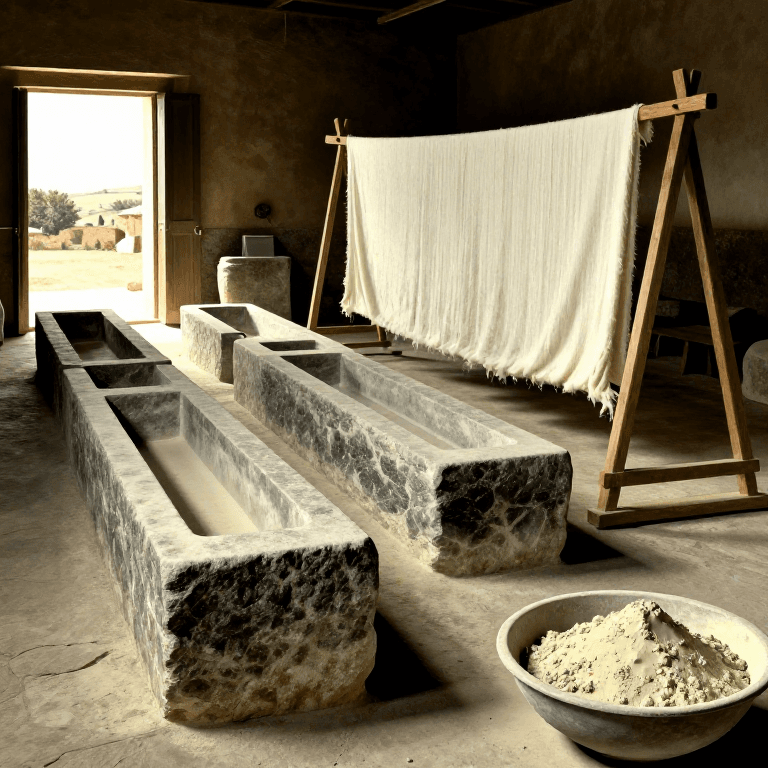
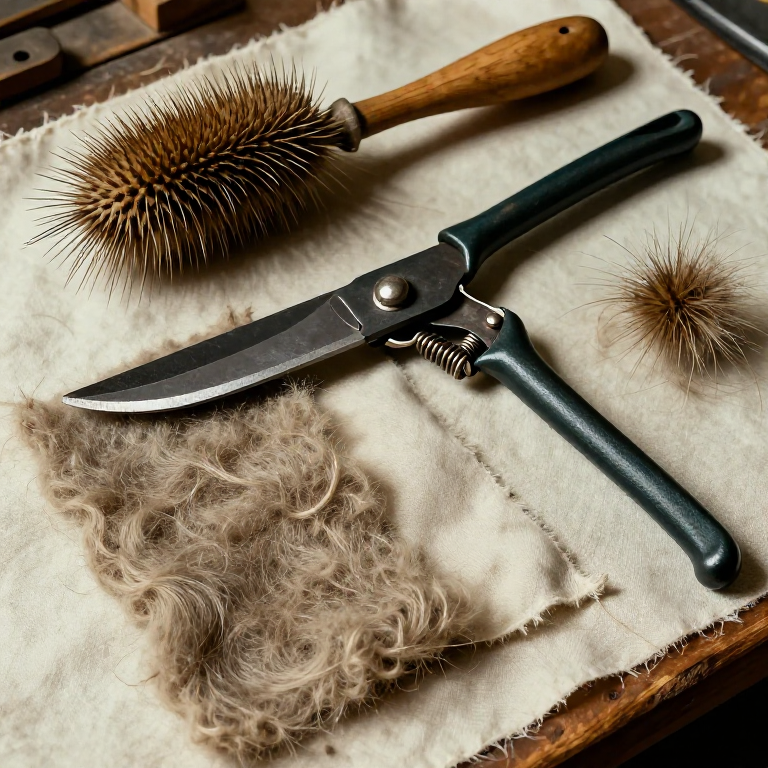
Napping and shearing are the twin finishing operations that transform rough fulled cloth into the smooth, luxurious broadcloth that made medieval England's fortune. First, the dried teasel heads of Dipsacus fullonum — mounted in rows on a wooden frame called a napping handle — are drawn repeatedly across the surface of the cloth, catching and raising individual fibres into a soft, fuzzy nap. Then a craftsman called a cropper lays the cloth over a padded table and shears the raised fibres to a uniform height with enormous spring-loaded cropping shears, sometimes weighing 15 kg. The cycle of napping and shearing is repeated several times — each pass producing a finer, denser surface. No mechanical substitute has ever matched the teasel: its hooks are stiff enough to raise fibres but elastic enough to release before tearing the cloth, and to this day teasels are used to finish the finest billiard cloth and military uniform fabric. This blueprint follows the cloth from its first napping through final shearing to a finished face.

Pertengahan
4-6 hours

Arahan

1

Prepare the tentered cloth

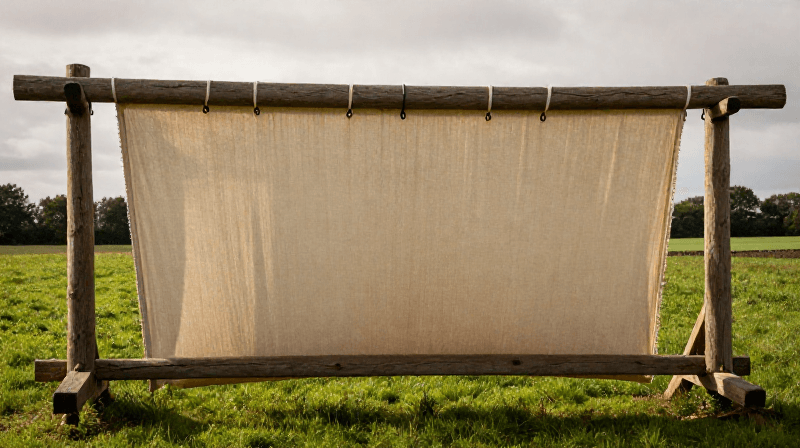
Begin with a piece of fulled and tentered wool cloth that has been dried to its proper width. The cloth should be dense, firm, and slightly rough to the touch. Lay it flat on a clean work surface and inspect for any remaining debris, burrs, or uneven patches from fulling.

Bahan untuk langkah ini:

Tentered Wool ClothTentered Wool Cloth1 keping
2

Dampen the cloth lightly

Sprinkle the surface of the cloth with clean water using your hand or a brush. The cloth should be slightly damp — not wet. Damp fibres raise more easily than dry ones and are less likely to break. Work one section at a time as you proceed.

Bahan untuk langkah ini:

Clean WaterClean Water2 liter
3

Mount the teasel heads

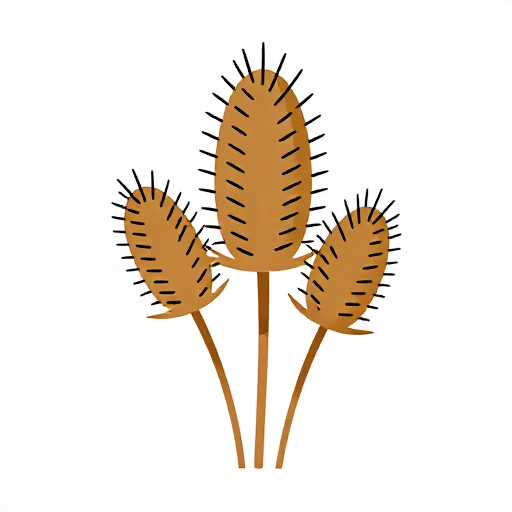
Collect dried teasel heads (Dipsacus fullonum) — the flower heads are covered in stiff but springy hooked bracts that catch wool fibres. Mount 6-10 teasel heads in a wooden napping handle — a flat board with wire loops or pegs that hold the heads in a row with their hooks all pointing the same direction.

Bahan untuk langkah ini:

Dried Teasel HeadsDried Teasel Heads10 keping

Alatan diperlukan:

Napping HandleNapping Handle
4

Stretch the cloth on the napping board

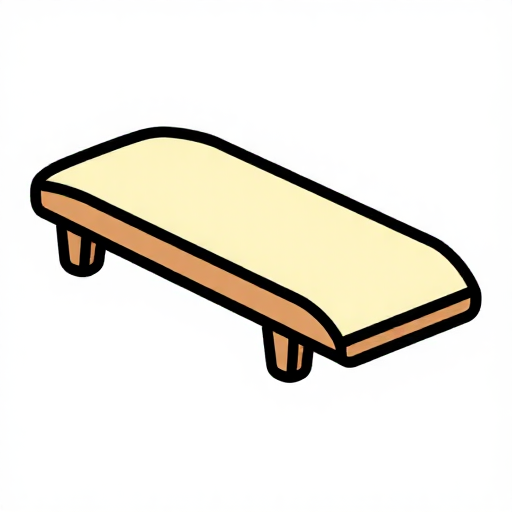
Drape the cloth over a padded napping board — a long, slightly curved wooden table covered with a thick pad of old cloth. The cloth should lie smooth and taut over the rounded surface. The curve exposes the fibres and gives the teasels something to work against.

Alatan diperlukan:

Napping BoardNapping Board
5

Make the first napping pass

Hold the napping handle firmly and draw it across the cloth surface in long, steady strokes — always in one direction, following the grain of the warp. The teasel hooks catch individual fibres and pull them up from the matted surface. Use moderate pressure — too heavy tears the cloth, too light does nothing.
6

Work the entire surface

Continue napping stroke by stroke, slightly overlapping each pass, until you have covered the entire visible area of the cloth. Then shift the cloth on the board to expose the next section and repeat. After the first complete pass, the surface should look noticeably fuzzy with raised fibres standing up.
7

Replace worn teasel heads

After extensive use, the teasel hooks soften and lose their grip. When fibres stop rising easily, replace the spent heads with fresh ones. Medieval napping workshops consumed thousands of teasel heads per year. The used heads from rough napping were saved for gentler finish passes.
8

Lay the cloth for shearing

Move the napped cloth to the cropping table — a long, flat, padded bench. Lay the cloth face-up with the raised nap pointing upward. Smooth it flat and ensure the surface is even. The nap should stand up uniformly across the cloth like a fine lawn.
9

Prepare the cropping shears

Cropping shears are enormous spring-loaded scissors with flat, wide blades — typically 60-90 cm long and weighing 10-15 kg. The lower blade rests flat on the cloth while the upper blade is pressed down to cut. Ensure the blades are razor-sharp; a dull edge drags and tears instead of cutting cleanly.

Alatan diperlukan:

Cropping ShearsCropping Shears
10

Make the first shearing cut

Rest the lower blade flat on the cloth surface. Squeeze the handles to bring the upper blade down in a smooth cutting action while sliding the shears slowly forward. The blades should glide just above the cloth surface, trimming the raised nap to a uniform height. Cut with the grain, never across it.
11

Shear the full surface

Work row by row across the cloth, overlapping each pass slightly. Keep the shears at a consistent height — the lower blade always touching the cloth, the cutting height uniform. Sweep the cut fibres away with a soft brush between passes. The craft of the cropper was one of the most skilled in the medieval cloth trade.
12

Brush away the clippings

After shearing one face completely, brush the cut fibre clippings from the cloth surface using a soft bristle brush. These clippings (called flocks) were historically collected and sold as stuffing for mattresses and cushions — nothing was wasted.

Alatan diperlukan:

Soft BrushSoft Brush
13

Nap the second pass

Dampen the cloth again lightly and repeat the napping process with the teasel handle. This second pass raises finer fibres that the first pass left behind and any fibres that sprang back after shearing. Use lighter pressure than the first pass — the cloth is now thinner.
14

Shear the second pass

Shear the newly raised nap as before, this time cutting slightly closer to the surface. Each successive napping-and-shearing cycle produces a progressively smoother, denser surface. Fine broadcloth received 3-4 complete cycles.
15

Repeat for the reverse side

Turn the cloth over and nap and shear the reverse face using the same technique. Some cloths were finished on one side only (single-dressed), while higher-quality broadcloth was finished on both faces (double-dressed). Two-sided finishing takes twice the labour but produces a reversible fabric.
16

Make the final finishing pass

For the last pass, use gently worn teasel heads (saved from earlier rough napping) and shear as close to the surface as you dare. This final pass gives the cloth its characteristic smooth, almost glossy appearance — the surface that distinguished English broadcloth from inferior grades.
17

Press the finished cloth

Fold the cloth in layers with clean linen sheets between each fold. Press under heavy weights or in a screw press overnight. Pressing sets the sheared surface, flattens any remaining unevenness, and gives the cloth a slight lustre. Medieval cloth was sometimes pressed hot for extra sheen.
18

Inspect and fold for sale

Unfold and examine the finished cloth under good light. The surface should be smooth, uniform, and dense. Run your hand across it — properly finished broadcloth feels almost like felt but with far more body and drape. Fold the cloth to the standard bolt length for storage or sale. The cloth is now ready for tailoring or dyeing.

Bahan

3

Alatan Diperlukan

4

Bahan Blueprint Bersambung

CC0 Domain Awam

Blueprint ini dikeluarkan di bawah CC0. Anda bebas menyalin, mengubah, mengedar, dan menggunakan karya ini untuk sebarang tujuan, tanpa meminta kebenaran.

Sokong Pembuat dengan membeli produk melalui Blueprint mereka di mana mereka memperoleh Komisen Pembuat ditetapkan oleh Penjual, atau cipta iterasi baru Blueprint ini dan sertakan ia sebagai sambungan dalam Blueprint anda sendiri untuk berkongsi hasil.

Perbincangan

(0)

Log masuk untuk menyertai perbincangan

Memuatkan komen...