
Recovering Selenium from Copper Refinery Anode Slime — The Photoconductor That Sees Light
Selenium is element 34 — a chalcogen sitting directly below sulfur on the periodic table, and one of the most photosensitive elements known. In darkness, selenium is a poor electrical conductor; exposed to light, its conductivity increases up to a thousandfold. This remarkable photoconductive property, discovered by Willoughby Smith in 1873, launched the entire field of photoelectric technology: selenium cells powered the first light meters, the first fax machines (1920s), and the first photocopiers (Xerox, 1959). Today, selenium is used in photovoltaic cells, glass decolorization, and as a nutritional trace element essential for human health.
Selenium rarely forms its own minerals. Instead, it substitutes for sulfur in copper sulfide ores — wherever copper is smelted and electrolytically refined, selenium concentrates in the anode slime: the dark mud that accumulates at the bottom of electrolytic refining cells. This slime also contains tellurium, silver, gold, and platinum-group metals. Commercial selenium is almost entirely a by-product of copper refining.
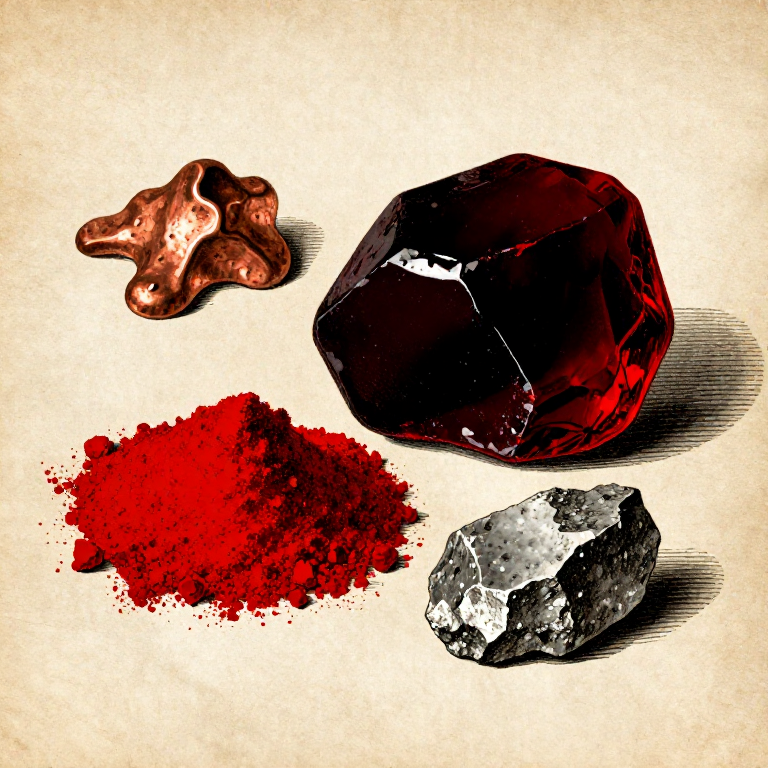
This blueprint demonstrates the laboratory-scale recovery of selenium from simulated or real copper anode slime through oxidizing roasting, soda ash fusion, aqueous leaching, and reduction with sulfur dioxide. The final product is vitreous (glassy) selenium — the dark red-black allotrope used in photoelectric applications.
HAZARD: Selenium compounds are toxic. Selenium dioxide (SeO₂) is severely irritating to eyes and lungs, and hydrogen selenide (H₂Se), though not deliberately produced here, is extremely toxic and smells of rotting horseradish. All heating steps must be performed under a fume hood or in a well-ventilated outdoor area. Concentrated sulfuric acid causes severe burns. Wear chemical splash goggles, acid-resistant gloves, and a respirator with acid gas cartridge at all times.
Kandungan berbahaya
Blueprint ini mengandungi prosedur berbahaya. Log masuk dan aktifkan kandungan berbahaya dalam tetapan akaun anda untuk melihat arahan langkah demi langkah.
Log masukCC0 Domain Awam
Blueprint ini dikeluarkan di bawah CC0. Anda bebas menyalin, mengubah, mengedar, dan menggunakan karya ini untuk sebarang tujuan, tanpa meminta kebenaran.
Sokong Pembuat dengan membeli produk melalui Blueprint mereka di mana mereka memperoleh Komisen Pembuat ditetapkan oleh Penjual, atau cipta iterasi baru Blueprint ini dan sertakan ia sebagai sambungan dalam Blueprint anda sendiri untuk berkongsi hasil.