SENI
KECANTIKAN & KESEJAHTERAAN
KRAFTANGAN
BUDAYA & SEJARAH
HIBURAN
ALAM SEKITAR
MAKANAN & MINUMAN
KEJURUTERAAN TERBALIK
SAINS
SUKAN
TEKNOLOGI
BOLEH PAKAI
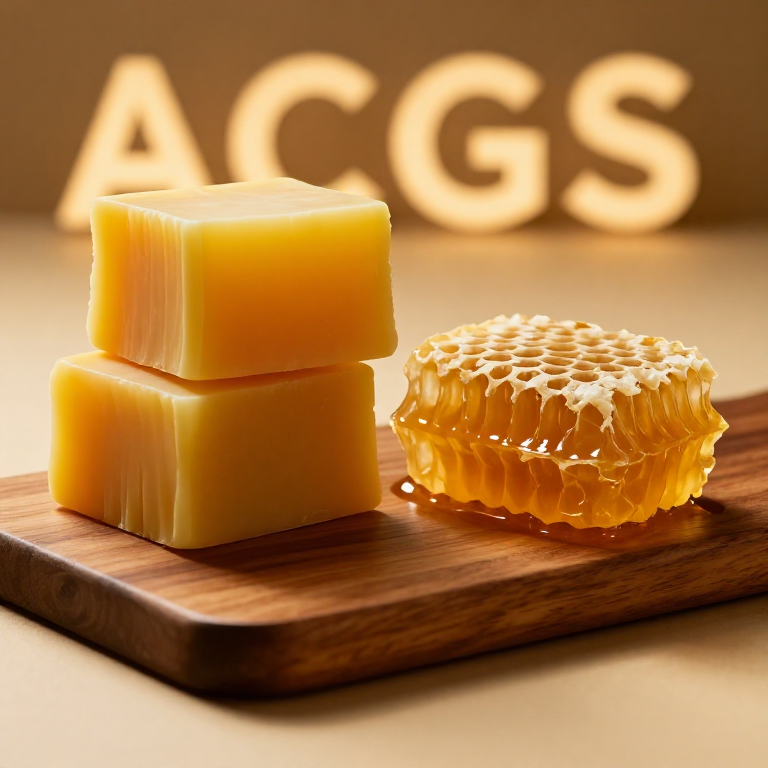


Rendering Beeswax from Honeycomb — The Original Natural Wax
Pertengahan
Arahan
1
1
Understand Beeswax Biosynthesis
Understand Beeswax Biosynthesis
Beeswax is produced by worker honeybees (Apis mellifera) from four pairs of wax glands on the ventral surface of abdominal segments 4-7. Bees aged 12-18 days secrete liquid wax that solidifies into thin, transparent scales (3 mm × 1.5 mm) upon contact with air. Each scale weighs approximately 1 mg. Bees chew the scales, mixing them with mandibular gland secretions, to form malleable wax for comb construction. A colony produces 1-2 kg of wax per year and requires approximately 6-7 kg of honey to fuel the metabolic energy for producing 1 kg of wax — making beeswax a metabolically expensive material.
2
2
Examine Honeycomb Architecture
Examine Honeycomb Architecture
Honeycomb is an engineering marvel — hexagonal cells tilted 13° from horizontal (preventing honey from flowing out) with a wall thickness of just 0.05-0.10 mm. The hexagonal geometry minimizes wax usage while maximizing storage volume. Each cell is approximately 5.2 mm across for worker brood and 6.9 mm for drone brood. Comb is built vertically, double-sided, with cells opening on both faces. Fresh comb is white and nearly pure wax; older comb darkens to brown or black as larval cocoons, pollen residue, and propolis accumulate — darkened comb yields lower-grade wax.
3
3
Harvest Wax from the Hive
Harvest Wax from the Hive
Beekeepers obtain wax from three sources: cappings (the thin wax layer bees seal over ripe honey cells, removed during honey extraction — the highest-quality wax), burr comb (irregular comb built between frames), and old brood comb (retired after 3-5 years of use). Cappings wax is nearly pure and light-colored. Old brood comb contains 50-60% non-wax impurities (cocoon silk, propolis, pollen, frass). A typical hive produces 1-2 kg of cappings wax per honey harvest. Solar wax melters — insulated boxes with glass lids — use sunlight to melt wax from cappings and burr comb passively.
Bahan untuk langkah ini:
 Penutup sel sarang lebah (daripada tuaian)
Alatan diperlukan:
 Garpu pembuka penutup madu
4
4
Render Wax by Water Bath Method
Render Wax by Water Bath Method
Place crushed honeycomb in a large stainless steel or enamel pot with water (never aluminum, which discolors the wax). Heat to 63-65°C — beeswax melts at 62-64°C. Do not exceed 85°C, as overheating darkens wax and degrades aromatic compounds. Stir occasionally as wax melts and floats to the surface. Impurities (cocoon silk, pollen, dead bees) settle to the bottom or remain suspended in the water layer. Remove from heat and allow to cool slowly — the wax solidifies into a disc floating on the water. The bottom surface of the wax disc collects a layer of 'slumgum' (debris) that is scraped off.
Alatan diperlukan:
 Periuk tanak dua lapis
 Termometer Masakan
 Penimbang Jitu
5
5
Filter and Purify
Filter and Purify
For clean, cosmetic-grade wax, re-melt the crude disc in a double boiler (never direct flame — beeswax is flammable above 204°C with a flash point of 238°C) and filter through multiple layers of cheesecloth, then through a finer filter such as a paper towel or commercial wax filter. For the cleanest result, filter twice — once coarse, once fine. Pour the filtered liquid wax into molds (silicone molds release easily). The finished product should be a uniform golden yellow with a pleasant honey-like aroma. One kg of crude cappings wax yields approximately 800-900 g of clean filtered wax.
Alatan diperlukan:
 Kain Kasa Halus
 Set membuat acuan silikon
6
6
Understand Beeswax Chemistry
Understand Beeswax Chemistry
Beeswax is a complex mixture of over 300 compounds. The principal components are esters of fatty acids and long-chain alcohols (67%, mainly myricyl palmitate C₁₅H₃₁COOC₃₀H₆₁), hydrocarbons (14%, mainly hentriacontane C₃₁H₆₄), free fatty acids (12%, mainly cerotic acid C₂₆H₅₂O₂), and free alcohols (1%). This composition gives beeswax its unique properties: melting point 62-64°C, density 0.96 g/cm³, insoluble in water, slightly soluble in warm ethanol, plastic and moldable at 32-35°C (body temperature), and resistant to hydrolysis and oxidation. Beeswax has remained chemically unchanged in Egyptian tombs for 3,000 years.
7
7
Explore Candle Making
Explore Candle Making
Beeswax candles were the luxury lighting of the medieval world — churches, monasteries, and royal courts used them because they burned brighter, longer, and cleaner than tallow (animal fat) candles, with a pleasant honey scent instead of acrid smoke. A beeswax candle burns at approximately 1,500°C flame temperature and produces a warm, golden light with a spectrum close to sunlight. Beeswax is naturally dripless in still air and self-trimming (the wick curls into the flame). Today, beeswax candles remain premium products, commanding 5-10× the price of paraffin candles. Rolled candles from embossed beeswax foundation sheets are the simplest form.
8
8
Survey Cosmetic and Medicinal Uses
Survey Cosmetic and Medicinal Uses
Beeswax is a base ingredient in lip balms, hand creams, salves, and solid perfumes — it provides structure, moisture barrier properties, and a smooth skin feel. The classic cold cream formula (Galen's ceroma, 2nd century AD) combines beeswax, olive oil, and rosewater. Beeswax forms a protective, breathable film on skin that prevents moisture loss without clogging pores. In traditional medicine, cera alba (purified white beeswax) is a pharmaceutical excipient for ointments, suppositories, and pill coatings. Beeswax wraps (cloth impregnated with beeswax, jojoba oil, and pine resin) are a reusable alternative to plastic food wrap.
9
9
Investigate Food and Industrial Applications
Investigate Food and Industrial Applications
Beeswax (E901) is approved as a food-grade glazing agent — it coats apples, citrus fruits, and hard cheese to prevent moisture loss and extend shelf life. Lost-wax casting (investment casting) has used beeswax for 5,000 years to create metal objects — a wax model is coated in ceramic, the wax melted out, and molten metal poured into the mold. Encaustic painting (pigment suspended in hot beeswax) produces luminous, durable artwork — Fayum mummy portraits from Roman Egypt remain vivid after 2,000 years. Beeswax also waterproofs leather, lubricates sewing thread, and seals envelopes.
10
10
Document Findings and Apiculture Significance
Document Findings and Apiculture Significance
Record beeswax key data: melting point 62-64°C, density 0.96 g/cm³, flash point 238°C, composition 67% esters + 14% hydrocarbons + 12% free fatty acids. Global production is approximately 65,000 tonnes per year, with China as the leading producer. Beeswax is the only structural material produced by an insect that humans have used continuously for over 5,000 years — for light, art, medicine, food, and industry. Every candle, salve, and wax wrap begins with a bee converting honey into translucent scales smaller than a fingernail, then chewing them into the most efficient storage structure in nature.
Bahan
1- Pemegang Tempat
Alatan Diperlukan
6- Pemegang Tempat
- Pemegang Tempat
- Pemegang Tempat
- Pemegang Tempat
- Pemegang Tempat
- Pemegang Tempat
Blueprint berkaitan
Blueprint ini berkongsi pengetahuan — teknik, bahan atau prinsip
CC0 Domain Awam
Blueprint ini dikeluarkan di bawah CC0. Anda bebas menyalin, mengubah, mengedar, dan menggunakan karya ini untuk sebarang tujuan, tanpa meminta kebenaran.
Sokong Pembuat dengan membeli produk melalui Blueprint mereka di mana mereka memperoleh Komisen Pembuat ditetapkan oleh Penjual, atau cipta iterasi baru Blueprint ini dan sertakan ia sebagai sambungan dalam Blueprint anda sendiri untuk berkongsi hasil.