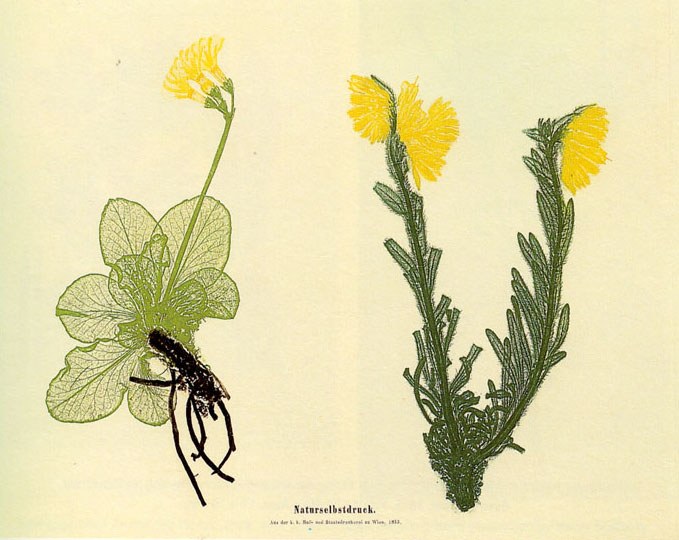


Stereotype and Electrotype
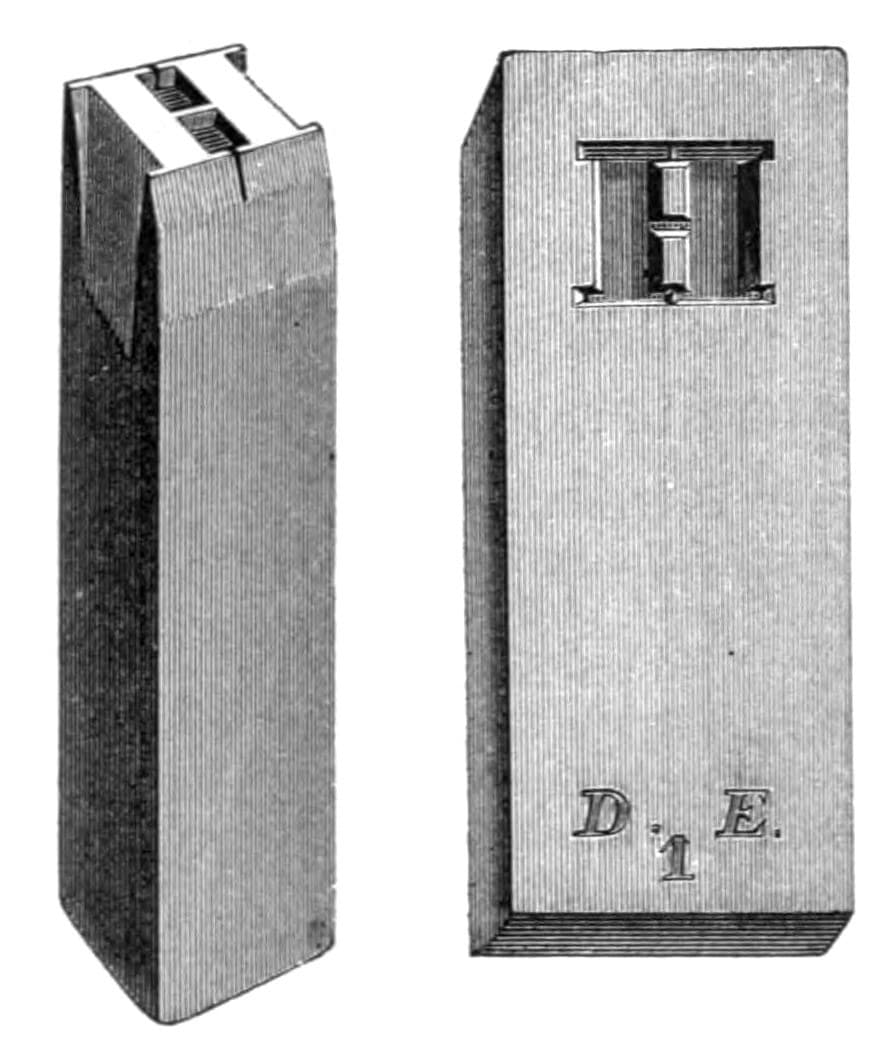
A page of set type is expensive and fragile. It ties up thousands of pieces of type that cannot be used for anything else until the forme is broken up, it wears under printing, and it exists in exactly one place — so only one press can print that page.
Both answers here are the same move: make a copy of the whole page as a single solid plate, then free the type and print from the copy.
Stereotype takes a squeeze. Press a damp papier-mâché mat — the flong — onto the forme so it takes the impression, dry it hard, and cast molten type metal against it. The result is a solid plate, identical to the original, in minutes. Because the flong is flexible while damp, it can be curved before casting — which is what makes a rotary press possible at all, since you cannot bend a forme of loose type around a cylinder.
Electrotype takes a deposit. Mould the forme in wax, dust the mould with graphite to make its surface conduct, hang it in a copper sulphate bath and pass a current: copper grows atom by atom onto every detail. Back the resulting shell with type metal and you have a printing surface of pure copper, far harder than type alloy and far finer in detail.
One is fast and cheap. One is slow and beautiful. Both turn a page from an object into a reproducible master.
Arahan
Count what a standing forme costs
Count what a standing forme costs
Estimate the type in one page — around 2,000 characters — and consider what a printer owns: a few cases of each size.
Now work out how many pages can be standing at once before the shop runs out of the letter e.
Expect a small number.
This is the constraint. A book cannot be held in type while it sells; a newspaper cannot print the same page on six presses. Everything below exists to release the type while keeping the page.
Take a squeeze and cast from it
Take a squeeze and cast from it
Build up a mat from layers of tissue and blotting paper pasted together, lay it damp over a relief block, and beat it in with a stiff brush so it takes every detail. Dry it hard under heat and pressure.
Cast plaster or low-melting metal against the dried mat.
Expect a faithful positive of the original, in one piece.
Note the time: minutes, not hours. Speed is the whole argument for stereotype — a newspaper page can be duplicated between editions.
If casting metal: ventilate, wear eye protection, and ensure the mat is bone dry. Trapped moisture flashes to steam and throws molten metal.
Curve the mat, and unlock the rotary press
Curve the mat, and unlock the rotary press
Take a fresh damp mat, bend it around a cylinder, and dry it in that shape. Cast against the curve.
Expect a curved printing plate.
Now try to bend a forme of loose type around the same cylinder.
You cannot — it falls apart, and even locked up it is rigid and flat.
That impossibility is why presses were flatbed for four centuries. Stereotype made a page bendable, and a bendable page can be mounted on a rotating cylinder and printed against a continuous web of paper at speeds a flatbed cannot approach.
Grow a copper shell by electrodeposition
Grow a copper shell by electrodeposition
Press a relief block into softened wax to take a negative. Dust the wax with graphite and brush it in until the whole surface is dull grey and conducting.
Hang it as the cathode in copper sulphate solution with a copper anode, and pass a low direct current for several hours.
Expect a thin copper skin to build over every detail, which can be peeled from the wax.
Note what the graphite did: it turned an insulator into an electrode, so the copper knows where to grow. Without it nothing deposits at all.
Bahan untuk langkah ini:
 Tiub tembaga1 keping
Compare the two copies on the terms that matter
Compare the two copies on the terms that matter
Put your stereotype casting and your electrotype shell side by side. Compare four things: time taken, fineness of detail reproduced, hardness of the surface, and cost.
Expect stereotype to win on time and cost, and electrotype to win decisively on detail and hardness.
Then match each to a job. A newspaper page, read once and discarded, wants speed. A book illustration or a banknote, printed in huge numbers and judged closely, wants a hard copper surface that holds fine work.
Neither is better. They are answers to different questions, and knowing which question you are being asked is most of engineering.
History & Context
History & Context
Duplication is what made mass publishing possible, and it is almost never the part people remember. The press gets the credit; but a press can only print what is in it, once. Stereotyping let the same page run on many presses at once and be stored for reprinting without holding the type — which is why standard works could stay permanently available, and why the word stereotype came to mean a fixed unchanging form.
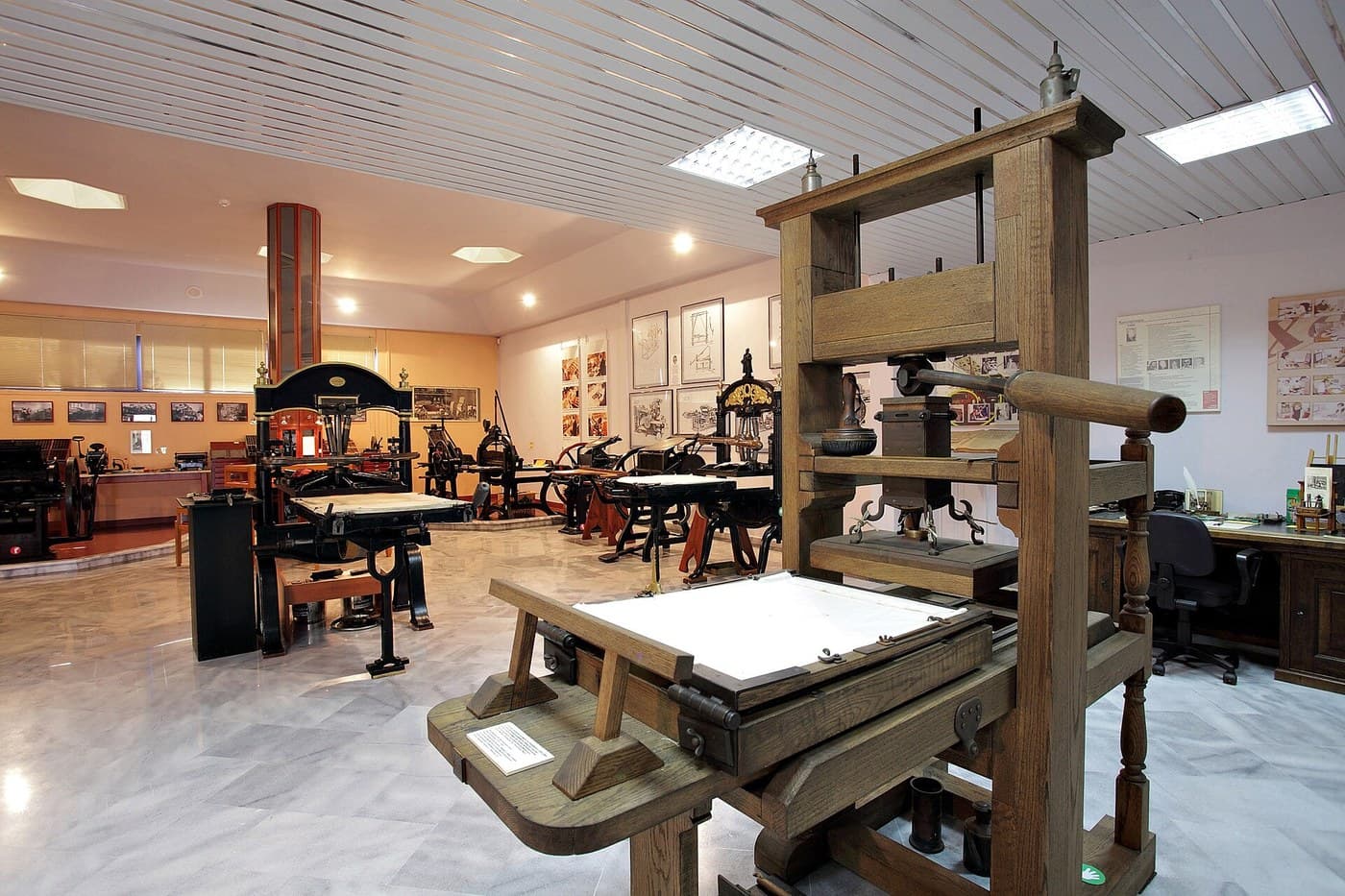
The curved plate is the hinge of the whole nineteenth-century press. Rotary printing needs a cylindrical printing surface and a continuous web. Type cannot be curved; a stereotype mat can. Every high-speed newspaper press descends from that one property of damp papier-mâché, and the Hoe rotary press elsewhere in this corpus is what it enabled.
Electrotyping is electroplating used as a manufacturing process. It arrives at the same moment as the electroplating industry and shares its chemistry, but the intent is different: plating coats an object, electroforming grows a new object and throws the mould away. The same idea makes record stampers, precision meshes, and micro-moulds today.
It also made illustration reproducible. A wood engraving is a fragile block that wears; an electrotype of it is copper, hard, and can be made in quantity and shipped. Nineteenth-century illustrated magazines and encyclopaedias moved images between publishers and countries as electrotypes, which is why the same engraving turns up in books that share no other connection.
Honest limits. Every generation of copy loses a little: a stereotype is slightly softer in detail than the type, and a plate cast from a worn mat is worse again. Stereotype metal is soft and wears faster than type. Electrotyping is slow, needs a plating bath and skilled attention, and its copper shell must be backed with metal or it collapses. Both were displaced entirely by photographic platemaking — which does the same job, from a film rather than a squeeze, and is the direct ancestor of the offset plate.
Bahan
8- 1 kepingPemegang Tempat
- 1 bungkusPemegang Tempat
- 2 kgPemegang Tempat
- Pemegang Tempat
- 25 helaianPemegang Tempat
- 10 helaianPemegang Tempat
- 100 gPemegang Tempat
- 500 gPemegang Tempat
Alatan Diperlukan
1- Pemegang Tempat
Bahan Blueprint Bersambung

Blueprint berkaitan
Blueprint ini berkongsi pengetahuan — teknik, bahan atau prinsip
CC0 Domain Awam
Blueprint ini dikeluarkan di bawah CC0. Anda bebas menyalin, mengubah, mengedar, dan menggunakan karya ini untuk sebarang tujuan, tanpa meminta kebenaran.
Sokong Pembuat dengan membeli produk melalui Blueprint mereka di mana mereka memperoleh Komisen Pembuat ditetapkan oleh Penjual, atau cipta iterasi baru Blueprint ini dan sertakan ia sebagai sambungan dalam Blueprint anda sendiri untuk berkongsi hasil.