SENI
KECANTIKAN & KESEJAHTERAAN
KRAFTANGAN
BUDAYA & SEJARAH
HIBURAN
ALAM SEKITAR
MAKANAN & MINUMAN
KEJURUTERAAN TERBALIK
SAINS
SUKAN
TEKNOLOGI
BOLEH PAKAI
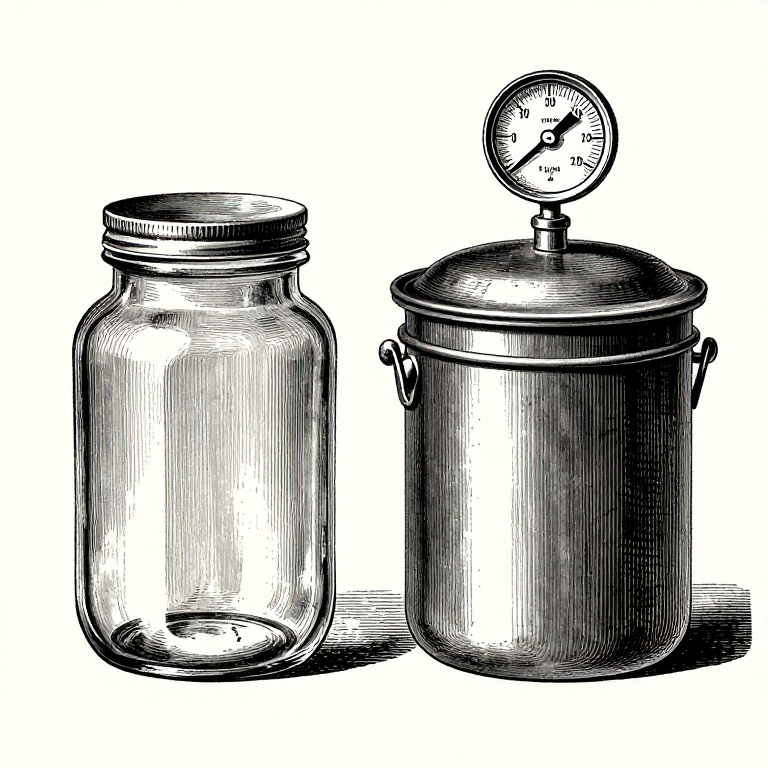

The Acid Line: Why Canning Splits at pH 4.6
A sealed jar is an oxygen-free container held at room temperature for months. That is an excellent preservation method and it is also the ideal habitat for *Clostridium botulinum*, whose spores survive boiling and whose toxin is among the most potent substances known.
One number decides which of those it will be. Below **pH 4.6** the organism cannot grow at all, and boiling water is sufficient. Above it, the spores themselves must be destroyed, and that requires a pressure canner — no amount of extra time at boiling point substitutes.
This rung is that line: which foods fall on which side, why the temperature matters more than the time, and what altitude does to the numbers. It is hazard-gated because getting the side wrong is the classic fatal error in home preserving.
Lanjutan
3 hours
Arahan
1
1
Which side is a food on, and how to be sure
Which side is a food on, and how to be sure
**High acid, pH 4.6 or below** — most fruit, jams and jellies, pickles in vinegar, properly acidified tomatoes, sauerkraut and other fully fermented vegetables. A boiling water bath is the correct and sufficient method.
**Low acid, above pH 4.6** — all vegetables, all meat, fish and poultry, soups, stocks, beans, corn, most plain tomatoes. A pressure canner is the only safe method. There is no water-bath recipe for these that is safe, whatever its age or its source.
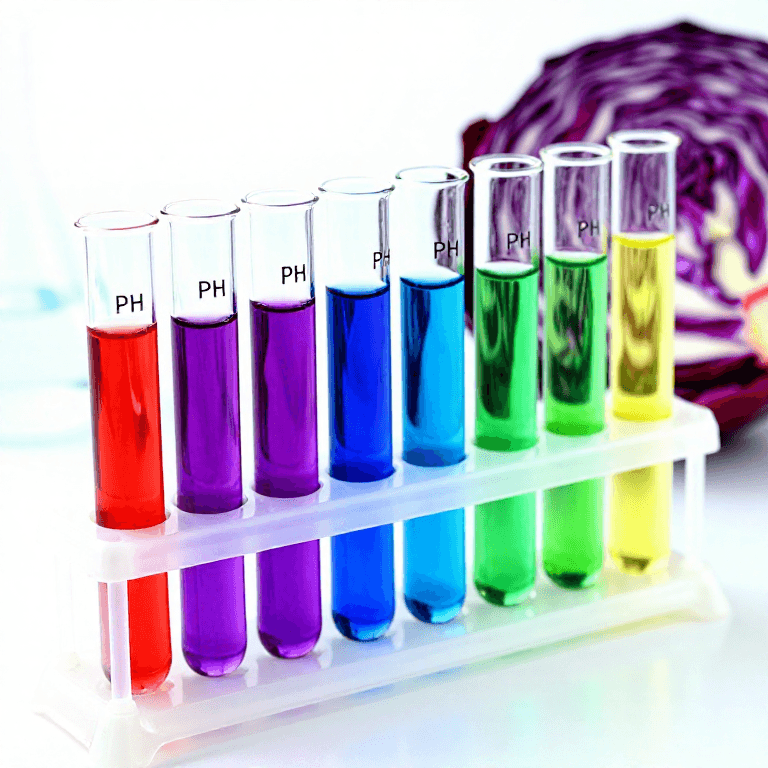
**Measure, do not assume.** A food-grade pH meter calibrated with buffer solutions is the reliable tool; strips are indicative but hard to read against a coloured food. Measure the finished product at room temperature, not the ingredients.
**Tomatoes deserve their own warning.** They sit within a tenth of a unit of the line, and modern varieties are bred less acidic than old ones. This is why every current recipe adds bottled lemon juice or citric acid to canned tomatoes, and why a family recipe from a century ago can be unsafe with today's fruit. Use bottled lemon juice rather than fresh — its acidity is standardised and fresh fruit varies.
Bahan untuk langkah ini:
 Asid sitrik1 keping
 Balang pengetinan (Mason)6 keping
Alatan diperlukan:
 Meter pH gred makanan
 Jalur pH
2
2
The numbers behind the split
The numbers behind the split
Memuatkan buku nota Jupyter…
Alatan diperlukan:
 Komputer Meja
3
3
Acidifying deliberately, and where fermentation fits
Acidifying deliberately, and where fermentation fits
A low-acid food can be moved across the line on purpose, and then treated as a high-acid one. Three routes:
**Vinegar.** Pickling uses vinegar of a known strength, normally 5% acetic acid. The ratio of vinegar to water in a published pickle recipe is a safety calculation, not a flavour preference — diluting it further is exactly the change that makes a pickle unsafe.
**Bottled lemon juice or citric acid.** The standard addition for tomatoes. Bottled, because its acidity is standardised.
**Fermentation.** Lactic acid bacteria convert sugars to lactic acid and take a vegetable down to pH 3.4 or so on their own. That is how sauerkraut, kimchi and many pickles were made before vinegar was cheap, and it is genuinely safe — but only once the fermentation has actually finished. A half-fermented vegetable is a low-acid food.
In every case: **measure the finished pH.** A recipe predicts it; a meter confirms it. The one is worth having for exactly this.
Bahan untuk langkah ini:
Asid sitrik1 keping Asid laktik (gred makanan)1 keping
 Garam1 kepingBalang pengetinan (Mason)6 keping
Alatan diperlukan:
Meter pH gred makanan Penimbang Dapur Digital
 Periuk besar (bawah, untuk rendaman air)
4
4
Warning signs, and the rule that overrides everything
Warning signs, and the rule that overrides everything
**Botulism toxin has no taste, no smell and no appearance.** A jar containing it can look, smell and taste perfectly normal. That is the fact that makes this different from ordinary spoilage, and it is why the procedure has to be right rather than checked at the end.
Signs that a jar is definitely bad — none of which are required for it to be dangerous:
* a lid that has lost its seal, or bulges, or springs back when pressed
* liquid spurting out on opening
* rising bubbles, cloudiness, or an unexpected colour
* any mould, on the surface or under the lid
* a smell that is not the smell of the food
**If a low-acid jar is doubtful in any way, do not taste it.** Tasting is the single most dangerous thing a person does with a suspect jar. Dispose of it sealed, and wash anything it touched.
**Boiling low-acid home-canned food for 10 minutes before eating destroys the toxin** even though it does not destroy the spores, and it is a recommended precaution for home-canned vegetables. It is a second line of defence and it does not make an incorrectly processed jar safe.
Follow a tested recipe from a current source, with current processing times. This is the one area of cooking where improvising has killed people.
Bahan untuk langkah ini:
Balang pengetinan (Mason)6 kepingAlatan diperlukan:
Meter pH gred makanan Periuk tekanan
Bahan
4- 1 kepingPemegang Tempat
- 6 kepingPemegang Tempat
- 1 kepingPemegang Tempat
- 1 kepingPemegang Tempat
Alatan Diperlukan
6- Pemegang Tempat
- Pemegang Tempat
- Pemegang Tempat
- Pemegang Tempat
- Pemegang Tempat
- Pemegang Tempat
Blueprint berkaitan
Blueprint ini berkongsi pengetahuan — teknik, bahan atau prinsip




CC0 Domain Awam
Blueprint ini dikeluarkan di bawah CC0. Anda bebas menyalin, mengubah, mengedar, dan menggunakan karya ini untuk sebarang tujuan, tanpa meminta kebenaran.
Sokong Pembuat dengan membeli produk melalui Blueprint mereka di mana mereka memperoleh Komisen Pembuat ditetapkan oleh Penjual, atau cipta iterasi baru Blueprint ini dan sertakan ia sebagai sambungan dalam Blueprint anda sendiri untuk berkongsi hasil.