SENI
KECANTIKAN & KESEJAHTERAAN
KRAFTANGAN
BUDAYA & SEJARAH
HIBURAN
ALAM SEKITAR
MAKANAN & MINUMAN
KEJURUTERAAN TERBALIK
SAINS
SUKAN
TEKNOLOGI
BOLEH PAKAI


The Hand-Housing Rubber Brush: Back, Teeth and a Hood for the Hand in One Moulding
A horse brush held by a strap or a handle slips in a wet hand, and knuckles are knocked against the stall.
John S. Hickson of Charlottesville, Virginia, received US 840,328, patented 1 January 1907, for a horse brush "preferably formed of rubber molded or otherwise formed into the desired shape" in one piece: a back, tapering teeth, and a retainer that houses the hand. The retainer's edges are thick where they join the back and taper to a thin, flexible crown, and its entrance is cut away on an incline so the mouth closes about the wrist.
This rung compares the stiffness of the thick edges and the thin crown, then casts the whole brush in one pour of silicone rubber in a printed three-part mould.
Lanjutan
About 8 hours plus curing
Arahan
1
1
Stiff edges, yielding crown
Stiff edges, yielding crown
Memuatkan buku nota Jupyter…
2
2
A rubber brush before it
A rubber brush before it
The embedded blueprint casts a ridged rubber pad and glues it to a leather plate. Hickson moulds the teeth, the back and a hood for the hand as one piece of rubber.
3
3
Read US 840,328
Read US 840,328
"As stated, the brush comprising the back 1, teeth 2, and retainer 3, is a one-piece structure and is preferably formed of rubber molded or otherwise formed into the desired shape."
"The edge portions of the retainer at their juncture of the back 1 are made thicker than the remaining portion and gradually taper in thickness as they recede from their juncture with the back, leaving the center portion comparatively thin and flexible, so as to yield slightly when a large hand is thrust into the retainer."
"The thickened edge portions of the retainer provide ample protection against injury and resist wear incident to the striking of the edge portion of the retainer against any part of the stall or other object."
4
4
Print the mould and cast the brush
Print the mould and cast the brush
**Mould.** In CAD draw three parts and print them in PLA. A tray 16 × 10 cm oval inside, its floor pitted with tapering pockets 8 mm deep every 8 mm for the teeth. A core the shape of the space a flat hand fills: a half-oval dome 13 cm long, 8.5 cm wide and 3.5 cm high with a flat underside, standing 4 mm above the tray floor on a tab that runs out through the mouth. A shell whose inside follows the core 6 mm away at the edges, narrowing to 2.5 mm at the crown, with its open end cut on a slant toward the closed end, a pour hole at the crown and a vent at the closed end.
**Cast.** Wipe every face with a thin film of petroleum jelly. Assemble tray, core and shell and clamp the core's tab. In gloves, weigh and mix the silicone rubber by its maker's instructions, stir slowly with a dowel, and pour in a thin stream into the pour hole until it rises in the vent. Leave it to cure as long as its maker says. Take off the shell, stretch the mouth and draw the core out, and peel the brush from the tray.
**Test.** Slide your hand in and check that the mouth closes about the wrist. Dust a piece of wool felt with flour and count the strokes it takes to lift it.
Bahan untuk langkah ini:
 Getah silikon untuk acuan1 keping
 Filamen PLA1 keping
 Pasak kayu keras1 keping
 Kepingan kain kempa bulu1 keping
 Tepung1 keping
Alatan diperlukan:
 Pencetak 3D filamen (FDM)
 Penimbang Dapur Digital
 Pengapit
 Angkup Digital 6 Inci
 Pisau Kraf
 Sarung Tangan Nitril
 Cermin Mata Keselamatan Jernih
 Cawan
 Vaselin
5
5
A brush with holes, thin spots or a stuck core
A brush with holes, thin spots or a stuck core
Hand-housing rubber brush troubleshooting.
Flow
Loading...
6
6
History and honest limits
History and honest limits
**John S. Hickson** of Charlottesville, Albemarle County, Virginia, filed US 840,328 on 29 January 1906; it was patented 1 January 1907. The retainer 3's middle is spaced from the back 1 and joined to it at its edges, making a housing that completely encompasses the hand. In the most general construction the brush is oblong, and the teeth may be of any length and number. His claim covers a new rubber article of manufacture: a back with integral tapering teeth, a retainer integral with it that houses the hand, thickened at the joint with the back, and an entrance cut away on an incline toward the closed end, giving a contracted mouth and free play for the wrist.
**Honest limits.** Cast silicone rubber in a printed mould stands in for his moulded rubber. The notebook compares stiffness only through thickness, for one rubber; its thicknesses are examples. The fit on your hand and your stroke counts are the result.
Bahan
5- 1 kepingPemegang Tempat
- 1 kepingPemegang Tempat
- 1 kepingPemegang Tempat
- 1 kepingPemegang Tempat
- 1 kepingPemegang Tempat
Alatan Diperlukan
9- Pemegang Tempat
- Pemegang Tempat
- Pemegang Tempat
- Pemegang Tempat
- Pemegang Tempat
- Pemegang Tempat
- Pemegang Tempat
- Pemegang Tempat
- Pemegang Tempat
Blueprint berkaitan
Blueprint ini berkongsi pengetahuan — teknik, bahan atau prinsip
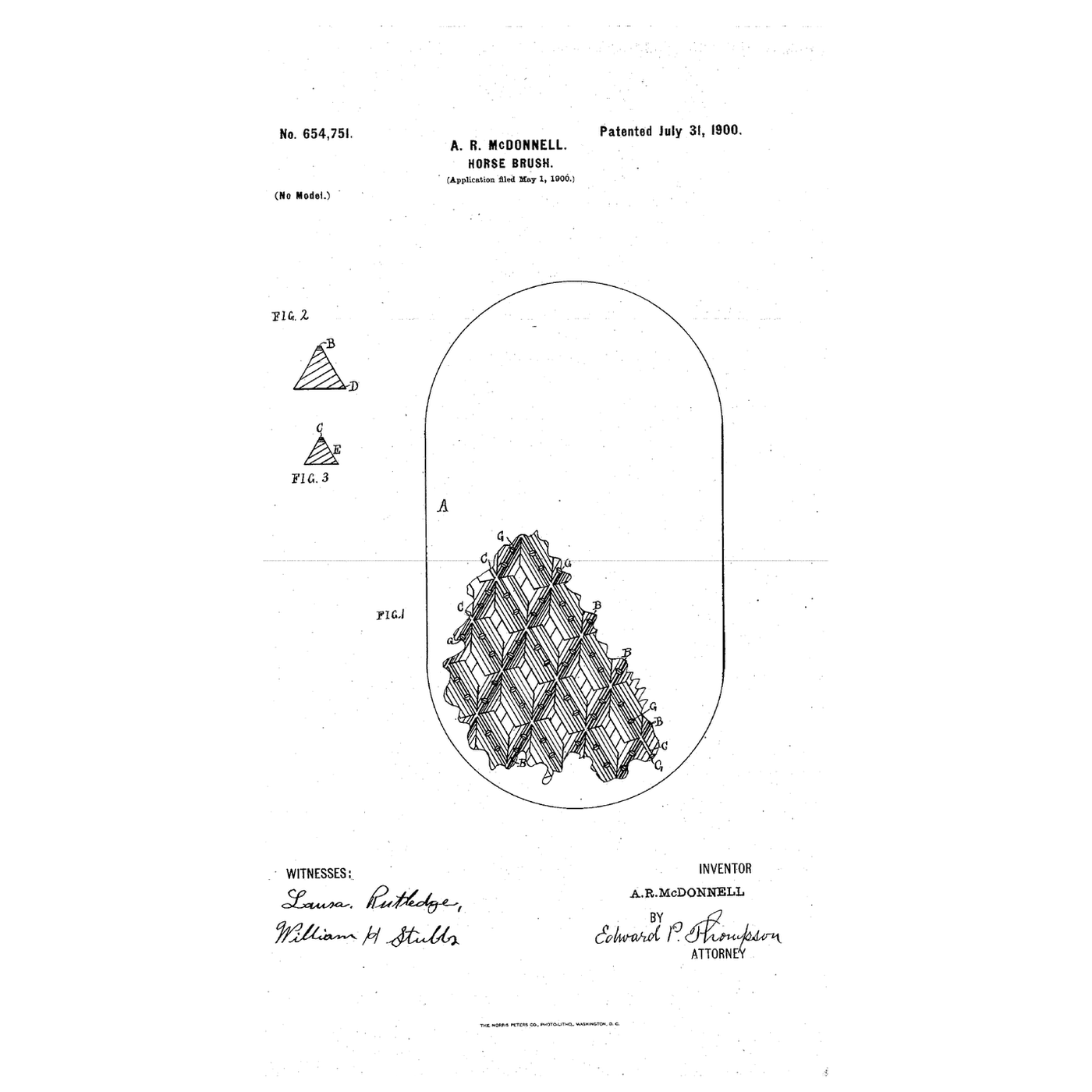
The Rubber Horse Brush: Crossed, Notched Ridges on a Leather Plate
oleh Mary
Penternakan Haiwan
29
0
0
0
0
0
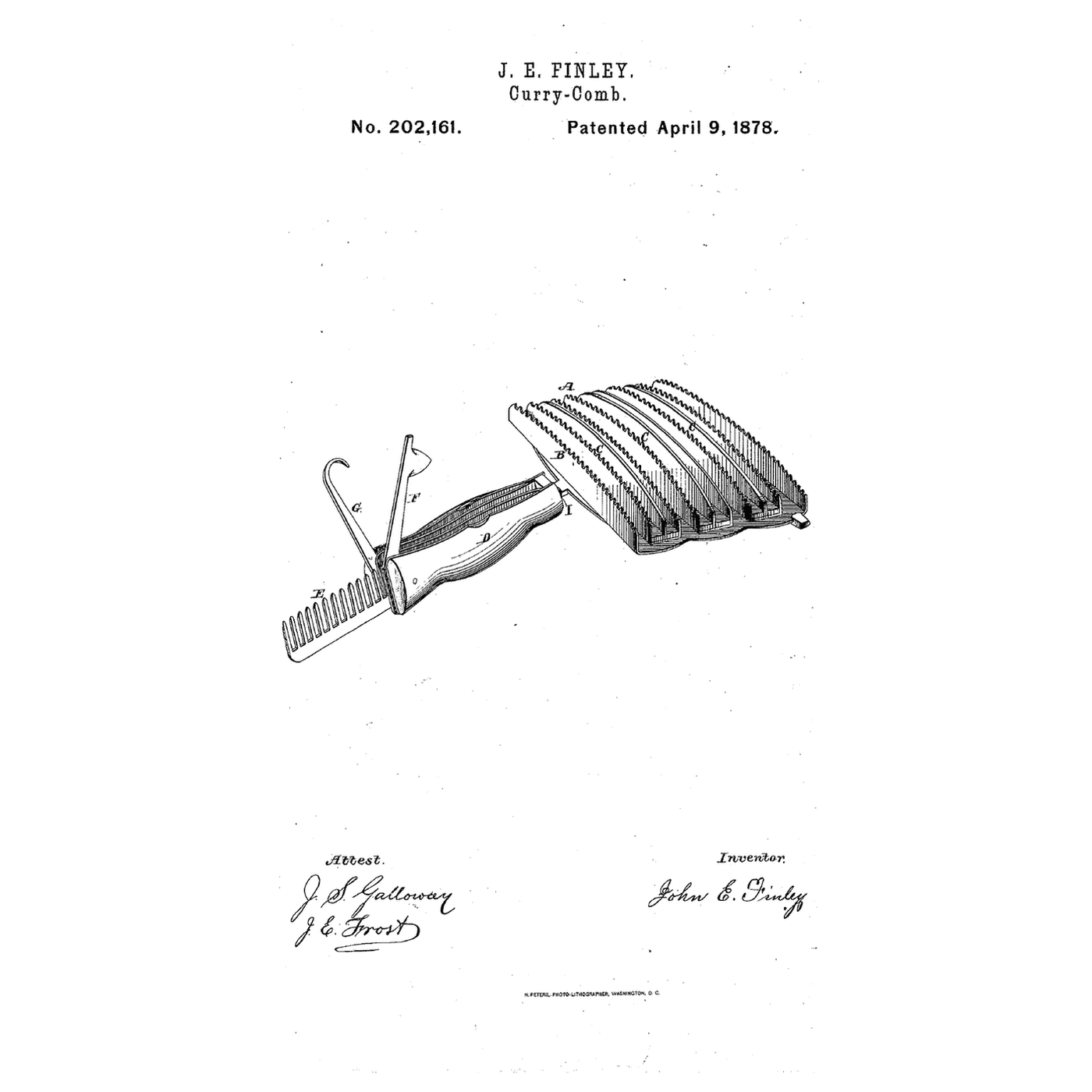
The Rubber-Barred Curry Comb: Curry Comb and Brush in One
oleh Karen
Penternakan Haiwan
33
0
0
0
0
0
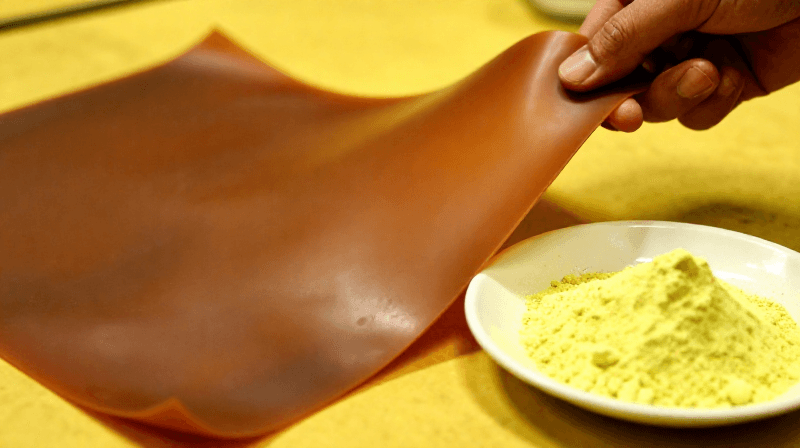
Vulcanizing Rubber with Sulfur — The Accidental Discovery That Put Tyres on the Road
oleh Charlie
Industri
105
0
0
0
3
0
CC0 Domain Awam
Blueprint ini dikeluarkan di bawah CC0. Anda bebas menyalin, mengubah, mengedar, dan menggunakan karya ini untuk sebarang tujuan, tanpa meminta kebenaran.
Sokong Pembuat dengan membeli produk melalui Blueprint mereka di mana mereka memperoleh Komisen Pembuat ditetapkan oleh Penjual, atau cipta iterasi baru Blueprint ini dan sertakan ia sebagai sambungan dalam Blueprint anda sendiri untuk berkongsi hasil.