SENI
KECANTIKAN & KESEJAHTERAAN
KRAFTANGAN
BUDAYA & SEJARAH
HIBURAN
ALAM SEKITAR
MAKANAN & MINUMAN
KEJURUTERAAN TERBALIK
SAINS
SUKAN
TEKNOLOGI
BOLEH PAKAI
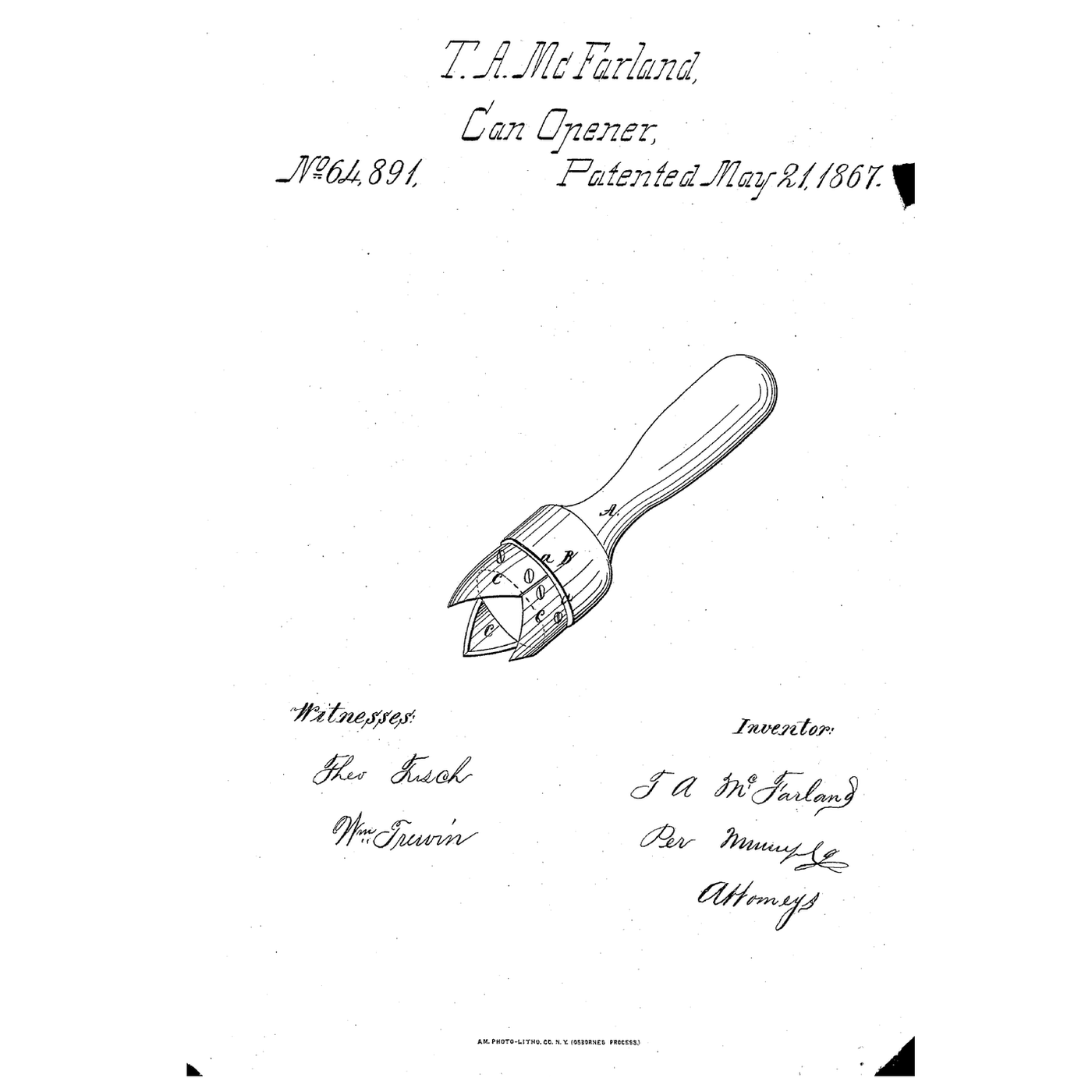


The Single-Blow Can Opener: A Ring of Pointed Teeth Punches the Hole
Cutting into a can with a single blade takes several cuts or blows.
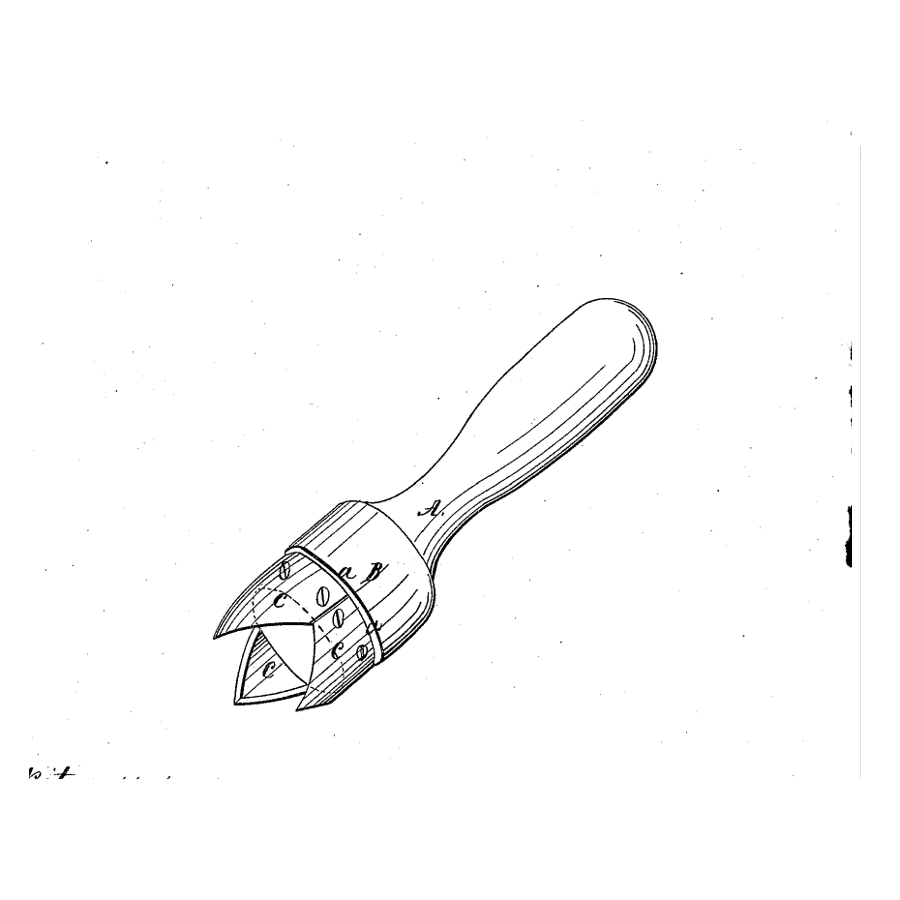
Thomas A. McFarland of Meadville, Pennsylvania, received US 64,891, dated 21 May 1867, for "a cheap, simple, and effective implement for cutting an opening in a can by a single blow": a ring of curved pointed teeth on a handle's head, bevelled inside, whose points enter first and whose edges widen until they meet, punching out a plug that stays inside the cutter.
This rung works out why pointed teeth need so little force, then files the teeth on a steel tube and punches a can top with one blow.
Pertengahan
About 3 hours
Arahan
1
1
Peak force and work
Peak force and work
Memuatkan buku nota Jupyter…
2
2
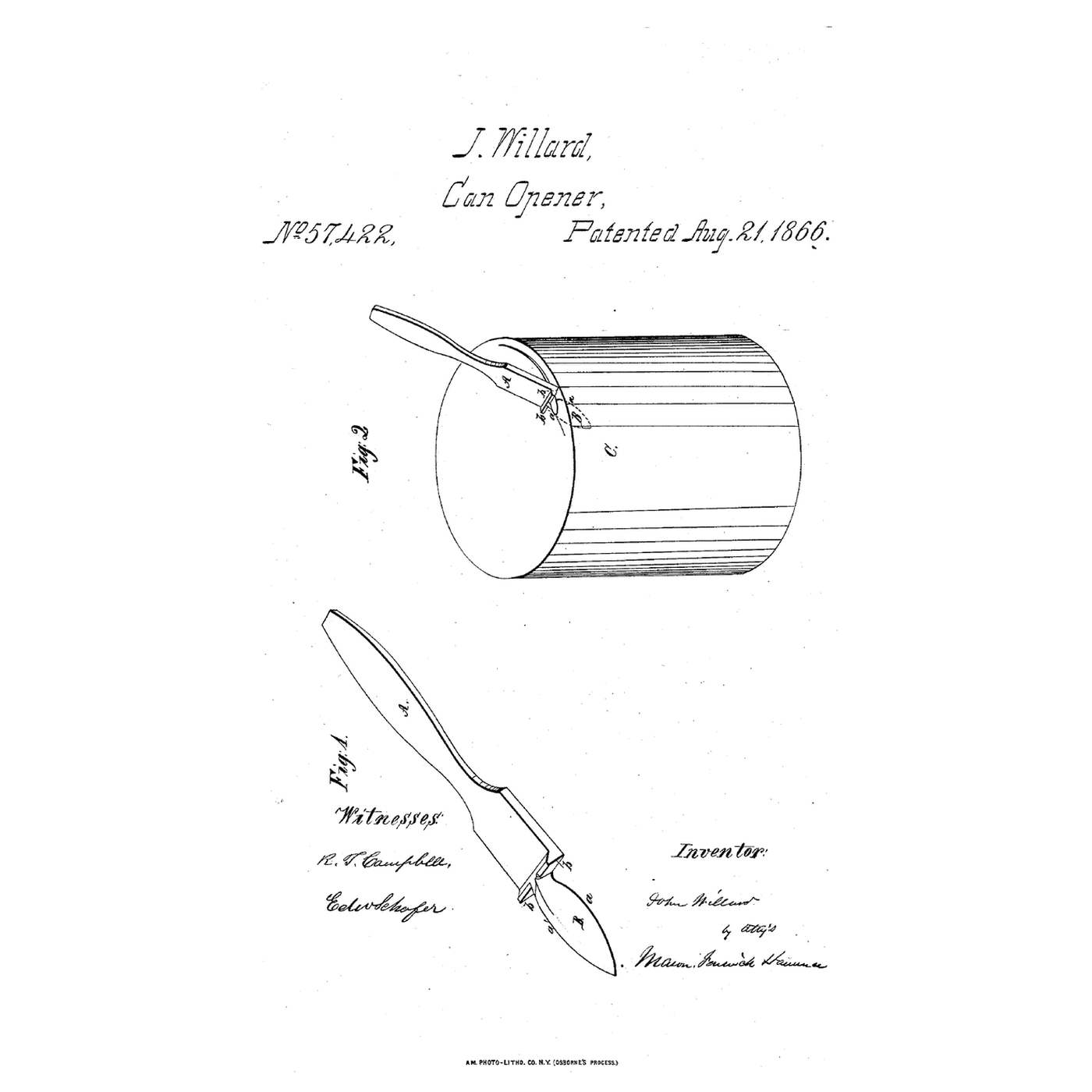
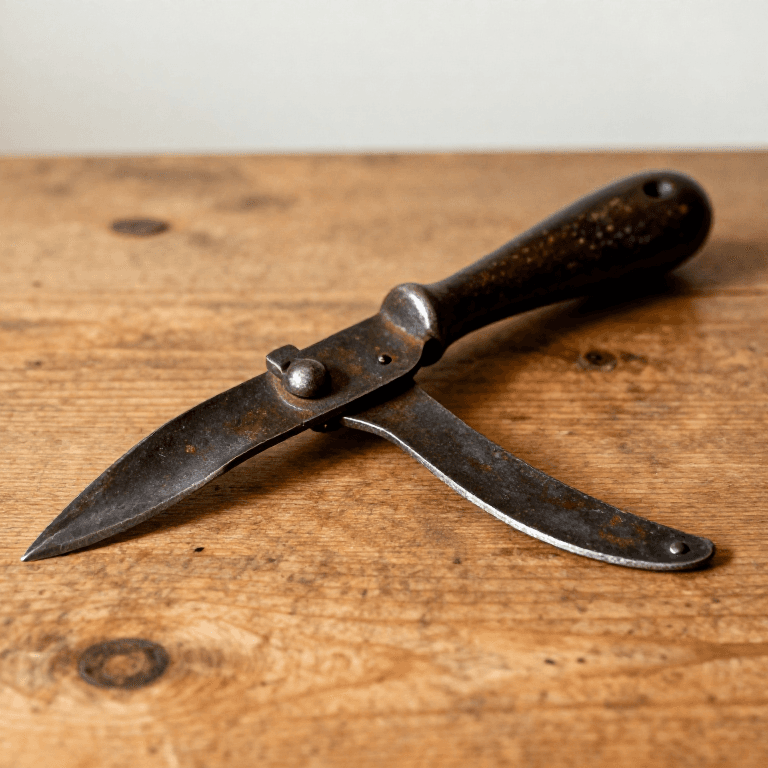
A single blade before it
A single blade before it
The embedded blueprint cuts a can top a slit at a time with one blade. McFarland rings the blade round into teeth so one blow cuts the whole opening.
3
3
Read US 64,891
Read US 64,891
"In operation the tool is placed on the head of the can, and the points of the teeth driven in by a smart blow, and the cutters forced down until their forks or bases have cut through the can, when a piece will have been cut out of the form of the cutters."
"The teeth being bevelled on the inside tend to compress the plug removed, and cause it to remain inside the cutter, thus facilitating its removal from the can."
4
4
Cut and mark the tube
Cut and mark the tube
Cut 40 mm of 25 mm steel tube. Mark six teeth round one end, 12 mm tall, their bases touching.
Bahan untuk langkah ini:
 Tiub keluli1 keping
Alatan diperlukan:
 Gergaji Besi
 Ragum Bangku
 Penanda Kekal
 Pembaris
5
5
File the teeth
File the teeth
Saw a V between each pair of marks and file the teeth to points. Bevel each tooth's inside edge with a round needle file; leave the outside flush.
Alatan diperlukan:
Gergaji Besi Kikir (Kikir Tangan)
 Set Kikir JarumRagum Bangku
 Cermin Mata Keselamatan Jernih
6
6
Fit the handle
Fit the handle
Sand a hardwood dowel to fit the tube's other end, glue 20 mm of it in with epoxy, and leave 100 mm as the handle.
Bahan untuk langkah ini:
 Pasak kayu keras1 keping
 Epoksi dua komponen1 keping
Alatan diperlukan:
 Kertas Pasir
 Angkup Digital 6 Inci
7
7
The build in 3D
The build in 3D
FreeCAD model of this build, not of the patent: a 25 mm steel tube with six 12 mm pointed teeth bevelled inside, on a hardwood handle.
8
8
Punch a can top
Punch a can top
Stand a sealed can on a hardwood block. Set the teeth on its top and strike the handle once with the mallet; count the blows needed, and measure the plug with the caliper.
Bahan untuk langkah ini:
 Tin1 keping
 Blok Kayu Keras1 keping
Alatan diperlukan:
 Tukul getahAngkup Digital 6 Inci
 Sarung Tangan Kerja KulitCermin Mata Keselamatan Jernih
9
9
Teeth that bend, skid or leave the plug
Teeth that bend, skid or leave the plug
Single-blow can opener troubleshooting.
Flow
Loading...
10
10
History and honest limits
History and honest limits
**Thomas A. McFarland** of Meadville, Pennsylvania, received US 64,891, dated 21 May 1867, for opening oyster, fruit and other cans. The cutters are curved to fit a shoulder on the handle's head and fastened by screws; they may be one piece or sections. He disclaimed cutting an opening broadly, single shear-like cutters, and cork borers with spring handles, and claimed the handle and cutters cutting a plug at a single blow.
**Honest limits.** Mild steel tube is not hardened; the notebook's shear figures are estimates. Your blow counts are the result.
Bahan
5- 1 kepingPemegang Tempat
- 1 kepingPemegang Tempat
- 1 kepingPemegang Tempat
- 1 kepingPemegang Tempat
- 1 kepingPemegang Tempat
Alatan Diperlukan
11- Pemegang Tempat
- Pemegang Tempat
- Pemegang Tempat
- Pemegang Tempat
- Pemegang Tempat
- Pemegang Tempat
- Pemegang Tempat
- Pemegang Tempat
- Pemegang Tempat
- Pemegang Tempat
- Pemegang Tempat
Fail reka bentuk
1Blueprint ini membuat
Blueprint berkaitan
Blueprint ini berkongsi pengetahuan — teknik, bahan atau prinsip


CC0 Domain Awam
Blueprint ini dikeluarkan di bawah CC0. Anda bebas menyalin, mengubah, mengedar, dan menggunakan karya ini untuk sebarang tujuan, tanpa meminta kebenaran.
Sokong Pembuat dengan membeli produk melalui Blueprint mereka di mana mereka memperoleh Komisen Pembuat ditetapkan oleh Penjual, atau cipta iterasi baru Blueprint ini dan sertakan ia sebagai sambungan dalam Blueprint anda sendiri untuk berkongsi hasil.