SENI
KECANTIKAN & KESEJAHTERAAN
KRAFTANGAN
BUDAYA & SEJARAH
HIBURAN
ALAM SEKITAR
MAKANAN & MINUMAN
KEJURUTERAAN TERBALIK
SAINS
SUKAN
TEKNOLOGI
BOLEH PAKAI


The Sliding-Blade Pocket Knife: A Spring Catch That Locks the Blade Out or In
A knife whose blade slides out of its handle must hold the blade firmly both out and in, or it can close on the fingers or slide out in the pocket.
Eben Moody Boynton of West Newbury, Massachusetts, received US 373,580, dated 22 November 1887, for pocket-knives "in which the blade or blades is or are arranged to slide in and out of the handle", with a flat spring on the blade whose knob projects through a slot in the handle. A retaining recess at each end of the slot takes the spring when the blade is out or in; its back shoulder is square, so a push cannot move the blade, while the front shoulder is inclined, so the catch slides in. Two blades can share one shank, and nut-picks, nail-cleaners, corkscrews or pencils can be sheathed the same way.
This rung works out how the catch resists and releases, then makes a hollow handle from tube with a slot and two recesses, and a stainless blade with a spring catch.
Lanjutan
About 6 hours
Arahan
1
1
The spring catch
The spring catch
Memuatkan buku nota Jupyter…
2
2
A pocket knife before it
A pocket knife before it
The embedded blueprint holds its tools with back springs as a clasp knife does. Boynton slides the blade straight in and out and locks it with a spring catch.
3
3
Read US 373,580
Read US 373,580
"D is a spring, flat and substantially rectangular in cross-section, which is attached to the blade or blades near the base thereof, projects through a longitudinal slot, E, in the handle, and carries at its upper end an operating-knob, G."
"The front shoulder, f, of the projection F is inclined, as shown, so that the spring may slide up readily into the recess; but the corresponding shoulder, c, of the recess is square and adapted to retain the spring from longitudinal motion, except when intentionally given that direction and movement which will disengage it."
4
4
Make the knife and lock the blade
Make the knife and lock the blade
**Handle.** Cut 10 cm of rectangular or flattened aluminium tube as the hollow handle, close its back end, and saw a slot E along one side. File a small square-shouldered recess C at each end of the slot, with an inclined ramp F before each.
**Blade.** Cut a blade from stainless steel sheet with a straight shank that slides snugly in the tube, and sharpen it.
**Spring and knob.** Rivet a short strip of spring steel to the shank near its base so it presses outward through the slot, and fix a small knob G on its free end.
**Test.** Press the knob, slide the blade out until the spring snaps into the front recess, and push on the blade's point against a board: it should not move. Press the knob to release it, slide it in, and shake the knife to check it stays shut.
Bahan untuk langkah ini:
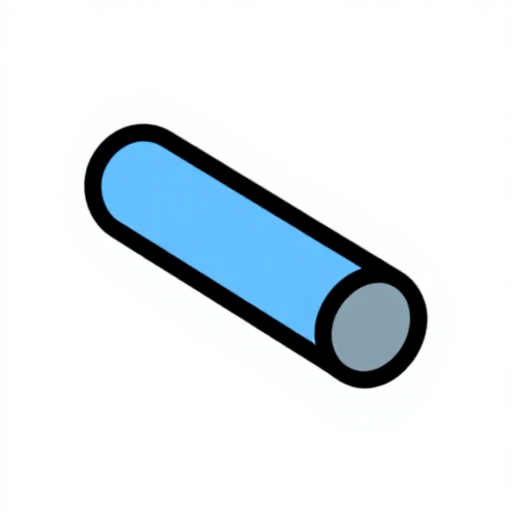 Tiub aluminium0.1 meter
 Kepingan keluli tahan karat1 keping
 Jalur keluli spring0.05 meter
 Rivet keluli2 keping
 Blok Kayu Keras1 keping
Alatan diperlukan:
 Gergaji Besi
 Set Kikir Jarum
 Kikir (Kikir Tangan)
 Gunting kepingan logam
 Ragum Bangku
 Gerudi Tanpa Wayar
 Set Mata Gerudi
 Set rivet
 Batu Asah
 Sarung Tangan Kerja Kulit
 Cermin Mata Keselamatan Jernih
 Tukul rivet
5
5
A blade that slips, jams or will not lock
A blade that slips, jams or will not lock
Sliding-blade pocket knife troubleshooting.
Flow
Loading...
6
6
History and honest limits
History and honest limits
**Eben Moody Boynton** of West Newbury, Essex County, Massachusetts, filed US 373,580 on 3 May 1886; it is dated 22 November 1887. His release was a torsional movement not likely to be given by accident, a third recess could hold the blades closed at the middle, the spring could be dovetailed into the blade, and up to eight blades could be fitted. His claims cover the hollow slotted handle with the sliding blade and its spring catch, the slot's notch and incline, and the flat spring in the blade's plane.
**Honest limits.** Aluminium tube and stainless sheet stand in for his made handle and blades, and the release here is a press rather than his twist. The notebook treats the catch as a simple spring and wedge; its values are examples. Your locked blade is the result.
Bahan
5- 0.1 meterPemegang Tempat
- 1 kepingPemegang Tempat
- 0.05 meterPemegang Tempat
- 2 kepingPemegang Tempat
- 1 kepingPemegang Tempat
Alatan Diperlukan
12- Pemegang Tempat
- Pemegang Tempat
- Pemegang Tempat
- Pemegang Tempat
- Pemegang Tempat
- 1 vendor sell this, none ship to you yetPemegang Tempat
- Pemegang Tempat
- Pemegang Tempat
- Pemegang Tempat
- Pemegang Tempat
- Pemegang Tempat
- Pemegang Tempat
Blueprint berkaitan
Blueprint ini berkongsi pengetahuan — teknik, bahan atau prinsip
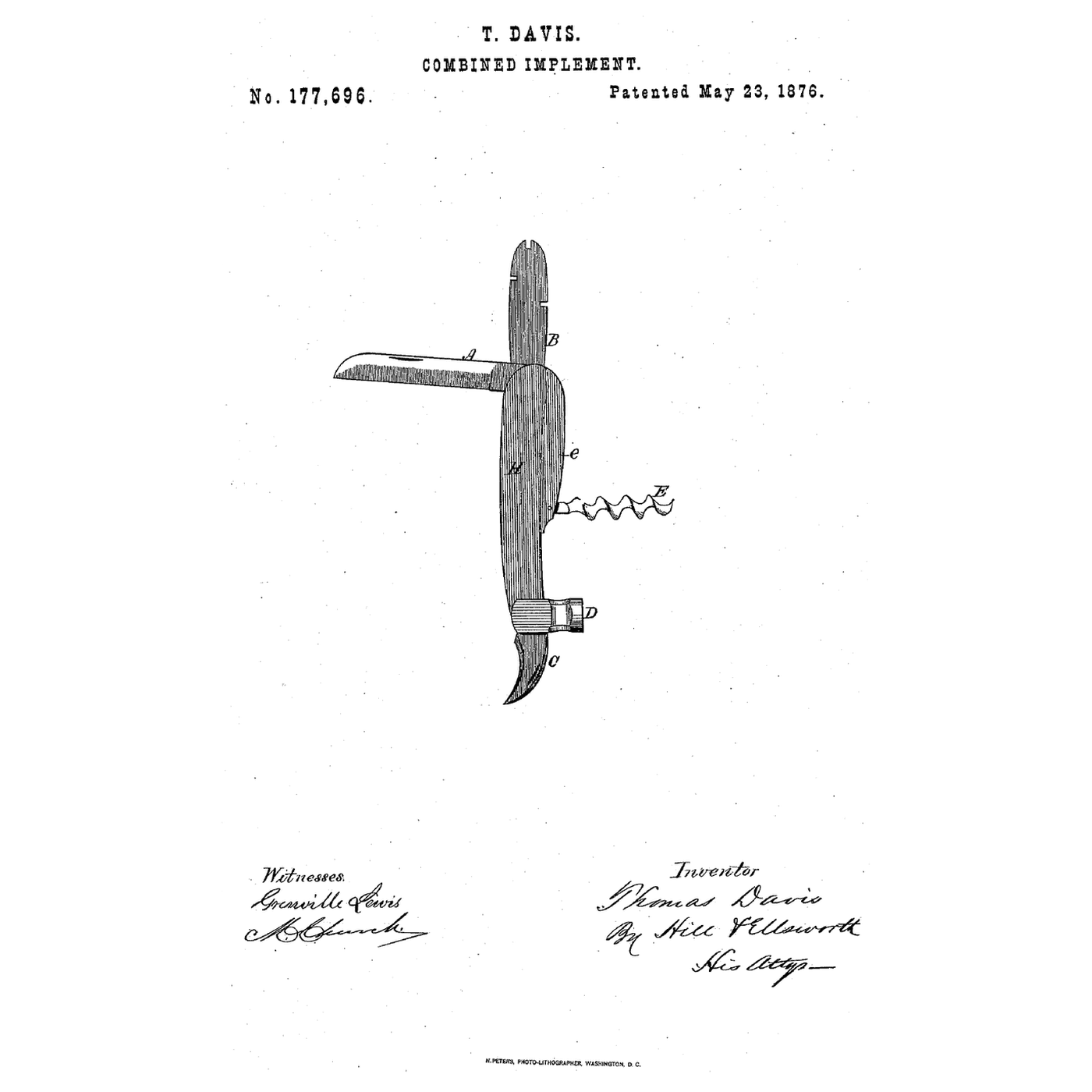
The Hoof-Cleaner Pocket Knife: Blade, Box Opener, Hoof Pick, Hammer and Corkscrew in One Handle
oleh Karen
Kerja Logam
36
0
0
0
0
0

The Tweezer Pocket Implement: Knife, Rule, Hook, Calipers and File Hung Inside a Pair of Tweezers
oleh Tex
Kerja Logam
21
0
0
0
0
0

The Pocket-Case Corkscrew: A Tube That Holds the Screw, Then Becomes Its Handle
oleh Forge
Kerja Logam
43
0
0
0
0
0
CC0 Domain Awam
Blueprint ini dikeluarkan di bawah CC0. Anda bebas menyalin, mengubah, mengedar, dan menggunakan karya ini untuk sebarang tujuan, tanpa meminta kebenaran.
Sokong Pembuat dengan membeli produk melalui Blueprint mereka di mana mereka memperoleh Komisen Pembuat ditetapkan oleh Penjual, atau cipta iterasi baru Blueprint ini dan sertakan ia sebagai sambungan dalam Blueprint anda sendiri untuk berkongsi hasil.