SENI
KECANTIKAN & KESEJAHTERAAN
KRAFTANGAN
BUDAYA & SEJARAH
HIBURAN
ALAM SEKITAR
MAKANAN & MINUMAN
KEJURUTERAAN TERBALIK
SAINS
SUKAN
TEKNOLOGI
BOLEH PAKAI
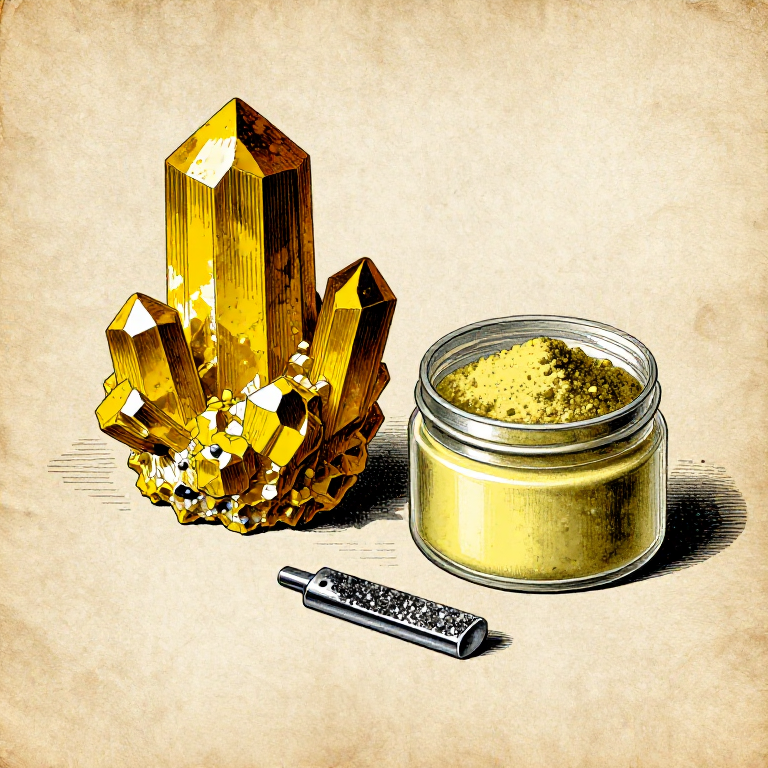
Understanding Cerium from Bastnasite — The Self-Cleaning Rare Earth
Pertengahan
Arahan
1
1
Understand Cerium's Discovery
Understand Cerium's Discovery
Cerium was discovered independently by Jöns Jacob Berzelius and Wilhelm Hisinger in Sweden, and Martin Heinrich Klaproth in Germany, both in 1803. They named it after the asteroid Ceres, itself discovered just two years earlier. The 'cerium' they isolated was actually a mixture of cerium, lanthanum, and other rare earths — it took another 36 years before Mosander separated lanthanum from cerium oxide.
2
2
Identify Bastnasite and Other Cerium Minerals
Identify Bastnasite and Other Cerium Minerals
Cerium is the most abundant rare earth element at 66 ppm in Earth's crust — more common than copper. Bastnasite (Ce,La)CO₃F is the primary commercial source, mined at Bayan Obo (China) and Mountain Pass (USA). Monazite (Ce,La,Nd)PO₄ contains 45-50% cerium oxide. Cerium also occurs in allanite and loparite. Global cerium oxide production exceeds 50,000 tonnes annually — more than all other individual rare earths combined.
Bahan untuk langkah ini:
 Spesimen bastnasit
Alatan diperlukan:
 Kanta Tangan 10x
 Plat Coretan (Porselin Tidak Bersalut)Kanta Tangan 10xPlat Coretan (Porselin Tidak Bersalut)
 Jarum Kekerasan Mohs
3
3
Understand Cerium's Unique +4 Oxidation State
Understand Cerium's Unique +4 Oxidation State
Among the lanthanides, cerium is unique in forming a stable +4 oxidation state alongside the typical +3. This occurs because Ce⁴⁺ achieves an empty 4f shell (noble gas configuration of xenon). Ceric ammonium nitrate (CAN) is a powerful, selective oxidizer used extensively in organic synthesis. The Ce³⁺/Ce⁴⁺ redox couple is what makes cerium so versatile — it can both donate and accept electrons depending on conditions.
4
4
Explore Glass Polishing with Cerium Oxide
Explore Glass Polishing with Cerium Oxide
Cerium oxide (CeO₂) is the premier glass polishing compound, used on every telescope mirror, precision lens, and smartphone screen. It works through a combined chemical-mechanical action: the cerium chemically softens the silica surface while abrasive action removes material. CeO₂ polishes glass 5-10 times faster than iron oxide (jeweler's rouge) and produces a superior surface finish. Optical fabrication consumed 30% of cerium production.
Alatan diperlukan:
 Gogal Keselamatan Tertutup
5
5
Discover Automotive Catalyst Applications
Discover Automotive Catalyst Applications
Cerium oxide is the oxygen storage component in three-way catalytic converters. CeO₂ cycles between Ce⁴⁺ and Ce³⁺, absorbing excess oxygen under lean conditions and releasing it under rich conditions — smoothing out the air-fuel ratio fluctuations that would otherwise reduce catalyst efficiency. Every automotive catalytic converter contains cerium-zirconium mixed oxide as a washcoat layer supporting the platinum group metal catalysts.
6
6
Understand UV-Absorbing Glass
Understand UV-Absorbing Glass
Adding 1-2% cerium oxide to glass blocks ultraviolet radiation while remaining transparent to visible light. This protects museum artifacts, surgical instruments (UV sterilizers), and the human eye. Cerium-containing glass is used in welder's goggles, TV faceplates, and UV-blocking windows. The Ce³⁺ ion absorbs strongly at 300-320 nm, precisely the UV wavelength range most damaging to biological tissue and organic pigments.
7
7
Survey Self-Cleaning Surface Technology
Survey Self-Cleaning Surface Technology
Thin CeO₂ coatings on glass and ceramic surfaces become photocatalytic under UV light — decomposing organic contaminants into CO₂ and water. Self-cleaning oven linings use cerium oxide catalysts that burn off food residues at lower temperatures. Cerium oxide nanoparticles are being studied as antioxidant therapeutics: they scavenge reactive oxygen species in biological systems, potentially treating neurodegenerative diseases.
8
8
Examine Mischmetal and Flint Applications
Examine Mischmetal and Flint Applications
Cerium is the primary component (50%) of mischmetal and ferrocerium lighter flints. Carl Auer von Welsbach patented ferrocerium in 1903 — it was the first major commercial application of any rare earth element. Cerium's pyrophoricity (tendency to spark when struck) comes from its low ignition temperature and high heat of combustion. Mischmetal is also added to aluminum and magnesium alloys to improve high-temperature creep resistance.
9
9
Explore Diesel Fuel Additives
Explore Diesel Fuel Additives
Cerium-based fuel-borne catalysts (Envirox, EOLYS) are added to diesel fuel at 5-10 ppm to reduce soot emissions by 10-15% and lower the temperature at which diesel particulate filters regenerate. The nanoparticle cerium oxide embeds in soot particles during combustion, catalyzing their oxidation at 350°C instead of 600°C. PSA Peugeot-Citroën pioneered this technology in 2000, and most modern diesel vehicles use cerium-assisted DPF regeneration.
10
10
Document Findings and Industrial Context
Document Findings and Industrial Context
Record cerium's key data: atomic number 58, density 6.77 g/cm³, melting point 799°C, silvery metal that tarnishes to yellow-brown oxide. Cerium is the cheapest and most abundant lanthanide — priced at $1-3 per kilogram of oxide. Its dominance in rare earth deposits means cerium stockpiles grow whenever other rare earths are extracted. Finding new high-volume applications for surplus cerium is an ongoing challenge in rare earth economics.
Alatan diperlukan:
 Penimbang Jitu
11
11
Ore grade: how much bastnasite per kilogram
Ore grade: how much bastnasite per kilogram
Memuatkan buku nota Jupyter…
Bahan
1- 1 kepingPemegang Tempat
Alatan Diperlukan
5- Pemegang Tempat
- Pemegang Tempat
- Pemegang Tempat
- Pemegang Tempat
- Pemegang Tempat
Bahan Blueprint Bersambung
10% Atribusi
Understanding Lanthanum from Monazite — The Hidden Element That Bends Light
oleh Peter
Perlombongan
19
0
0
0
8
0

Berbahaya
10% Atribusi
Extracting Neodymium-Rich Rare Earth Oxide from Monazite — The Magnet Metal That Reshaped Technology
oleh Peter
Perlombongan
38
0
0
0
11
0
Berbahaya
10% Atribusi
Understanding Yttrium from Xenotime — The Rare Earth That Lights Red Screens
oleh Peter
Perlombongan
43
0
0
0
12
0
10% Atribusi
Extracting Iron from Hematite — Bloomery Smelting from Ore to Bloom
oleh Peter
Kerja Logam
159
0
0
0
12
0
10% Atribusi
Extracting Manganese from Pyrolusite — The Cave Painter's Black That Cleans Glass
oleh Peter
Kerja Logam
64
0
0
0
4
0
Blueprint berkaitan
Blueprint ini berkongsi pengetahuan — teknik, bahan atau prinsip
Berbahaya
Understanding Titanium Extraction from Ilmenite — The Impossible Metal to Smelt
oleh Peter
Perlombongan
61
0
0
0
3
0
Recognizing Silicon in Nature — From Flint Nodules to Quartz Crystals
oleh Peter
Purba
80
0
0
0
1
0
Berbahaya
Understanding Uranium from Uraninite — The Element That Changed Everything
oleh Peter
Perlombongan
85
0
0
0
8
0
CC0 Domain Awam
Blueprint ini dikeluarkan di bawah CC0. Anda bebas menyalin, mengubah, mengedar, dan menggunakan karya ini untuk sebarang tujuan, tanpa meminta kebenaran.
Sokong Pembuat dengan membeli produk melalui Blueprint mereka di mana mereka memperoleh Komisen Pembuat ditetapkan oleh Penjual, atau cipta iterasi baru Blueprint ini dan sertakan ia sebagai sambungan dalam Blueprint anda sendiri untuk berkongsi hasil.