SENI
KECANTIKAN & KESEJAHTERAAN
KRAFTANGAN
BUDAYA & SEJARAH
HIBURAN
ALAM SEKITAR
MAKANAN & MINUMAN
KEJURUTERAAN TERBALIK
SAINS
SUKAN
TEKNOLOGI
BOLEH PAKAI
Understanding Krypton from Air Separation — The Hidden Gas That Once Defined the Meter
Pertengahan
Arahan
1
1
Understand Krypton's Discovery
Understand Krypton's Discovery
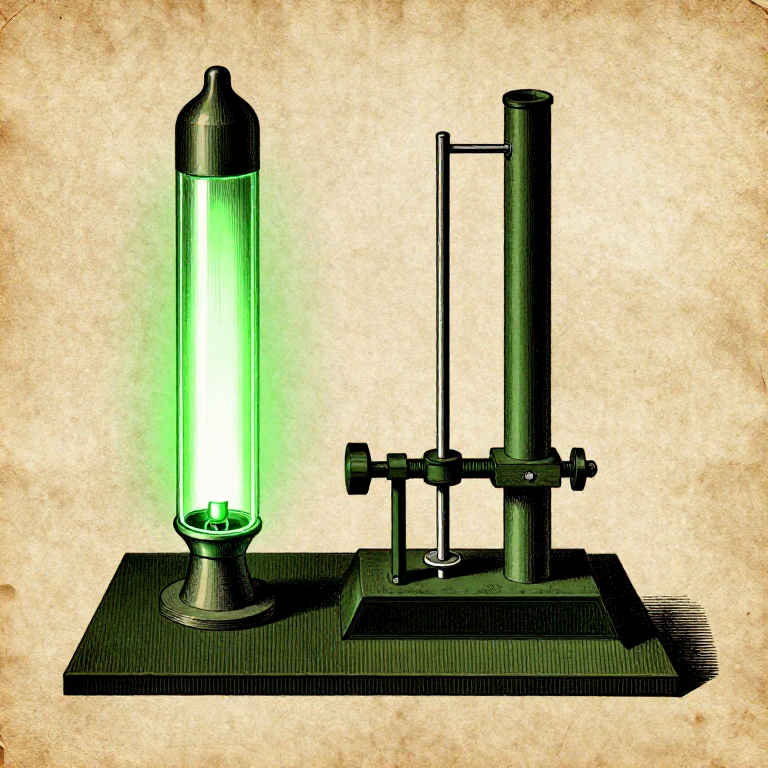
William Ramsay and Morris Travers discovered krypton on May 30, 1898, by evaporating liquid air and examining the fraction that boiled between argon and xenon. The gas produced a brilliant greenish-white glow in a discharge tube with sharp spectral lines distinct from any known element. They named it krypton from the Greek 'kryptos' (hidden) because it had been concealed within the atmosphere, undetected despite being present in every breath.
2
2
Identify Krypton in Earth's Atmosphere
Identify Krypton in Earth's Atmosphere
Krypton makes up just 1.14 ppm of Earth's atmosphere — approximately 1 part in 877,000. It is produced by slow neutron capture in stars and distributed throughout the universe. On Earth, some krypton isotopes (Kr-81, Kr-85) are produced by nuclear fission. All commercial krypton is extracted as a minor byproduct of cryogenic air separation, collected alongside xenon in the heavy noble gas fraction. Global production is approximately 15 tonnes per year.
Alatan diperlukan:
 Set tiub nyahcas gas (6 unsur)
3
3
Examine the Former Definition of the Meter
Examine the Former Definition of the Meter
From 1960 to 1983, the meter was defined as 1,650,763.73 wavelengths of the orange-red emission line of krypton-86 in vacuum. This replaced the physical platinum-iridium meter bar that had defined the unit since 1889. Krypton-86 was chosen because its spectral line is exceptionally narrow and reproducible — any laboratory worldwide could reproduce the exact same wavelength. The meter was later redefined in terms of the speed of light in 1983.
4
4
Discover High-Performance Lighting Applications
Discover High-Performance Lighting Applications
Krypton gas fill in incandescent bulbs allows the filament to operate at higher temperatures, producing brighter and whiter light with 10% greater efficiency than argon-filled bulbs. Krypton fluoride (KrF) excimer lasers emit deep ultraviolet light at 248 nm and are used in semiconductor photolithography for patterning chip features. Aircraft runway approach lighting uses krypton flash tubes for their intense, reliable white light output visible in poor weather.
5
5
Understand Window Insulation Applications
Understand Window Insulation Applications
Krypton gas fill in double and triple-glazed windows provides superior insulation to argon — krypton's thermal conductivity is 36% that of air, compared to argon's 67%. Krypton-filled windows achieve the same insulation in a thinner gap (10 mm vs 16 mm for argon), making them ideal for slim-profile frames. The premium price (krypton costs 200 times more than argon per liter) limits its use to high-performance applications where thin profiles are essential.
6
6
Explore Nuclear Monitoring Applications
Explore Nuclear Monitoring Applications
Krypton-85 (half-life 10.76 years) is a fission product released during nuclear fuel reprocessing. Monitoring atmospheric Kr-85 levels allows detection of covert nuclear weapons programs — any country reprocessing spent fuel to extract plutonium releases Kr-85 that can be detected thousands of kilometers away. The Comprehensive Nuclear-Test-Ban Treaty Organization monitors global Kr-85 as part of its International Monitoring System for treaty verification.
7
7
Examine Krypton in Ion Propulsion
Examine Krypton in Ion Propulsion
SpaceX's Starlink satellites use krypton as the propellant for their Hall-effect ion thrusters. Krypton was chosen over the traditional xenon because it is cheaper and more abundant, though slightly less efficient. Each Starlink satellite carries several kilograms of krypton for station-keeping and deorbiting maneuvers. With over 5,000 Starlink satellites in orbit, SpaceX has become the world's largest consumer of krypton for space propulsion.
8
8
Survey MRI and Medical Applications
Survey MRI and Medical Applications
Hyperpolarized krypton-83 is used in MRI imaging of lung function. Patients inhale the gas and are scanned immediately — the krypton fills the airspaces and reveals ventilation patterns with extraordinary detail. This technique diagnoses early-stage chronic obstructive pulmonary disease (COPD) and asthma before conventional tests show abnormalities. Krypton MRI can detect lung function changes caused by a single cigarette.
Alatan diperlukan:
 Penimbang Jitu
9
9
Understand Groundwater Dating with Kr-81
Understand Groundwater Dating with Kr-81
Krypton-81 (half-life 229,000 years) is a cosmogenic isotope used to date ancient groundwater between 50,000 and 1,000,000 years old — filling a gap where radiocarbon dating is too short and other methods are unreliable. Atom trap trace analysis (ATTA) counts individual Kr-81 atoms in water samples. This technique has revealed that some of the world's largest aquifers in the Sahara and Nubian Sandstone contain water that fell as rain over 500,000 years ago.
10
10
Document Findings and Modern Significance
Document Findings and Modern Significance
Record krypton's key data: atomic number 36, density 3.749 g/L, boiling point -153.4°C, colorless noble gas with white-green glow. Krypton's story spans from defining the meter to propelling satellites and detecting covert nuclear programs. Its growing use in satellite propulsion is transforming this once-obscure gas into a strategically important aerospace material. SpaceX's Starlink alone may eventually consume a significant fraction of annual krypton production.
11
11
Half-life: what is left, and when
Half-life: what is left, and when
Memuatkan buku nota Jupyter…
Alatan Diperlukan
2- Pemegang Tempat
- Pemegang Tempat
Bahan Blueprint Bersambung

10% Atribusi
Understanding Argon from Air Separation — The Invisible Shield Gas
oleh Peter
Perlombongan
13
0
0
0
2
0
10% Atribusi
Understanding Neon from Air Separation — The Gas That Lit the Modern City
oleh Peter
Perlombongan
36
0
0
0
3
0
10% Atribusi
Understanding Helium from Natural Gas — The Element That Escapes Earth Forever
oleh Peter
Perlombongan
21
0
0
0
4
0

10% Atribusi
Understanding Bromine from Seawater Brine — The Only Liquid Non-Metal
oleh Peter
Laut
68
0
0
0
2
0
Berbahaya
10% Atribusi
Understanding Fluorine from Fluorite — The Most Reactive Element on Earth
oleh Peter
Perlombongan
40
0
0
0
4
0
Blueprint berkaitan
Blueprint ini berkongsi pengetahuan — teknik, bahan atau prinsip

CC0 Domain Awam
Blueprint ini dikeluarkan di bawah CC0. Anda bebas menyalin, mengubah, mengedar, dan menggunakan karya ini untuk sebarang tujuan, tanpa meminta kebenaran.
Sokong Pembuat dengan membeli produk melalui Blueprint mereka di mana mereka memperoleh Komisen Pembuat ditetapkan oleh Penjual, atau cipta iterasi baru Blueprint ini dan sertakan ia sebagai sambungan dalam Blueprint anda sendiri untuk berkongsi hasil.