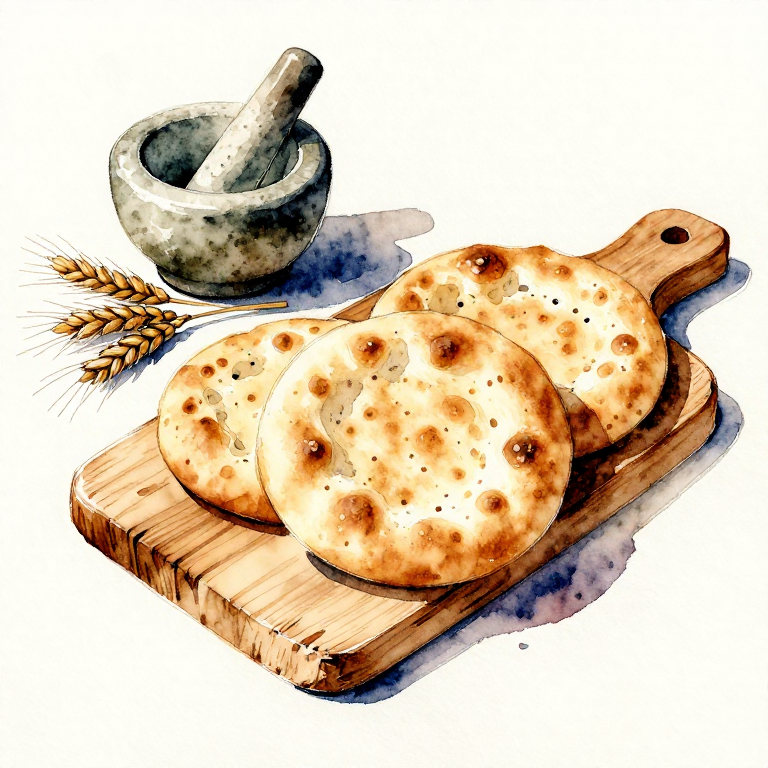


Viking Barley Flatbread — Baking on an Iron Griddle
Arahan
Grind Barley on a Quern
Grind Barley on a Quern
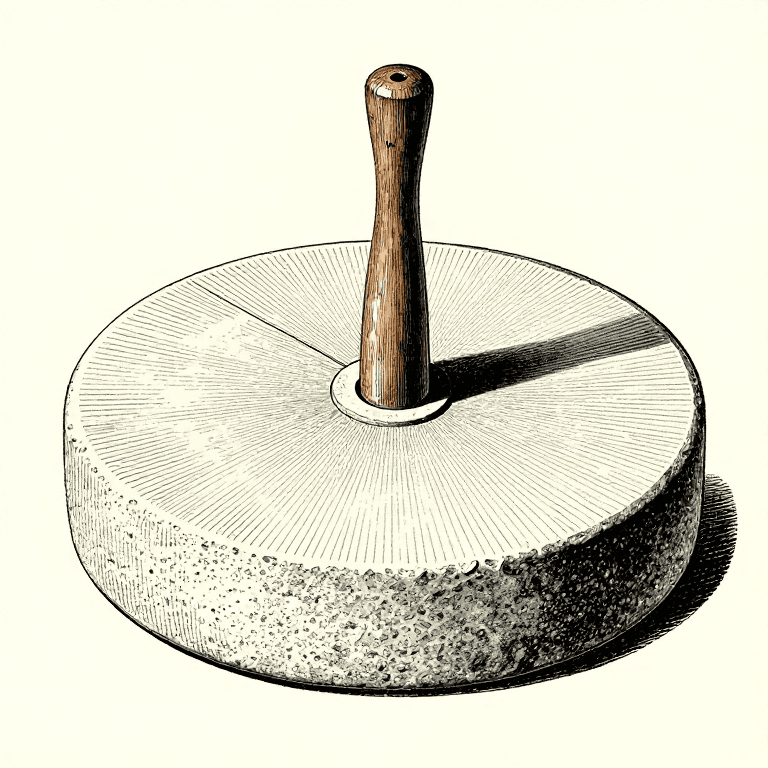
Pour a handful of dried barley grain into the quern stone hopper (the hole in the center of the top stone). Turn the runner stone steadily clockwise by the handle while feeding grain with the other hand. The grain passes between the two stone faces and is crushed into coarse flour that emerges at the edges.
Collect the flour on a cloth spread below the quern. For finer flour, pass the meal through the quern a second time. Sift through a cloth to remove any remaining large husks. For Viking-era flatbread, a somewhat coarse grind is traditional and provides a nutty texture.
Bahan untuk langkah ini:
 Bijirin barli~500g (yields ~400g flour) g
 Susu mentega~200ml ml
 Garam Laut HalusPinch keping
Alatan diperlukan:
 Batu kisar tangan
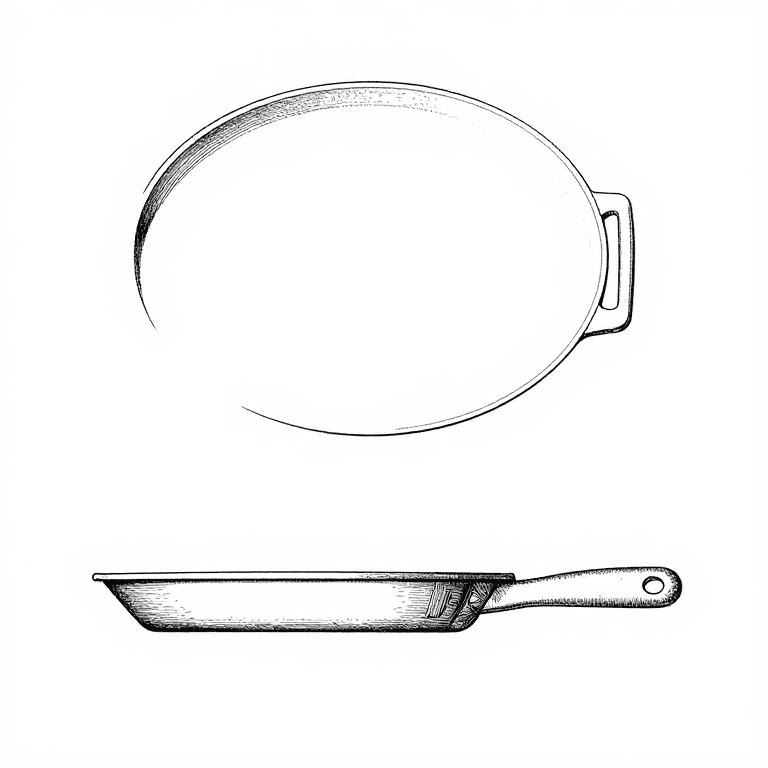
 Kuali leper besi
 Tungku (Api Tempa)
Mix the Dough
Mix the Dough
Combine barley flour with water or buttermilk in a mixing bowl or trough, using roughly a 2:1 ratio of flour to liquid. Add a small pinch of salt if available. Mix until a cohesive dough forms.
Barley flour contains very little gluten compared to wheat, so the dough will be crumbly and dense rather than elastic. Work it firmly with your hands, pressing and folding until it holds together. If the dough cracks apart, add a tiny amount more liquid. If too wet and sticky, add more flour. Buttermilk gives a slightly richer flavor and a bit more binding than plain water.
Shape the Flatbreads
Shape the Flatbreads
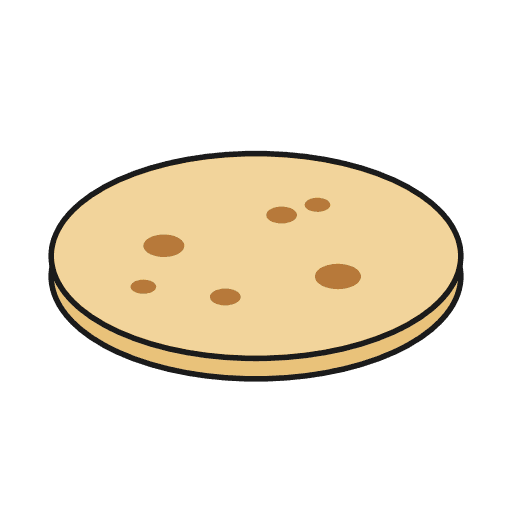
Divide the dough into palm-sized portions (approximately 80-100g each). On a surface dusted with barley flour, flatten each portion into a round disc approximately 8-12cm in diameter and about 5mm thick. Press firmly with your palms — barley dough does not roll out as easily as wheat dough.
Keep the thickness even across each round for consistent baking. Slightly thicker edges help prevent the bread from becoming too brittle at the rim.
Heat the Griddle
Heat the Griddle
Place the iron griddle over the hearth fire, supported on stones or an iron trivet. Allow it to heat for several minutes until the surface is thoroughly hot — test by flicking a few drops of water onto the surface. If they sizzle and evaporate within a second, the griddle is ready.
The griddle should be hot but not smoking excessively. Too low a temperature makes the bread pale and doughy; too high scorches the outside while leaving the center raw.
Bake the Flatbread
Bake the Flatbread
Carefully place shaped dough rounds onto the hot griddle. Cook for 2-3 minutes per side until brown spots appear on the surface and the bread feels firm when pressed. The bread should be dry and slightly crisp on the outside, dense and crumbly inside.
Flip using a flat wooden spatula or tongs. Barley flatbread is fragile — handle gently. Stack finished breads on a cloth to keep warm. Serve immediately with butter, skyr, smoked meat, or alongside mead. The bread keeps for several days and can be re-crisped over the fire.
Bahan
3- ~500g (yields ~400g flour) gPemegang Tempat
- ~200ml mlPemegang Tempat
- Pinch kepingPemegang Tempat
Alatan Diperlukan
3- Pemegang Tempat
- Pemegang Tempat
- Pemegang Tempat
Blueprint ini membuat
Blueprint berkaitan
Blueprint ini berkongsi pengetahuan — teknik, bahan atau prinsip

CC0 Domain Awam
Blueprint ini dikeluarkan di bawah CC0. Anda bebas menyalin, mengubah, mengedar, dan menggunakan karya ini untuk sebarang tujuan, tanpa meminta kebenaran.
Sokong Pembuat dengan membeli produk melalui Blueprint mereka di mana mereka memperoleh Komisen Pembuat ditetapkan oleh Penjual, atau cipta iterasi baru Blueprint ini dan sertakan ia sebagai sambungan dalam Blueprint anda sendiri untuk berkongsi hasil.