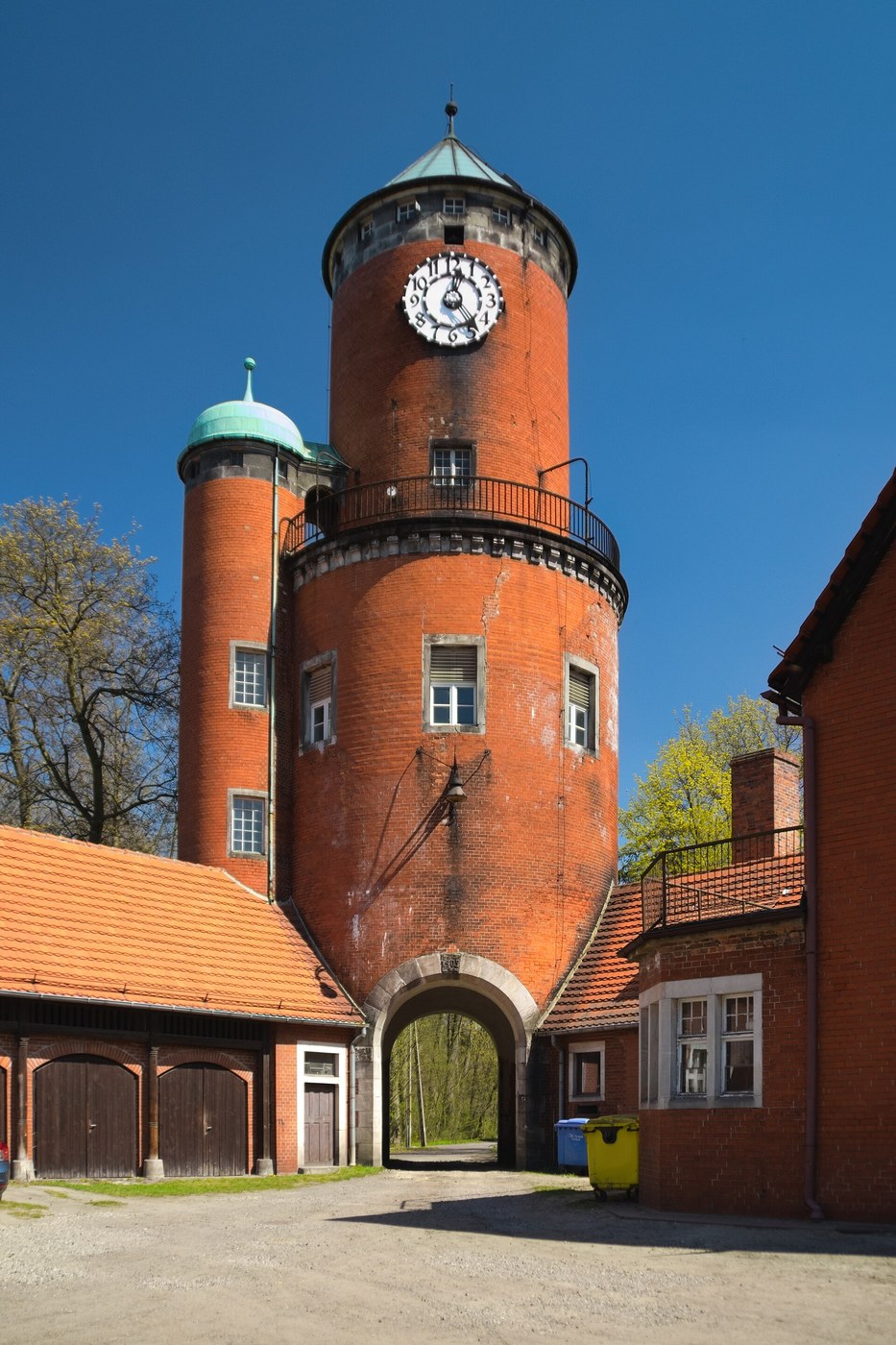


The Water Tower
A town's water demand is not steady. It collapses overnight and spikes at breakfast, and it can jump enormously in seconds when a fire main opens. A pump sized for the peak spends most of its life idle and oversized; a pump sized for the average fails at the moment it is needed most.
The water tower answers this by storing not water but pressure. Lift water into a tank on a tower and every litre up there is a litre already pressurised, waiting, with no machinery running.
The pressure is set entirely by height, not by volume: roughly 1 bar for every 10 metres of elevation. A full tank and a nearly empty one deliver almost the same pressure, because the surface has barely moved compared to the height of the tower. That constancy is why the tank is tall and slim rather than a wide reservoir on a hill.
So the pumps can run steadily at the average rate, day and night, filling the tower during the quiet hours and letting it discharge during the busy ones. The tower absorbs every fluctuation, and it keeps supplying at full pressure during a power cut, which no pump can do.
It is the hydraulic accumulator of the earlier batch, scaled to a town and using the town's own water as the weight.
Arahan
Prove pressure comes from height, not quantity
Prove pressure comes from height, not quantity
Take a tall narrow bottle and a wide shallow tray, and fill both to the same depth. Fit each with an identical outlet tube at the base and measure the jet distance or the flow rate.
Expect them to be the same, despite the tray holding far more water.
Now raise the narrow bottle higher and measure again. The flow increases.
Write the rule down: pressure = depth. Volume decides how long you can supply; height alone decides how hard.
Bahan untuk langkah ini:
 Tiub Silikon1 m
Alatan diperlukan:
 Pita Ukur
 Botol air
Convert height to pressure and check it against a real tower
Convert height to pressure and check it against a real tower
Compute the head needed for a usable mains pressure of 3 bar: about 30 metres.
Now look at a real water tower and estimate its height, or find the height of a local one.
Expect the numbers to agree closely — towers are 20 to 40 metres because that is what produces household pressure, not because of any structural preference.
Then note the consequence for a hilly town: the tower's height sets the pressure for everyone, so houses high on a hill get less and houses in the valley get more, which is why large networks are split into pressure zones.
Watch a steady pump serve an unsteady demand
Watch a steady pump serve an unsteady demand
Run a small pump at a constant slow rate into a raised container that has an outlet you open and close in bursts.
Log the tank level over several cycles of heavy and light draw.
Expect the level to fall during the bursts and recover between them, while the pump never changes.
Measure the outlet pressure throughout. It should stay nearly constant even while the level swings — which is the payoff. The pump is decoupled from the demand entirely, and can be sized for the average instead of the peak.
Cut the power and see what the tower is really for
Cut the power and see what the tower is really for
With the tank part full, switch the pump off and keep drawing.
Expect supply to continue at full pressure until the tank empties.
Measure how long. Then scale it: a tower typically holds around a day of average demand.
That reserve is not primarily a convenience. It is what keeps fire hydrants pressurised during a power failure, and what stops a network losing pressure — because a depressurised main draws groundwater in through every joint and contaminates the supply. The tower is a public health device as much as a hydraulic one.
Find the reason it must not sit still
Find the reason it must not sit still
Recall the chlorine residual blueprint: residual decays with time.
Compute the turnover of a tower holding a day's demand — the average water sits there for many hours, and water in a poorly designed tank can sit for far longer.
That is why tower inlets and outlets are arranged to force circulation rather than letting a stagnant pocket form, and why operators deliberately cycle levels instead of keeping tanks comfortably full.
A store of water is also a store of age, and age is the enemy of a disinfectant residual. The two blueprints constrain each other.
History & Context
History & Context
The same idea as the accumulator, with water as its own weight. Armstrong's hydraulic accumulator raised a hundred tonnes of iron to store pressure for dock cranes. A water tower raises the water itself. Both decouple a steady supply from a spiky demand, both deliver constant pressure regardless of state of charge, and both exist because sizing machinery for the peak is ruinous. Recognising that these are one idea is worth more than either blueprint alone.
Why towers exist at all where hills do not. Any town with high ground puts a covered reservoir on it and needs no tower — the hill is free. The tower is what you build on a plain. That is why they dominate the skylines of flat regions and are almost absent from hilly ones, and why the tower is often the tallest structure in a prairie town.
Gravity is also a failure-tolerance strategy. A pressurised system that depends on running pumps has a single point of failure with a power cord attached. A tower keeps working through a blackout, a pump failure, a control fault or a maintenance shutdown, because the energy was banked as height hours earlier. Modern variable-speed pumping is more efficient and increasingly replaces towers — and quietly trades that resilience for it, which is a real decision and not always a well-examined one.
Where the principle turns up elsewhere. The header tank in a loft, the cistern in the earlier blueprint, the tank on a steam locomotive's tender, the raised drip bag in a hospital, and pumped-storage hydroelectricity — which is a water tower the size of a mountain, storing a nation's electricity as height. Same physics, twelve orders of magnitude apart.
Honest limits. Towers are expensive to build and to maintain — inspection, painting, ice, and every one is a confined-space job. They are limited in volume by what a structure can carry, so they buffer daily variation rather than seasonal. And they must be covered and screened, because an open elevated tank is an invitation to birds, insects and anyone who fancies climbing it.
Bahan
1- 1 mPemegang Tempat
Bahan Blueprint Bersambung
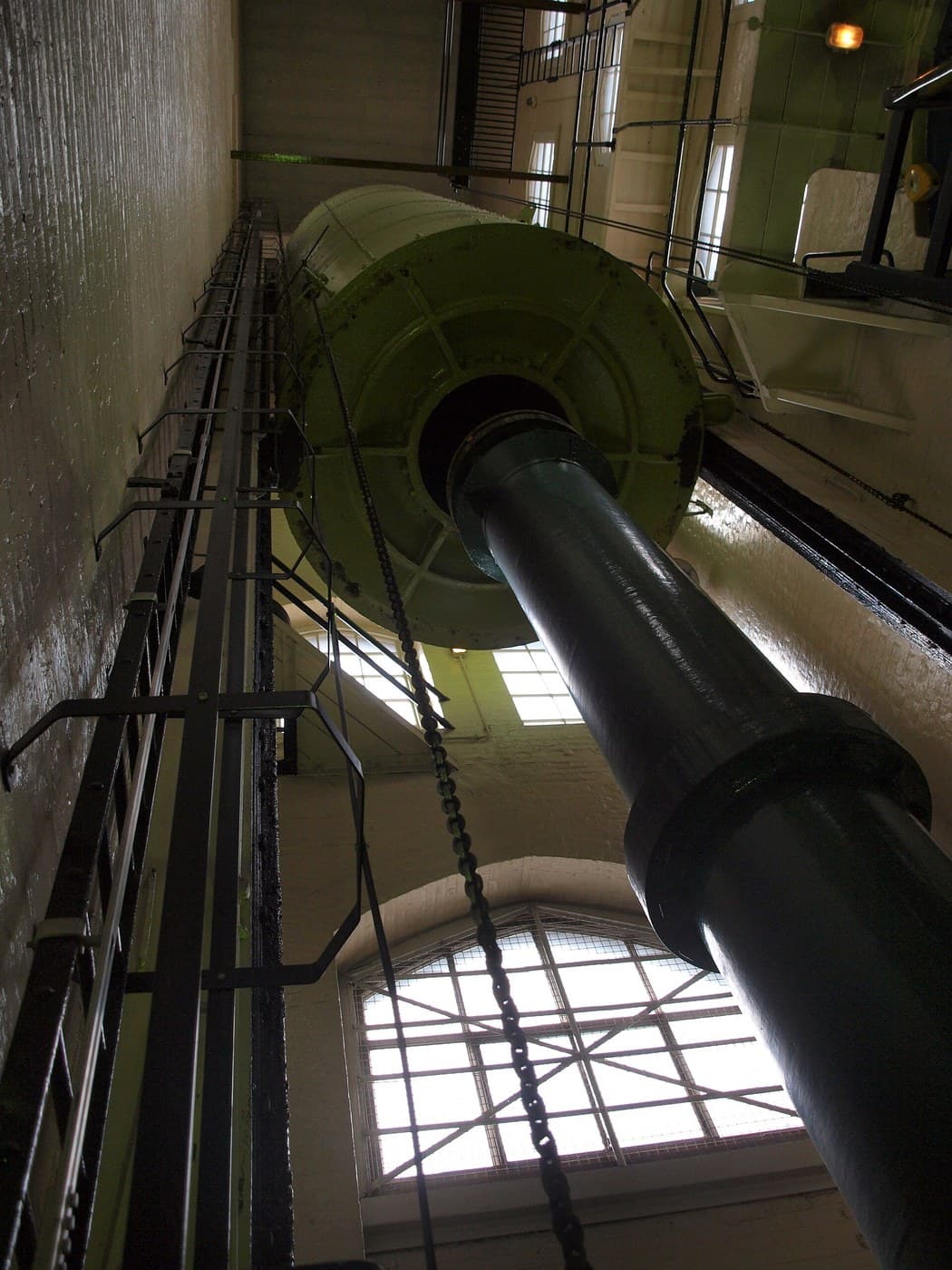
Blueprint berkaitan
Blueprint ini berkongsi pengetahuan — teknik, bahan atau prinsip
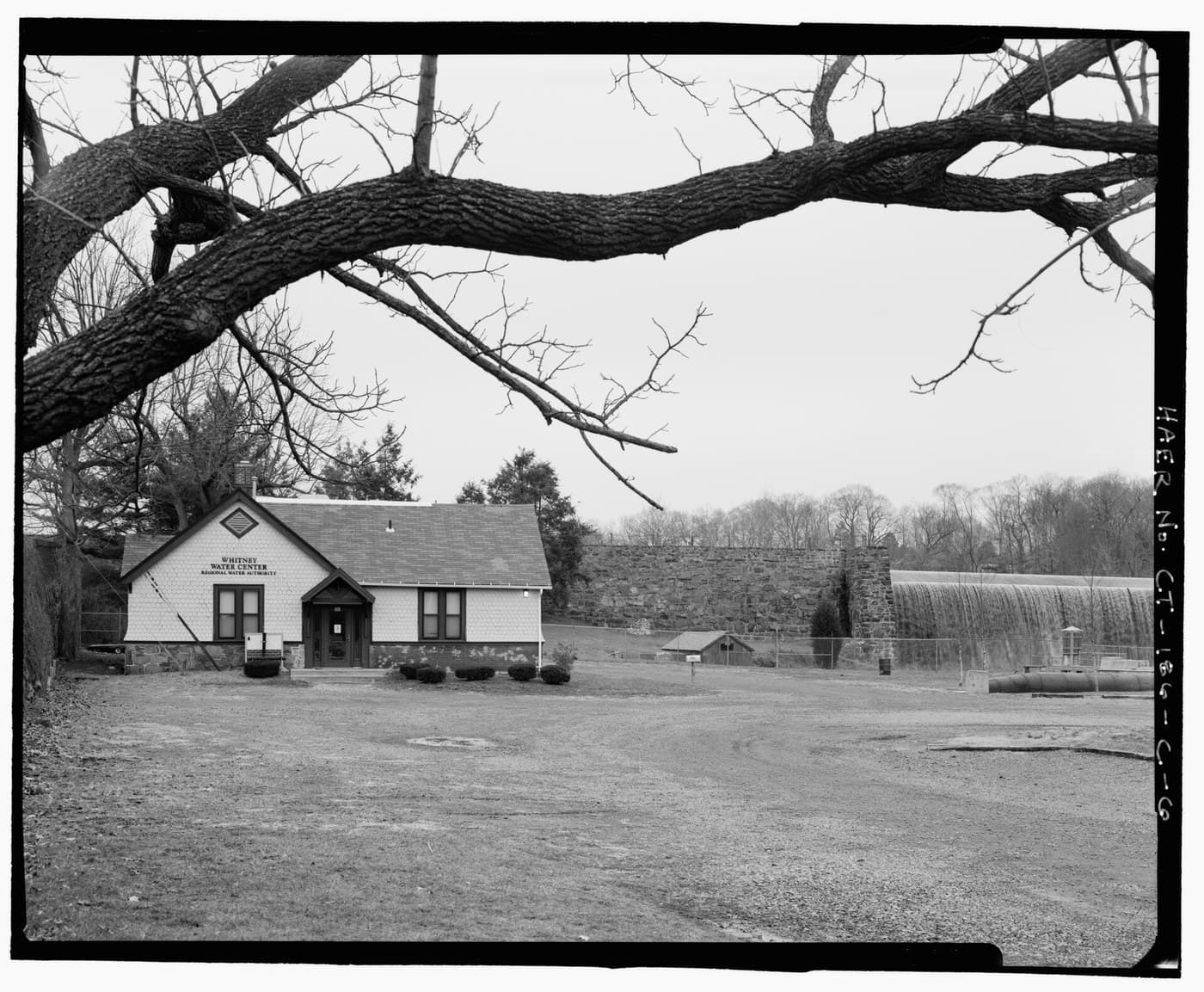

CC0 Domain Awam
Blueprint ini dikeluarkan di bawah CC0. Anda bebas menyalin, mengubah, mengedar, dan menggunakan karya ini untuk sebarang tujuan, tanpa meminta kebenaran.
Sokong Pembuat dengan membeli produk melalui Blueprint mereka di mana mereka memperoleh Komisen Pembuat ditetapkan oleh Penjual, atau cipta iterasi baru Blueprint ini dan sertakan ia sebagai sambungan dalam Blueprint anda sendiri untuk berkongsi hasil.