IṢẸ́ ỌNÀ
ẸWÀ ÀTI ÌLERA
IṢẸ́ ỌWỌ́
ÀṢÀ ÀTI ÌTÀN
ÌṢERÉ
ÀYÍKÁ
OÚNJẸ ÀTI OHUN MÍMU
REVERSE ENGINEERING
SÁYẸ́ǸSÌ
ERÉ ÌDÁRAYÁ
ÌMỌ̀-Ẹ̀RỌ
ÀWỌN OHUN WÍWỌ̀
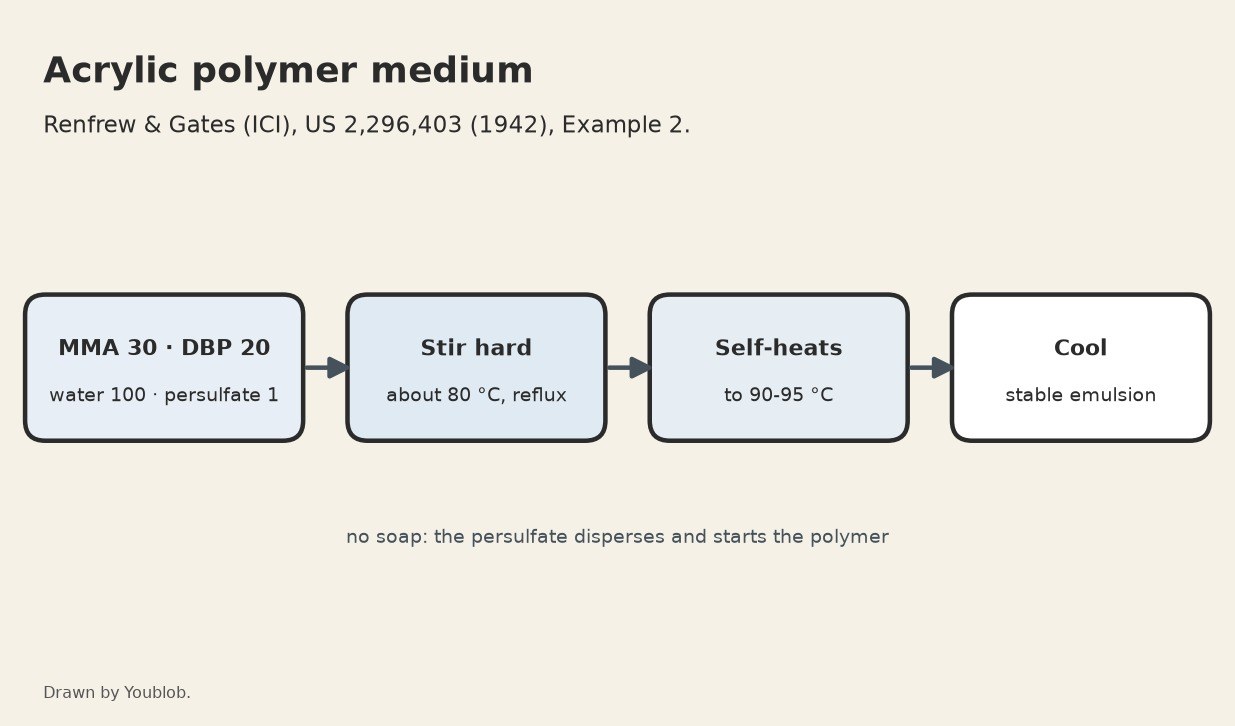


Acrylic Polymer Medium: Methyl Methacrylate Emulsified by Persulfate Alone
Acrylic polymer medium is an emulsion of acrylic polymer in water, the binder of acrylic paint. ICI's Renfrew and Gates (US 2,296,403, 1942) found that a persulfate alone both keeps the monomer dispersed and starts it polymerising, so no soap is needed. Their Example 2 stirs 30 parts methyl methacrylate and 20 parts dibutyl phthalate (a plasticiser) hard in 100 parts water with 1 part persulfate at about 80 °C; the batch heats itself to 90-95 °C and gives a very stable emulsion. Using it as paint medium is our choice.
The picture: our diagram.
Àárín
Half a day
Ìlànà
1
1
Weigh the charge
Weigh the charge
Weigh 30 parts methyl methacrylate, 20 parts dibutyl phthalate, 100 parts water and 1 part persulfate (ours: potassium persulfate; the example used lithium persulfate, and the patent names potassium among the alternatives).
Àwọn ohun èlò fún ìgbésẹ̀ yìí:
 Methyl Methacrylate30 parts
 Dibutyl Phthalate20 parts
 Omi100 parts
 Èròjà ìbẹ̀rẹ̀ persulfate1 part
Àwọn irinṣẹ́ tí a nílò:
 Òǹwọ̀n ìdọ́gba
 Gílásì Ààbò Fún Ìfọ́n Kẹ́míkà
 Ìbọ̀wọ́ rọ́bà
2
2
Stir hard at about 80 °C
Stir hard at about 80 °C
Put everything in a flask with a reflux condenser and stir very vigorously at about 80 °C, where it refluxes gently.
Àwọn irinṣẹ́ tí a nílò:
 Ìgò abẹ́-róbótó
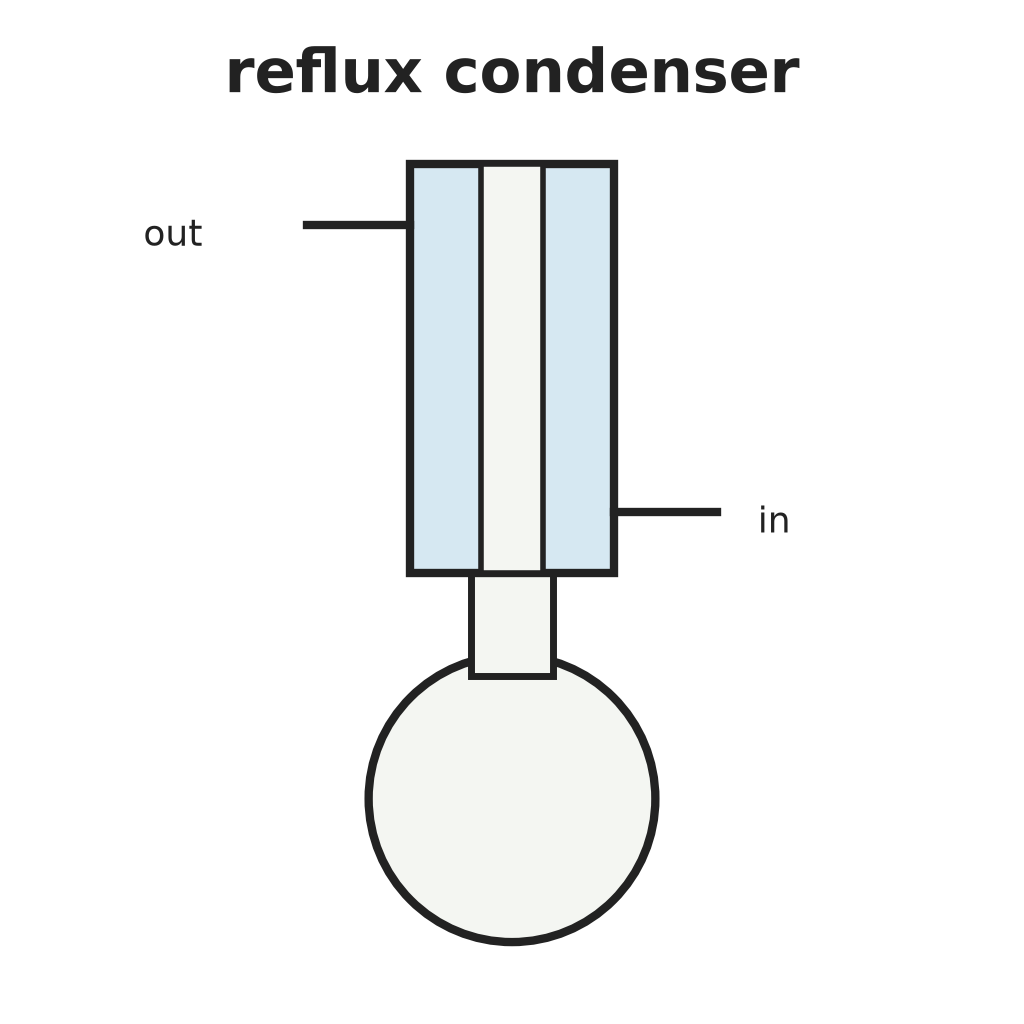 Kọ́ndẹ́nsà Ìpadàbọ̀
 Ohun ìrúwé
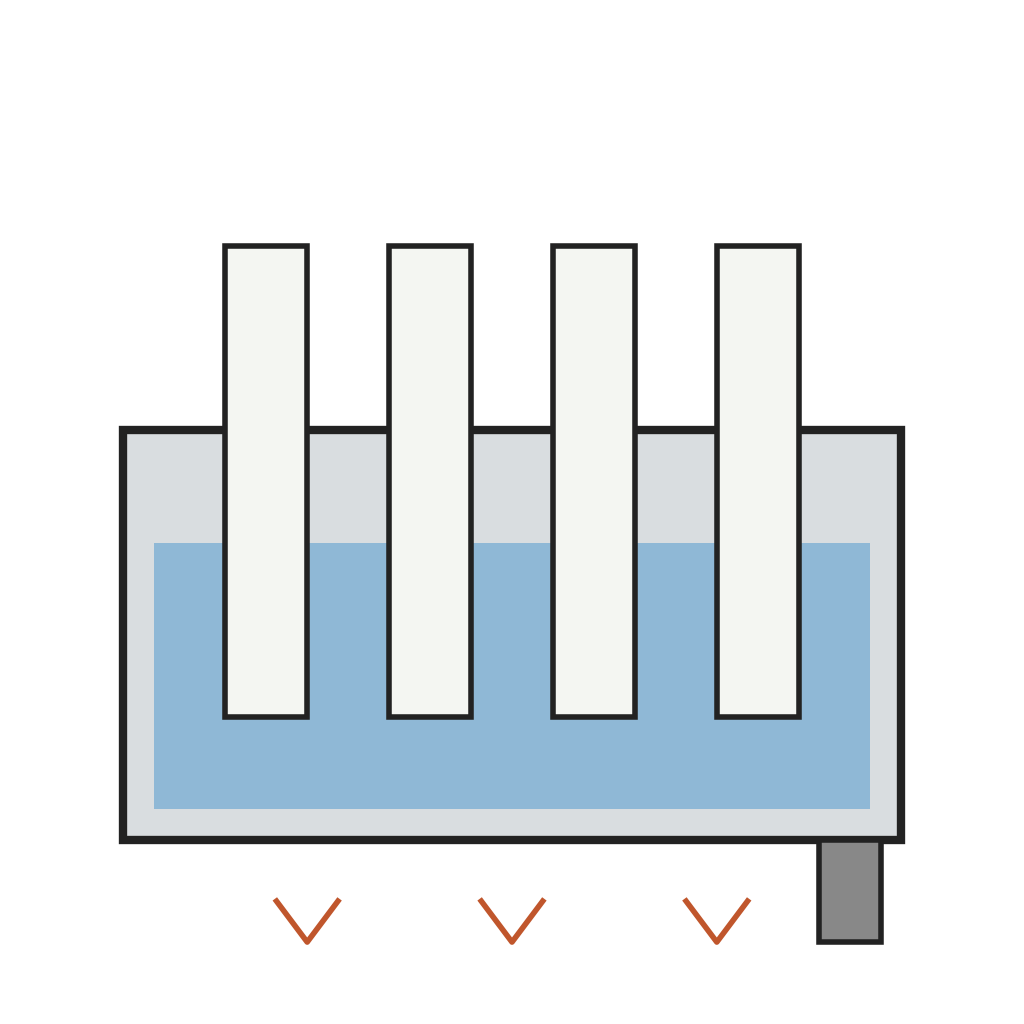 Ìwẹ̀ Omi
 Pátákó Gbígbóná
 Ẹ̀rọ Ìwọ̀n Ooru Yàrá Ìwádìí
 Àpótí eérú (tí ó ní ọ̀pá ìjáde)
3
3
Let it heat itself
Let it heat itself
After about half an hour the polymerisation starts giving off heat and the temperature climbs to 90-95 °C on its own. Keep stirring.
Àwọn irinṣẹ́ tí a nílò:
Ohun ìrúwéẸ̀rọ Ìwọ̀n Ooru Yàrá Ìwádìí4
4
Cool
Cool
When the temperature starts to fall, the polymerisation is complete. Stop stirring and let it cool. The result is a very stable emulsion.
Àwọn irinṣẹ́ tí a nílò:
Ẹ̀rọ Ìwọ̀n Ooru Yàrá ÌwádìíÀwọn ohun-èlò
4- 30 partsÀyè
- 20 partsÀyè
- 100 partsÀyè
- 1 partÀyè
Àwọn irinṣẹ́ tó nílò
10- Àyè
- Àyè
Ìtọ́nisọ́nà yìí ń ṣe

Blueprint tó jọra
Àwọn blueprint wọ̀nyí pín ìmọ̀ — ọ̀nà, ohun-èlò tàbí ìlànà

CC0 Àgbègbè Gbogbogbò
Blueprint yìí ti jáde lábẹ́ CC0. O lè ṣe àdàkọ, yí padà, pín, àti lò láìsí ìyọ̀ǹda.
Ṣàtìlẹ́yìn Olùṣẹ́dá nípa rírà àwọn ọjà nipasẹ̀ Blueprint wọn Ẹ̀san Olùṣẹ́dá tí àwọn Olùtajà gbé kalẹ̀, tàbí ṣẹ̀dá àtúnṣe tuntun ti Blueprint yìí kí o sì fi sínú Blueprint rẹ gẹ́gẹ́ bí ìsopọ̀ láti pín owó-wíwọlé.