IṢẸ́ ỌNÀ
ẸWÀ ÀTI ÌLERA
IṢẸ́ ỌWỌ́
ÀṢÀ ÀTI ÌTÀN
ÌṢERÉ
ÀYÍKÁ
OÚNJẸ ÀTI OHUN MÍMU
REVERSE ENGINEERING
SÁYẸ́ǸSÌ
ERÉ ÌDÁRAYÁ
ÌMỌ̀-Ẹ̀RỌ
ÀWỌN OHUN WÍWỌ̀
Wikimedia Commons contributor · CC0 1.0 (Public Domain Dedication)


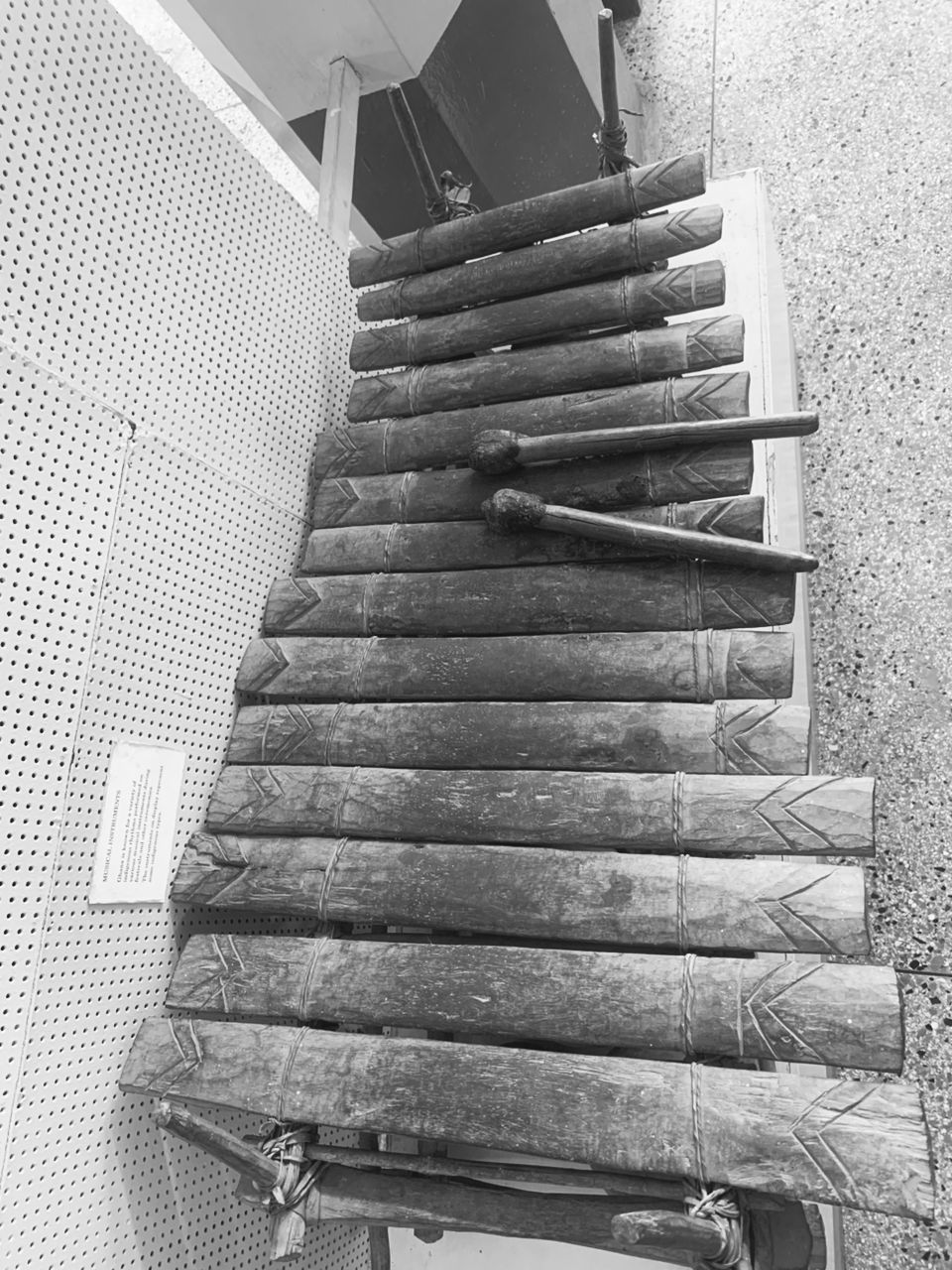
Building a Balafon — The West African Gourd-Resonated Xylophone
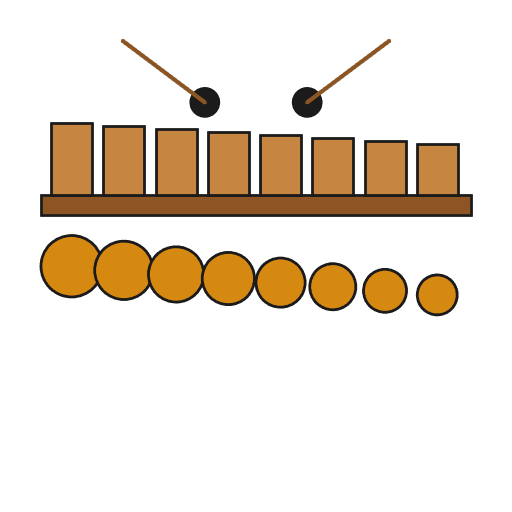
Build a balafon: a row of tuned wooden bars, each hung over its OWN tuned gourd resonator with a little buzzing membrane, struck with rubber-headed mallets. Cut and tune the bars by shaving, hang them on a frame over the gourds, and play. A serious maker build in the tuned wooden bar and the individually-tuned resonator.
Àárín
Several hours over a couple of sessions
Ìlànà
1
1
Wooden bars over singing gourds
Wooden bars over singing gourds
The balafon is a xylophone of tuned wooden bars, but each bar hangs over its own tuned gourd resonator with a small buzzing membrane, giving it a warm, humming, buzzy voice.
2
2
Cut the bars
Cut the bars
Cut a set of hard, dense wooden bars in graduated lengths, longest to shortest, and dry them well. A shorter, thicker bar rings higher.
Àwọn ohun èlò fún ìgbésẹ̀ yìí:
 Pákó bloodwood1 ẹyọ
Àwọn irinṣẹ́ tí a nílò:
 Ayùn Irin
3
3
Tune the bars
Tune the bars
Tune each bar by shaving wood away: hollow the MIDDLE of the underside to lower its note, or trim the ENDS to raise it — the same two cuts as any xylophone or marimba.
Àwọn irinṣẹ́ tí a nílò:
 Ọ̀bẹ Sìlóìdì
4
4
Build the frame
Build the frame
Build an open frame — two long rails on legs — to carry the bars in a row with space beneath for the gourds.
Àwọn ohun èlò fún ìgbésẹ̀ yìí:
 Pátákó Igi Rírọ̀ Gbígbẹ1 ẹyọ
 Ìdìpọ̀ Igi PVA1 ẹyọ
5
5
Fit the gourd resonators
Fit the gourd resonators
Hang a gourd of the right SIZE beneath each bar — a bigger gourd for a lower bar. Each gourd's air cavity is tuned to its bar so it swells that note like a bottle blown at the right pitch.
Àwọn ohun èlò fún ìgbésẹ̀ yìí:
 Agbè tí ó pọ́n6 ẹyọ
6
6
Add the buzzing membranes
Add the buzzing membranes
Pierce a small hole in the side of each gourd and cover it with a thin membrane (traditionally spider-egg-sac film; tissue works). It buzzes when the bar sounds — the balafon's signature rasp.
Àwọn irinṣẹ́ tí a nílò:
 Ọ̀kọ̀ Ìlùhò
7
7
Hang the bars and play
Hang the bars and play
Rest the bars on cords along the rails at their still points (nodes) so they ring freely, and strike them with two rubber-headed mallets.
Àwọn ohun èlò fún ìgbésẹ̀ yìí:
 Okùn Abaca1 ẹyọ
 Òpó Igi Dòwẹ̀lì1 ẹyọ
8
8
Compendium — the bar and its own resonator
Compendium — the bar and its own resonator
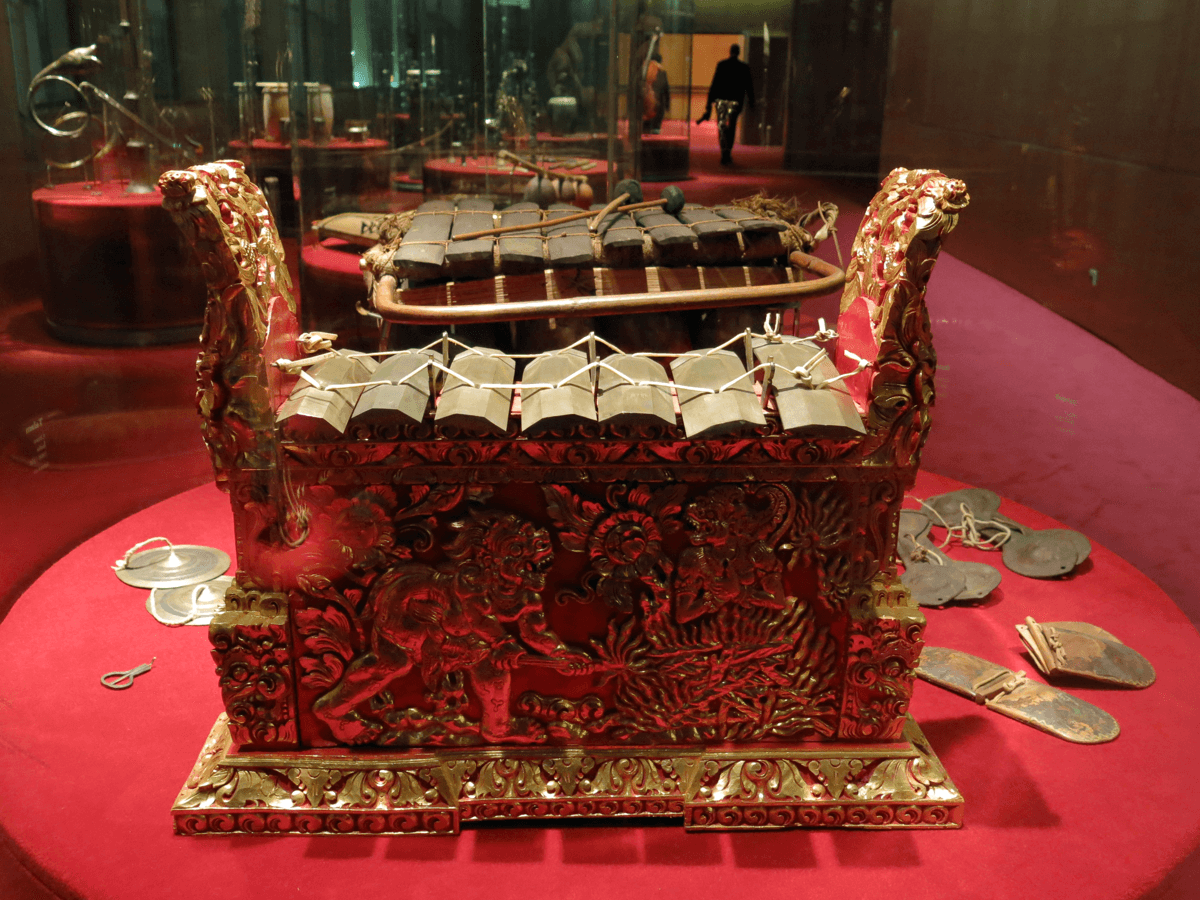
The balafon is a tuned-bar idiophone, just like the gamelan's metal saron, and its bars follow the same physics: a struck bar bends and rings, higher when it is short, thick and stiff, and it is tuned by removing wood — hollow the middle to lower the note, trim the ends to raise it — while resting the bar on cords at its two nodes (the still points about a fifth in from each end) lets it ring freely. But the balafon differs from the saron in two ways. First its bars are WOOD, not bronze, giving a warmer, woodier tone. Second, and beautifully, every bar has its OWN resonator: a gourd hung beneath it whose air cavity is tuned to that bar's note, so it acts as a Helmholtz resonator (a bottle blown at just the right pitch) and swells that one note — exactly the job a marimba's metal tube does under each bar. And each gourd carries a small membrane over a side-hole that BUZZES sympathetically when the bar sounds, a built-in mirliton that adds the balafon's characteristic rasp, the same trick as the dizi's dimo. The balafon is ancient in West Africa — the Sosso Bala, a sacred balafon, is said to date from the thirteenth century — and it is a direct ancestor of the marimba, carried across the Atlantic and grown into the marimbas of Latin America.
Àwọn ohun-èlò
6- 1 ẹyọÀyè
- Àyè
- 1 ẹyọÀyè
- 6 ẹyọÀyè
- 1 ẹyọÀyè
- 1 ẹyọÀyè
Àwọn irinṣẹ́ tó nílò
3- Àyè
- Àyè
- Àyè
Ìtọ́nisọ́nà yìí ń ṣe
Blueprint tó jọra
Àwọn blueprint wọ̀nyí pín ìmọ̀ — ọ̀nà, ohun-èlò tàbí ìlànà
CC0 Àgbègbè Gbogbogbò
Blueprint yìí ti jáde lábẹ́ CC0. O lè ṣe àdàkọ, yí padà, pín, àti lò láìsí ìyọ̀ǹda.
Ṣàtìlẹ́yìn Olùṣẹ́dá nípa rírà àwọn ọjà nipasẹ̀ Blueprint wọn Ẹ̀san Olùṣẹ́dá tí àwọn Olùtajà gbé kalẹ̀, tàbí ṣẹ̀dá àtúnṣe tuntun ti Blueprint yìí kí o sì fi sínú Blueprint rẹ gẹ́gẹ́ bí ìsopọ̀ láti pín owó-wíwọlé.