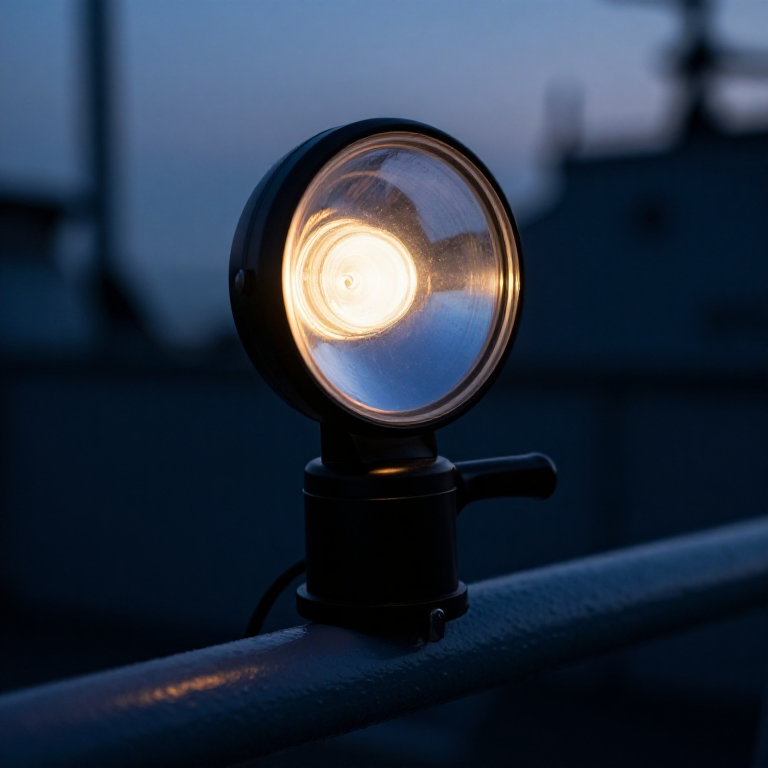

Aldis Signal Lamp
Ìlànà
Make a beam instead of a glow
Make a beam instead of a glow
A bare lamp wastes almost all its light. A mirror behind it does not.
- Mount an LED and its battery holder on a small board.
- Curve a strip of acrylic mirror sheet behind it and hold the curve with card.
- Move the lamp back and forth until the projected patch on a distant wall is at its smallest and brightest.
Àwọn ohun èlò fún ìgbésẹ̀ yìí:
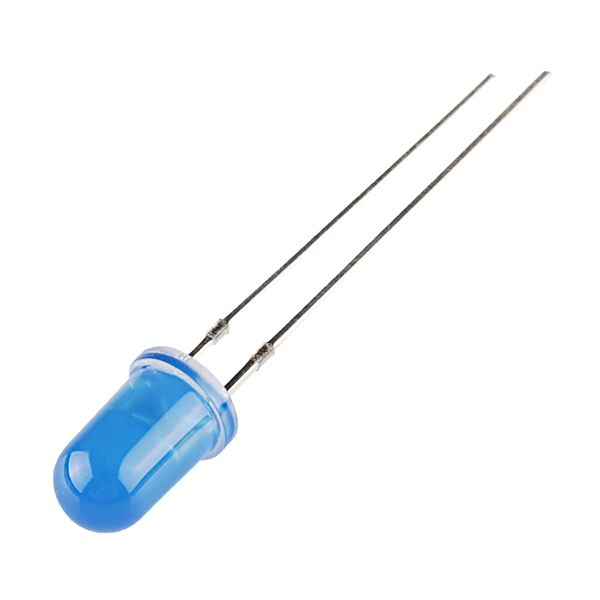 LED - Basic 5mm1 ẹyọ
 Àwo dígí akiriliki1 ewé
 Ìdìmú bátírì AA (sẹ́ẹ̀lì 4)1 àkópọ̀
Add a shutter with a clean edge
Add a shutter with a clean edge
The shutter is the whole signalling mechanism, and its quality is timing quality.
- Cut a card vane that fully blocks the beam.
- Hinge it so a finger press swings it clear and a spring or its own weight returns it.
- Aim for the beam to go from full to none in as short a travel as possible.
Àwọn ohun èlò fún ìgbésẹ̀ yìí:
 Bébà Líle1 àkópọ̀
 Ìsopọ̀ ilẹ̀kùn àpótí1 ẹyọ
Sight it, then send
Sight it, then send
A narrow beam has to be aimed, and that is a real operational burden.
- Fix a simple sight along the top of the lamp, aligned with the beam.
- Have a partner stand well away and aim using the sight.
- Send a short Morse message and have them read it back.
- Now have them move ten metres sideways and try again without re-aiming.
Test it against the conditions that defeat the alternatives
Test it against the conditions that defeat the alternatives
Find the boundary of the region this approach owns.
- Send a message in full daylight and note the maximum readable distance.
- Repeat after dark.
- Repeat with a sheet of tracing paper held in the path to imitate haze.
History and context
History and context
Arthur Cyril Webb Aldis patented his signalling lamp in 1916, during the First World War. The design's distinguishing feature is that the trigger tilts a mirror in and out of the beam path rather than moving a shutter in front of the lens — light, fast and reliable in a hand-held instrument. Aldis was part of the Birmingham optical firm whose name is also on the Aldis camera lens.
Its enduring role is radio silence. A ship transmitting by radio announces its position to anyone listening over the horizon. A narrow light beam pointed at one other ship does not. Signal lamps therefore remained standard equipment through both world wars and long after radio was mature — not because radio was unavailable, but because being heard was the danger. Warships still carry them.
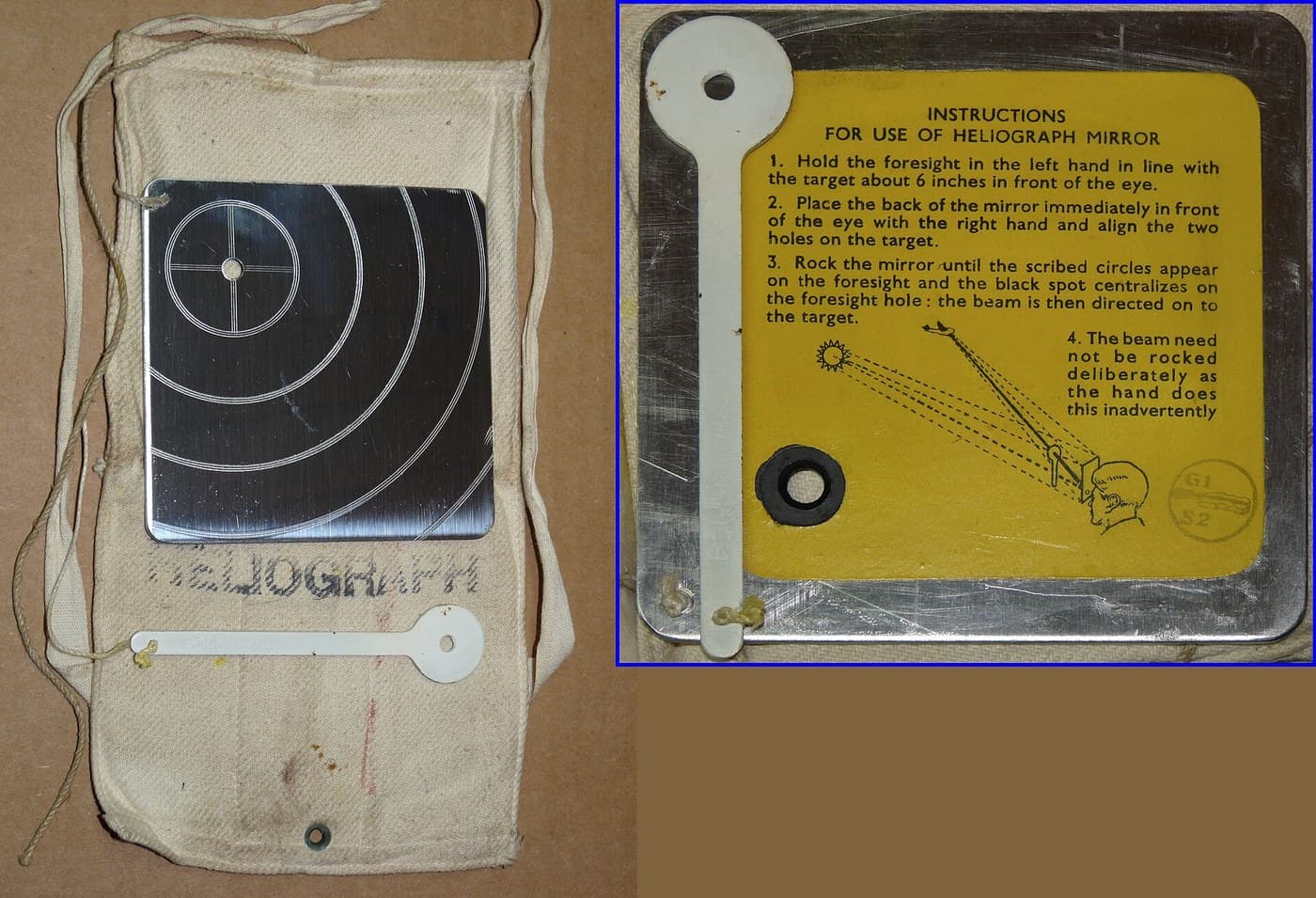
The family it belongs to: heliograph, signal lamp, semaphore flags and Chappe's towers all solve line-of-sight signalling. The lamp's specific region is night, dusk, overcast weather and any situation where the transmission must not spread. It is heavier than flags, needs power, and demands accurate aiming — real costs, freely admitted, paid for capabilities nothing else in the family offers.
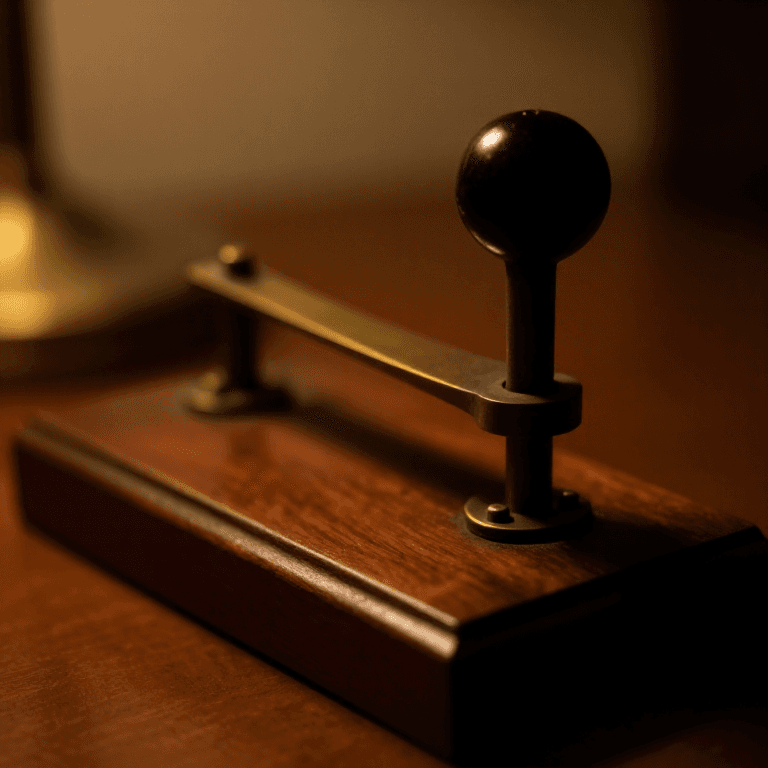
A note on what the shutter is doing: chopping a continuous carrier into timed marks and spaces is exactly what a telegraph key does to a current and what a radio transmitter does to a wave. The medium changes; the modulation is the same idea, which is why Morse could move between all of them without alteration.
Àwọn ohun-èlò
5- LED - Basic 5mmìdá 10%1 ẹyọ$0.76
- 1 ewéÀyè
- 1 àkópọ̀Àyè
- 1 àkópọ̀Àyè
- 1 ẹyọÀyè
Ìtọ́nisọ́nà yìí ń ṣe
Blueprint tó jọra
Àwọn blueprint wọ̀nyí pín ìmọ̀ — ọ̀nà, ohun-èlò tàbí ìlànà

CC0 Àgbègbè Gbogbogbò
Blueprint yìí ti jáde lábẹ́ CC0. O lè ṣe àdàkọ, yí padà, pín, àti lò láìsí ìyọ̀ǹda.
Ṣàtìlẹ́yìn Olùṣẹ́dá nípa rírà àwọn ọjà nipasẹ̀ Blueprint wọn Ẹ̀san Olùṣẹ́dá tí àwọn Olùtajà gbé kalẹ̀, tàbí ṣẹ̀dá àtúnṣe tuntun ti Blueprint yìí kí o sì fi sínú Blueprint rẹ gẹ́gẹ́ bí ìsopọ̀ láti pín owó-wíwọlé.