IṢẸ́ ỌNÀ
ẸWÀ ÀTI ÌLERA
IṢẸ́ ỌWỌ́
ÀṢÀ ÀTI ÌTÀN
ÌṢERÉ
ÀYÍKÁ
OÚNJẸ ÀTI OHUN MÍMU
REVERSE ENGINEERING
SÁYẸ́ǸSÌ
ERÉ ÌDÁRAYÁ
ÌMỌ̀-Ẹ̀RỌ
ÀWỌN OHUN WÍWỌ̀
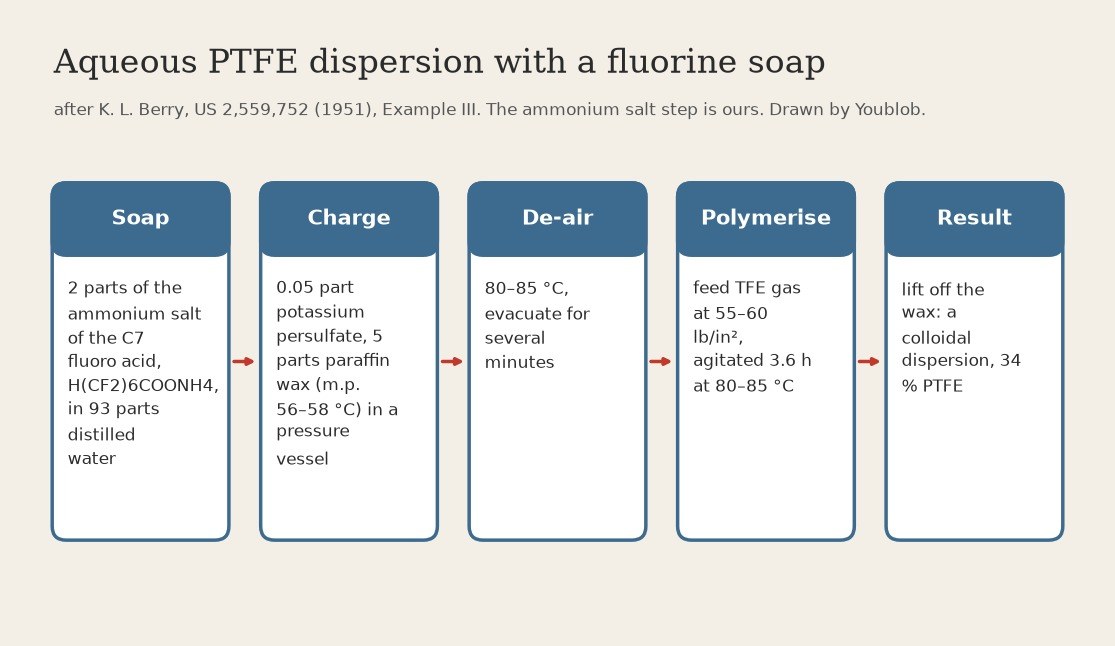

Aqueous PTFE Dispersion: Tetrafluoroethylene Polymerised in Soapy Water (Berry 1951)
Ordinary soaps stop tetrafluoroethylene from growing into long chains. A fluorine soap does not: with 2 % of ammonium dodecafluoroheptanoate in the water, the gas polymerises into tiny PTFE ribbons that stay suspended. The result is a milky dispersion, a third of it polymer, the raw material for PTFE fine powder.
Source: K. L. Berry (du Pont), US 2,559,752 (1951), Example III. Making the ammonium salt from our acid, and the apparatus, are ours. Picture drawn by Youblob.
Ilọsíwájú
1 day
Ìlànà
1
1
Make the ammonium salt
Make the ammonium salt
Ours: neutralise about 1.9 parts of dodecafluoroheptanoic acid with ammonia solution until just neutral to litmus, giving 2 parts of ammonium dodecafluoroheptanoate. Make it up with distilled water to 93 parts of water in all. Parts are by weight.
Àwọn ohun èlò fún ìgbésẹ̀ yìí:
 Ásíìdì dodecafluoroheptanoic1.9 parts
 Omi amonia - 25-28 %1 as required to neutralise
 Omi Àyọ́93 parts
Àwọn irinṣẹ́ tí a nílò:
 Bébà litmus
 Ohun èlò dígí
 Òǹwọ̀n ìdọ́gba
2
2
Load the pressure vessel
Load the pressure vessel
Put the solution in a pressure vessel with 0.05 part of potassium persulfate and 5 parts of paraffin wax melting at 56–58 °C. The wax protects the colloid while it is stirred.
Àwọn irinṣẹ́ tí a nílò:
 Èròjà ìbẹ̀rẹ̀ persulfate
 Ìdí parafíìnì
 Ìkòkò ìṣesí ìfúnpáÒǹwọ̀n ìdọ́gba
3
3
Heat and remove the air
Heat and remove the air
Bring it to 80–85 °C, then evacuate the vessel and hold it under reduced pressure for several minutes to drive out air and dissolved oxygen.
Àwọn irinṣẹ́ tí a nílò:
Ìkòkò ìṣesí ìfúnpá Ẹ̀rọ ìfàfẹ́fẹ́jáde
 Ẹ̀rọ Ìwọ̀n Ooru
4
4
Feed tetrafluoroethylene for 3.6 hours
Feed tetrafluoroethylene for 3.6 hours
Let in tetrafluoroethylene to 60 lb/sq in gauge. Agitate at 80–85 °C for 3.6 hours; each time the pressure falls to 55 lb/sq in, bring it back to 60.
Àwọn ohun èlò fún ìgbésẹ̀ yìí:
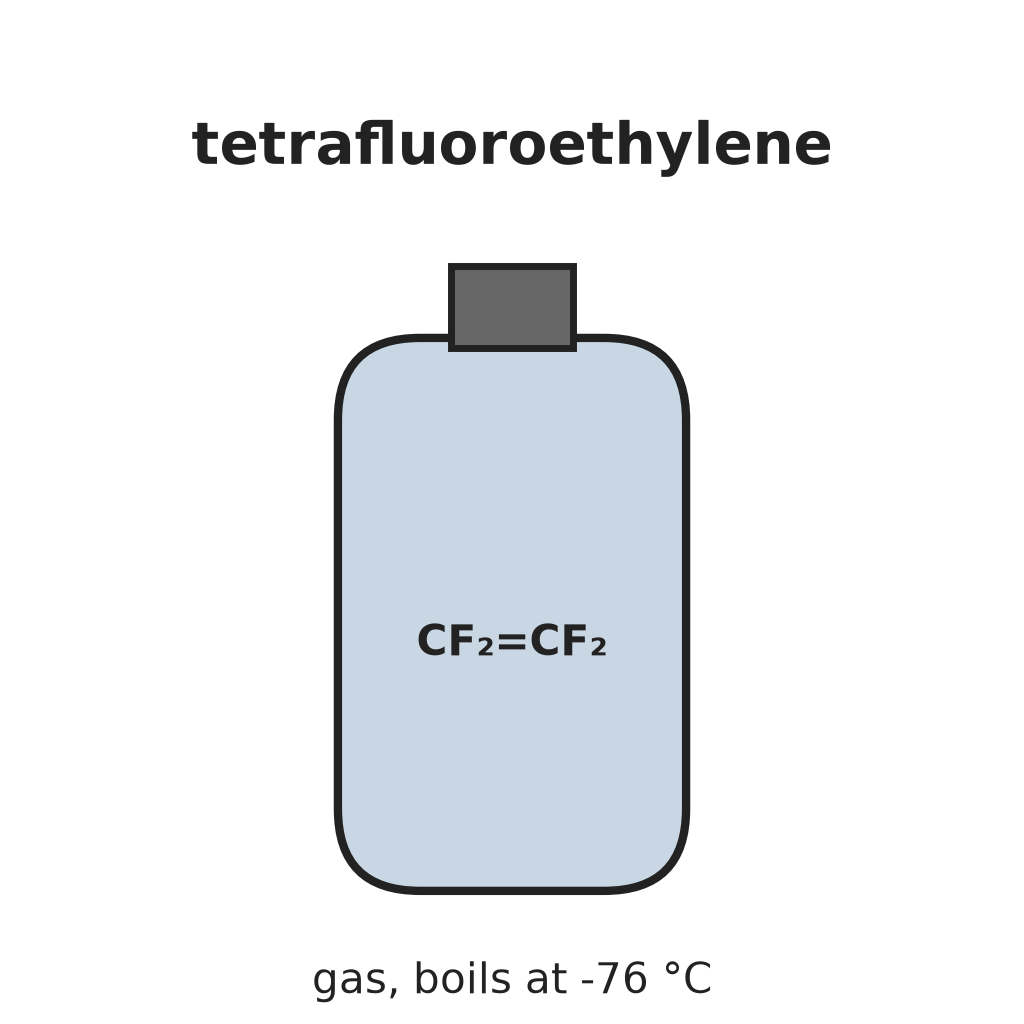 Tẹ́trafluoroétílénì1 as required to hold 55–60 psi
Àwọn irinṣẹ́ tí a nílò:
Ìkòkò ìṣesí ìfúnpá Àgbá gáàsì tí a fi ìfúnpá kún
 Ẹ̀rọ Ìwọ̀n Ìtẹ̀Ẹ̀rọ Ìwọ̀n Ooru
5
5
Cool and lift off the wax
Cool and lift off the wax
Cool it. The paraffin sets on top and lifts off. Below it is a colloidal PTFE dispersion with 34 % solids.
Àwọn irinṣẹ́ tí a nílò:
Ìkòkò ìṣesí ìfúnpá Ìgò Gílásì Onídìí
Àwọn ohun-èlò
4- 1.9 partsÀyè
- 1 as required to neutraliseÀyè
- 93 partsÀyè
- 1 as required to hold 55–60 psiÀyè
Àwọn irinṣẹ́ tó nílò
11- Àyè
- 1 vendor sell this, none ship to you yetÀyè
Ìtọ́nisọ́nà yìí ń ṣe
Blueprint tó jọra
Àwọn blueprint wọ̀nyí pín ìmọ̀ — ọ̀nà, ohun-èlò tàbí ìlànà
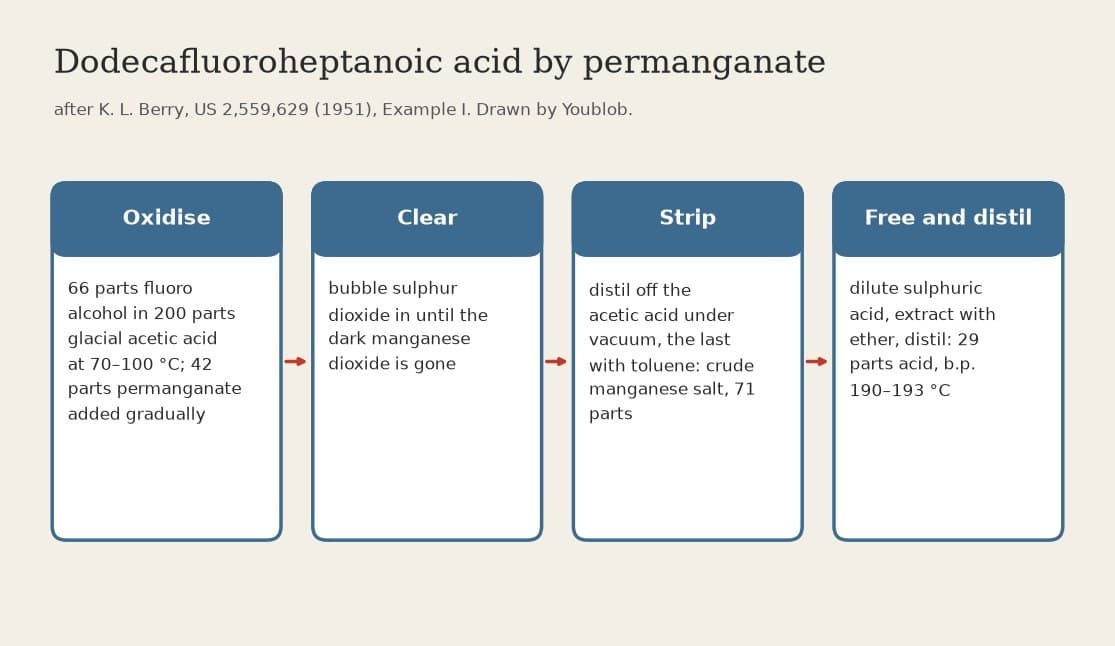
Léwu
Dodecafluoroheptanoic Acid: the Fluoro Alcohol Oxidised with Permanganate (Berry 1951)
láti ọwọ́ Charlie
Ti Ilé-iṣẹ́
6
0
0
0
0
0
Léwu
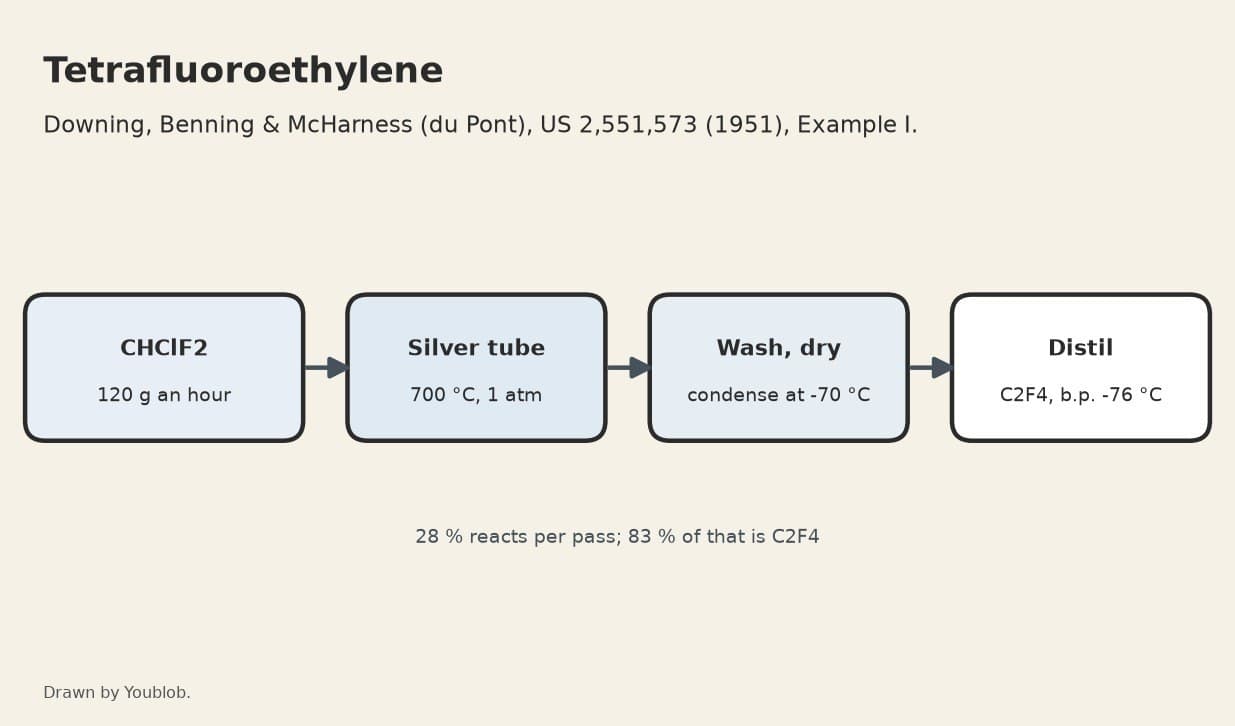
Tetrafluoroethylene: Chlorodifluoromethane Pyrolysed in a Silver Tube at 700 °C
láti ọwọ́ Charlie
Ti Ilé-iṣẹ́
10
0
0
0
0
0
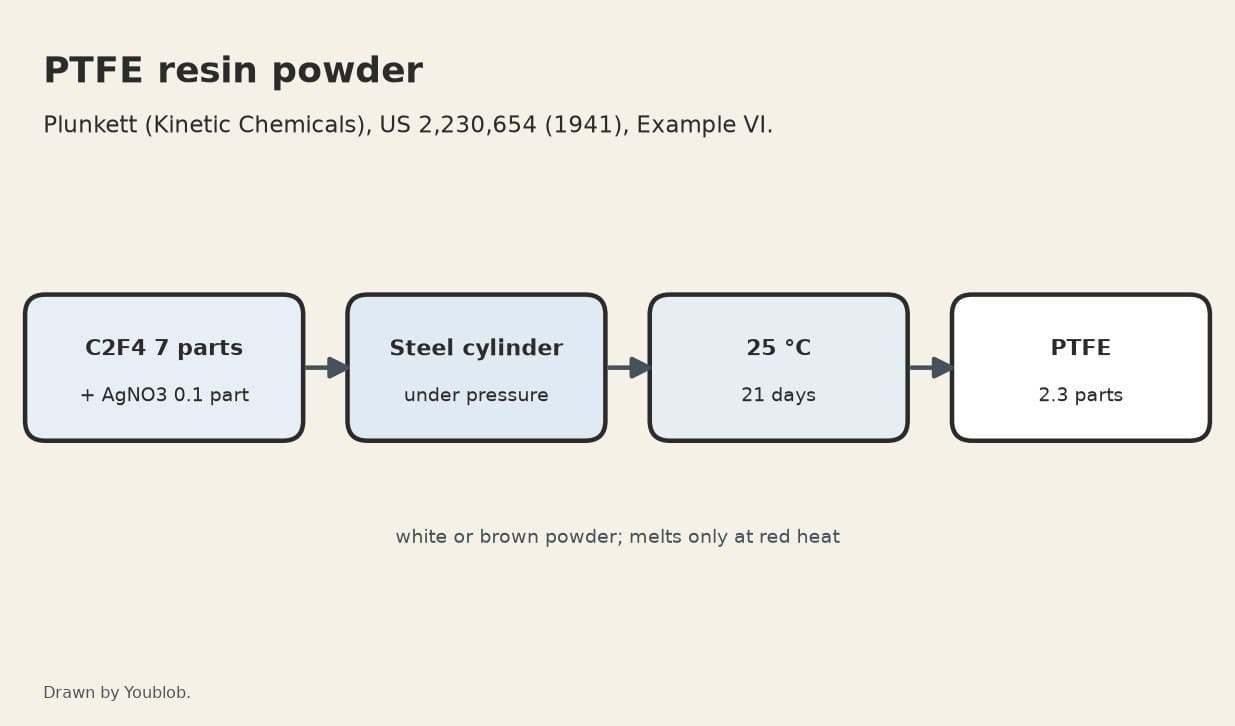
PTFE Resin Powder: Tetrafluoroethylene Polymerised under Pressure, Plunkett 1941
láti ọwọ́ Charlie
Ti Ilé-iṣẹ́
7
0
0
0
0
0
CC0 Àgbègbè Gbogbogbò
Blueprint yìí ti jáde lábẹ́ CC0. O lè ṣe àdàkọ, yí padà, pín, àti lò láìsí ìyọ̀ǹda.
Ṣàtìlẹ́yìn Olùṣẹ́dá nípa rírà àwọn ọjà nipasẹ̀ Blueprint wọn Ẹ̀san Olùṣẹ́dá tí àwọn Olùtajà gbé kalẹ̀, tàbí ṣẹ̀dá àtúnṣe tuntun ti Blueprint yìí kí o sì fi sínú Blueprint rẹ gẹ́gẹ́ bí ìsopọ̀ láti pín owó-wíwọlé.