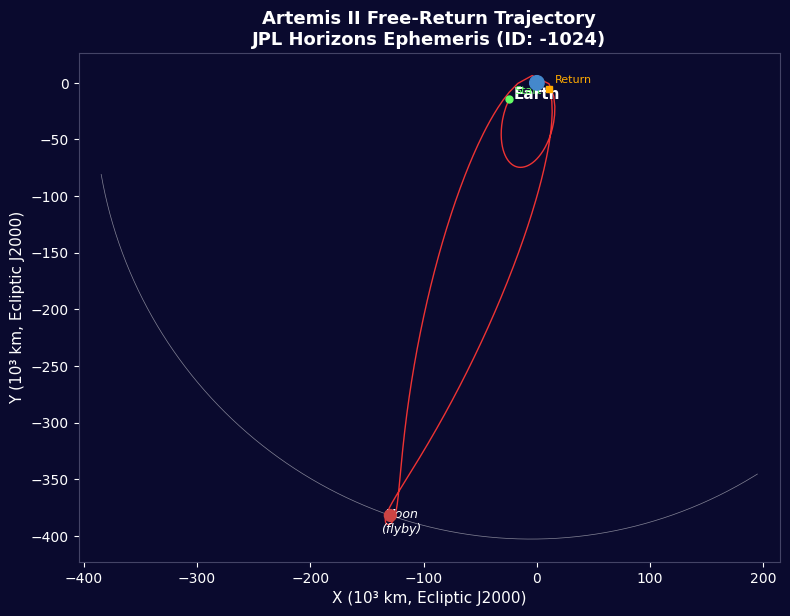

Artemis II - Isan Ẹrọ JPL Horizons
Ìlànà
Àwọn ìtẹ̀kédé Ṣíṣẹ
Àwọn ìtẹ̀kédé Ṣíṣẹ
Àwọn ohun èlò fún ìgbésẹ̀ yìí:
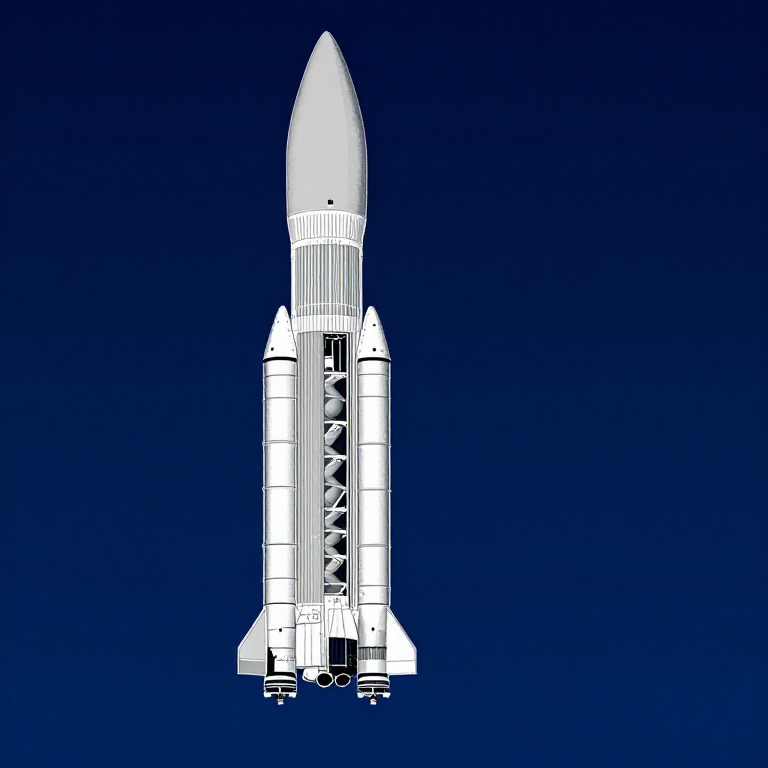
 Ìkójọpọ̀ rọkẹ́tì àpẹẹrẹ (agbára ńlá)1 (SLS Block 1 reference) ẹyọ
 Hydrogen144,000 kg (core stage) kg
 Oxygen840,000 kg (core stage) kg
 Epo líle ti rọ́kẹ́ẹ̀tì1,000,000 kg (2 boosters) kg
 Ọkọ̀ òfuurufú Orion1 (CM-003 Integrity) ẹyọ
 Àwọn awakọ̀ òfuurufú4 ẹyọ
Àwọn irinṣẹ́ tí a nílò:
 Pátákó ìfilọ́lẹ̀ rọ́kẹ́tì
Gba ìwé ò séríà
Gba ìwé ò séríà
Àwọn àmì-ẹkọ Ayé àti Ọ̀ṣùpá
Àwọn àmì-ẹkọ Ayé àti Ọ̀ṣùpá
Àwọn ìsosílẹ̀ SLS Block 1 Ero
Àwọn ìsosílẹ̀ SLS Block 1 Ero
Iyara Òkètè Ìjẹ́ Àgbédìgbẹ́dì
Iyara Òkètè Ìjẹ́ Àgbédìgbẹ́dì
Iyara Ìkọlọjú
Iyara Ìkọlọjú
Idapọ̀ Ero Tsiolkovsky
Idapọ̀ Ero Tsiolkovsky
Ìrántí-sáré Trans-Lunar
Ìrántí-sáré Trans-Lunar
Ìlànà òti-àwò-ọ̀rẹ
Ìlànà òti-àwò-ọ̀rẹ
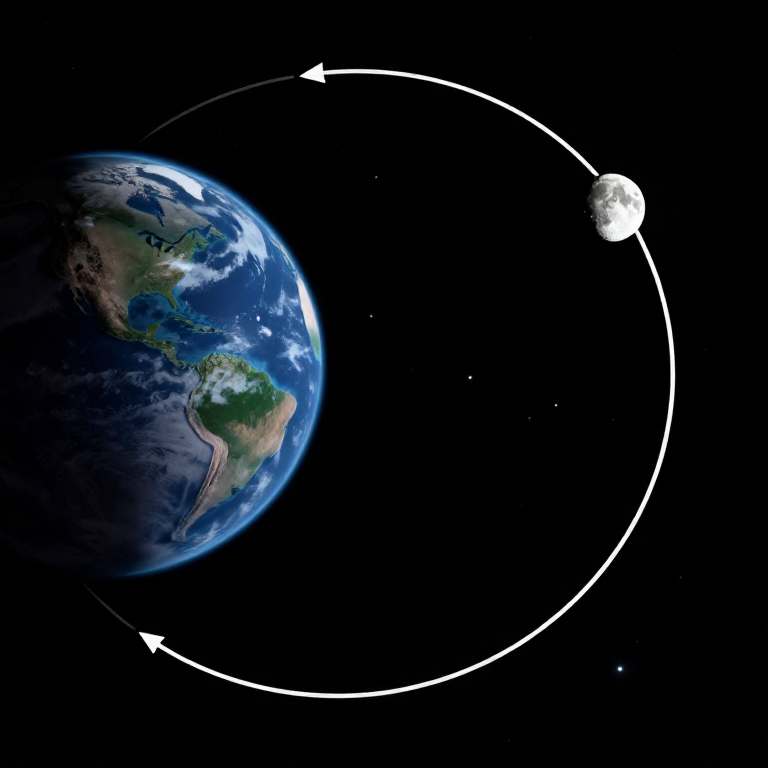
Hyperbolic Ọ̀ṣùpá Jíjà
Hyperbolic Ọ̀ṣùpá Jíjà
Ẹkọ-ìpáye Ní Àwọn Oníwájú
Ẹkọ-ìpáye Ní Àwọn Oníwájú
Àti-ìtúsẹ̀ Arọ́
Àti-ìtúsẹ̀ Arọ́
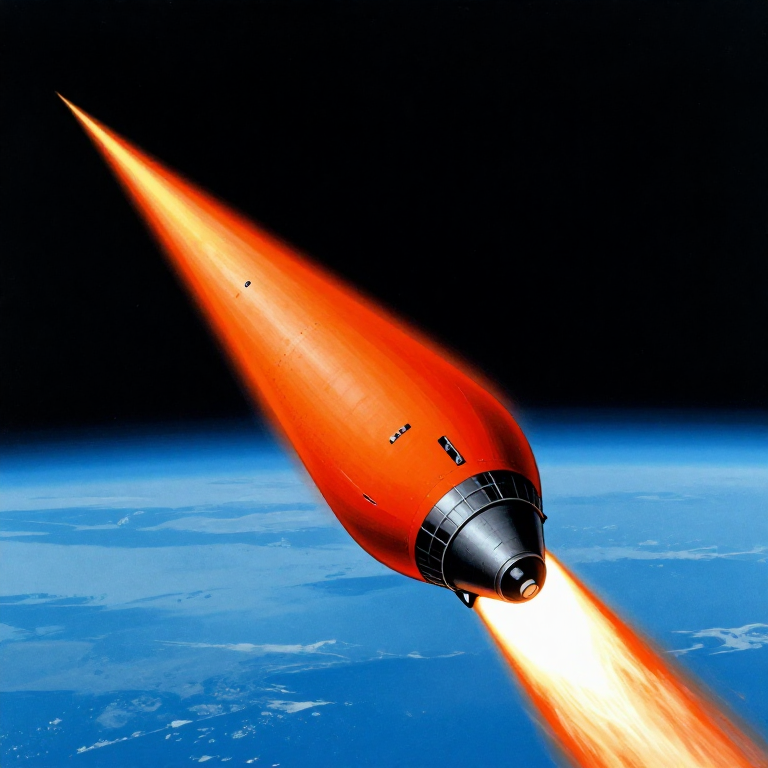
Idási-akọkọ Ṣíṣẹ
Idási-akọkọ Ṣíṣẹ
Ìgbébisí Ìlànà
Ìgbébisí Ìlànà
Àkópọ̀ Ìya-ero
Àkópọ̀ Ìya-ero
Python Ní Ìfo Wolfram
Python Ní Ìfo Wolfram
What free Python can do vs Wolfram Mathematica
| Capability | Python (free) | Mathematica ($$$) |
|---|---|---|
| Orbital mechanics equations | NumPy/SciPy — full coverage | Built-in symbolic + numeric |
| JPL Horizons ephemeris data | REST API + gzip/json (as shown above) | HorizonsEphemerisData[] function |
| Unit-aware calculations | Pint library | Built-in Quantity framework |
| 2D/3D trajectory plots | Matplotlib (4-panel dashboard above) | Built-in Graphics3D + Manipulate |
| Real-time ephemeris data | Astropy + JPL Horizons API | Built-in AstronomicalData[] |
| Interactive animation | ipywidgets / Plotly | Manipulate[] — seamless |
| Symbolic algebra | SymPy | Native — Mathematica's core strength |
| Deployment | Runs anywhere (browser via Pyodide) | Requires Wolfram licence or Cloud |
Verdict: Using the same JPL Horizons data source as Wolfram, Python reproduces the Artemis II trajectory with identical data points — 428 state vectors covering the full 10-day mission. The analytical model (Hohmann transfer + patched conics) predicts TLI speed within 3% and flyby distance within 0.4% of reality.
Mathematica's edge is in symbolic manipulation and the seamless Manipulate[] 3D animation. But for numerical computation, data analysis, and reproducibility, Python is fully capable — and this entire blueprint runs in the browser via Pyodide. No server, no licence, no installation.
Àwọn ohun-èlò
6- 1 (SLS Block 1 reference) ẹyọÀyè
- 144,000 kg (core stage) kgÀyè
- 840,000 kg (core stage) kgÀyè
- 1,000,000 kg (2 boosters) kgÀyè
- 1 (CM-003 Integrity) ẹyọÀyè
- 4 ẹyọÀyè
Àwọn irinṣẹ́ tó nílò
1CC0 Àgbègbè Gbogbogbò
Blueprint yìí ti jáde lábẹ́ CC0. O lè ṣe àdàkọ, yí padà, pín, àti lò láìsí ìyọ̀ǹda.
Ṣàtìlẹ́yìn Olùṣẹ́dá nípa rírà àwọn ọjà nipasẹ̀ Blueprint wọn Ẹ̀san Olùṣẹ́dá tí àwọn Olùtajà gbé kalẹ̀, tàbí ṣẹ̀dá àtúnṣe tuntun ti Blueprint yìí kí o sì fi sínú Blueprint rẹ gẹ́gẹ́ bí ìsopọ̀ láti pín owó-wíwọlé.