IṢẸ́ ỌNÀ
ẸWÀ ÀTI ÌLERA
IṢẸ́ ỌWỌ́
ÀṢÀ ÀTI ÌTÀN
ÌṢERÉ
ÀYÍKÁ
OÚNJẸ ÀTI OHUN MÍMU
REVERSE ENGINEERING
SÁYẸ́ǸSÌ
ERÉ ÌDÁRAYÁ
ÌMỌ̀-Ẹ̀RỌ
ÀWỌN OHUN WÍWỌ̀
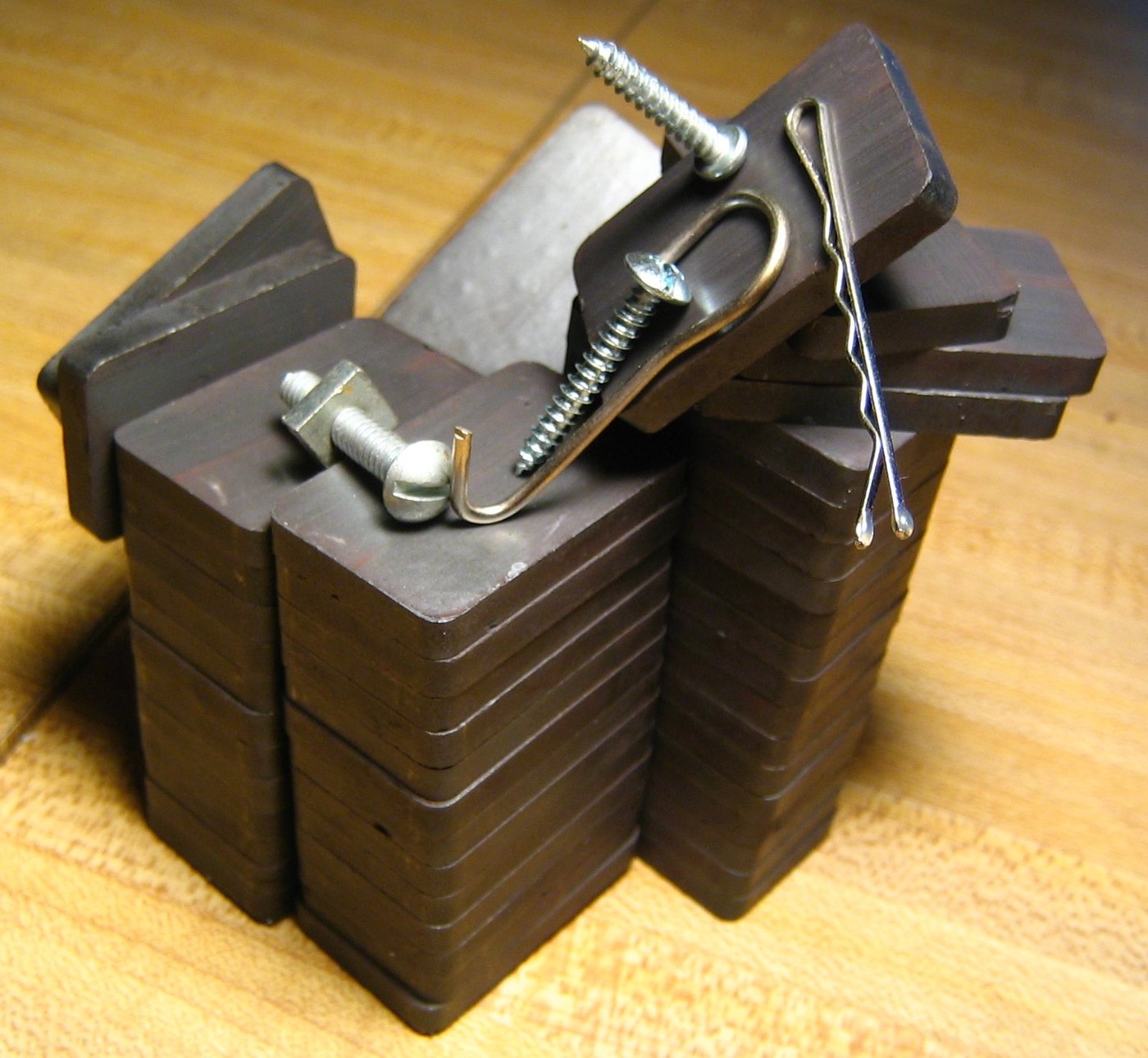


Barium Ferrite Disc Magnet: Barium Carbonate and Iron Oxide Sintered (Went, Philips 1956)
The dark grey ceramic magnet on fridges and in loudspeakers is barium ferrite. It is made from two cheap powders: one part barium carbonate to six of iron oxide, milled, fired, milled again, pressed and sintered. No cobalt or nickel is needed. This is Example 34 of the Philips patent. Fired 4 hours at 1100 °C, its rod held 1,375 gauss with a coercive force of 3,350 oersted.
Source: J. J. Went, G. W. van Oosterhout and E. W. Gorter (Philips), US 2,762,777 (1956). They pressed rods; the claim covers "a body of a desired shape", and the disc size is ours. The patent does not say how to magnetise it; our way is stated. Picture: ferrite magnets, Omegatron, Wikimedia Commons, CC BY-SA 3.0.
Ilọsíwájú
2 days
Ìlànà
1
1
Weigh one part barium carbonate to six of iron oxide
Weigh one part barium carbonate to six of iron oxide
Weigh 39.5 g of barium carbonate (0.2 mol) and 191.7 g of ferric oxide, Fe2O3 (1.2 mol). Barium carbonate is poisonous if swallowed: ours, gloves and a dust respirator.
Àwọn ohun èlò fún ìgbésẹ̀ yìí:
 Barium carbonate (witherite)39.5 g
 Ọ́kísáìdì irin (III)191.7 g
Àwọn irinṣẹ́ tí a nílò:
 Òǹwọ̀n ìdọ́gba
 Ìbọ̀wọ́ rọ́bà
 Ẹ̀rọ Ìmí P100
2
2
Mill with ethanol for 4 hours
Mill with ethanol for 4 hours
Grind the mixture with ethanol in an iron ball mill for 4 hours. Let the ethanol evaporate, then dry the powder in a drying oven.
Àwọn irinṣẹ́ tí a nílò:
 Ẹ̀rọ Lílọ Bọ́ọ̀lù Irin
 Ethanol - ìpele ilé-ìwádìí, 95 %
 Ààrò ìgbẹ̀
3
3
Presinter at 1000 °C for 4 hours
Presinter at 1000 °C for 4 hours
Fire the dry powder in air at 1000 °C for 4 hours (ours: in a lidded porcelain crucible in a muffle furnace). Let it cool.
Àwọn irinṣẹ́ tí a nílò:
 Ààrò muffle
 Ìkòkò ìyọ́ pẹ̀lú ìdérí (porcelain)
 Ẹmú Ìkòkò Ìyọ́
 Ìbọ̀wọ́ Tí Ń Fara Da Ooru
4
4
Mill again for 4 hours
Mill again for 4 hours
Grind the presintered product with ethanol in the ball mill for another 4 hours. Let the ethanol evaporate.
Àwọn irinṣẹ́ tí a nílò:
Ẹ̀rọ Lílọ Bọ́ọ̀lù IrinEthanol - ìpele ilé-ìwádìí, 95 %Ààrò ìgbẹ̀Ẹ̀rọ Ìmí P1005
5
Press discs at 1.5 tons per cm²
Press discs at 1.5 tons per cm²
Press the powder at 1.5 tons/cm². The patent pressed rods; we press discs. Ours: a die 20 mm across, so about 4.7 tonnes on the punch (our arithmetic: 1.5 × 3.14 cm²).
Àwọn irinṣẹ́ tí a nílò:
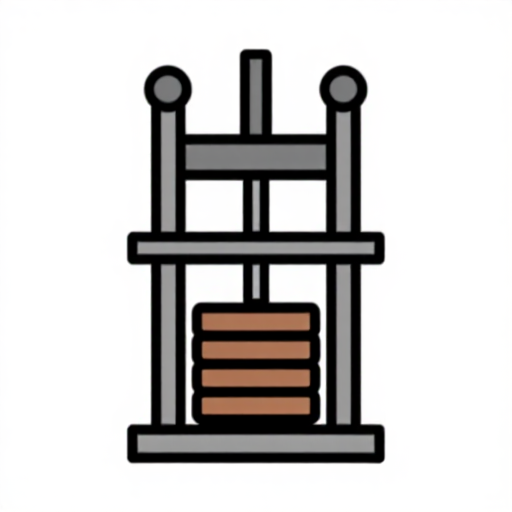 Ẹ̀rọ ìtẹ̀ háídírọ́líìkì
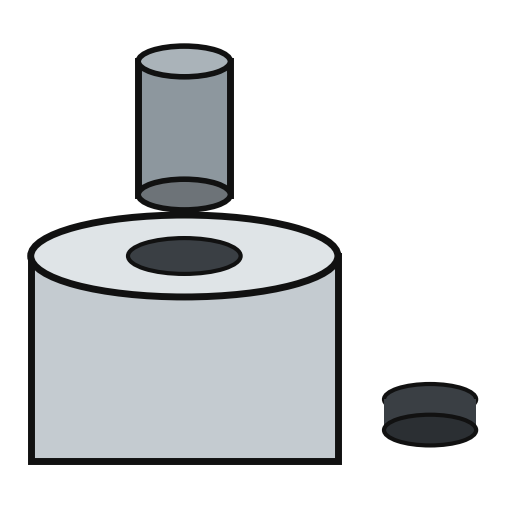 Mọ́ọ̀dù títẹ díìsì
6
6
Sinter for 4 hours
Sinter for 4 hours
Sinter the discs for 4 hours in oxygen or in air. The patent's results: at 1100 °C, 1,375 gauss and 3,350 oersted; at 1200 °C, 1,400 and 3,100; at 1300 °C, 1,850 and 1,780. Hotter gives a stronger but less stubborn magnet.
Àwọn irinṣẹ́ tí a nílò:
Ààrò muffleẸmú Ìkòkò Ìyọ́Ìbọ̀wọ́ Tí Ń Fara Da Ooru7
7
Magnetise the discs
Magnetise the discs
The patent gives no magnetising method. Ours: lay a disc with its faces against the poles of a strong electromagnet, switch the current on, then off. Find which face is north with a compass.
Àwọn irinṣẹ́ tí a nílò:
 Òòfà iná-mànàmáná
 Kọ́mpasi
Àwọn ohun-èlò
2- Àyè
- 191.7 gÀyè
Àwọn irinṣẹ́ tó nílò
14- Àyè
- Àyè
- Àyè
Ìtọ́nisọ́nà yìí ń ṣe
Blueprint tó jọra
Àwọn blueprint wọ̀nyí pín ìmọ̀ — ọ̀nà, ohun-èlò tàbí ìlànà

CC0 Àgbègbè Gbogbogbò
Blueprint yìí ti jáde lábẹ́ CC0. O lè ṣe àdàkọ, yí padà, pín, àti lò láìsí ìyọ̀ǹda.
Ṣàtìlẹ́yìn Olùṣẹ́dá nípa rírà àwọn ọjà nipasẹ̀ Blueprint wọn Ẹ̀san Olùṣẹ́dá tí àwọn Olùtajà gbé kalẹ̀, tàbí ṣẹ̀dá àtúnṣe tuntun ti Blueprint yìí kí o sì fi sínú Blueprint rẹ gẹ́gẹ́ bí ìsopọ̀ láti pín owó-wíwọlé.