IṢẸ́ ỌNÀ
ẸWÀ ÀTI ÌLERA
IṢẸ́ ỌWỌ́
ÀṢÀ ÀTI ÌTÀN
ÌṢERÉ
ÀYÍKÁ
OÚNJẸ ÀTI OHUN MÍMU
REVERSE ENGINEERING
SÁYẸ́ǸSÌ
ERÉ ÌDÁRAYÁ
ÌMỌ̀-Ẹ̀RỌ
ÀWỌN OHUN WÍWỌ̀
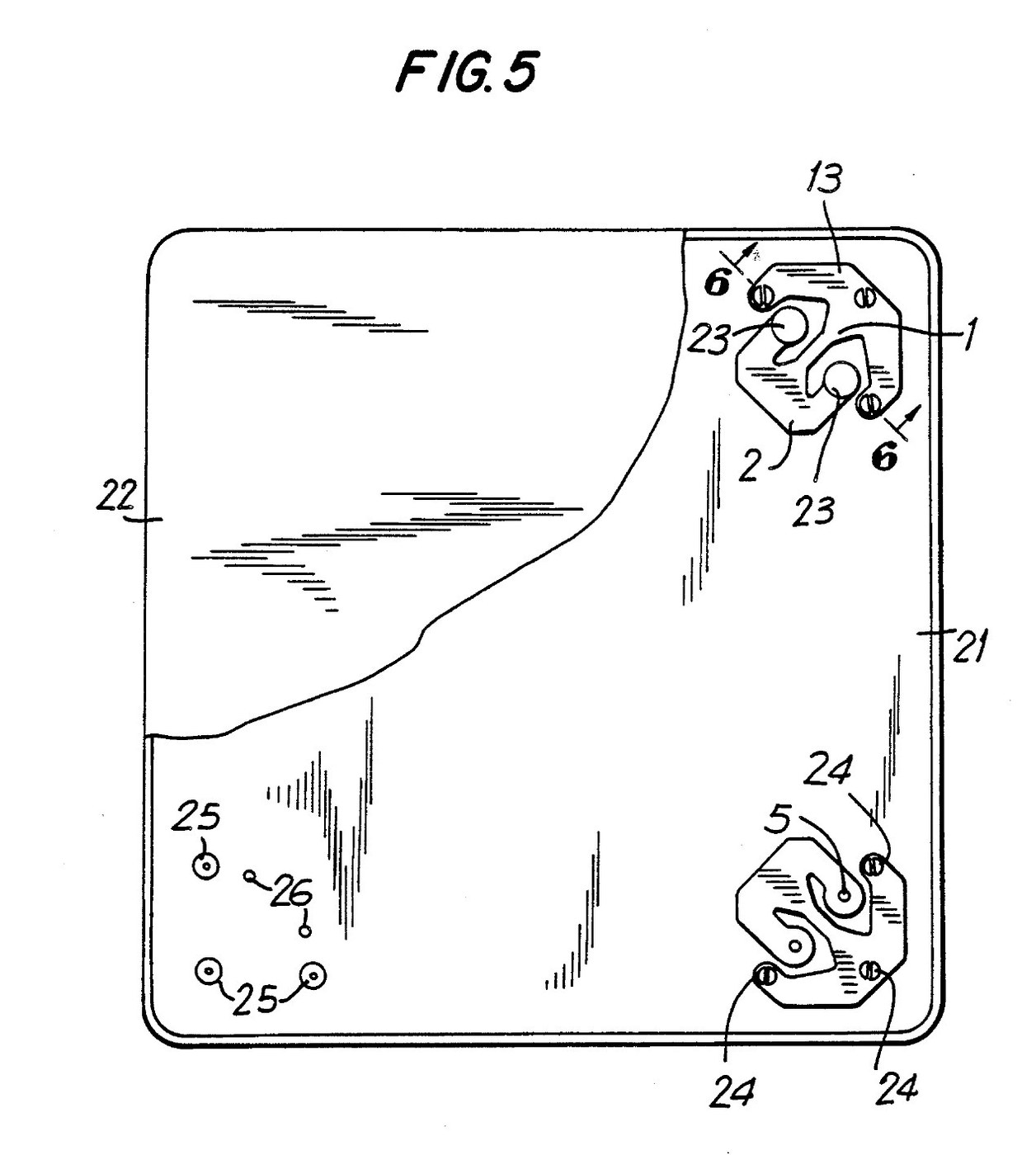


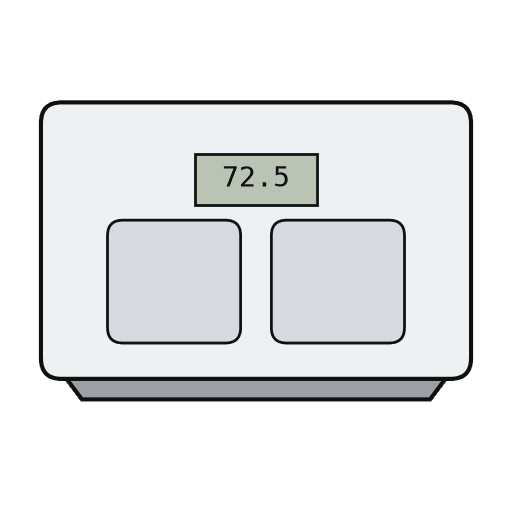
Bathroom Scale: Four Flat Load Cells Between Two Plates (Angel, 1991)
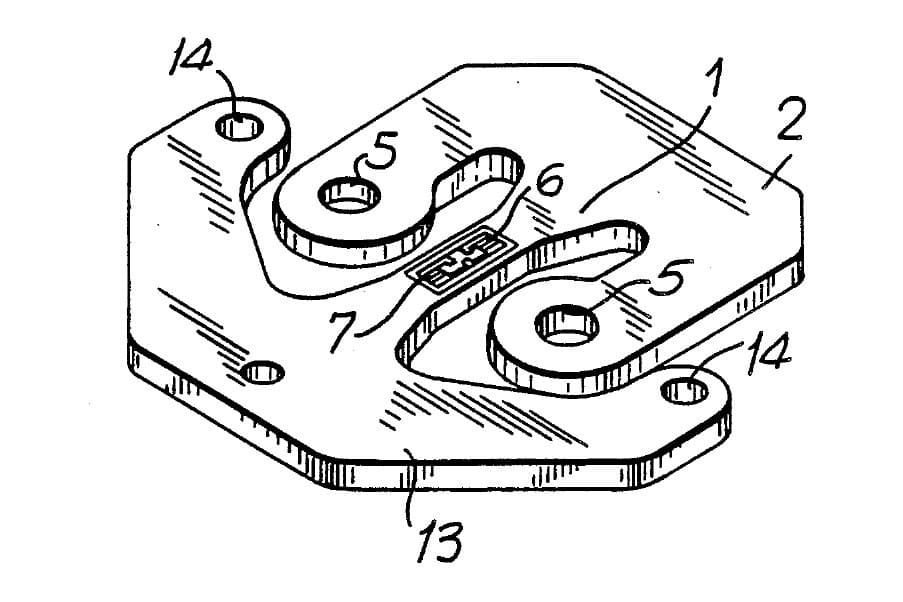
A floor scale only as thick as two plates. Four flat load cells sit in the corners between a base and a top plate; their strain gauges are wired into one bridge, so the signal is the sum of the four loads wherever you stand.
Result: a low digital bathroom scale reading in pounds or kilograms. The patent gives under 0.05 % non-linearity, hysteresis and non-repeatability, and under 0.1 % error from off-centre loads; its feet let it stand on thick carpet.
Source: S. Angel, US Patent 4,993,506 (1991). Unknown: the plate material and size, the maximum load, and the circuit. Ours: ebonite for the hard rubber, epoxy, the amplifier and display parts. Picture: patent drawing (Fig. 5).
Ilọsíwájú
2 days
Ìlànà
1
1
Mount the four load cells
Mount the four load cells
Put one load cell in each corner of the rigid base plate. Screw each one down to small flat raised pads on the plate. Place the pads away from the edge of the cell's beam, so that fixing the cell does not change its sensitivity. Under each cell, tap two holes through the base for the overload screws. Not given: the plate material and size.
Àwọn ohun èlò fún ìgbésẹ̀ yìí:
 Sẹ́ẹ̀lì ẹrù4 ẹyọ
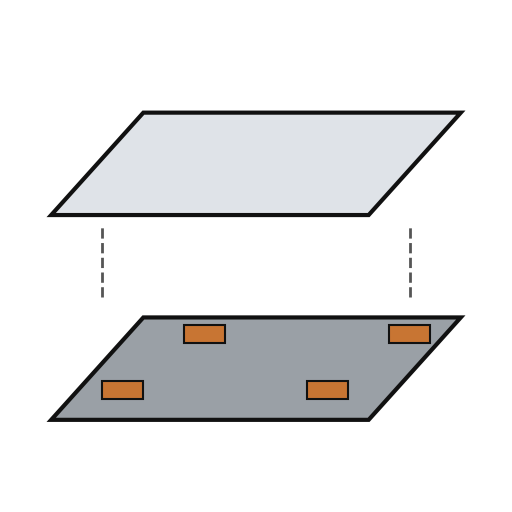 Ìsàlẹ̀ àti àwo òkè òṣùwọ̀n1 base and top plate
 Skurú ẹ̀rọ8 cell screws
Àwọn irinṣẹ́ tí a nílò:
 Ìtò irinṣẹ́ ìgé ihá
 Ìṣù àwọn ohun ìyí skurú
 Ìwọ̀n tí a kò mọ̀
2
2
Wire one bridge and the readout
Wire one bridge and the readout
Each cell's two gauges are half a Wheatstone bridge. Join the four halves into one full bridge, one half at each corner, so the bridge gives a signal in step with the sum of the four loads. The signal is amplified, turned into numbers by an analog-to-digital converter, worked into pounds or kilograms and shown on a display. Put the electronics and batteries in the space between the plates. Not given: the circuit. Ours: an op-amp and a segment LCD.
Àwọn ohun èlò fún ìgbésẹ̀ yìí:
 IC amplifier oníṣẹ́1 amplifier
 Ẹ̀rọ Ìyípadà Ànálọ́ọ̀gì sí Díjítà1 ẹyọ
 Pánẹ́ẹ̀lì LCD oní-apá1 ẹyọ
 Bátìrì1 as the circuit needs
 Okun waya ìsopọ̀1 as needed
 Wáyà Sọ́ldà1 a little
Àwọn irinṣẹ́ tí a nílò:
 Irin ìsúdì
3
3
Fit the top plate on hard rubber pads
Fit the top plate on hard rubber pads
Glue four flat round pads of a rigid but slightly yielding material, such as hard rubber, under the top plate. Give each pad small round studs that snap into the two load holes of its cell, so the weight goes in at the centres of those holes. The pads soften impacts when something is dropped on the scale and take up sideways forces as the top plate bends. The snaps let the top plate be pulled off for repairs. Ours: ebonite and epoxy.
Àwọn ohun èlò fún ìgbésẹ̀ yìí:
 Ọ̀pá ebonite1 four pads
 Ìlẹ̀mọ́ epoxy ẹ̀yà méjì (tí ń le kíákíá)1 a little
Àwọn irinṣẹ́ tí a nílò:
 Ayùn Irin
4
4
Fit the feet
Fit the feet
Under the base, below each cell, fix a shallow foot of flexible material such as hard rubber, rounded underneath. Put its lowest point exactly below the centre of the cell's beam: the floor then pushes up at the beam's centre without bending it, and the scale works on thick carpet or uneven floors. Ours: ebonite.
Àwọn ohun èlò fún ìgbésẹ̀ yìí:
Ọ̀pá ebonite1 four feetÌlẹ̀mọ́ epoxy ẹ̀yà méjì (tí ń le kíákíá)1 a littleÀwọn irinṣẹ́ tí a nílò:
Ayùn Irin5
5
Set the overload stops
Set the overload stops
Load the scale to its maximum capacity. Turn the short screws in from below until they just touch the arms of each cell's loading element, then lock them with adhesive. Any heavier load now rests on the screws instead of bending the cells further. Not given: the maximum capacity. Ours: calibration weights and epoxy.
Àwọn ohun èlò fún ìgbésẹ̀ yìí:
Skurú ẹ̀rọ8 overload screwsÌlẹ̀mọ́ epoxy ẹ̀yà méjì (tí ń le kíákíá)1 a littleÀwọn irinṣẹ́ tí a nílò:
 Ìdìpọ̀ ìwọ̀n ìdánwòÌṣù àwọn ohun ìyí skurú
Àwọn ohun-èlò
11- 4 ẹyọÀyè
- 1 base and top plateÀyè
- 8 overload screwsÀyè
- 1 amplifierÀyè
- Àyè
- 1 as the circuit needsÀyè
- 1 as neededÀyè
- 1 a littleÀyè
- 1 four feetÀyè
- 3 a littleÀyè
Àwọn irinṣẹ́ tó nílò
6- 2 vendors sell this, none ship to you yetÀyè
- Àyè
Àwọn Ohun Èlò Ìtọ́nisọ́nà Tí A So Pọ̀
Ìtọ́nisọ́nà yìí ń ṣe
Blueprint tó jọra
Àwọn blueprint wọ̀nyí pín ìmọ̀ — ọ̀nà, ohun-èlò tàbí ìlànà

CC0 Àgbègbè Gbogbogbò
Blueprint yìí ti jáde lábẹ́ CC0. O lè ṣe àdàkọ, yí padà, pín, àti lò láìsí ìyọ̀ǹda.
Ṣàtìlẹ́yìn Olùṣẹ́dá nípa rírà àwọn ọjà nipasẹ̀ Blueprint wọn Ẹ̀san Olùṣẹ́dá tí àwọn Olùtajà gbé kalẹ̀, tàbí ṣẹ̀dá àtúnṣe tuntun ti Blueprint yìí kí o sì fi sínú Blueprint rẹ gẹ́gẹ́ bí ìsopọ̀ láti pín owó-wíwọlé.