IṢẸ́ ỌNÀ
ẸWÀ ÀTI ÌLERA
IṢẸ́ ỌWỌ́
ÀṢÀ ÀTI ÌTÀN
ÌṢERÉ
ÀYÍKÁ
OÚNJẸ ÀTI OHUN MÍMU
REVERSE ENGINEERING
SÁYẸ́ǸSÌ
ERÉ ÌDÁRAYÁ
ÌMỌ̀-Ẹ̀RỌ
ÀWỌN OHUN WÍWỌ̀
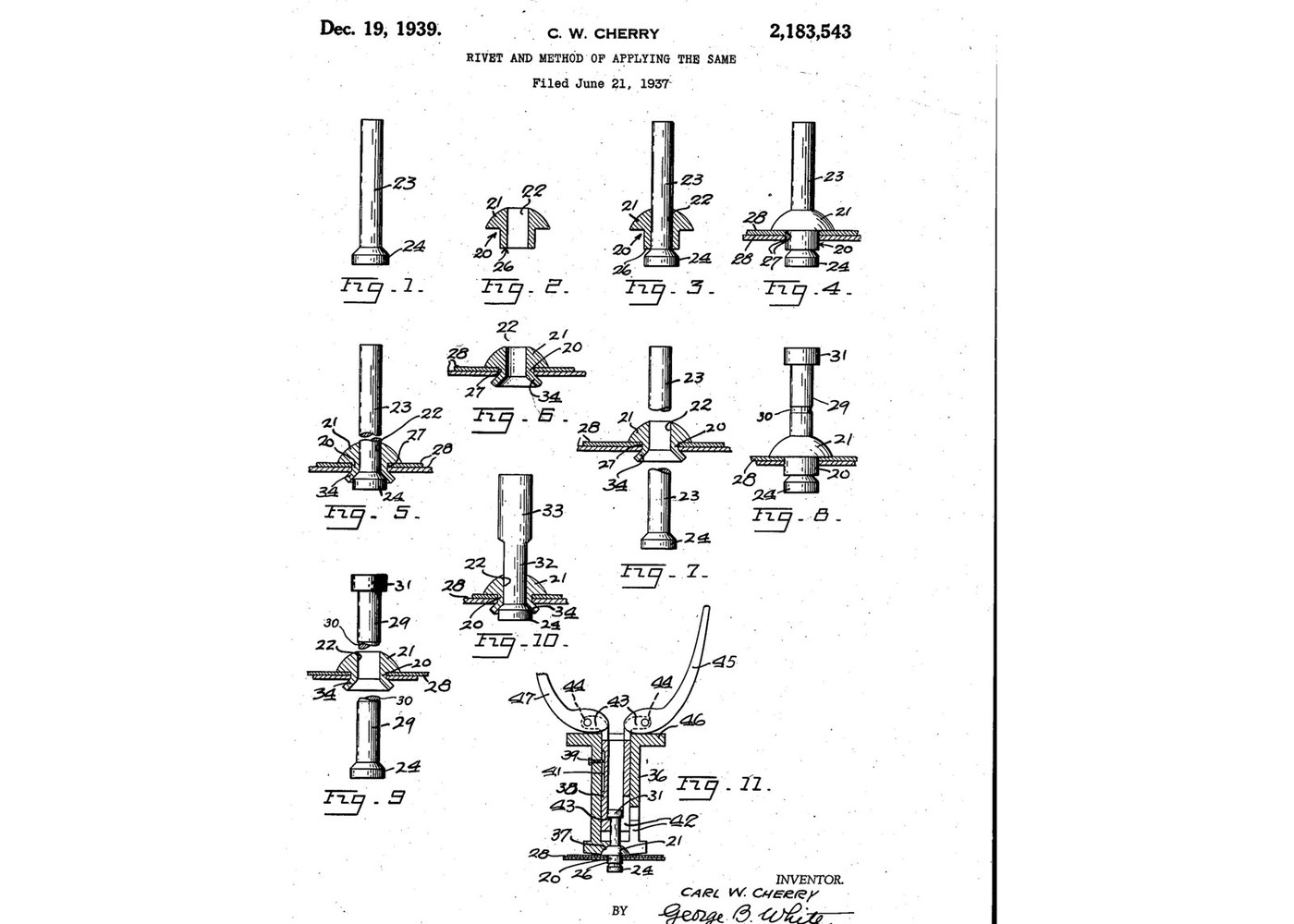


Pop Rivets: Hollow Rivet on a Break-Off Former Shank (Cherry 1939)
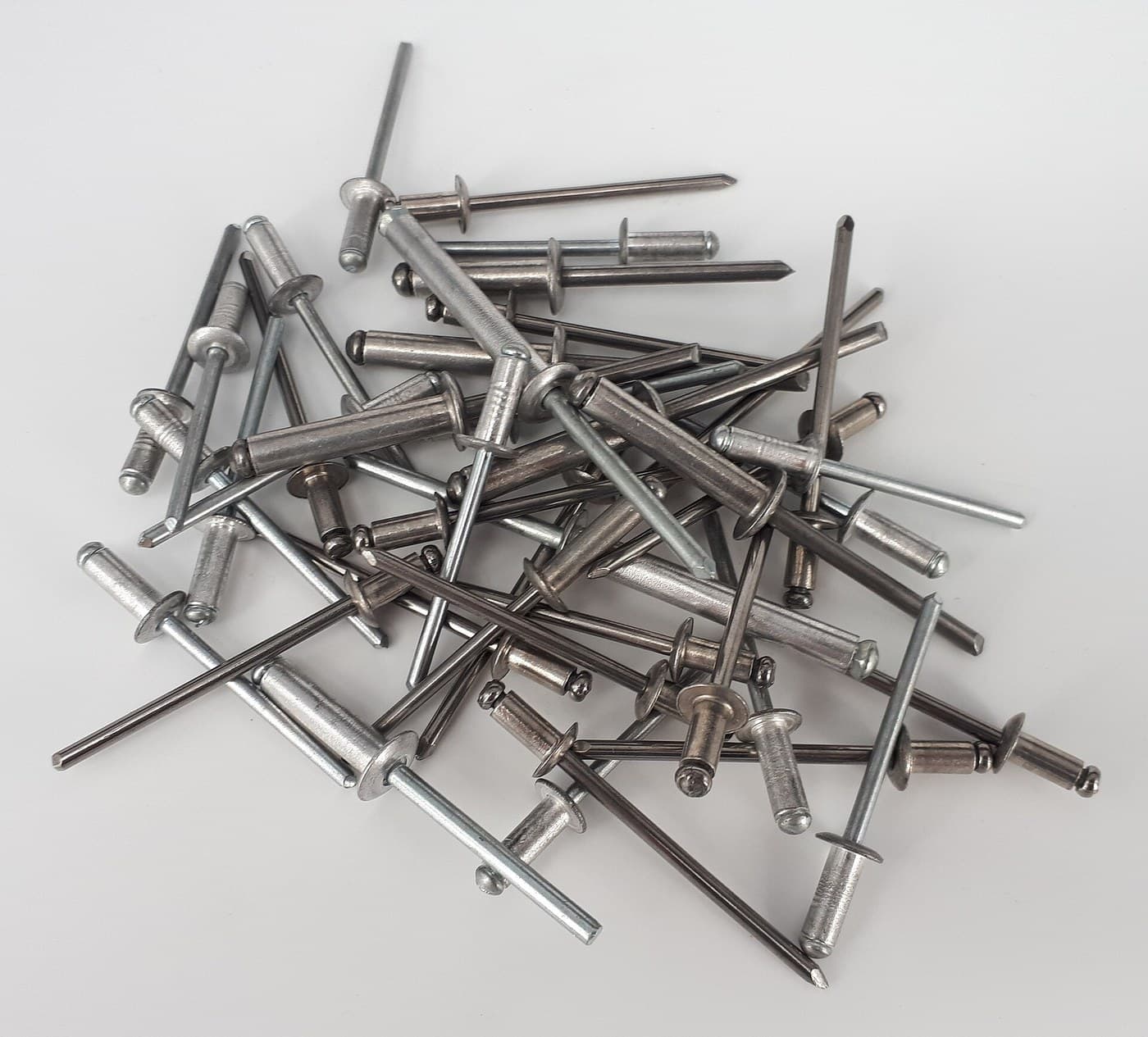
A rivet you set from one side. Cherry threaded a hollow rivet onto a shank with a bevelled head, the former, at the far end. Pull the shank while pushing on the rivet head and the former spreads the rivet's tail against the back of the work. A groove in the shank makes it break at a set pull, so every rivet is set to the same tightness.
Source: Carl W. Cherry, US 2,183,543 (1939). Unknown: the metal and the dimensions. Cherry gives neither, so both are linked to unknown heads. Turning the parts on a lathe and setting them with a pop rivet gun are ours. Picture: the patent's drawing.
Ilọsíwájú
1 day
Ìlànà
1
1
Turn the hollow rivet
Turn the hollow rivet
Turn a tubular rivet with a head formed at one end and a passage right through it. Unknown: the metal and the sizes.
Àwọn ohun èlò fún ìgbésẹ̀ yìí:
 Irin tí a kò mọ̀1 as required
Àwọn irinṣẹ́ tí a nílò:
 Ẹ̀rọ Ìyí Irin
 Àpò ohun èlò lathe (HSS)
 Kálípà Fáníà
 Ìwọ̀n tí a kò mọ̀
2
2
Turn the former shank
Turn the former shank
Turn a shank that slides through the rivet's passage, with a former head at one end: no wider than the rivet, and bevelled on its inner edge where it meets the rivet's tail. The bevel sets the angle the tail spreads to. Cut a groove around the shank where it should break.
Àwọn ohun èlò fún ìgbésẹ̀ yìí:
Irin tí a kò mọ̀1 as requiredÀwọn irinṣẹ́ tí a nílò:
Ẹ̀rọ Ìyí IrinÀpò ohun èlò lathe (HSS)Kálípà FáníàÌwọ̀n tí a kò mọ̀3
3
Assemble and set
Assemble and set
Push the shank through the rivet so the former sits against the tail. Put the rivet into matching holes in the work. Press on the rivet head and pull the shank at the same time (Cherry's tool: a casing with a dolly on the head, and a shank holder pulled by cammed handles; ours: a pop rivet gun). The former spreads the tail against the far plate. Then the shank breaks at its groove, and the broken pieces fall out of the passage.
Àwọn irinṣẹ́ tí a nílò:
 Ẹ̀rọ Ìlùkòkò Onídúró
 Ìdìpọ̀ ẹ̀rọ ìso pop rivet
 Gíláàsì ààbò
Àwọn ohun-èlò
1- 1 as requiredÀyè
Àwọn irinṣẹ́ tó nílò
7- Àyè
- Àyè
Ìtọ́nisọ́nà yìí ń ṣe

Blueprint tó jọra
Àwọn blueprint wọ̀nyí pín ìmọ̀ — ọ̀nà, ohun-èlò tàbí ìlànà

CC0 Àgbègbè Gbogbogbò
Blueprint yìí ti jáde lábẹ́ CC0. O lè ṣe àdàkọ, yí padà, pín, àti lò láìsí ìyọ̀ǹda.
Ṣàtìlẹ́yìn Olùṣẹ́dá nípa rírà àwọn ọjà nipasẹ̀ Blueprint wọn Ẹ̀san Olùṣẹ́dá tí àwọn Olùtajà gbé kalẹ̀, tàbí ṣẹ̀dá àtúnṣe tuntun ti Blueprint yìí kí o sì fi sínú Blueprint rẹ gẹ́gẹ́ bí ìsopọ̀ láti pín owó-wíwọlé.