IṢẸ́ ỌNÀ
ẸWÀ ÀTI ÌLERA
IṢẸ́ ỌWỌ́
ÀṢÀ ÀTI ÌTÀN
ÌṢERÉ
ÀYÍKÁ
OÚNJẸ ÀTI OHUN MÍMU
REVERSE ENGINEERING
SÁYẸ́ǸSÌ
ERÉ ÌDÁRAYÁ
ÌMỌ̀-Ẹ̀RỌ
ÀWỌN OHUN WÍWỌ̀
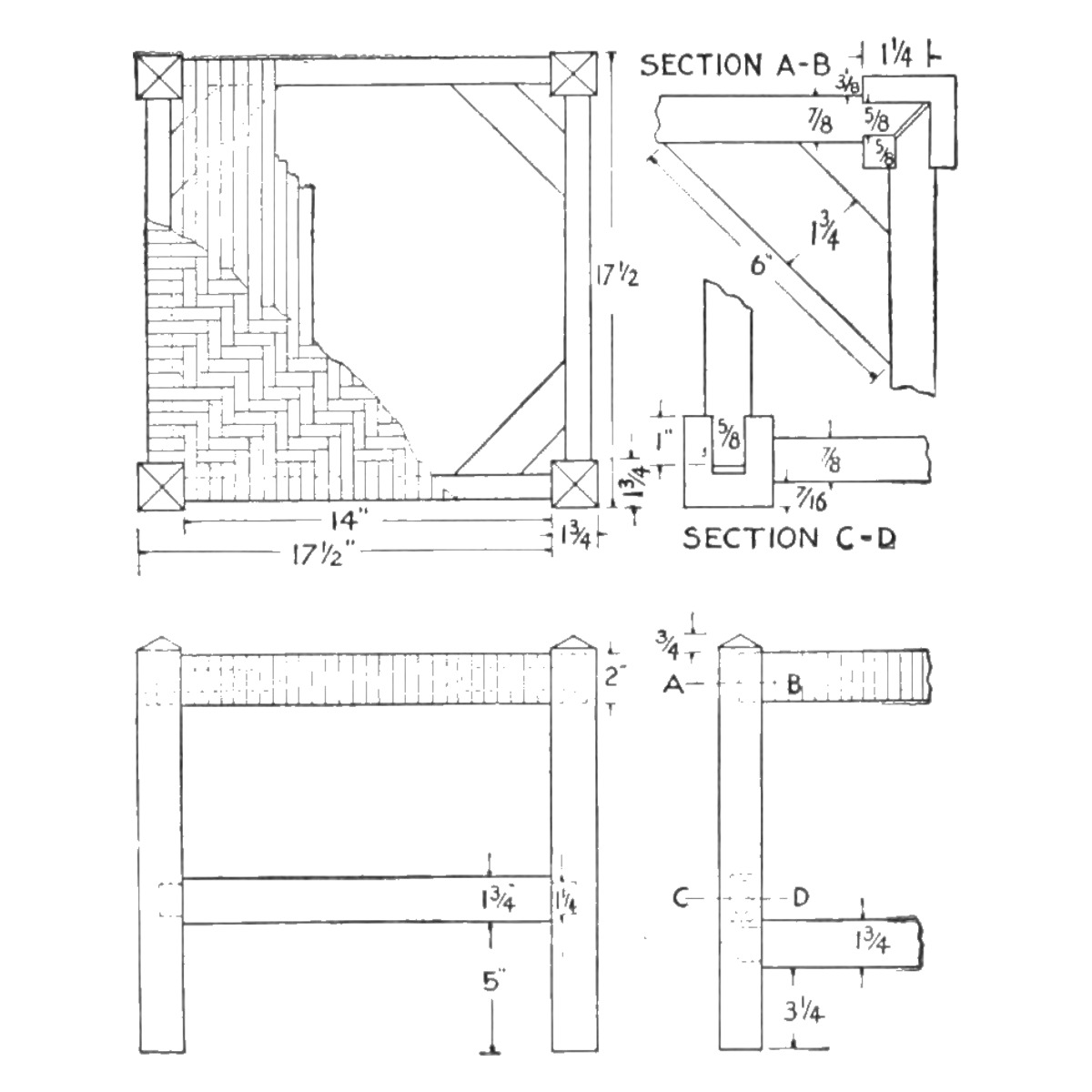


Woven-Top Stool: Mortised, Braced Frame With a Diagonal Reed Seat (Boy Mechanic, 1915)
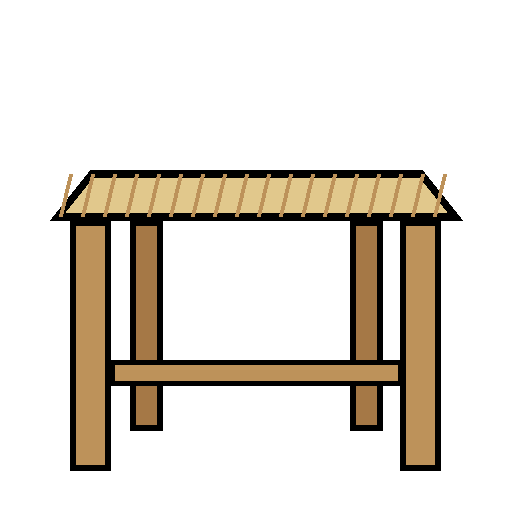
Russel Dodsworth's stool from The Boy Mechanic, Book 2 (1915): a 17-1/2 in square mortise-and-tenon frame with corner braces, its top woven from wet reed in two layers, the second laid over-three-under-three so a diagonal pattern runs across the seat.
Àárín
About 2 days
Ìlànà
1
1
His cutting list, and the weave
His cutting list, and the weave
Ń ṣí ìwé Jupyter…
2
2
Read The Boy Mechanic, Book 2
Read The Boy Mechanic, Book 2
The material: 4 legs, 1-3/4 by 1-3/4 by 16 in; 4 bottom rails, 7/8 by 1-3/4 by 16 in; 4 top rails, 7/8 by 2 by 16-1/2 in; 4 diagonal braces, 7/8 by 1-3/4 by 6 in.
3
3
Cut and mortise the frame
Cut and mortise the frame
Cut the parts to his list. Mortise the legs so the top rails come level; tenon the top rails on the sides only and bevel them at the ends. For the bottom rails, cut the mortises one above the other (5 in above the floor on his drawing) and tenon the rails on all sides. Cut the braces at 45 deg on each end.
Àwọn ohun èlò fún ìgbésẹ̀ yìí:
 Pátákó Igi Líle4 ẹyọ
Àwọn irinṣẹ́ tí a nílò:
 Ayùn Ọwọ́
 Àwọn ìgbẹ́ igi
 Òòlù Igi
 Ohun èlò ìfárí igi (pìlánì)
 Gègé
 Okùn Ìdíwọ̀n
4
4
Glue up
Glue up
Glue the frame together and glue the diagonal braces in place inside the top corners.
Àwọn ohun èlò fún ìgbésẹ̀ yìí:
 Ìdìpọ̀ Igi1 ẹyọ
Àwọn irinṣẹ́ tí a nílò:
 Ìdìmú oní-ọ̀páÒòlù Igi
5
5
Wrap the first layer
Wrap the first layer
Use a wet reed weaver and wrap one layer over the whole top, the strips close together and tightly wound.
Àwọn ohun èlò fún ìgbésẹ̀ yìí:
 Rattan1 ẹyọ
Àwọn irinṣẹ́ tí a nílò:
 Bàkẹ́ẹ̀tì Lítà 20
 Ọ̀bẹ awọ
6
6
Weave the second layer
Weave the second layer
Start the second layer at right angles to the first. Strip 1: under one, then over three, under three, and so on by threes. Strip 2: under two, then over three, under three. Strip 3: under three, then over and under three. Strip 4: over one, then under three, over three. Strip 5: over two, then under and over three. Strip 6: over three, then by threes. Repeat the series of six across the top.
Àwọn ohun èlò fún ìgbésẹ̀ yìí:
Rattan1 ẹyọÀwọn irinṣẹ́ tí a nílò:
Bàkẹ́ẹ̀tì Lítà 20Ọ̀bẹ awọ7
7
Finish
Finish
Good white shellac makes the best finish for the seat; finish the frame to suit.
Àwọn ohun èlò fún ìgbésẹ̀ yìí:
 Fánníṣì sẹ́làkì1 ẹyọ
Àwọn irinṣẹ́ tí a nílò:
 Búrọ́ọ̀ṣì fífẹ̀
8
8
Troubleshooting
Troubleshooting
Stool troubleshooting.
Flow
Loading...
9
9
History and honest limits
History and honest limits
From "Woven-Top Stool" by Russel Dodsworth, Erie, Pa., in **The Boy Mechanic, Book 2**, Popular Mechanics, 1915 (Project Gutenberg 44585; checked on the archive.org scan boymechanicbook200chic2, p. 256). His caption names the weaver as reed; he gives no reed size or tenon lengths. Rattan reed as the weaver, the tools and metric figures are ours.
Àwọn ohun-èlò
4- 4 ẹyọÀyè
- 1 ẹyọÀyè
- 1 ẹyọÀyè
- 1 ẹyọÀyè
Ìtọ́nisọ́nà yìí ń ṣe
Blueprint tó jọra
Àwọn blueprint wọ̀nyí pín ìmọ̀ — ọ̀nà, ohun-èlò tàbí ìlànà
CC0 Àgbègbè Gbogbogbò
Blueprint yìí ti jáde lábẹ́ CC0. O lè ṣe àdàkọ, yí padà, pín, àti lò láìsí ìyọ̀ǹda.
Ṣàtìlẹ́yìn Olùṣẹ́dá nípa rírà àwọn ọjà nipasẹ̀ Blueprint wọn Ẹ̀san Olùṣẹ́dá tí àwọn Olùtajà gbé kalẹ̀, tàbí ṣẹ̀dá àtúnṣe tuntun ti Blueprint yìí kí o sì fi sínú Blueprint rẹ gẹ́gẹ́ bí ìsopọ̀ láti pín owó-wíwọlé.