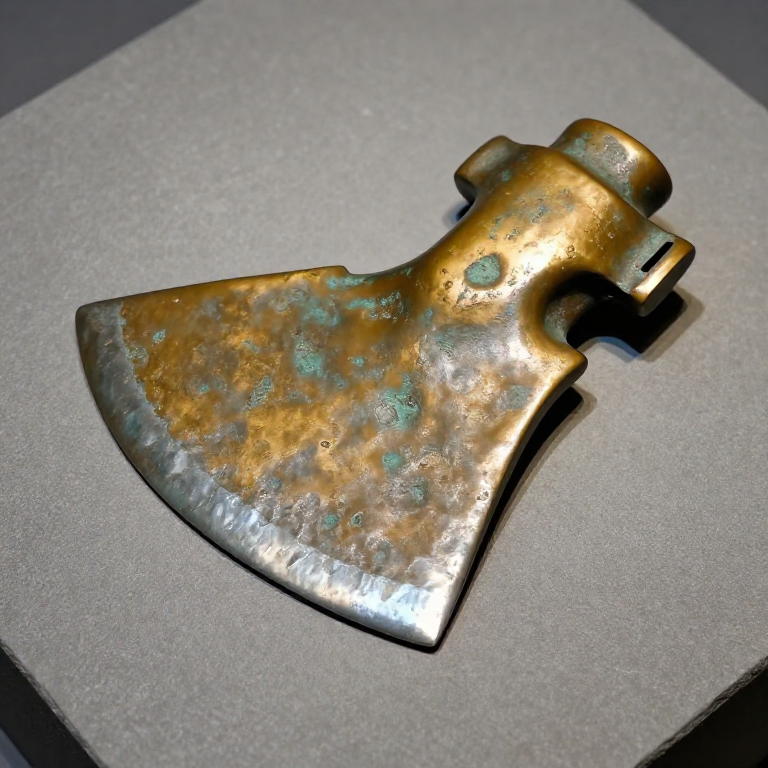


Casting a Bronze Flat Axe — The First Metal Cutting Tool
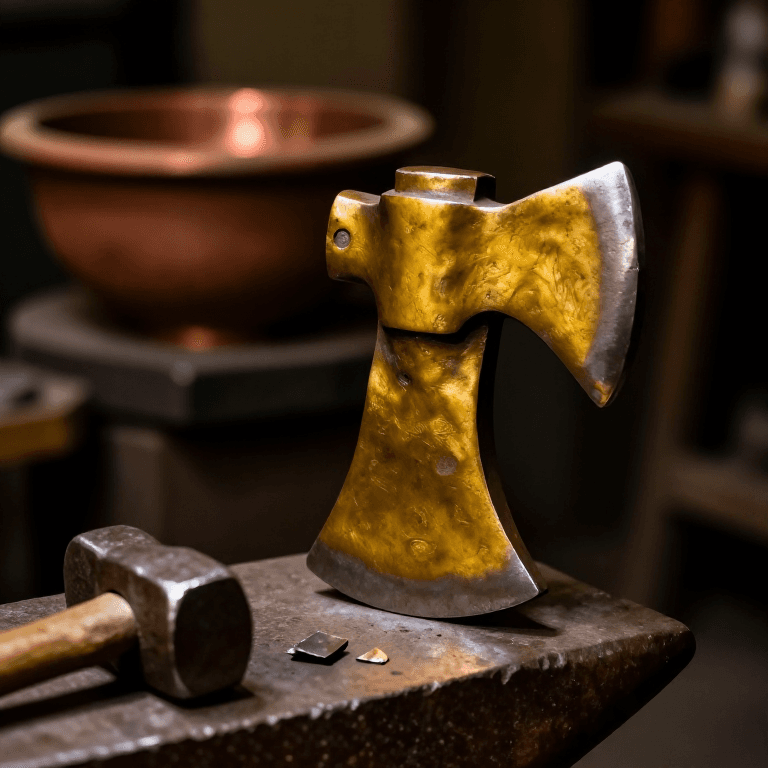
The flat axe was the first metal tool to surpass its stone predecessor in every way — sharper, more durable, and resharpened by simple hammering rather than knapping a new edge. Cast from bronze (roughly 90% copper, 10% tin), these axes appeared across Europe, the Near East, and East Asia from around 3300 BCE.
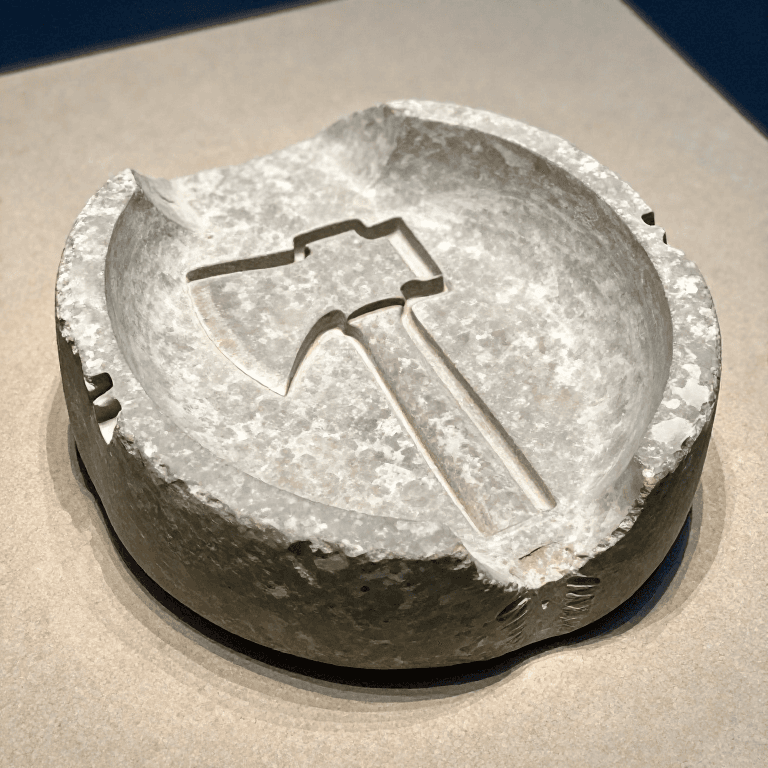
This blueprint uses an open-face stone mould — the simplest casting method. Molten bronze is poured into a carved soapstone cavity and allowed to cool. The resulting casting has one flat face (from the mould floor) and one slightly convex face (from the open top where the metal surface tensions). After demoulding, the axe is cold-hammered to harden the cutting edge, ground to shape, and hafted onto a wooden handle with rawhide lashing.
A single flat axe required the combined knowledge of mining, smelting, alloying, crucible-making, mould-carving, and woodworking — making it one of the most knowledge-intensive objects of its era.
Ìlànà
Prepare the mould
Prepare the mould
Àwọn ohun èlò fún ìgbésẹ̀ yìí:
 Ọ̀rá Ẹranko30 g
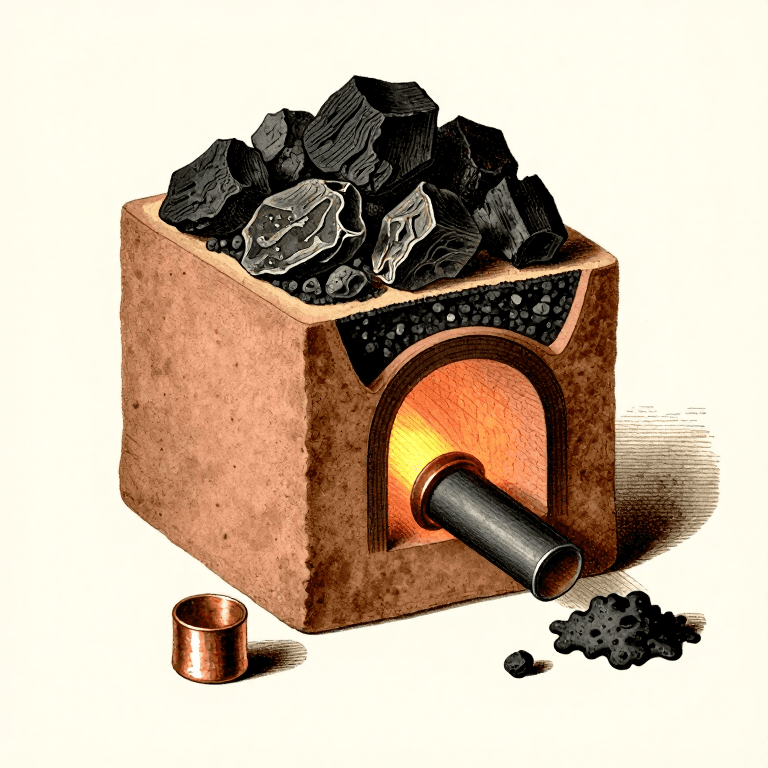
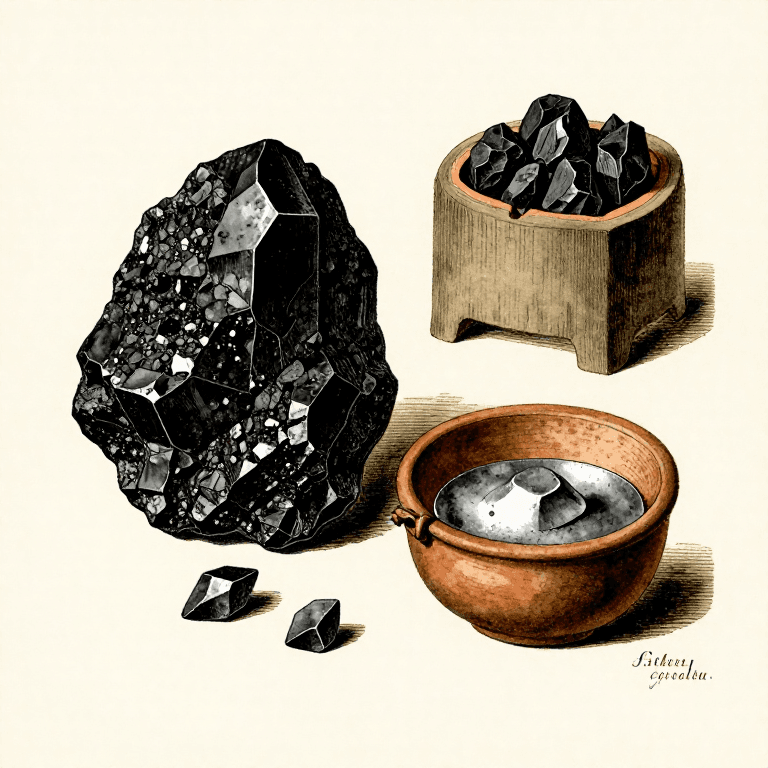
Charge the crucible with bronze
Charge the crucible with bronze
Àwọn ohun èlò fún ìgbésẹ̀ yìí:
 Pẹlẹbẹ Bàbà270 g
Melt and alloy the bronze
Melt and alloy the bronze
Àwọn ohun èlò fún ìgbésẹ̀ yìí:
 Èédú Ìṣùu3 kg
Pour the bronze into the mould
Pour the bronze into the mould
Àwọn irinṣẹ́ tí a nílò:
 Ẹmú Ìkòkò Ìyọ́
Cool and demould
Cool and demould
Remove the pour channel and flash
Remove the pour channel and flash
Àwọn irinṣẹ́ tí a nílò:
 Òkúta Ìlù
Cold-hammer the cutting edge
Cold-hammer the cutting edge
Àwọn irinṣẹ́ tí a nílò:
 Pẹpẹ Òkúta Pẹrẹsẹ
Grind and sharpen
Grind and sharpen
Àwọn ohun èlò fún ìgbésẹ̀ yìí:
 Òkúta Iyanrìn (Ohun Ìfá)1 ẹyọ
 Òkúta ìpọ́n1 ẹyọ
Shape the haft
Shape the haft
Bind the axe head to the haft
Bind the axe head to the haft
Àwọn ohun èlò fún ìgbésẹ̀ yìí:
 Ege awọ àìṣe2 m
Àwọn ohun-èlò
7- 30 gÀyè
- 270 gÀyè
- 3 kgÀyè
- Àyè
- 1 ẹyọÀyè
- 2 mÀyè
- 1 ẹyọÀyè
Àwọn irinṣẹ́ tó nílò
4- Àyè
- Àyè
Àwọn Ohun Èlò Ìtọ́nisọ́nà Tí A So Pọ̀
Blueprint tó jọra
Àwọn blueprint wọ̀nyí pín ìmọ̀ — ọ̀nà, ohun-èlò tàbí ìlànà
CC0 Àgbègbè Gbogbogbò
Blueprint yìí ti jáde lábẹ́ CC0. O lè ṣe àdàkọ, yí padà, pín, àti lò láìsí ìyọ̀ǹda.
Ṣàtìlẹ́yìn Olùṣẹ́dá nípa rírà àwọn ọjà nipasẹ̀ Blueprint wọn Ẹ̀san Olùṣẹ́dá tí àwọn Olùtajà gbé kalẹ̀, tàbí ṣẹ̀dá àtúnṣe tuntun ti Blueprint yìí kí o sì fi sínú Blueprint rẹ gẹ́gẹ́ bí ìsopọ̀ láti pín owó-wíwọlé.