IṢẸ́ ỌNÀ
ẸWÀ ÀTI ÌLERA
IṢẸ́ ỌWỌ́
ÀṢÀ ÀTI ÌTÀN
ÌṢERÉ
ÀYÍKÁ
OÚNJẸ ÀTI OHUN MÍMU
REVERSE ENGINEERING
SÁYẸ́ǸSÌ
ERÉ ÌDÁRAYÁ
ÌMỌ̀-Ẹ̀RỌ
ÀWỌN OHUN WÍWỌ̀
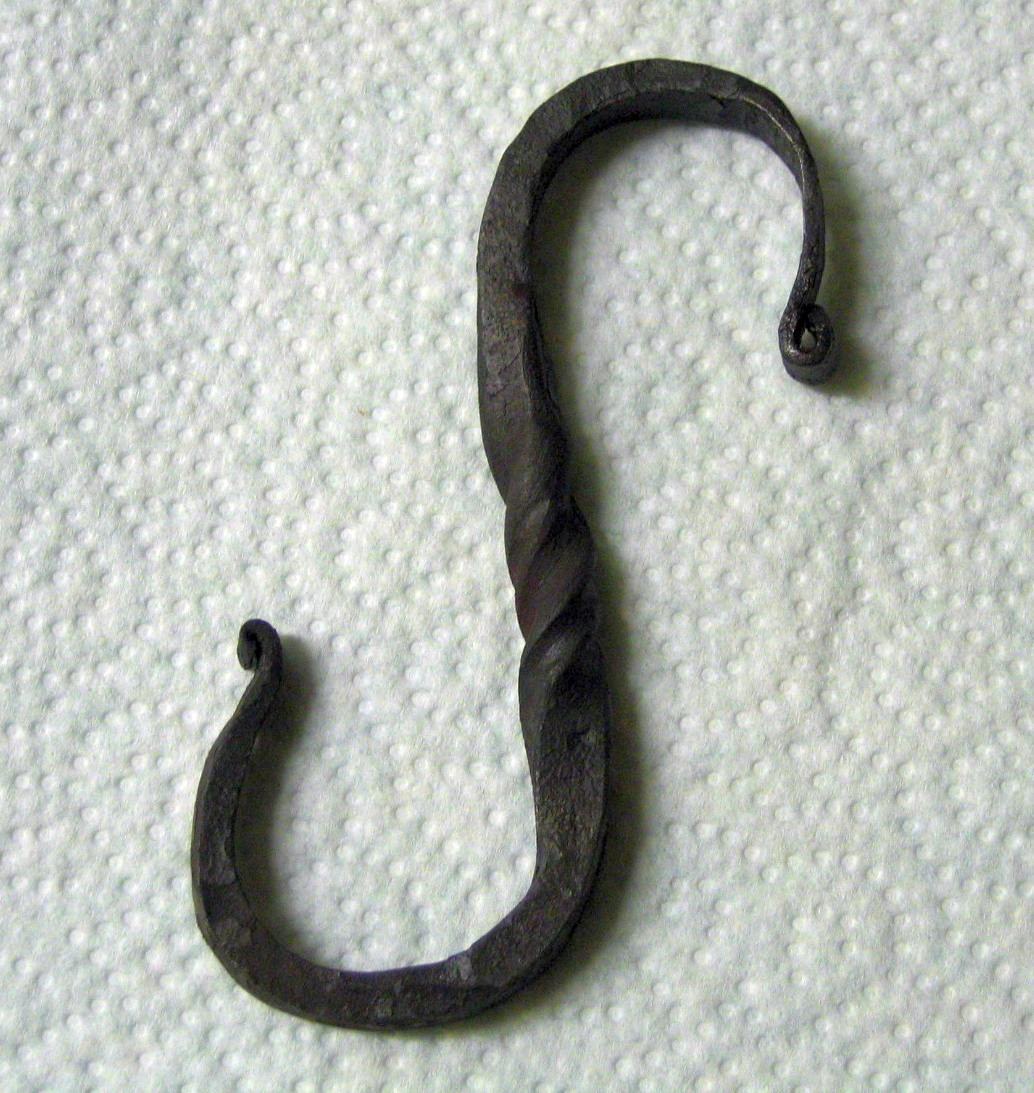


Bucket Hook: an S-Hook Bent Hot over the Anvil Horn
A bucket hangs from a tap, a pole or a crossbeam on an S-hook: one end over the support, the other through the bail. Harcourt (1920) gives it as a first forging exercise: bend one end hot over the anvil horn, then the other end the opposite way. Rod size and hook sizes are ours.
The picture: a forged S-hook (Wikimedia Commons).
Olùbẹ̀rẹ̀
1 hour
Ìlànà
1
1
Cut and square the stock
Cut and square the stock
Saw 200 mm of 8 mm mild steel rod and square up both ends.
Àwọn ohun èlò fún ìgbésẹ̀ yìí:
 Ọ̀pá Róbótó Irin Rírọ̀200 mm
Àwọn irinṣẹ́ tí a nílò:
 Ayùn Irin
 Gíláàsì ààbò
2
2
Bend the first hook
Bend the first hook
Heat about half the piece and bend one end over the anvil horn, with the blows falling on the far side of the horn. Close it to a hook that fits over the support.
Àwọn ohun èlò fún ìgbésẹ̀ yìí:
 Èédú1 as required
Àwọn irinṣẹ́ tí a nílò:
 Ìléru alágbẹ̀dẹ
 Ìdí Alágbẹ̀dẹ
 Òòlù olórí ìtẹ̀ ìpakà
 Ẹmú alágbẹ̀dẹ
 Ìbọ̀wọ́ wẹ́lídìnGíláàsì ààbò
3
3
Bend the second hook
Bend the second hook
Heat the other end and bend it over the horn the same way, but in the opposite direction, to make the S. Size it to take the bucket's bail.
Àwọn irinṣẹ́ tí a nílò:
Ìléru alágbẹ̀dẹÌdí Alágbẹ̀dẹÒòlù olórí ìtẹ̀ ìpakàẸmú alágbẹ̀dẹÌbọ̀wọ́ wẹ́lídìn4
4
True it up
True it up
Even out both curves so the hook is free of rough hammer marks, and let it cool in air.
Àwọn irinṣẹ́ tí a nílò:
Ìdí Alágbẹ̀dẹÒòlù olórí ìtẹ̀ ìpakàẸmú alágbẹ̀dẹÌtọ́nisọ́nà yìí ń ṣe

Blueprint tó jọra
Àwọn blueprint wọ̀nyí pín ìmọ̀ — ọ̀nà, ohun-èlò tàbí ìlànà
CC0 Àgbègbè Gbogbogbò
Blueprint yìí ti jáde lábẹ́ CC0. O lè ṣe àdàkọ, yí padà, pín, àti lò láìsí ìyọ̀ǹda.
Ṣàtìlẹ́yìn Olùṣẹ́dá nípa rírà àwọn ọjà nipasẹ̀ Blueprint wọn Ẹ̀san Olùṣẹ́dá tí àwọn Olùtajà gbé kalẹ̀, tàbí ṣẹ̀dá àtúnṣe tuntun ti Blueprint yìí kí o sì fi sínú Blueprint rẹ gẹ́gẹ́ bí ìsopọ̀ láti pín owó-wíwọlé.