IṢẸ́ ỌNÀ
ẸWÀ ÀTI ÌLERA
IṢẸ́ ỌWỌ́
ÀṢÀ ÀTI ÌTÀN
ÌṢERÉ
ÀYÍKÁ
OÚNJẸ ÀTI OHUN MÍMU
REVERSE ENGINEERING
SÁYẸ́ǸSÌ
ERÉ ÌDÁRAYÁ
ÌMỌ̀-Ẹ̀RỌ
ÀWỌN OHUN WÍWỌ̀
Youblob (generated from this blueprint's notebook) · CC0


Calibrating a Sprayer: Litres per Hectare from a Stopwatch and a Jug
A boom sprayer puts down whatever the product label says only if three numbers agree: the flow from each nozzle, the speed across the field, and the spacing of the nozzles. Get them wrong and the crop gets too little to work, or too much — wasted money, damaged crops and chemical in the water.
Calibration needs no instruments beyond a measuring jug, a stopwatch and a tape. This rung derives the one formula that ties the numbers together, works through a catch test and the 10 % replacement rule, shows why pressure is only for small corrections, and then calibrates a real boom with clean water.
Olùbẹ̀rẹ̀
About 2 hours
Ìlànà
1
1
The formula, the catch test and the pressure law
The formula, the catch test and the pressure law
Ń ṣí ìwé Jupyter…
2
2
Time your real speed
Time your real speed
Tractor speedometers read wrong when tyres wear or slip. Measure 100 m in the field you will spray, with the sprayer half full, and mark both ends with survey flags. Drive it at the gear and engine speed you will spray at, getting up to speed before the first flag, and time it. Do it twice and average.
Speed in km/h = 360 ÷ seconds for 100 m. A 45 s run is 8.0 km/h.
Àwọn irinṣẹ́ tí a nílò:
 Ohun Èlò Àsíá àti Ìgi Ìdíwọ̀n Ilẹ̀
 Okùn Ìdíwọ̀n
 Aago Ìdúró
3
3
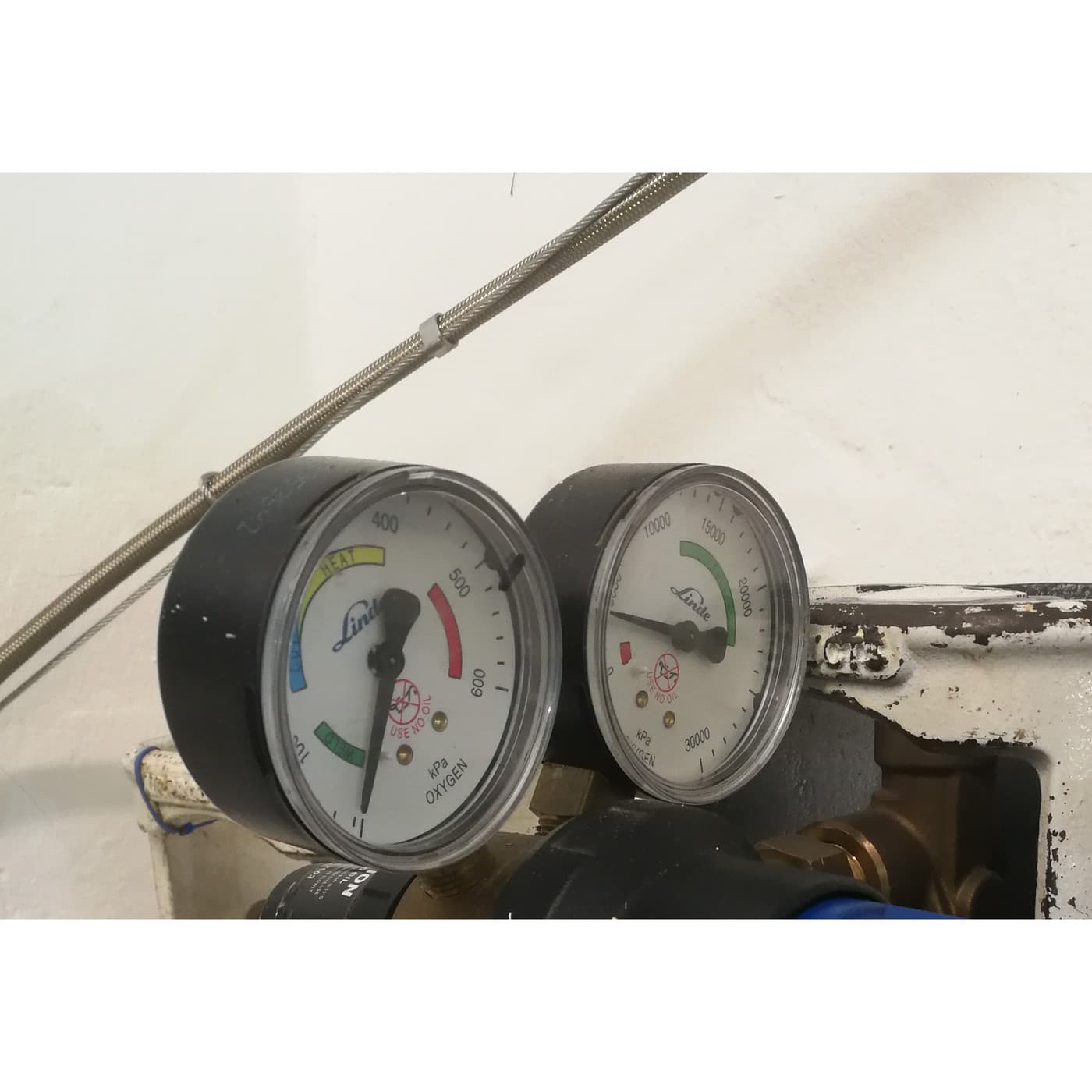
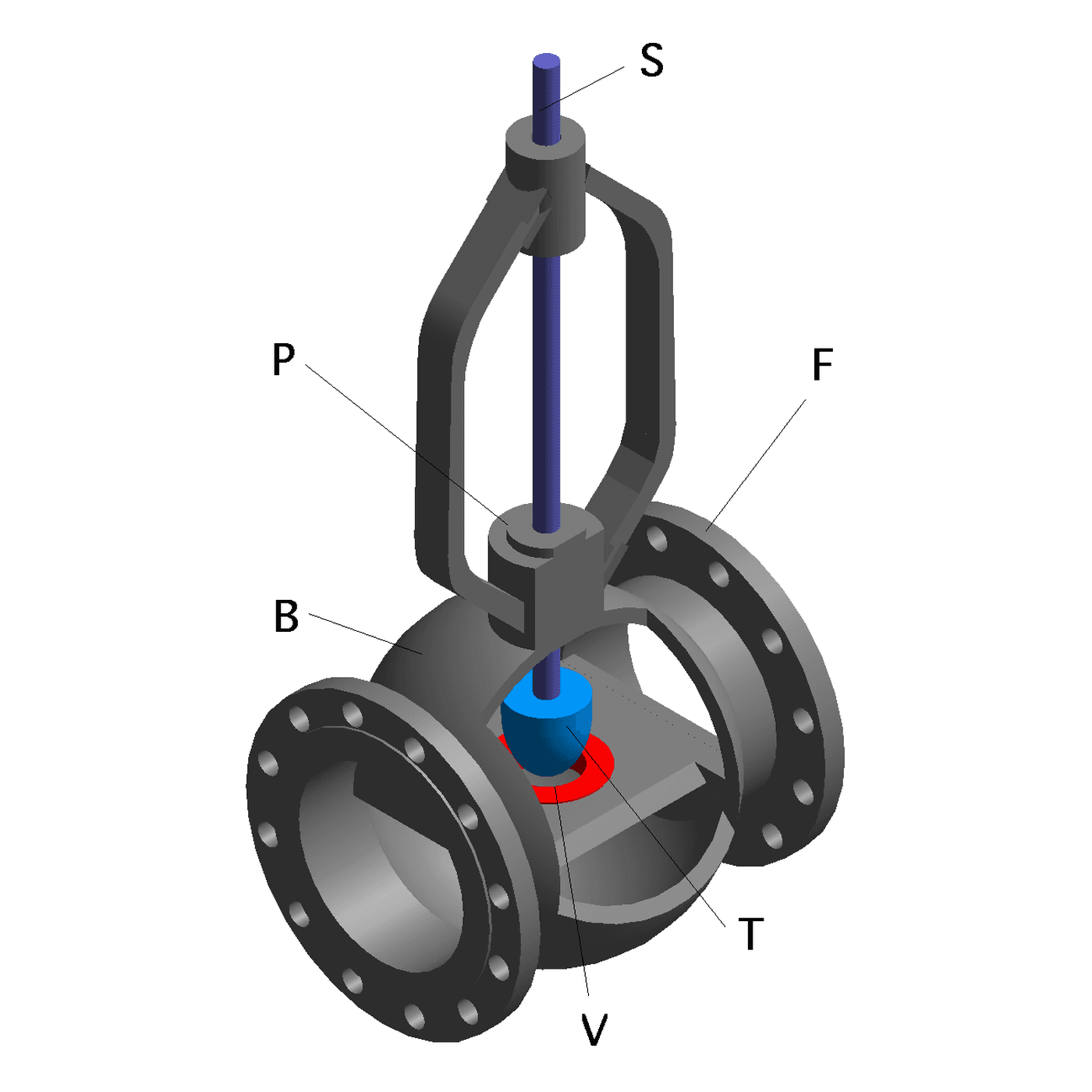
Hold the pressure steady
Hold the pressure steady
Nozzle flow depends on pressure, so the sprayer's regulator must hold it steady as the pump speed and tank level change. The embedded blueprint shows how.
4
4
Catch every nozzle
Catch every nozzle
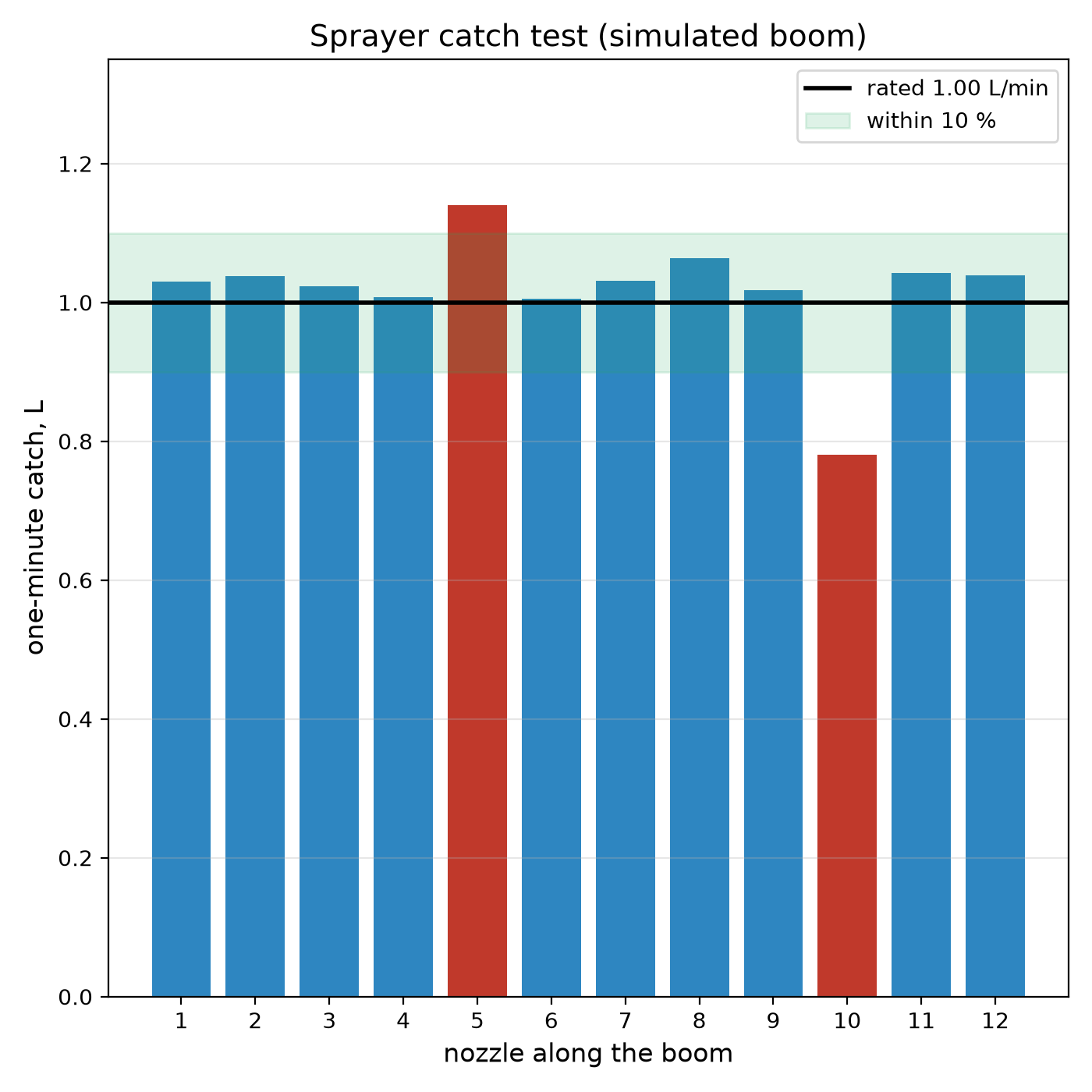
Fill the tank with **clean water only**. Park, set the pressure you will spray at, and run the boom. Hold a measuring jug under each nozzle for exactly one minute and write down the catch.
From the notebook, work out the flow each nozzle needs for your target rate, speed and spacing. Replace every nozzle more than 10 % off its rated flow — the flat-fan tips wear open with use, and a blocked one shows at once. Clean filters and nozzle strainers while you are there. Catch the replaced nozzles again.
Then compute the boom's actual rate from the average catch. If it is within a few per cent of target, trim with pressure; if not, change speed or fit a different nozzle size. Write the settings on a card in the cab.
Àwọn ohun èlò fún ìgbésẹ̀ yìí:
 Nọ́sù ìfọ́n pẹlẹbẹ bíi abẹ̀bẹ̀12 ẹyọ
 Omi50 lítà
Àwọn irinṣẹ́ tí a nílò:
 Ìgò ìwọ̀nAago Ìdúró
 Silinda òǹwọ̀n
 Ẹ̀rọ Ìwọ̀n Ìtẹ̀
 Ìbọ̀wọ́ Iṣẹ́ Awọ
 Gílásì Ààbò Tí Ó Mọ́
5
5
When the rate comes out wrong
When the rate comes out wrong
Work through the causes from the most common.
Flow
Loading...
6
6
Context and honest limits
Context and honest limits
The calibration method here is the one taught by agricultural extension services: time a known distance, catch each nozzle for a fixed time, replace nozzles more than 10 % off, and compute the rate from the formula. In US units the same relation is GPM = GPA × MPH × spacing (inches) ÷ 5940, and the notebook checks the two agree.
**Honest limits.** Calibrating does not make a spray safe: always follow the product label for rate, protective equipment, weather and buffer zones, and calibrate with water, never with the product. Uniform output from each nozzle does not guarantee uniform coverage on the ground: boom height, overlap between fans and wind all change it.
Àwọn irinṣẹ́ tó nílò
8- 1 vendor sell this, none ship to you yetÀyè
- Àyè
- Àyè
Blueprint tó jọra
Àwọn blueprint wọ̀nyí pín ìmọ̀ — ọ̀nà, ohun-èlò tàbí ìlànà

CC0 Àgbègbè Gbogbogbò
Blueprint yìí ti jáde lábẹ́ CC0. O lè ṣe àdàkọ, yí padà, pín, àti lò láìsí ìyọ̀ǹda.
Ṣàtìlẹ́yìn Olùṣẹ́dá nípa rírà àwọn ọjà nipasẹ̀ Blueprint wọn Ẹ̀san Olùṣẹ́dá tí àwọn Olùtajà gbé kalẹ̀, tàbí ṣẹ̀dá àtúnṣe tuntun ti Blueprint yìí kí o sì fi sínú Blueprint rẹ gẹ́gẹ́ bí ìsopọ̀ láti pín owó-wíwọlé.