IṢẸ́ ỌNÀ
ẸWÀ ÀTI ÌLERA
IṢẸ́ ỌWỌ́
ÀṢÀ ÀTI ÌTÀN
ÌṢERÉ
ÀYÍKÁ
OÚNJẸ ÀTI OHUN MÍMU
REVERSE ENGINEERING
SÁYẸ́ǸSÌ
ERÉ ÌDÁRAYÁ
ÌMỌ̀-Ẹ̀RỌ
ÀWỌN OHUN WÍWỌ̀
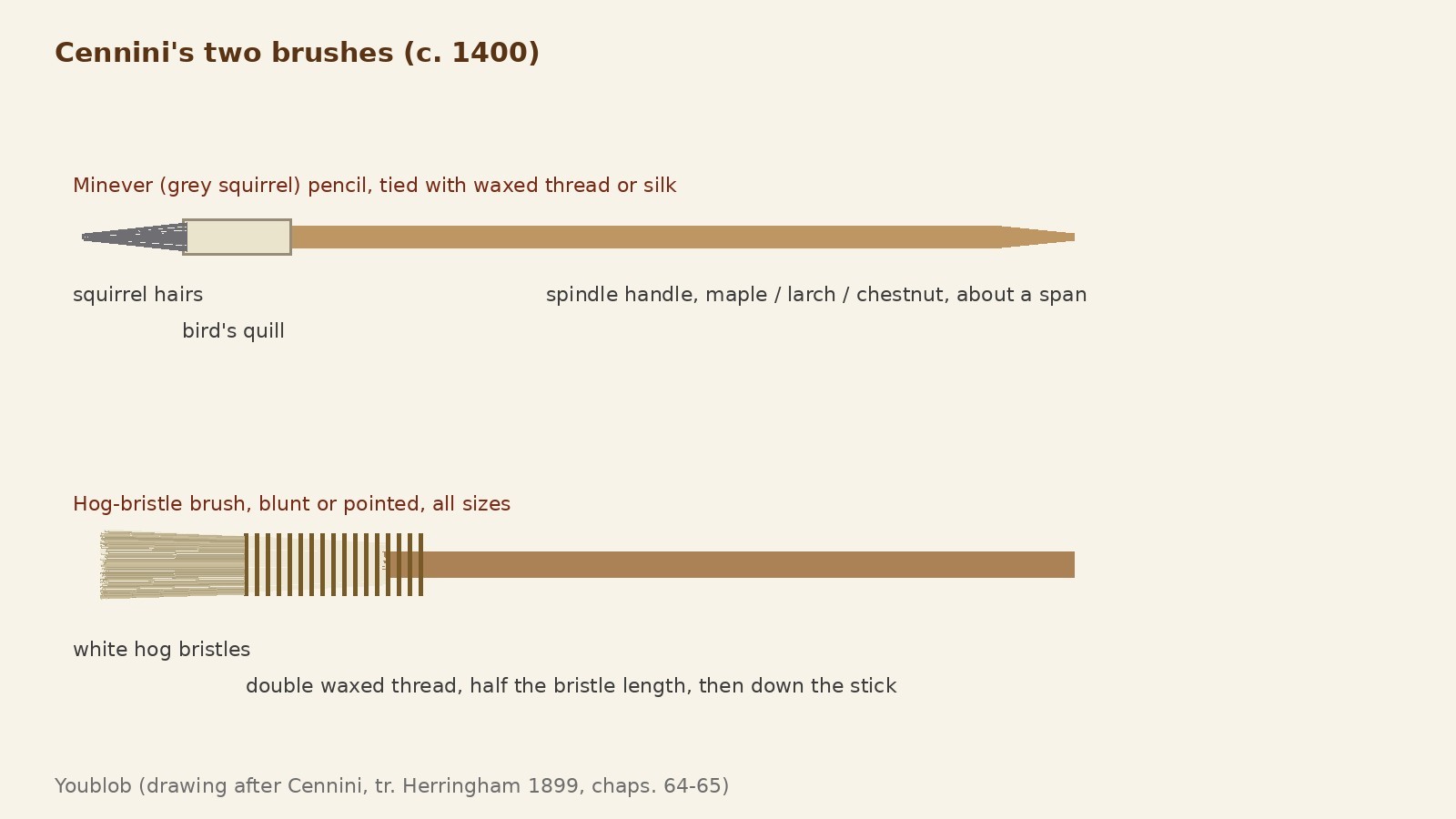


Squirrel-Hair Quill Pencils and Hog-Bristle Brushes (Cennini, c. 1400)
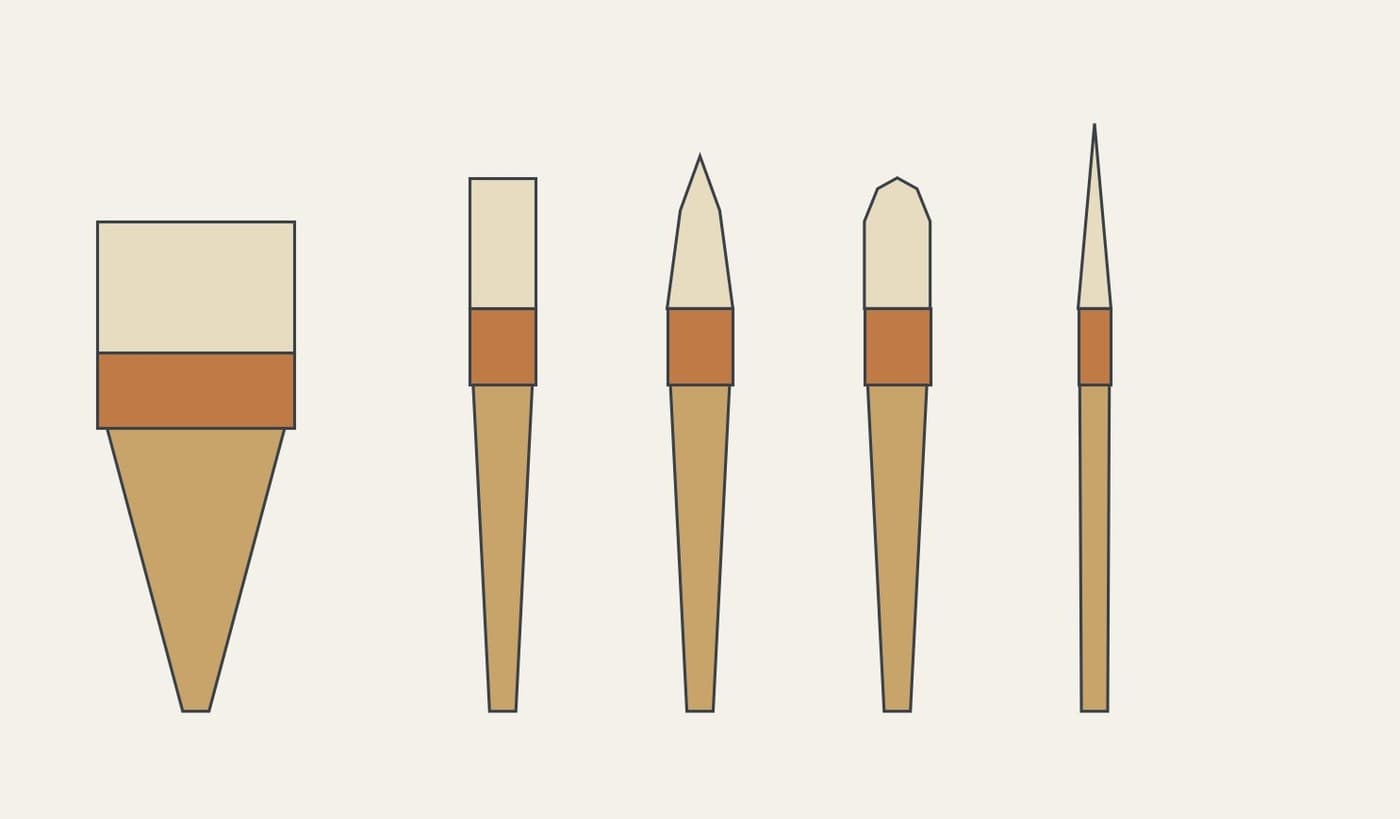
The painter's own brushes from Cennino Cennini's handbook: soft squirrel-tail hairs tied and squeezed into a bird's quill on a spindle-shaped wooden handle, and white hog bristles first broken in on a wall brush, then bound with waxed thread into blunt and pointed brushes of every size.
Olùbẹ̀rẹ̀
An afternoon (plus breaking in the bristles)
Ìlànà
1
1
His sizes
His sizes
Ń ṣí ìwé Jupyter…
2
2
Read the Book of the Art
Read the Book of the Art
"In painting, two kinds of brushes are necessary, namely, minever and hog's bristles."
3
3
Keep the tails
Keep the tails
Use dressed (cured) grey-squirrel tails, never raw ones. To keep moths off and the hairs from falling out, stick them tight into kneaded clay or chalk and hang them up; wash them in clean water before use.
Àwọn ohun èlò fún ìgbésẹ̀ yìí:
 Squirrel Tails1 ẹyọ
 Amọ̀1 ẹyọ
4
4
Bundle the hairs
Bundle the hairs
For a soft gilding pencil, draw the longest hairs from the tips of six or eight tails. For other brushes take the straightest, stiffest hairs from the middle of the tail. Make small bundles, soak them in a glass of clear water, squeeze each with the fingers, and trim them with scissors. Lay the points even and tie each with waxed thread or silk, two knots.
Àwọn ohun èlò fún ìgbésẹ̀ yìí:
Squirrel Tails1 ẹyọ Okùn ọ̀gbọ̀ tí a fi ìdì kùn1 ẹyọ
Àwọn irinṣẹ́ tí a nílò:
 Ìgò Gílásì
 Ìṣẹ́ná
5
5
Set them in quills
Set them in quills
Take a quill (vulture, goose, hen or dove) to suit the bundle, cut off its end, and push the hairs in, squeezing in as many as you can: the firmer and shorter the brush, the finer work it does. Scrape a small stick of maple, larch, chestnut or other good wood into a smooth spindle that fits tightly into the quill, about a span long. For flat washes blunt the brush a little with scissors and rub it on a smooth stone; keep others to a perfect point for outlines, and some very small for fine work.
Àwọn ohun èlò fún ìgbésẹ̀ yìí:
 Ìyẹ́1 ẹyọ
 Àwọn dowel igi líle1 ẹyọ
Àwọn irinṣẹ́ tí a nílò:
Ìṣẹ́ná Ọ̀bẹ Sìlóìdì
6
6
Break in the bristles
Break in the bristles
Take bristles of a white domestic pig (better than black). Bind a pound of them on a large stick and use it to whitewash and wash walls until the bristles soften.
Àwọn ohun èlò fún ìgbésẹ̀ yìí:
 Irun ẹlẹ́dẹ̀ igbó1 ẹyọÀwọn dowel igi líle1 ẹyọOkùn ọ̀gbọ̀ tí a fi ìdì kùn1 ẹyọ
Àwọn irinṣẹ́ tí a nílò:
Ọ̀bẹ Sìlóìdì7
7
Make the bristle brushes
Make the bristle brushes
Unbind the wall brush and make the bristles up into brushes of all sizes, some blunt (all hairs one length), some pointed. Bind each bundle with a double waxed thread, push the pointed end of a stick into it, bind it evenly for half the length of the bristles and then on down the stick.
Àwọn ohun èlò fún ìgbésẹ̀ yìí:
Irun ẹlẹ́dẹ̀ igbó1 ẹyọÀwọn dowel igi líle1 ẹyọOkùn ọ̀gbọ̀ tí a fi ìdì kùn1 ẹyọÀwọn irinṣẹ́ tí a nílò:
Ìṣẹ́náỌ̀bẹ Sìlóìdì8
8
Troubleshooting
Troubleshooting
Brush troubleshooting.
Flow
Loading...
9
9
History and honest limits
History and honest limits
From Cennino Cennini, **Il Libro dell'Arte** (c. 1400), translated by Christiana J. Herringham as **The Book of the Art of Cennino Cennini** (1899), chaps. 64-66 (checked on the archive.org scan bookartcenninoc01herrgoog, pp. 52-54). One word in the manuscript, what the wall brush is tied with, is defaced. Herringham explains minever as the grey squirrel. The metric figures and the smooth stone in place of his porphyry are ours.
Àwọn ohun-èlò
6- 1 ẹyọÀyè
- 1 ẹyọÀyè
- Àyè
- 1 ẹyọÀyè
- 1 ẹyọÀyè
- 1 ẹyọÀyè
Ìtọ́nisọ́nà yìí ń ṣe
Blueprint tó jọra
Àwọn blueprint wọ̀nyí pín ìmọ̀ — ọ̀nà, ohun-èlò tàbí ìlànà
CC0 Àgbègbè Gbogbogbò
Blueprint yìí ti jáde lábẹ́ CC0. O lè ṣe àdàkọ, yí padà, pín, àti lò láìsí ìyọ̀ǹda.
Ṣàtìlẹ́yìn Olùṣẹ́dá nípa rírà àwọn ọjà nipasẹ̀ Blueprint wọn Ẹ̀san Olùṣẹ́dá tí àwọn Olùtajà gbé kalẹ̀, tàbí ṣẹ̀dá àtúnṣe tuntun ti Blueprint yìí kí o sì fi sínú Blueprint rẹ gẹ́gẹ́ bí ìsopọ̀ láti pín owó-wíwọlé.