IṢẸ́ ỌNÀ
ẸWÀ ÀTI ÌLERA
IṢẸ́ ỌWỌ́
ÀṢÀ ÀTI ÌTÀN
ÌṢERÉ
ÀYÍKÁ
OÚNJẸ ÀTI OHUN MÍMU
REVERSE ENGINEERING
SÁYẸ́ǸSÌ
ERÉ ÌDÁRAYÁ
ÌMỌ̀-Ẹ̀RỌ
ÀWỌN OHUN WÍWỌ̀
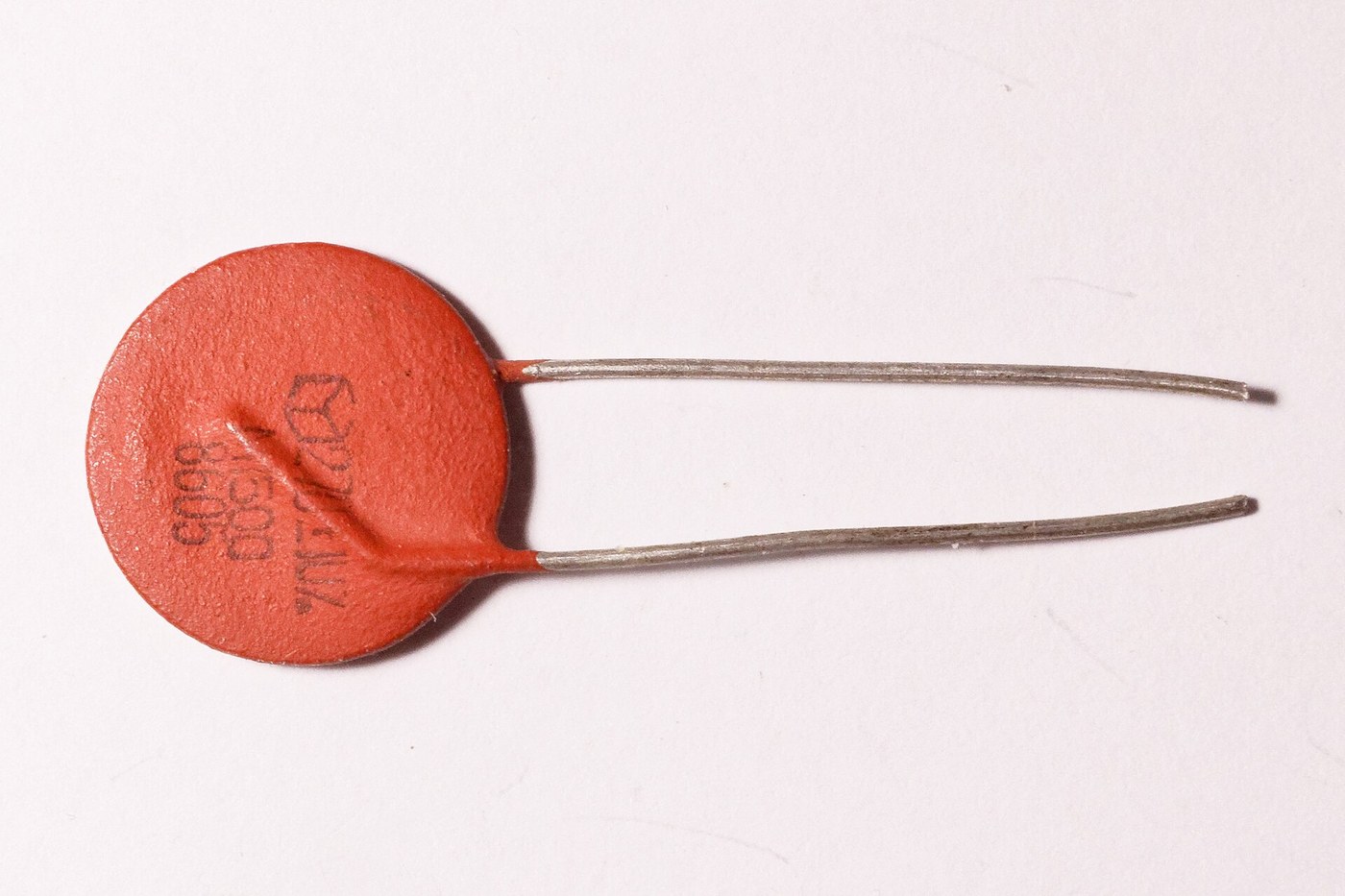


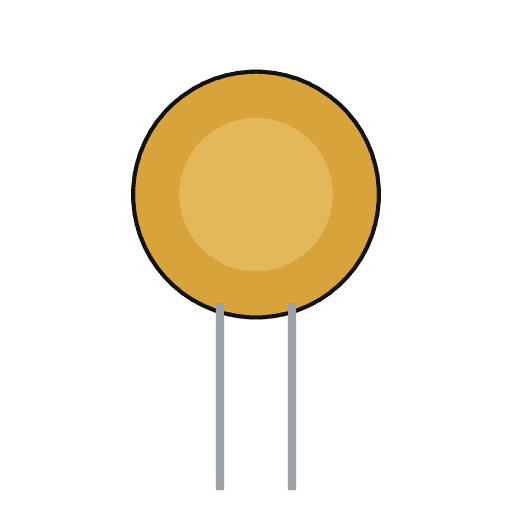
Ceramic Disc Capacitors: Barium Titanate with Nickel Stannate, Pressed, Fired and Silvered (Coffeen, US 2,789,061)
Barium titanate with 3 mole % nickel stannate is calcined, pressed into small discs and fired hard. Silver is fired onto both faces and a lead soldered to each, giving ceramic disc capacitors of high capacity for their size.
Result: discs 3/8 inch across and about 1/10 inch thick with a dielectric constant averaging 2380 and a dissipation factor of 0.58 %. Between 25 and 85 °C the dielectric constant rose at most 17 % and fell at most 7 %.
Source: W. W. Coffeen (Metal & Thermit Corp.), US 2,789,061 (1957). Unknown: how the barium titanate, the nickel stannate and the tinned lead wire are made; the patent uses them ready-made. Picture: Wikimedia Commons.
Ilọsíwájú
10 days
Ìlànà
1
1
Weigh and slurry
Weigh and slurry
Weigh 19.32 g of barium titanate and 0.68 g of hydrated nickel stannate (about NiSnO3·2H2O), which is 97 mole % BaTiO3 and 3 mole % NiSnO3. Slurry them with 50 cc of distilled water. The patent prefers 2 to 4 mole % nickel stannate; 1 to 15 % works.
Àwọn ohun èlò fún ìgbésẹ̀ yìí:
 Barium titanate19.32 g
 Nickel stannate0.68 g
Àwọn irinṣẹ́ tí a nílò:
 Omi Àyọ́
 Òṣùwọ̀n Díjítà Pípé
 Àwo Ìgbẹ
2
2
Dry, sieve and calcine
Dry, sieve and calcine
Dry the slurry, crush it to pass a 50 mesh screen, moisten it with 5 % of a 2 1/2 % starch solution and press it into one slug. Calcine the slug for one hour at 1600 °F (871 °C). Ours: potato starch, a drying oven, mortar and pestle.
Àwọn irinṣẹ́ tí a nílò:
 Sítáàṣì ọ̀dùnkún
 Ààrò ìgbẹ̀
 Odó àti Ọmọ Odó
 Ajọ̀
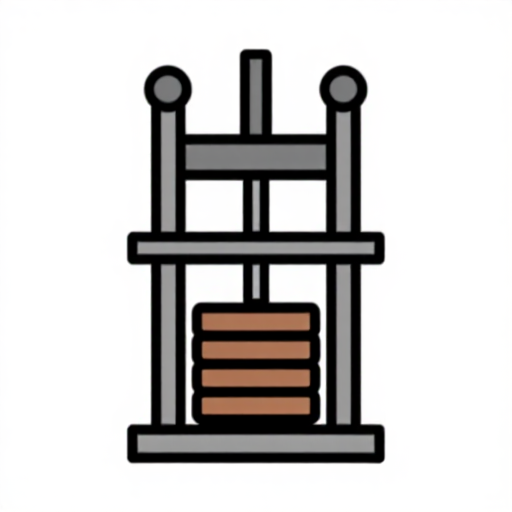 Ẹ̀rọ ìtẹ̀ háídírọ́líìkì
 Ààrò oníná gíga
3
3
Press the discs
Press the discs
Grind the calcine to pass a 325 mesh screen, moisten it again with starch solution, and press small discs 3/8 inch in diameter and about 1/10 inch thick at 20,000 pounds per square inch.
Àwọn irinṣẹ́ tí a nílò:
Odó àti Ọmọ Odó Ajọ Ojú KékeréSítáàṣì ọ̀dùnkúnẸ̀rọ ìtẹ̀ háídírọ́líìkì
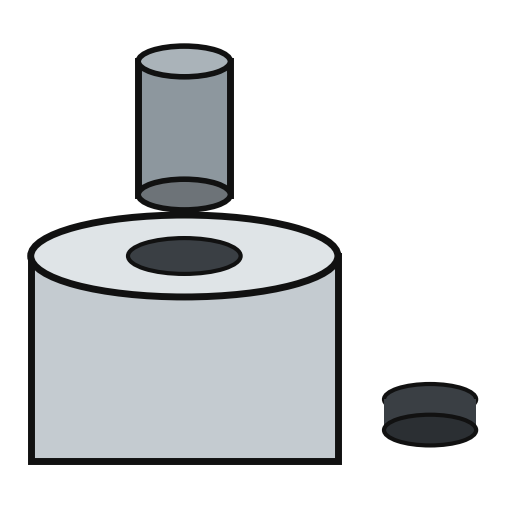 Mọ́ọ̀dù títẹ díìsì
4
4
Fire on platinum
Fire on platinum
Fire the discs on platinum foil at 2400 °F (1316 °C) for one hour. They come out with zero absorption.
Àwọn irinṣẹ́ tí a nílò:
Ààrò oníná gíga Platinum
5
5
Silver and lead
Silver and lead
Paint silver paint on both faces and fire the discs at 1350 °F (732 °C) for one hour. Solder tinned copper lead wires directly to the silver electrodes. Age at least a week before measuring. Ours: a fine brush and a soldering iron.
Àwọn ohun èlò fún ìgbésẹ̀ yìí:
 Àwọ̀ fàdákà tí a ń sun1 both faces
 Wáyà bàbà tí a fi tin bò2 leads per disc
 Wáyà Sọ́ldà1 a little
Àwọn irinṣẹ́ tí a nílò:
 Àwọn búrọ́ọ̀ṣì tí orí wọn kéréÀàrò oníná gíga
 Irin ìsúdì
Àwọn ohun-èlò
5- 19.32 gÀyè
- 0.68 gÀyè
- 1 both facesÀyè
- 2 leads per discÀyè
- 1 a littleÀyè
Àwọn irinṣẹ́ tó nílò
14- Àyè
- Àyè
- Àyè
- Àyè
- Àyè
- 2 vendors sell this, none ship to you yetÀyè
Ìtọ́nisọ́nà yìí ń ṣe
CC0 Àgbègbè Gbogbogbò
Blueprint yìí ti jáde lábẹ́ CC0. O lè ṣe àdàkọ, yí padà, pín, àti lò láìsí ìyọ̀ǹda.
Ṣàtìlẹ́yìn Olùṣẹ́dá nípa rírà àwọn ọjà nipasẹ̀ Blueprint wọn Ẹ̀san Olùṣẹ́dá tí àwọn Olùtajà gbé kalẹ̀, tàbí ṣẹ̀dá àtúnṣe tuntun ti Blueprint yìí kí o sì fi sínú Blueprint rẹ gẹ́gẹ́ bí ìsopọ̀ láti pín owó-wíwọlé.