IṢẸ́ ỌNÀ
ẸWÀ ÀTI ÌLERA
IṢẸ́ ỌWỌ́
ÀṢÀ ÀTI ÌTÀN
ÌṢERÉ
ÀYÍKÁ
OÚNJẸ ÀTI OHUN MÍMU
REVERSE ENGINEERING
SÁYẸ́ǸSÌ
ERÉ ÌDÁRAYÁ
ÌMỌ̀-Ẹ̀RỌ
ÀWỌN OHUN WÍWỌ̀
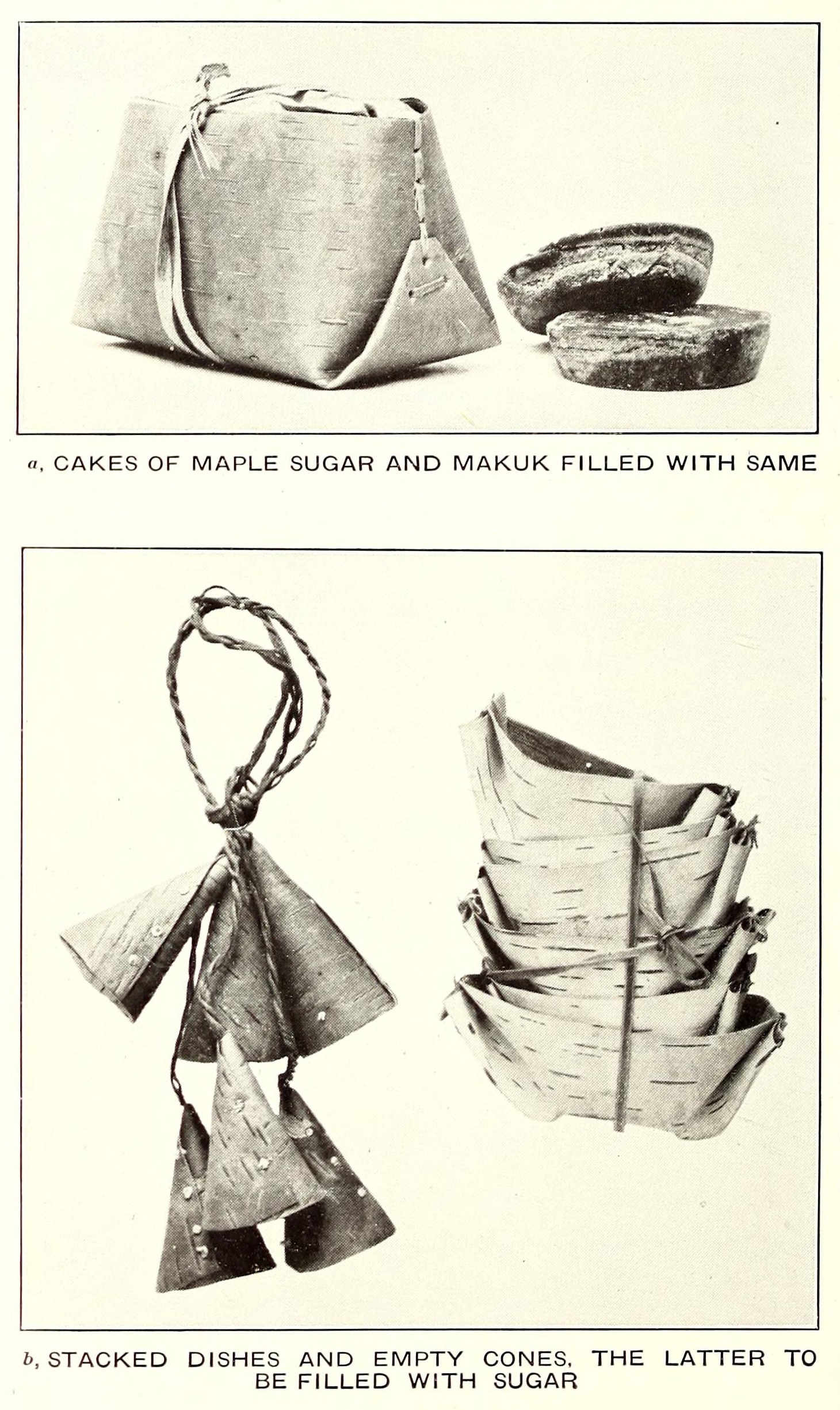


Chippewa Birch Bark Makuks, Dishes and Trays: Warmed Bark Folded and Sewn with Split Roots (Densmore, 1928)
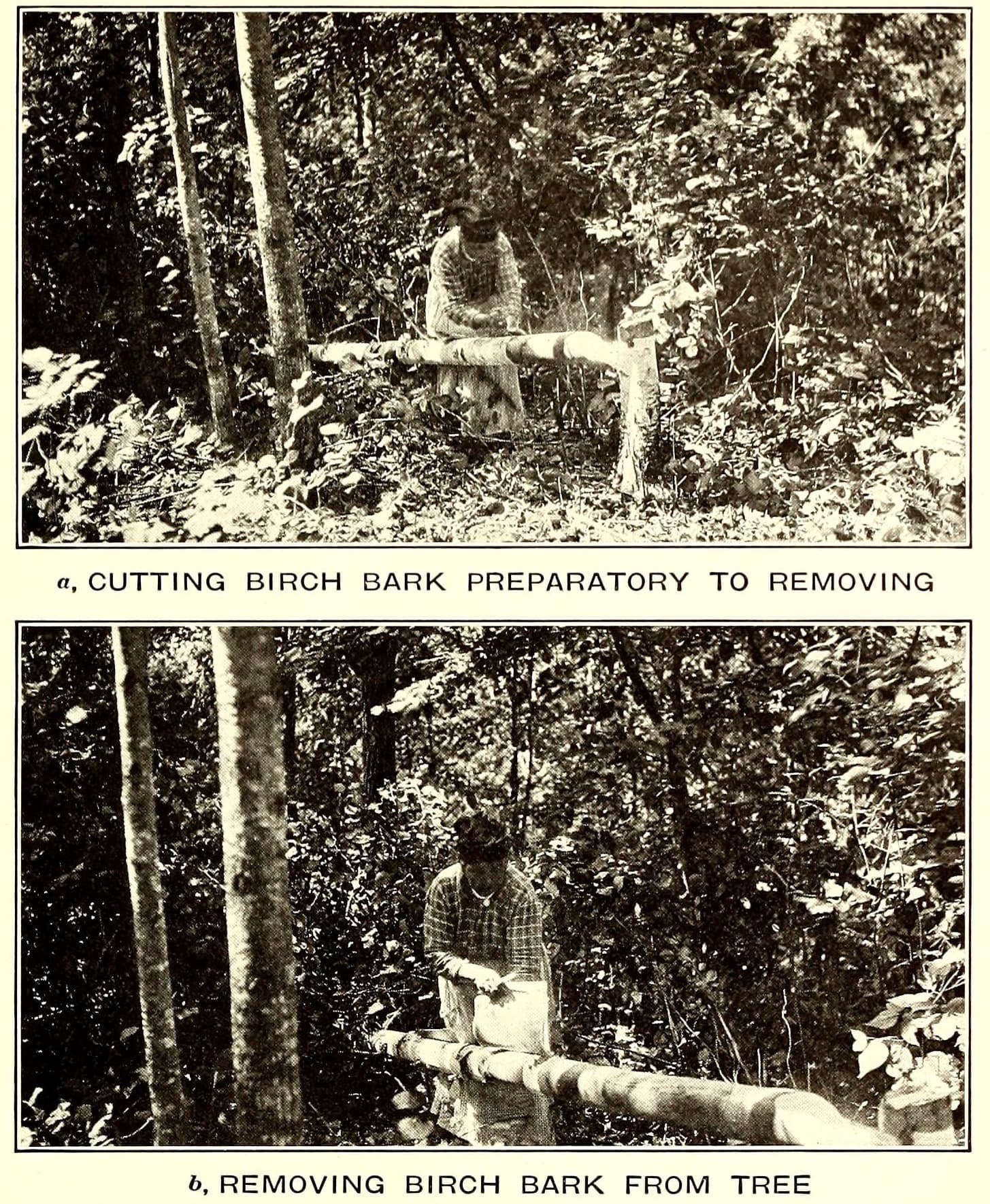
The Chippewa (Ojibwe) birch-bark makuks, dishes and trays Frances Densmore recorded: bark warmed at the fire so it bends and holds its shape, everyday dishes about 10 in. long and 5 in. deep folded and held by a stitch or two at each end, and makuks and trays sewn with split roots and bound at the rim with basswood bark. Birch bark keeps food from spoiling.
Olùbẹ̀rẹ̀
An hour per dish, an afternoon per makuk
Ìlànà
1
1
Read Densmore
Read Densmore
"Birch bark can be unrolled only by exposing it to the heat of a fire. When heated it becomes pliable, and retains any form in which it is placed when thus softened."
2
2
Warm the bark
Warm the bark
Pick bark of the right thickness: heavy for buckets and large makuks, thinner for dishes. Warm the sheet at the fire until it bends without cracking.
Àwọn ohun èlò fún ìgbésẹ̀ yìí:
 Ìwé Èèpo Igi Birch1 ẹyọ
Àwọn irinṣẹ́ tí a nílò:
 Ihò iná
 Ọ̀bẹ
3
3
Folded dish
Folded dish
Fold the warm sheet up into a dish and fasten it with one or two stitches of split root at each end. Her common size: about 10 in. (25 cm) long and 5 in. (13 cm) deep. Ours: fold the corners in like a paper box and pierce the stitch holes with an awl. Tie dishes in bunches of ten to store.
Àwọn ohun èlò fún ìgbésẹ̀ yìí:
 Split Tree Roots1 ẹyọ
Àwọn irinṣẹ́ tí a nílò:
 Ọ̀kọ̀ ÌlùhòỌ̀bẹ
4
4
Tray
Tray
For a finer tray cut away the spare bark at the ends, sew the overlapping edges with split roots, and finish the top with a stiff strip of bark sewn firmly in place.
Àwọn ohun èlò fún ìgbésẹ̀ yìí:
Ìwé Èèpo Igi Birch1 ẹyọSplit Tree Roots1 ẹyọÀwọn irinṣẹ́ tí a nílò:
Ọ̀kọ̀ ÌlùhòỌ̀bẹ5
5
Makuk
Makuk
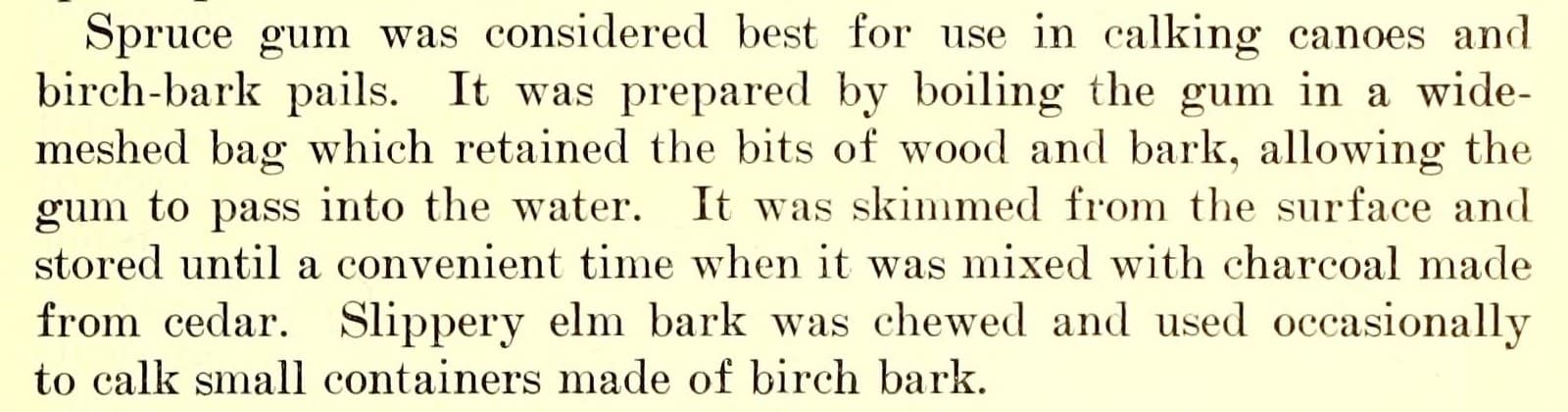
Sew a box-shaped makuk with split roots. Lay a thin strip of basswood bark round the top and sew it over and over with split roots, like a canoe rim. Sew a cover with slanting sides over the top. Sizes ran from about 1 lb to 20-30 lb of maple sugar. For a bucket, cover the seams with pitch and add a handle.
Àwọn ohun èlò fún ìgbésẹ̀ yìí:
Ìwé Èèpo Igi Birch1 ẹyọSplit Tree Roots1 ẹyọ Òwú èèpo inú igi linden1 ẹyọ
 Lẹ́ẹ̀ Oda Páínì1 ẹyọ
Àwọn irinṣẹ́ tí a nílò:
Ọ̀kọ̀ ÌlùhòỌ̀bẹIhò iná6
6
Troubleshooting
Troubleshooting
Birch bark container troubleshooting.
Flow
Loading...
7
7
History and honest limits
History and honest limits
From Frances Densmore, *Uses of Plants by the Chippewa Indians*, **44th Annual Report of the Bureau of American Ethnology** (1928), pp. 388-389 and plates (checked on the archive.org scan usesofplantsbych00dens). Other forms: berry makuks of about a quart with a fibre loop for the belt; storage makuks of 12 quarts or more with one side higher to lap over; an old round dish 9 in. across and 3 in. deep with folded sides and two rows of sweet grass at the rim. She gives no folding pattern: the fold, the awl and metric sizes are ours.
Àwọn ohun-èlò
4- 1 ẹyọÀyè
- 1 ẹyọÀyè
- Àyè
- 1 ẹyọÀyè
Ìtọ́nisọ́nà yìí ń ṣe

Blueprint tó jọra
Àwọn blueprint wọ̀nyí pín ìmọ̀ — ọ̀nà, ohun-èlò tàbí ìlànà

CC0 Àgbègbè Gbogbogbò
Blueprint yìí ti jáde lábẹ́ CC0. O lè ṣe àdàkọ, yí padà, pín, àti lò láìsí ìyọ̀ǹda.
Ṣàtìlẹ́yìn Olùṣẹ́dá nípa rírà àwọn ọjà nipasẹ̀ Blueprint wọn Ẹ̀san Olùṣẹ́dá tí àwọn Olùtajà gbé kalẹ̀, tàbí ṣẹ̀dá àtúnṣe tuntun ti Blueprint yìí kí o sì fi sínú Blueprint rẹ gẹ́gẹ́ bí ìsopọ̀ láti pín owó-wíwọlé.