IṢẸ́ ỌNÀ
ẸWÀ ÀTI ÌLERA
IṢẸ́ ỌWỌ́
ÀṢÀ ÀTI ÌTÀN
ÌṢERÉ
ÀYÍKÁ
OÚNJẸ ÀTI OHUN MÍMU
REVERSE ENGINEERING
SÁYẸ́ǸSÌ
ERÉ ÌDÁRAYÁ
ÌMỌ̀-Ẹ̀RỌ
ÀWỌN OHUN WÍWỌ̀
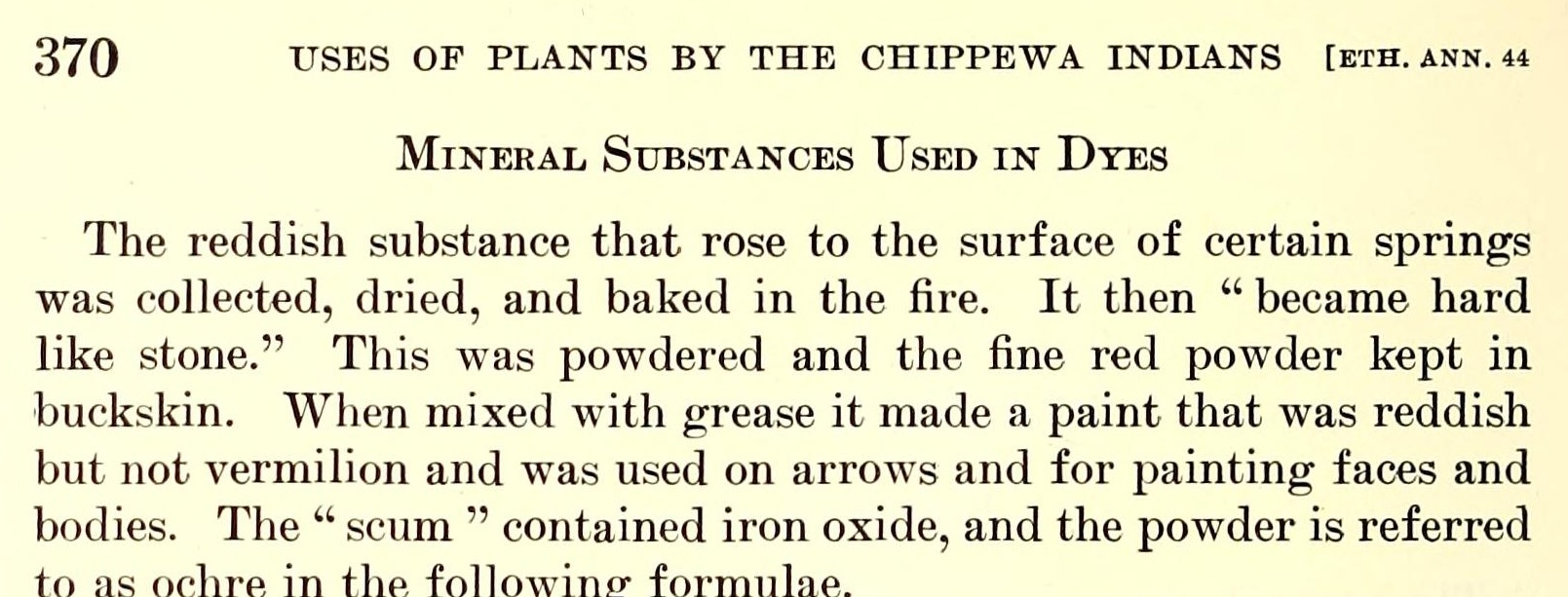


Chippewa Red Paint: Iron Scum from Springs, Baked Hard, Powdered and Mixed with Grease (Densmore, 1928)
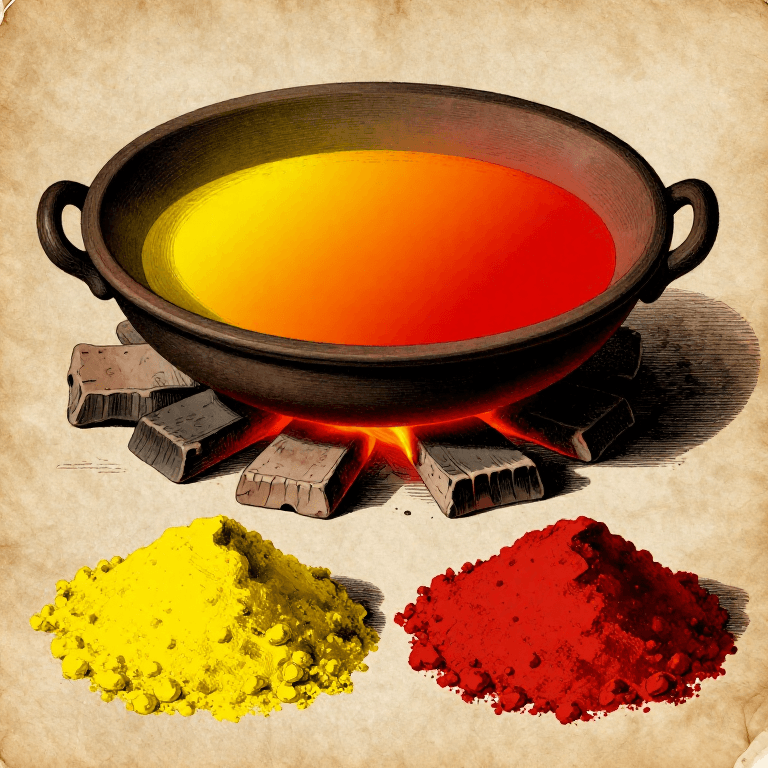
How the Chippewa (Ojibwe) made their red paint, as Frances Densmore recorded it for the Bureau of American Ethnology: the reddish iron scum skimmed from certain springs, dried, baked in the fire until hard as stone, ground to a fine red powder kept in buckskin, and mixed with grease to paint faces, bodies and arrows. The same powder set the colour in their dyes.
Olùbẹ̀rẹ̀
A day: collect, dry, bake, grind
Ìlànà
1
1
Read Densmore
Read Densmore
"When mixed with grease it made a paint that was reddish but not vermilion and was used on arrows and for painting faces and bodies."
2
2
Collect the scum
Collect the scum
Skim the reddish substance that rises on certain springs (it is iron oxide) and carry it home.
Àwọn ohun èlò fún ìgbésẹ̀ yìí:
 Okuta ochre tútù1 ẹyọ
Àwọn irinṣẹ́ tí a nílò:
 Ohun-èlò Èèpo Betula
3
3
Dry and bake
Dry and bake
Let it dry, then bake it in the fire until it "becomes hard like stone" (time ours: until it no longer gives off steam and is hard right through).
Àwọn irinṣẹ́ tí a nílò:
 Ihò iná
4
4
Powder it
Powder it
Break the baked lumps and grind them to a fine red powder. Keep the powder in a buckskin bag.
Àwọn ohun èlò fún ìgbésẹ̀ yìí:
 Awọ àgbọ̀nrín rírọ̀1 ẹyọ
Àwọn irinṣẹ́ tí a nílò:
 Òkúta Ìlù
 Òkúta Ọlọ
5
5
Mix the paint
Mix the paint
For face, body or arrow paint, work a little powder into grease on the palm or a stone until it spreads (amount ours: add grease until it smears smoothly). The colour is reddish, not vermilion.
Àwọn ohun èlò fún ìgbésẹ̀ yìí:
 Ọ̀rá Ẹranko1 ẹyọ
Àwọn irinṣẹ́ tí a nílò:
Òkúta Ọlọ6
6
Troubleshooting
Troubleshooting
Ochre paint troubleshooting.
Flow
Loading...
7
7
History and honest limits
History and honest limits
From Frances Densmore, *Uses of Plants by the Chippewa Indians*, **44th Annual Report of the Bureau of American Ethnology** (1928), p. 370 (checked on the archive.org scan usesofplantsbych00dens). Her Chippewa informants gave no baking time or grease amount; those and the grinding tools are ours.
Àwọn ohun-èlò
3- 1 ẹyọÀyè
- 1 ẹyọÀyè
- 1 ẹyọÀyè
Ìtọ́nisọ́nà yìí ń ṣe
Blueprint tó jọra
Àwọn blueprint wọ̀nyí pín ìmọ̀ — ọ̀nà, ohun-èlò tàbí ìlànà

CC0 Àgbègbè Gbogbogbò
Blueprint yìí ti jáde lábẹ́ CC0. O lè ṣe àdàkọ, yí padà, pín, àti lò láìsí ìyọ̀ǹda.
Ṣàtìlẹ́yìn Olùṣẹ́dá nípa rírà àwọn ọjà nipasẹ̀ Blueprint wọn Ẹ̀san Olùṣẹ́dá tí àwọn Olùtajà gbé kalẹ̀, tàbí ṣẹ̀dá àtúnṣe tuntun ti Blueprint yìí kí o sì fi sínú Blueprint rẹ gẹ́gẹ́ bí ìsopọ̀ láti pín owó-wíwọlé.