IṢẸ́ ỌNÀ
ẸWÀ ÀTI ÌLERA
IṢẸ́ ỌWỌ́
ÀṢÀ ÀTI ÌTÀN
ÌṢERÉ
ÀYÍKÁ
OÚNJẸ ÀTI OHUN MÍMU
REVERSE ENGINEERING
SÁYẸ́ǸSÌ
ERÉ ÌDÁRAYÁ
ÌMỌ̀-Ẹ̀RỌ
ÀWỌN OHUN WÍWỌ̀
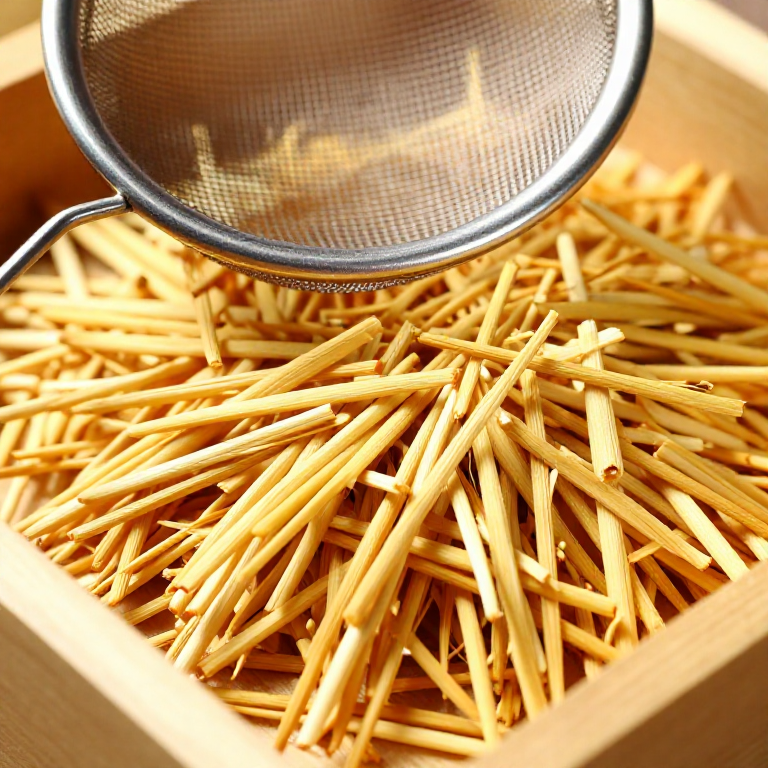


Chopped Straw for Plaster and Cob
Straw gives clay plasters, cob and mud bricks tensile strength: its fibres hold the clay together as it shrinks and stop cracks. Natural builders cut it short for plaster, about 6 to 25 mm, and longer for structural cob, about 25 to 75 mm. Dry, clean wheat or rye straw is best.
Olùbẹ̀rẹ̀
1 hour per sack
Ìlànà
1
1
Choose the length
Choose the length
Plaster: 6–25 mm. Cob: 25–75 mm. Decide before you start.
Àwọn irinṣẹ́ tí a nílò:
 Okùn Ìdíwọ̀n
2
2
Chop on a block
Chop on a block
Lay a handful of straw across a log end and chop it into lengths with the machete or billhook, feeding the bundle forward a length at a time.
Àwọn ohun èlò fún ìgbésẹ̀ yìí:
 Kóríko gbígbẹ5 kg
Àwọn irinṣẹ́ tí a nílò:
 Àdá
Àdá Àdá onítọ̀kọ̀
 Ìbọ̀wọ́ Iṣẹ́ Awọ
 Gíláàsì ààbò
3
3
Sieve for plaster
Sieve for plaster
For plaster, shake the chopped straw over a coarse wire sieve: what passes is plaster straw, what stays goes to cob or back to the block.
Àwọn irinṣẹ́ tí a nílò:
 Asẹ́ ẹ̀wọ̀n waya oníhò ńlá
 Àgbá pilasitiki ńlá 100 l
 Ìbòjú Eruku
4
4
Bag it dry
Bag it dry
Store in sacks somewhere dry; damp straw goes mouldy.
Àwọn irinṣẹ́ tí a nílò:
 Àpò ọ̀gbọ̀ rẹ́gẹdẹ
Àwọn ohun-èlò
1- 5 kgÀyè
Àwọn irinṣẹ́ tó nílò
9- 1 vendor sell this, none ship to you yetÀyè
- Àyè
- Àyè
- Àyè
Ìtọ́nisọ́nà yìí ń ṣe

CC0 Àgbègbè Gbogbogbò
Blueprint yìí ti jáde lábẹ́ CC0. O lè ṣe àdàkọ, yí padà, pín, àti lò láìsí ìyọ̀ǹda.
Ṣàtìlẹ́yìn Olùṣẹ́dá nípa rírà àwọn ọjà nipasẹ̀ Blueprint wọn Ẹ̀san Olùṣẹ́dá tí àwọn Olùtajà gbé kalẹ̀, tàbí ṣẹ̀dá àtúnṣe tuntun ti Blueprint yìí kí o sì fi sínú Blueprint rẹ gẹ́gẹ́ bí ìsopọ̀ láti pín owó-wíwọlé.