IṢẸ́ ỌNÀ
ẸWÀ ÀTI ÌLERA
IṢẸ́ ỌWỌ́
ÀṢÀ ÀTI ÌTÀN
ÌṢERÉ
ÀYÍKÁ
OÚNJẸ ÀTI OHUN MÍMU
REVERSE ENGINEERING
SÁYẸ́ǸSÌ
ERÉ ÌDÁRAYÁ
ÌMỌ̀-Ẹ̀RỌ
ÀWỌN OHUN WÍWỌ̀
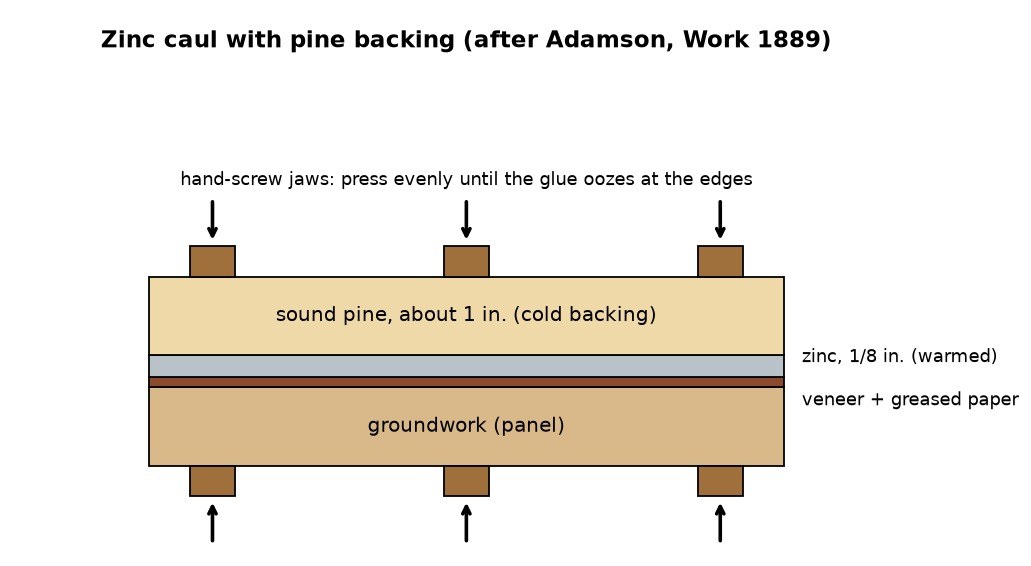


Clamping Caul: Zinc Plate with a Pine Backing Board (Adamson, 1889)
A caul spreads clamping pressure evenly over glued work. D. Adamson (1889) prefers zinc for veneering cauls because it lasts longer than wood: a plate 1/8 to 1/4 in. thick (1/8 in. is enough), with a loose backing board of sound pine about 1 in. thick that keeps it flat and holds its heat.
Only the zinc is warmed; the pine backing goes on cold.
Source: D. Adamson, "Practical Veneering", Work, 5 October 1889, pp. 453-455.
Olùbẹ̀rẹ̀
Unknown
Ìlànà
1
1
Read Adamson
Read Adamson
"Perhaps as a general thing the zinc is usually preferred of from 1/8 in. to 1/4 in. in thickness, the former being quite sufficient for ordinary purposes. ... Even with a zinc caul a backing of wood is necessary to keep it flat down to the work, and to prevent the heat from dispersing too rapidly."
2
2
Cut the zinc
Cut the zinc
Cut a zinc plate 1/8 in. thick (1/8 to 1/4 in. is usual; too thin does not hold the heat, thicker is only waste), large enough to cover the surface to be pressed and lying flat. Length and width are set by the work (not given). How it is cut is not given (ours: tin snips).
Àwọn ohun èlò fún ìgbésẹ̀ yìí:
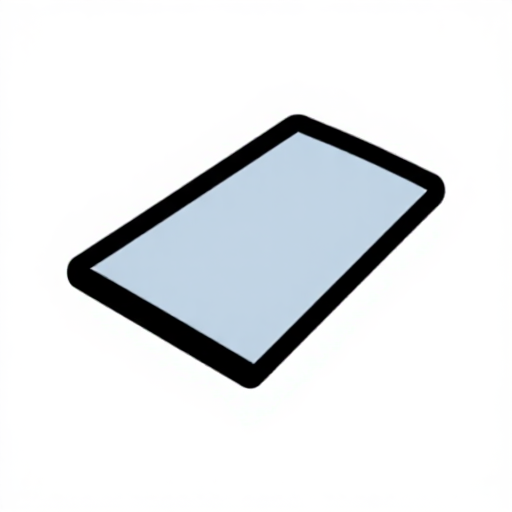 Pẹlẹbẹ sínkì1 1/8 in.
Àwọn irinṣẹ́ tí a nílò:
 Ìlàǹkàn irin
 Ìwọ̀n tí a kò mọ̀
3
3
Make the backing board
Make the backing board
Cut a backing board of good sound pine about 1 in. thick, the size of the zinc, and plane it flat so it keeps the zinc flat down to the work (ours: plane and straightedge).
Àwọn ohun èlò fún ìgbésẹ̀ yìí:
 Pákó igi pine1 about 1 in. thick
Àwọn irinṣẹ́ tí a nílò:
 Ayùn gbẹ́nàgbẹ́nà
 Ohun èlò ìfárí igi (pìlánì)
 Etí tààrà
4
4
Use it
Use it
Warm the zinc only (not so hot that it cannot be comfortably handled), lay it over the veneer with a sheet of slightly greased paper between, put the cold pine board on top, and screw down the hand-screws evenly until the glue oozes out at the edges. Leave it until the zinc is cold, an hour or two.
Àwọn irinṣẹ́ tí a nílò:
 Àwọn clamp
Àwọn ohun-èlò
2- 1 1/8 in.Àyè
- 1 about 1 in. thickÀyè
Àwọn irinṣẹ́ tó nílò
6- Àyè
- Àyè
- Àyè
Ìtọ́nisọ́nà yìí ń ṣe
CC0 Àgbègbè Gbogbogbò
Blueprint yìí ti jáde lábẹ́ CC0. O lè ṣe àdàkọ, yí padà, pín, àti lò láìsí ìyọ̀ǹda.
Ṣàtìlẹ́yìn Olùṣẹ́dá nípa rírà àwọn ọjà nipasẹ̀ Blueprint wọn Ẹ̀san Olùṣẹ́dá tí àwọn Olùtajà gbé kalẹ̀, tàbí ṣẹ̀dá àtúnṣe tuntun ti Blueprint yìí kí o sì fi sínú Blueprint rẹ gẹ́gẹ́ bí ìsopọ̀ láti pín owó-wíwọlé.