IṢẸ́ ỌNÀ
ẸWÀ ÀTI ÌLERA
IṢẸ́ ỌWỌ́
ÀṢÀ ÀTI ÌTÀN
ÌṢERÉ
ÀYÍKÁ
OÚNJẸ ÀTI OHUN MÍMU
REVERSE ENGINEERING
SÁYẸ́ǸSÌ
ERÉ ÌDÁRAYÁ
ÌMỌ̀-Ẹ̀RỌ
ÀWỌN OHUN WÍWỌ̀
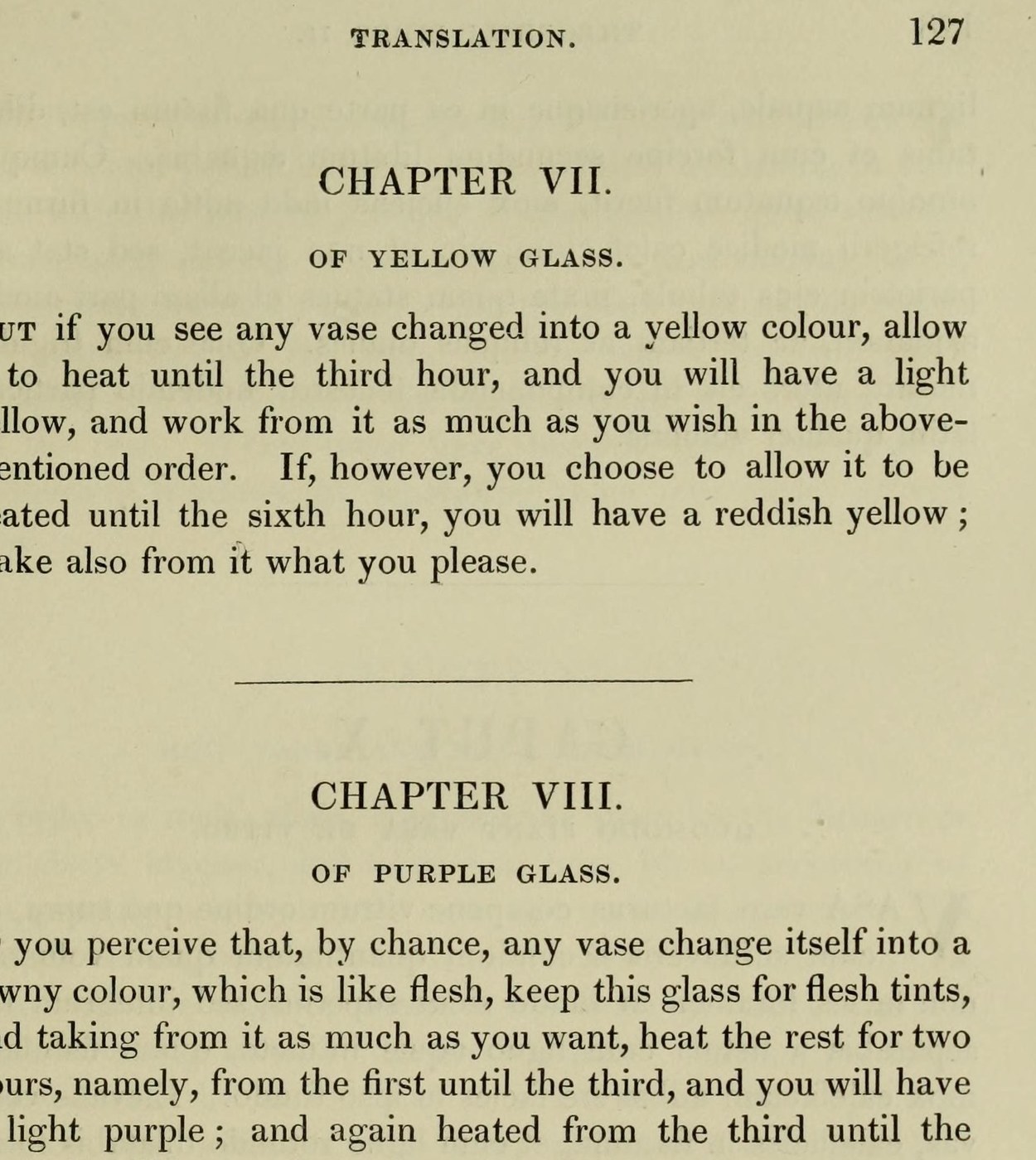


Coloured Glass Sheets: Beech-Ash Glass Blown into Cylinders and Flattened (Theophilus, tr. Hendrie 1847)
Window glass as the monk Theophilus taught it around 1100: two parts beech ash to one of clean sand, fritted for a night and a day, melted overnight in clay pots, blown into long bladders, opened into cylinders, split and flattened in a second oven, and cooled standing upright.
White glass comes first. A pot that turns yellow gives light yellow if heated to the third hour and reddish yellow by the sixth; a pot that turns flesh-coloured gives light purple after two more hours and red purple by the sixth.
Source: Theophilus, De Diversis Artibus, Book II, tr. R. Hendrie (1847), pp. 119-129. Picture: p. 127.
Ilọsíwájú
2-3 days
Ìlànà
1
1
Make the beech ash
Make the beech ash
Cut beech-wood logs and dry them. Burn them together in a clean spot and collect the ashes, taking care that no earth gets mixed in.
Àwọn ohun èlò fún ìgbésẹ̀ yìí:
 Igi líle (oaki, mápù, bíìṣì)1 beech
Àwọn irinṣẹ́ tí a nílò:
 Ohun èlò amọ̀-bíríkì (tùróòlù)
2
2
Frit the ash and sand
Frit the ash and sand
Mix two parts of ash with one part of sand washed free of earth and stones. Heat it on the upper hearth of the furnace for a night and a day, stirring it with an iron trowel as it warms so that it does not melt into a lump.
Àwọn ohun èlò fún ìgbésẹ̀ yìí:
 Iyanrìn Kuátsì1 1 part to 2 of ash
Àwọn irinṣẹ́ tí a nílò:
 Ààrò dígí tí ó lè dé 1100 ìwọ̀n CelsiusOhun èlò amọ̀-bíríkì (tùróòlù)
3
3
Make the pots and melt
Make the pots and melt
Grind dry white clay, wet it, beat it hard with wood and make pots wide at the top and narrow below, with a small lip curved inward. Set the dry pots in the glowing furnace, fill them in the evening with the hot frit and feed dry wood all night until the glass is fully melted.
Àwọn irinṣẹ́ tí a nílò:
 Ìyẹ̀fun amọ̀ kaolinÀàrò dígí tí ó lè dé 1100 ìwọ̀n Celsius
 Ẹmú Alágbẹ̀dẹOhun èlò amọ̀-bíríkì (tùróòlù)
4
4
Blow the cylinders
Blow the cylinders
In the morning gather glass on the iron pipe (two yards long, a thumb thick), blow a little, tap it on a flat stone so it hangs evenly, and blow it into a long bladder. Melt open the far end in the flame and widen it with a piece of wood, break it off the pipe with a wet piece of wood, open the other end the same way, and let a boy carry the cylinder on a stick to the warm cooling oven. This first glass is pure and white.
Àwọn irinṣẹ́ tí a nílò:
 Ọ̀pá ìfẹ́ dígíÀàrò dígí tí ó lè dé 1100 ìwọ̀n Celsius
 Ààrò ìrọ̀ irin
5
5
Bring out the colours
Bring out the colours
If a pot turns yellow, heat it to the third hour for light yellow or to the sixth for reddish yellow. If a pot turns tawny like flesh, keep some for flesh tints; heat the rest from the first to the third hour for light purple, from the third to the sixth for a red purple. Blow cylinders from each as before.
Àwọn irinṣẹ́ tí a nílò:
Ààrò dígí tí ó lè dé 1100 ìwọ̀n CelsiusỌ̀pá ìfẹ́ dígí6
6
Split and flatten
Split and flatten
When all are made and cooled, fire the flattening oven. Split each cylinder along one side with a hot iron, lay it on the glowing hearth, and when it softens open it with the pincers and a smooth piece of wood and flatten it. Stand the sheets upright against the wall of the warm cooling oven, one next to another. When cold, cut them into pieces for windows.
Àwọn irinṣẹ́ tí a nílò:
Ààrò dígí tí ó lè dé 1100 ìwọ̀n CelsiusẸmú Alágbẹ̀dẹÀàrò ìrọ̀ irinÀwọn ohun-èlò
2- 1 beechÀyè
- 1 1 part to 2 of ashÀyè
Ìtọ́nisọ́nà yìí ń ṣe

CC0 Àgbègbè Gbogbogbò
Blueprint yìí ti jáde lábẹ́ CC0. O lè ṣe àdàkọ, yí padà, pín, àti lò láìsí ìyọ̀ǹda.
Ṣàtìlẹ́yìn Olùṣẹ́dá nípa rírà àwọn ọjà nipasẹ̀ Blueprint wọn Ẹ̀san Olùṣẹ́dá tí àwọn Olùtajà gbé kalẹ̀, tàbí ṣẹ̀dá àtúnṣe tuntun ti Blueprint yìí kí o sì fi sínú Blueprint rẹ gẹ́gẹ́ bí ìsopọ̀ láti pín owó-wíwọlé.