IṢẸ́ ỌNÀ
ẸWÀ ÀTI ÌLERA
IṢẸ́ ỌWỌ́
ÀṢÀ ÀTI ÌTÀN
ÌṢERÉ
ÀYÍKÁ
OÚNJẸ ÀTI OHUN MÍMU
REVERSE ENGINEERING
SÁYẸ́ǸSÌ
ERÉ ÌDÁRAYÁ
ÌMỌ̀-Ẹ̀RỌ
ÀWỌN OHUN WÍWỌ̀
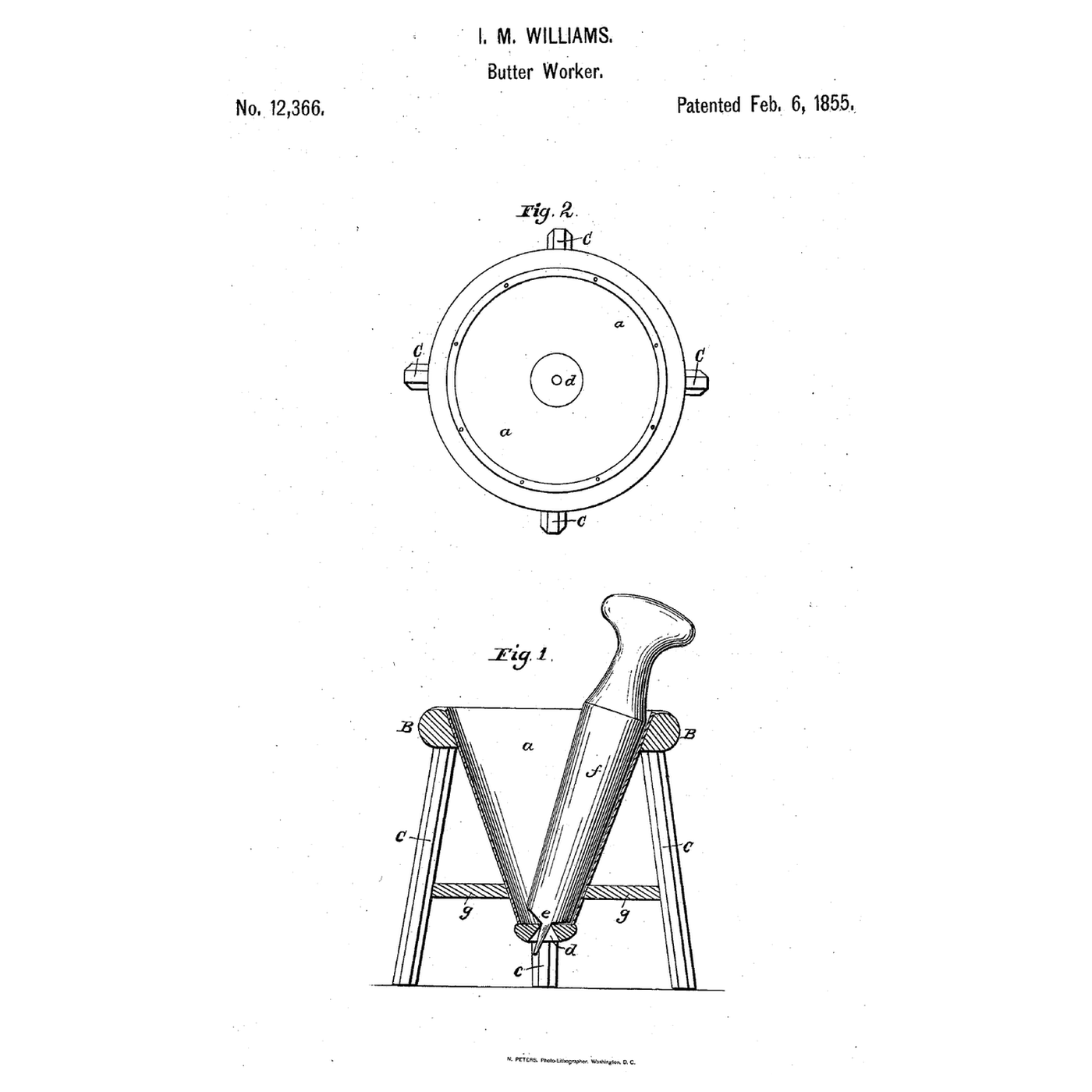

Cone-Bowl Roller Butter Worker: Roll a Conical Stick Round a Conical Bowl, the Buttermilk Drains Below
Williams worked the buttermilk out of fresh butter by rolling a stick round a cone.
I. M. Williams of Blanchester, Clinton County, Ohio, received US 12,366, dated 6 February 1855, for an "Improved Butter-Dresser": a round bowl of tin or wood "tapering from top to bottom, say top four times the diameter of bottom," with a small hole in its bottom bushed with bone, set in a rim with four legs and a brace; and a round working stick nearly filling the bottom, with a bone pin that nearly fills the hole. Rolled round the bowl, the stick presses the butter while the buttermilk sinks and escapes through the hole, "while the butter is pushed from the hole all the while."
This rung works out the bowl's proportions, then prints the bowl, bush, roller, rim and brace, builds the stand, and dresses butter.
Olùbẹ̀rẹ̀
About 2 hours, plus printing
Ìlànà
1
1
Four times across
Four times across
Ń ṣí ìwé Jupyter…
2
2
Working butter by hand before it
Working butter by hand before it
The embedded blueprint works butter on an inclined tray with a lever. Williams rolls a conical stick round a conical bowl and drains the buttermilk through its point.
3
3
Read US 12,366
Read US 12,366
"To dress a batch of butter right from the churn, take the butter dresser, place in the working stick, put in the butter, lay your hand on top of the working stick, roll it around with the circle of the bowl, backward or forward, across or otherwise, through the butter, which will cause all the butter milk, or water that may be used, to sink directly to the bottom of the bowl and escape through the hole."
4
4
Print the parts
Print the parts
Print the bowl on its rim (/uploads/blueprints/cone-bowl-roller-butter-worker-bowl.stl), the bush (/uploads/blueprints/cone-bowl-roller-butter-worker-bush.stl), the roller with its pin, standing on its wide end (/uploads/blueprints/cone-bowl-roller-butter-worker-roller.stl), the rim (/uploads/blueprints/cone-bowl-roller-butter-worker-rim.stl) and the brace (/uploads/blueprints/cone-bowl-roller-butter-worker-brace.stl). Print in PETG at 0.2 mm layers, 30 % infill, 4 walls; wash before first use.
Àwọn ohun èlò fún ìgbésẹ̀ yìí:
 Okùn PETG1 ẹyọ
Àwọn irinṣẹ́ tí a nílò:
 Ẹ̀rọ ìtẹ̀ 3D oníwàyà (FDM)
5
5
The stand
The stand
Cut four 22 mm hardwood dowels about 260 mm long as legs. Glue their tops into the rim's sockets and their middles through the brace's sockets so the brace sits about 120 mm below the rim. Drop the bowl into the rim so its foot rests in the brace's ring, and press the bush into its bottom hole.
Àwọn ohun èlò fún ìgbésẹ̀ yìí:
 Àwọn dowel igi líle1 ẹyọ
 Ìdìpọ̀ Igi1 ẹyọ
Àwọn irinṣẹ́ tí a nílò:
 Ayùn Ọwọ́
 Bébà Ìfá
6
6
The working stick
The working stick
Glue a 22 mm hardwood dowel into the roller's socket as the handle, long enough to stand well above the bowl, and round its top for the palm.
Àwọn ohun èlò fún ìgbésẹ̀ yìí:
Àwọn dowel igi líle1 ẹyọÌdìpọ̀ Igi1 ẹyọÀwọn irinṣẹ́ tí a nílò:
Ayùn Ọwọ́Bébà Ìfá7
7
The patent drawing
The patent drawing
US 12,366 drawing sheet, public domain (expired patent).
8
8
Churn, then dress the butter
Churn, then dress the butter
Let the heavy cream stand until it reaches about 15 °C, checked with the thermometer. Churn 1 litre in any churn until the butter comes, and drain it. Set a jug under the bowl's hole. Put the butter in the bowl, lay your hand on the stick's top and roll it round, forward and back, so the buttermilk sinks and runs out below. Pour a little cold water over it and roll on until the water runs clear; work in a pinch of salt and weigh the butter.
Àwọn ohun èlò fún ìgbésẹ̀ yìí:
 Ọ̀rá wàrà tó nípọn1000 ml
 Iyọ̀ Òkun Rúkèrúdò1 ẹyọ
 Omi1 ẹyọ
Àwọn irinṣẹ́ tí a nílò:
 Ẹ̀rọ ìwọ̀n ooru oníhun tí ó dúró sí inú
 Aago Ìdúró
 Òṣùwọ̀n Díjítà Ilé Ìdáná
 Àwo ìdàpọ̀ ńlá ti irin tí kò ń yá
9
9
A hole that clogs, a stick that skids
A hole that clogs, a stick that skids
Cone-bowl butter worker troubleshooting.
Flow
Loading...
10
10
History and honest limits
History and honest limits
**I. M. Williams** of Blanchester, Clinton County, Ohio, received US 12,366, dated 6 February 1855; the title is "Butter-Worker," and the text calls it a butter-dresser. The text marks the bowl A, the figures a. Williams wrote that butter dressed without water is better flavoured and keeps sweet much longer, "a fact admitted by all"; that is the inventor's claim, not tested here. He claimed a hollow cone combined with a conical roller working on its apex.
**Honest limits.** A printed bowl, bush and pin stand in for his tin or wood and bone; the quarter-full estimate is ours. FDM prints hold food in their layer lines, so wash well and replace when worn. Your weights are the result.
Àwọn ohun-èlò
6- 1 ẹyọÀyè
- 1 ẹyọÀyè
- 2 ẹyọÀyè
- 1000 mlÀyè
- 1 ẹyọÀyè
- 1 ẹyọÀyè
Àwọn irinṣẹ́ tó nílò
7- Àyè
- Àyè
- Àyè
Blueprint tó jọra
Àwọn blueprint wọ̀nyí pín ìmọ̀ — ọ̀nà, ohun-èlò tàbí ìlànà
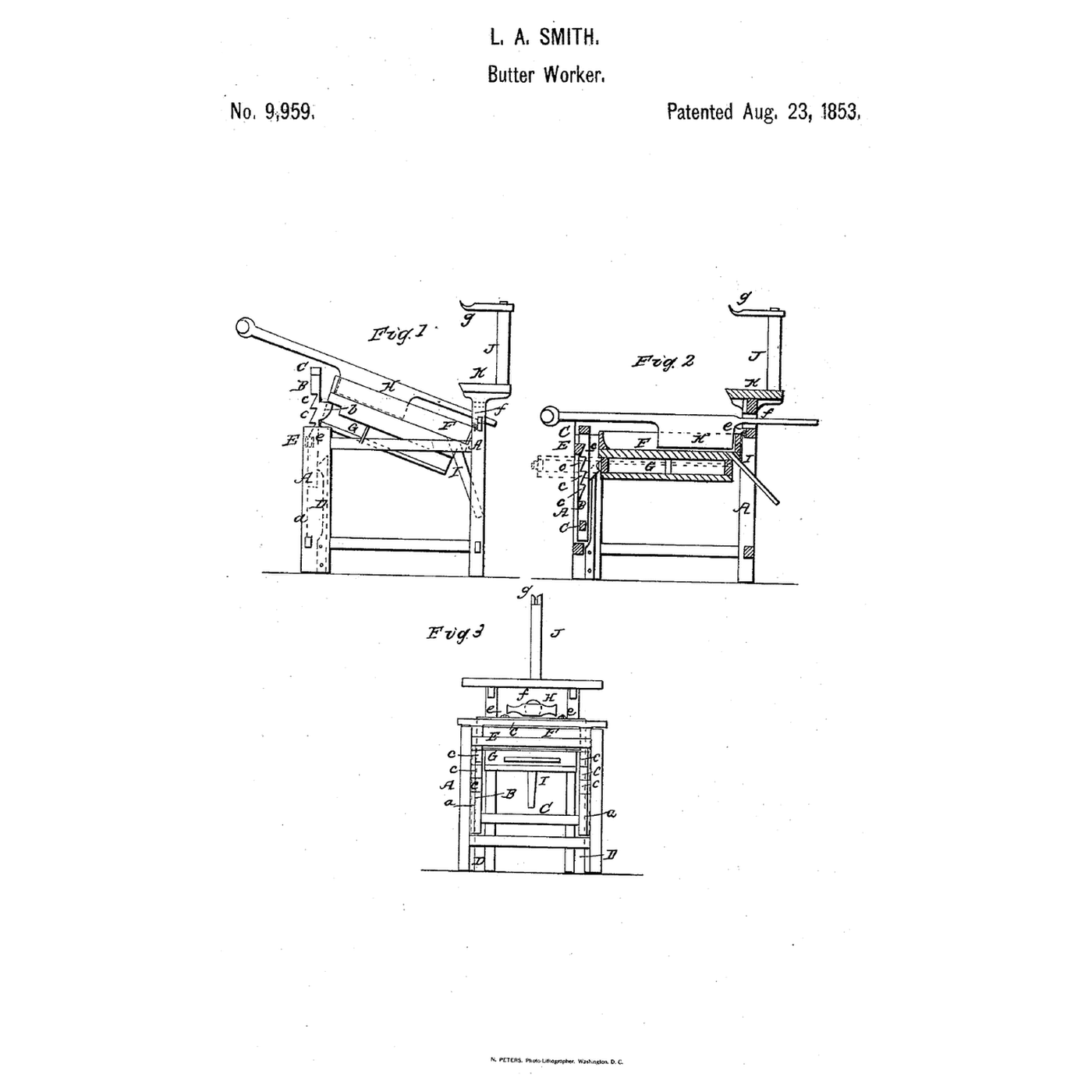
Ice-Drawer Butter Worker: An Ice Box Under the Tray, a Worker With Acute Edges
láti ọwọ́ YourGrandma
Iṣẹ́ Igi
21
0
0
0
0
0
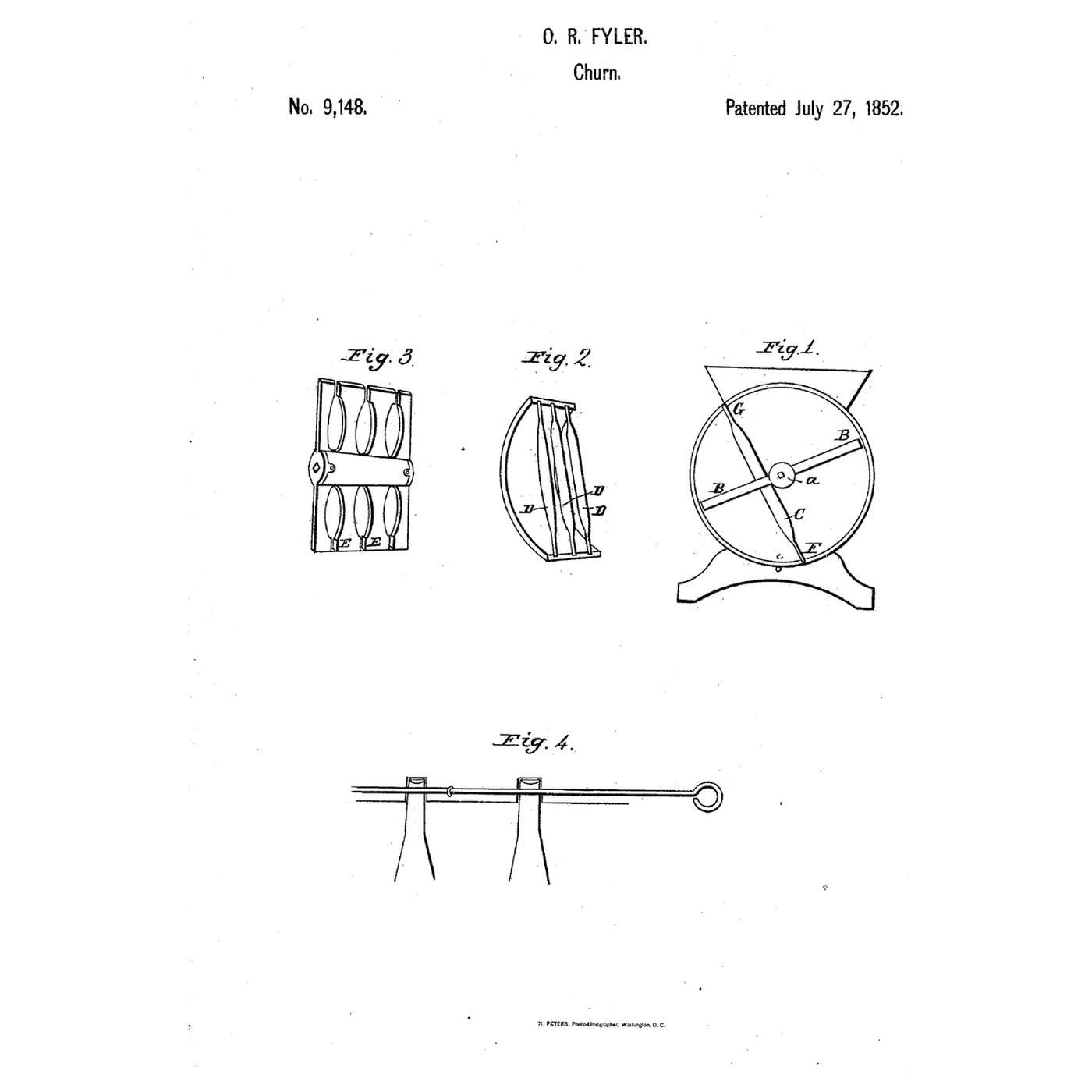
Post-and-Float Butter-Working Churn: Floats Revolving Astride Fixed Posts
láti ọwọ́ Woody
Iṣẹ́ Igi
24
0
0
0
0
0

Churning Butter from Cream — The 5,000-Year-Old Fat Separation
láti ọwọ́ TheChef
IṢẸ́ ỌWỌ́
49
0
0
0
0
0
CC0 Àgbègbè Gbogbogbò
Blueprint yìí ti jáde lábẹ́ CC0. O lè ṣe àdàkọ, yí padà, pín, àti lò láìsí ìyọ̀ǹda.
Ṣàtìlẹ́yìn Olùṣẹ́dá nípa rírà àwọn ọjà nipasẹ̀ Blueprint wọn Ẹ̀san Olùṣẹ́dá tí àwọn Olùtajà gbé kalẹ̀, tàbí ṣẹ̀dá àtúnṣe tuntun ti Blueprint yìí kí o sì fi sínú Blueprint rẹ gẹ́gẹ́ bí ìsopọ̀ láti pín owó-wíwọlé.