IṢẸ́ ỌNÀ
ẸWÀ ÀTI ÌLERA
IṢẸ́ ỌWỌ́
ÀṢÀ ÀTI ÌTÀN
ÌṢERÉ
ÀYÍKÁ
OÚNJẸ ÀTI OHUN MÍMU
REVERSE ENGINEERING
SÁYẸ́ǸSÌ
ERÉ ÌDÁRAYÁ
ÌMỌ̀-Ẹ̀RỌ
ÀWỌN OHUN WÍWỌ̀
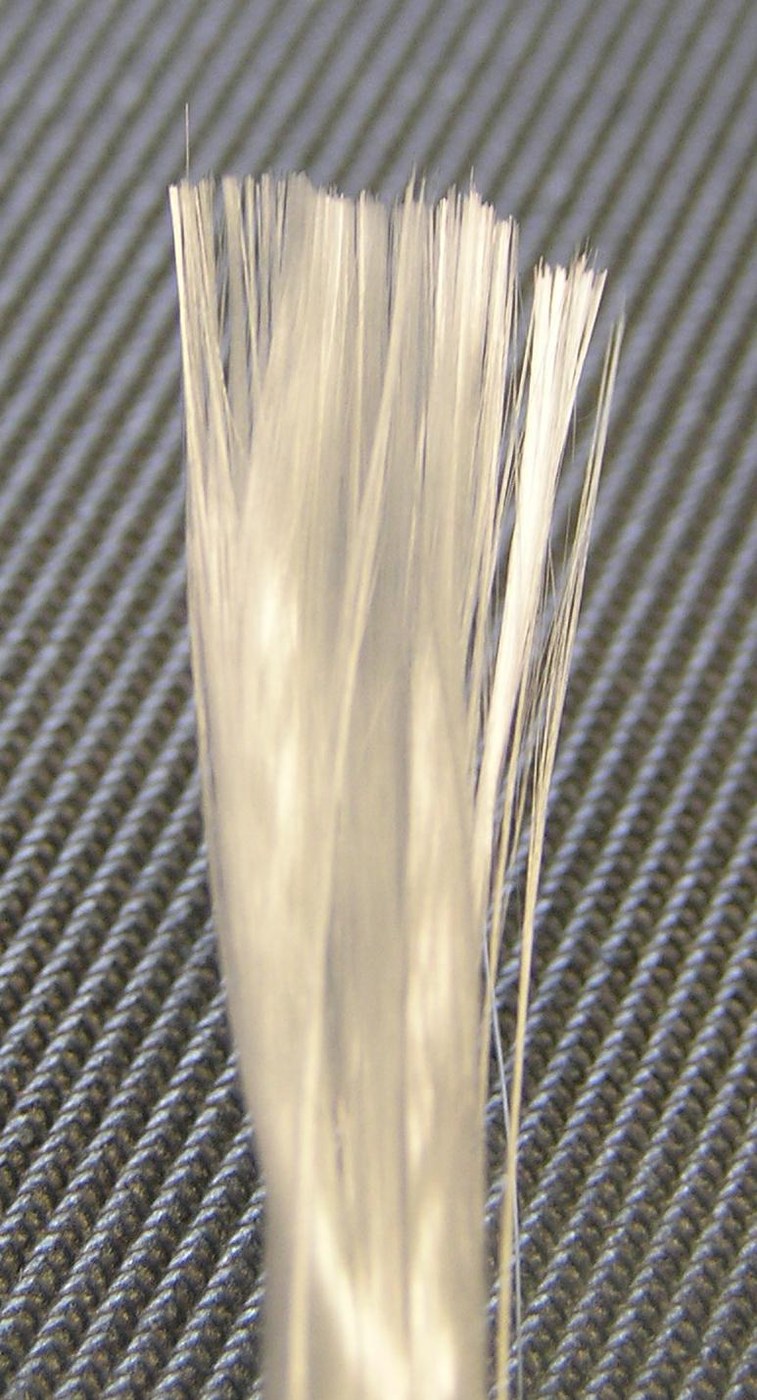


Continuous Glass Fibre Strand Drawn from a Platinum Bushing
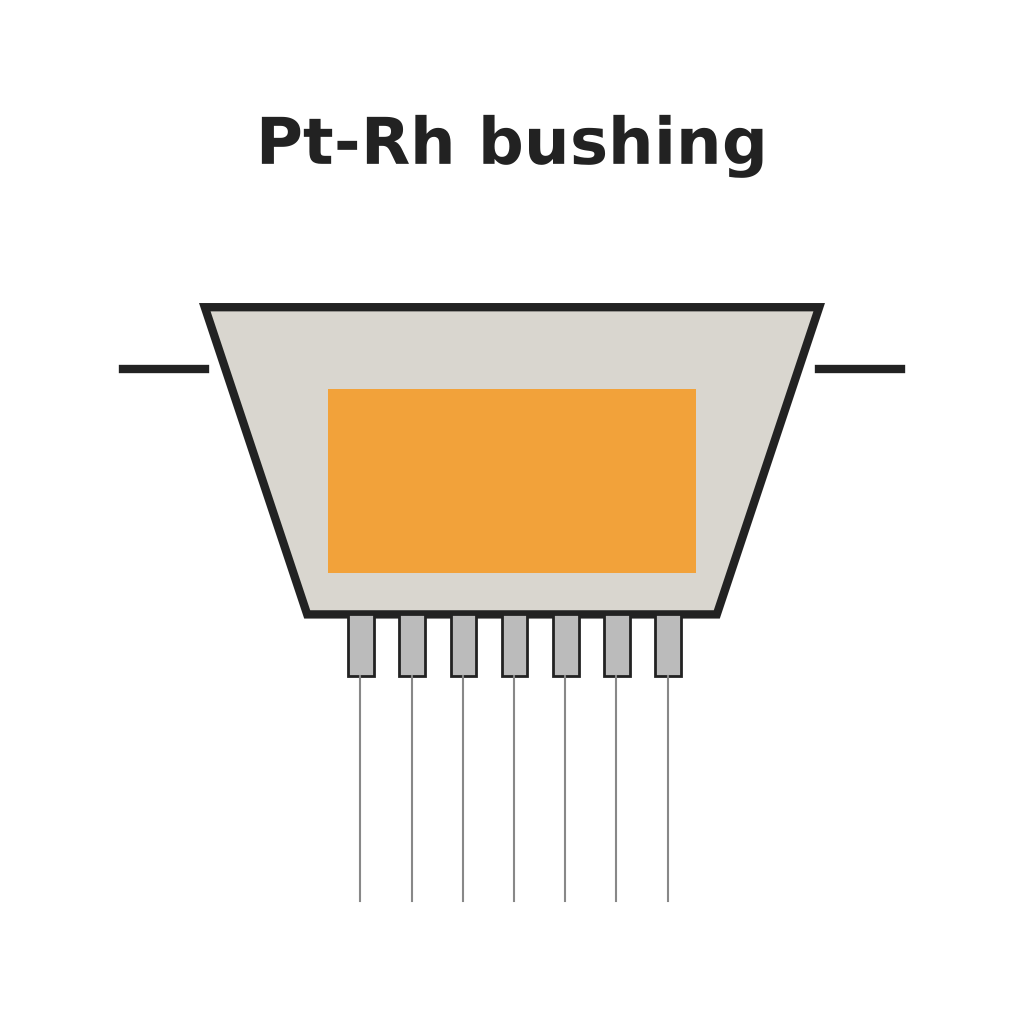
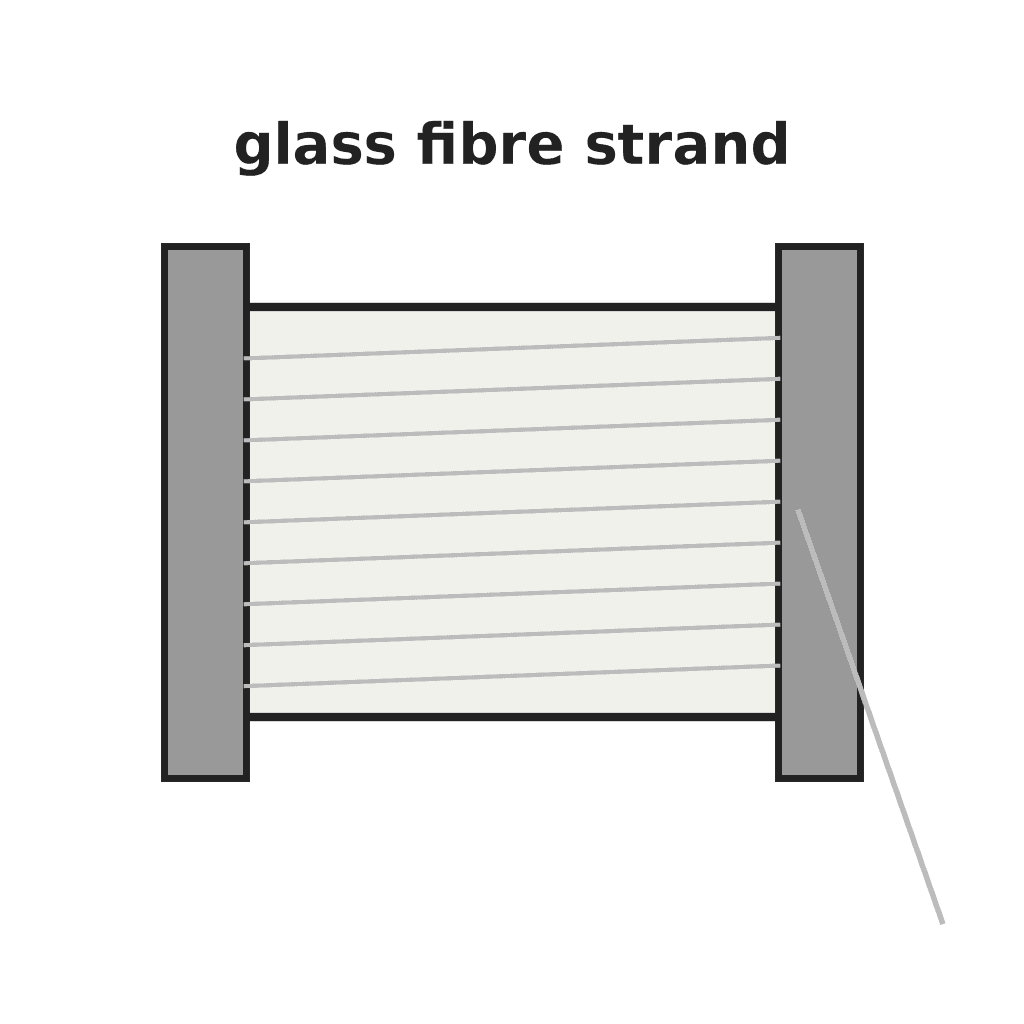
Glass fibre for cloth is not spun like wool: hundreds of fine filaments are pulled at once from small nozzles in a hot platinum box and wound up as one strand. This is the method of Slayter and Thomas's Owens-Corning patent (US 2,234,986, 1941): an electrically heated platinum-rhodium thimble melts glass cullet, a blower freezes each filament just below its nozzle, a size is put on, and a drum pulls and winds the strand. The faster the drum, the finer the fibre.
The picture: a glass fibre roving (NoiseD, Wikimedia Commons, CC BY-SA 3.0).
Ilọsíwájú
1 day
Ìlànà
1
1
Charge the bushing with cullet
Charge the bushing with cullet
Fill the platinum-rhodium thimble (90 % platinum, 10 % rhodium) with broken soda-lime glass. Its floor has rows of staggered nipples .02–.08 in (0.5–2 mm) wide; .04 in (1 mm) is best.
Àwọn ohun èlò fún ìgbésẹ̀ yìí:
 Àwọn ẹ̀yà dígí soda-ẹfun1 as required
Àwọn irinṣẹ́ tí a nílò:
 Àpótí Platinum-Rhodium
 Ìbọ̀wọ́ Tí Ń Fara Da Ooru
 Gíláàsì ààbò
2
2
Melt it with an electric current
Melt it with an electric current
Pass an adjustable current through the thimble to melt the glass. Ordinary lime glass is pulled from about 2,100–2,500 °F (about 1,150–1,370 °C).
Àwọn irinṣẹ́ tí a nílò:
Àpótí Platinum-Rhodium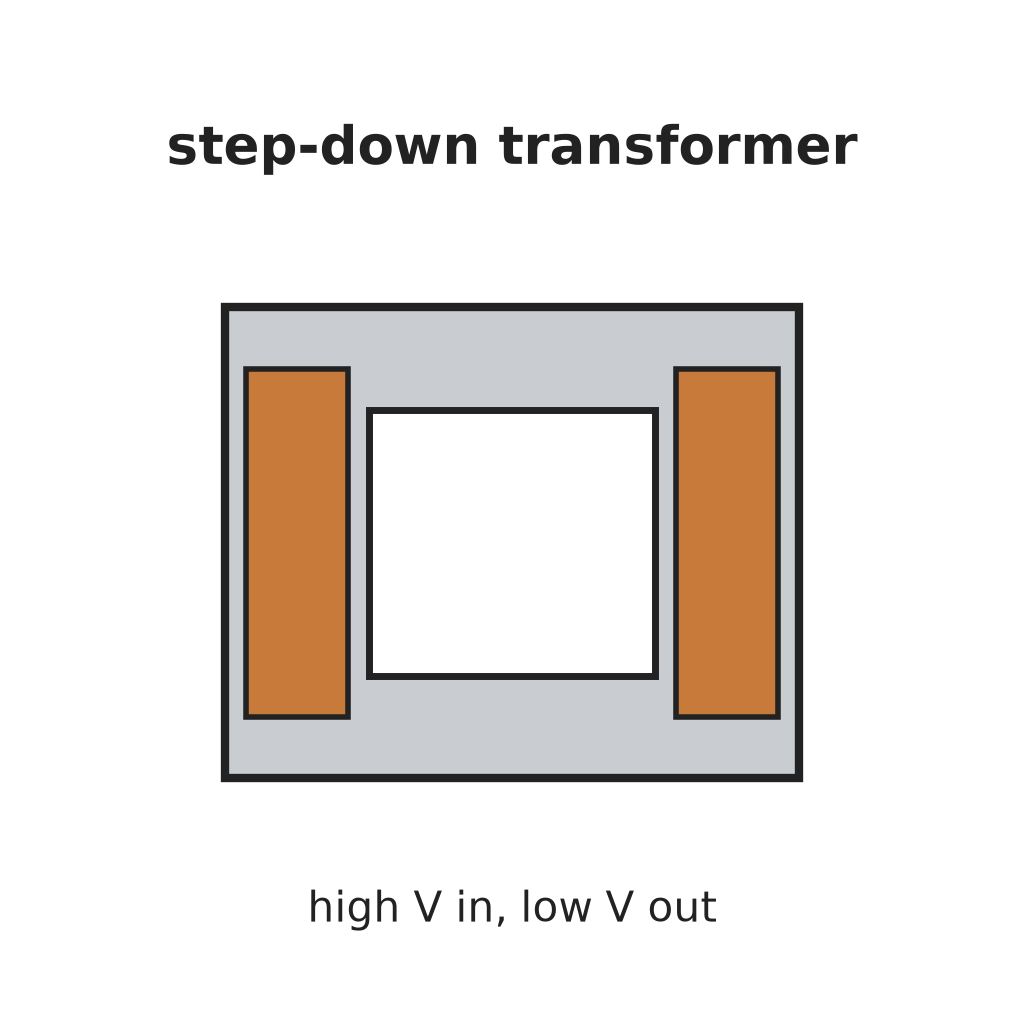 Ẹ̀rọ Ìdínkù Fóltéèjì
 PirómítàÌbọ̀wọ́ Tí Ń Fara Da Ooru
3
3
Start the cooling blower
Start the cooling blower
Blow cool air across the nipple tips from a blower a short distance below them. Each filament sets within a small fraction of an inch of its nipple.
Àwọn irinṣẹ́ tí a nílò:
 Ẹ̀rọ afẹ́fẹ́
4
4
Gather the filaments through a sized guide
Gather the filaments through a sized guide
Draw all the filaments together through one guide eye kept wet with size. Here the size is wax, kept molten with a burner; the patent also names oil, starch, gum and resin. An air jet dries off the excess size.
Àwọn ohun èlò fún ìgbésẹ̀ yìí:
 Ìdí parafíìnì1 as required
Àwọn irinṣẹ́ tí a nílò:
 Ọ̀gọ̀ BunsenẸ̀rọ afẹ́fẹ́
5
5
Pull and wind on a drum
Pull and wind on a drum
Wind the strand on a fast drum that moves back and forth so it lays evenly. Draw at a few hundred to a few thousand feet per minute: the faster you draw, the finer the fibre.
Àwọn irinṣẹ́ tí a nílò:
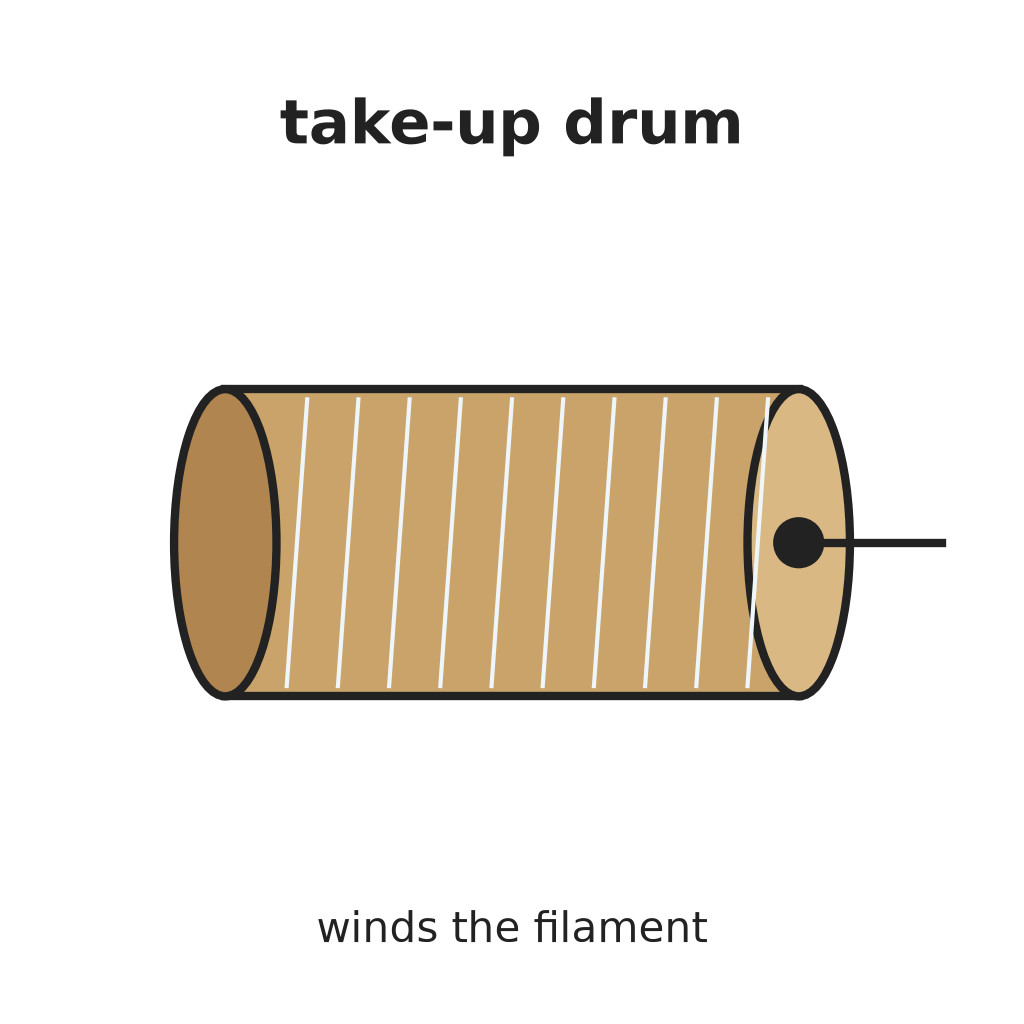 Ìlù Ìgbàwọ̀n Òwú
Àwọn ohun-èlò
2- 1 as requiredÀyè
- 1 as requiredÀyè
Àwọn irinṣẹ́ tó nílò
8- Àyè
- Àyè
- Àyè
- Àyè
Ìtọ́nisọ́nà yìí ń ṣe
CC0 Àgbègbè Gbogbogbò
Blueprint yìí ti jáde lábẹ́ CC0. O lè ṣe àdàkọ, yí padà, pín, àti lò láìsí ìyọ̀ǹda.
Ṣàtìlẹ́yìn Olùṣẹ́dá nípa rírà àwọn ọjà nipasẹ̀ Blueprint wọn Ẹ̀san Olùṣẹ́dá tí àwọn Olùtajà gbé kalẹ̀, tàbí ṣẹ̀dá àtúnṣe tuntun ti Blueprint yìí kí o sì fi sínú Blueprint rẹ gẹ́gẹ́ bí ìsopọ̀ láti pín owó-wíwọlé.