IṢẸ́ ỌNÀ
ẸWÀ ÀTI ÌLERA
IṢẸ́ ỌWỌ́
ÀṢÀ ÀTI ÌTÀN
ÌṢERÉ
ÀYÍKÁ
OÚNJẸ ÀTI OHUN MÍMU
REVERSE ENGINEERING
SÁYẸ́ǸSÌ
ERÉ ÌDÁRAYÁ
ÌMỌ̀-Ẹ̀RỌ
ÀWỌN OHUN WÍWỌ̀
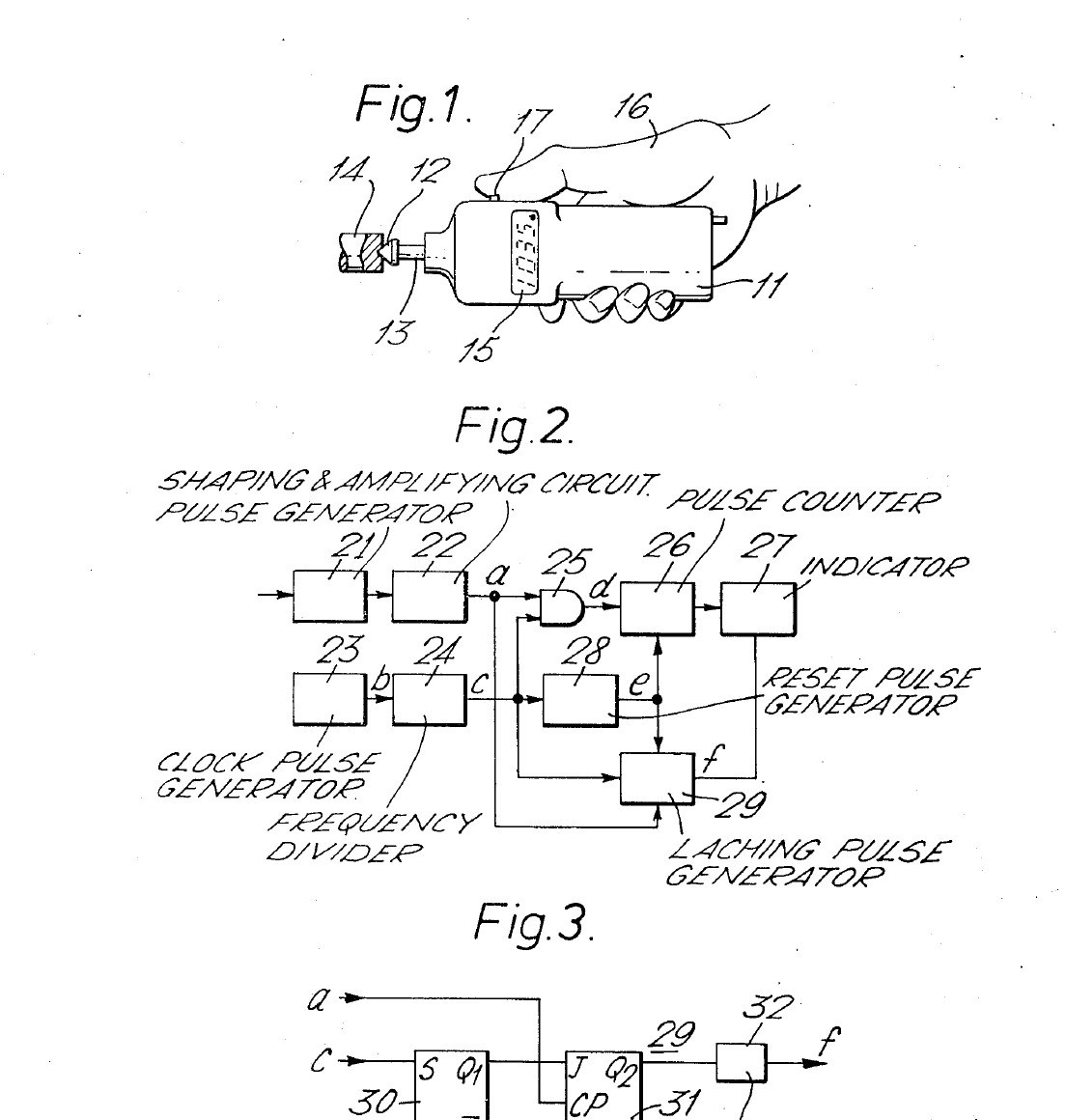

Digital Tachometer: Hand-Held Contact Type That Holds Its Reading (Sugiyama, Shimpo, US 4,000,465, 1976)
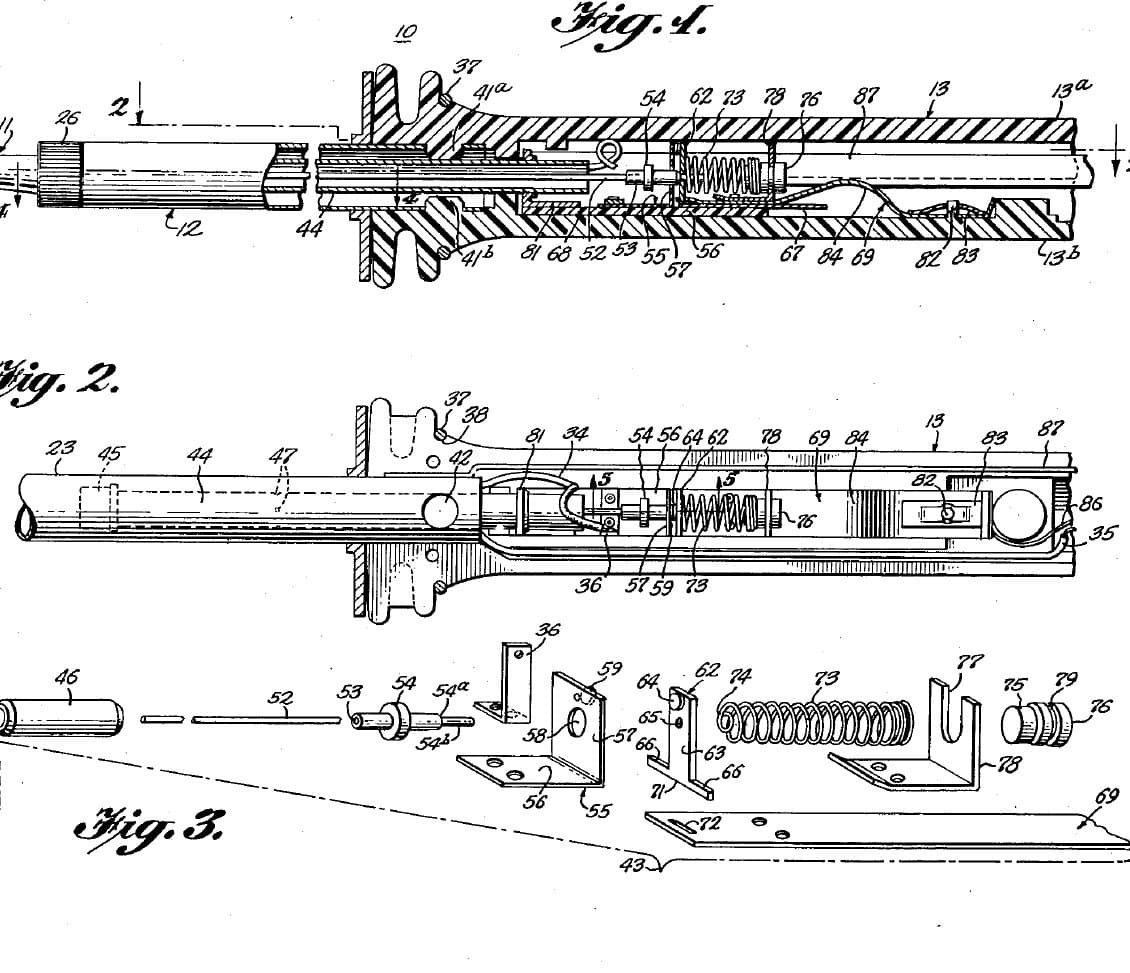
A hand-held digital tachometer. You press the contact head on its shaft against the end of a turning shaft and push the thumb button; a slotted disk inside chops a light beam into pulses, and the pulses counted in a fixed time, set by a quartz clock, appear in the window as the speed. A latch holds the reading after you take the tachometer away, so you can read it even where you could not see the window while measuring.
Result: a contact tachometer that shows revolutions per unit time and keeps the last reading.
Source: Y. Sugiyama (Shimpo Kogyo), US 4,000,465 (1976). Unknown: the number of holes, the clock, the gate time and the circuit details. Picture: the patent drawing.
Ilọsíwájú
Unknown
Ìlànà
1
1
Make the housing and measuring shaft
Make the housing and measuring shaft
Make a cylindrical housing to hold in one hand, with a window in its side for the reading and a push button for the power switch where the thumb falls. Run a measuring shaft out of the front end in bearings and fit a contact head on its tip to press against the shaft being measured. Not given: materials, sizes. Ours: aluminium tube, a ball bearing.
Àwọn ohun èlò fún ìgbésẹ̀ yìí:
 Páìpù aluminium1 housing
 Irin tí a kò mọ̀1 measuring shaft
 Bearing Bọ́ọ̀lù1 ẹyọ
 Ohun èlò tí a kò mọ̀1 contact head
Àwọn irinṣẹ́ tí a nílò:
 Ẹ̀rọ Ìyí Irin
 Ìlù ọwọ́
 Ìwọ̀n tí a kò mọ̀
2
2
Make the pulse generator
Make the pulse generator
Fix a disk on the measuring shaft with a ring of small holes evenly spaced near its edge. Put a light source on one side of the disk and a photodetector on the other: each hole passing makes one pulse. Shape and amplify the pulses. Not given: the number of holes. Ours: an LED and a photodiode.
Àwọn ohun èlò fún ìgbésẹ̀ yìí:
Ohun èlò tí a kò mọ̀1 slotted disk Onírúurú LED1 light source
 Fọtọdáyódì (BPW34)1 photodetector
 Ìdènà iná1 ìtò
Àwọn irinṣẹ́ tí a nílò:
Ìlù ọwọ́3
3
Build the counting circuit
Build the counting circuit
Divide a quartz oscillator's clock down to gate pulses one unit of time long. Pass the measurement pulses through an AND gate during each gate pulse into a counter. At the start of each gate pulse a reset pulse clears the counter. After the gate pulse ends, the first measurement pulse that arrives triggers a latch pulse that loads the new count into the display. If the head has been taken off the shaft, no pulse arrives, no latch pulse is made, and the display keeps the last reading until the next measurement or until the power is switched off. Not given: the clock frequency and gate time. Ours: logic ICs and a seven-segment display.
Àwọn ohun èlò fún ìgbésẹ̀ yìí:
 Àwo PCB1 ẹyọ
 Kírísítà quartz1 ẹyọ
 Onírúurú IC lóògíìkì1 divider, AND gate, counter, latch, reset
 Awakọ̀ Ojú-ìfihàn Oníìpín Méje1 ẹyọ
 Ojú-ìfihàn Olóǹkà Mẹ́rin Oníìpín Méje1 ẹyọ
 Wáyà Sọ́ldà1 as needed
Àwọn irinṣẹ́ tí a nílò:
 Irin ìsúdì
4
4
Power it and measure
Power it and measure
Fit the battery and the thumb button as the power switch. Press the contact head against the end of the turning shaft so it turns with it, push the button, and read the revolutions in the window, now or after you take the tachometer away.
Àwọn ohun èlò fún ìgbésẹ̀ yìí:
 Bátìrì1 ẹyọ
 Bọ́tìnì ìtẹ̀1 ẹyọ
Àwọn irinṣẹ́ tí a nílò:
Irin ìsúdìÀwọn ohun-èlò
15- 1 housingÀyè
- 1 measuring shaftÀyè
- Àyè
- 1 slotted diskÀyè
- 1 light sourceÀyè
- 1 photodetectorÀyè
- 1 ìtòÀyè
- 1 ẹyọÀyè
- 1 ẹyọÀyè
- 1 divider, AND gate, counter, latch, resetÀyè
- Àyè
- 1 as neededÀyè
- 1 ẹyọÀyè
- Àyè
Àwọn Ohun Èlò Ìtọ́nisọ́nà Tí A So Pọ̀
Ìtọ́nisọ́nà yìí ń ṣe
CC0 Àgbègbè Gbogbogbò
Blueprint yìí ti jáde lábẹ́ CC0. O lè ṣe àdàkọ, yí padà, pín, àti lò láìsí ìyọ̀ǹda.
Ṣàtìlẹ́yìn Olùṣẹ́dá nípa rírà àwọn ọjà nipasẹ̀ Blueprint wọn Ẹ̀san Olùṣẹ́dá tí àwọn Olùtajà gbé kalẹ̀, tàbí ṣẹ̀dá àtúnṣe tuntun ti Blueprint yìí kí o sì fi sínú Blueprint rẹ gẹ́gẹ́ bí ìsopọ̀ láti pín owó-wíwọlé.