IṢẸ́ ỌNÀ
ẸWÀ ÀTI ÌLERA
IṢẸ́ ỌWỌ́
ÀṢÀ ÀTI ÌTÀN
ÌṢERÉ
ÀYÍKÁ
OÚNJẸ ÀTI OHUN MÍMU
REVERSE ENGINEERING
SÁYẸ́ǸSÌ
ERÉ ÌDÁRAYÁ
ÌMỌ̀-Ẹ̀RỌ
ÀWỌN OHUN WÍWỌ̀
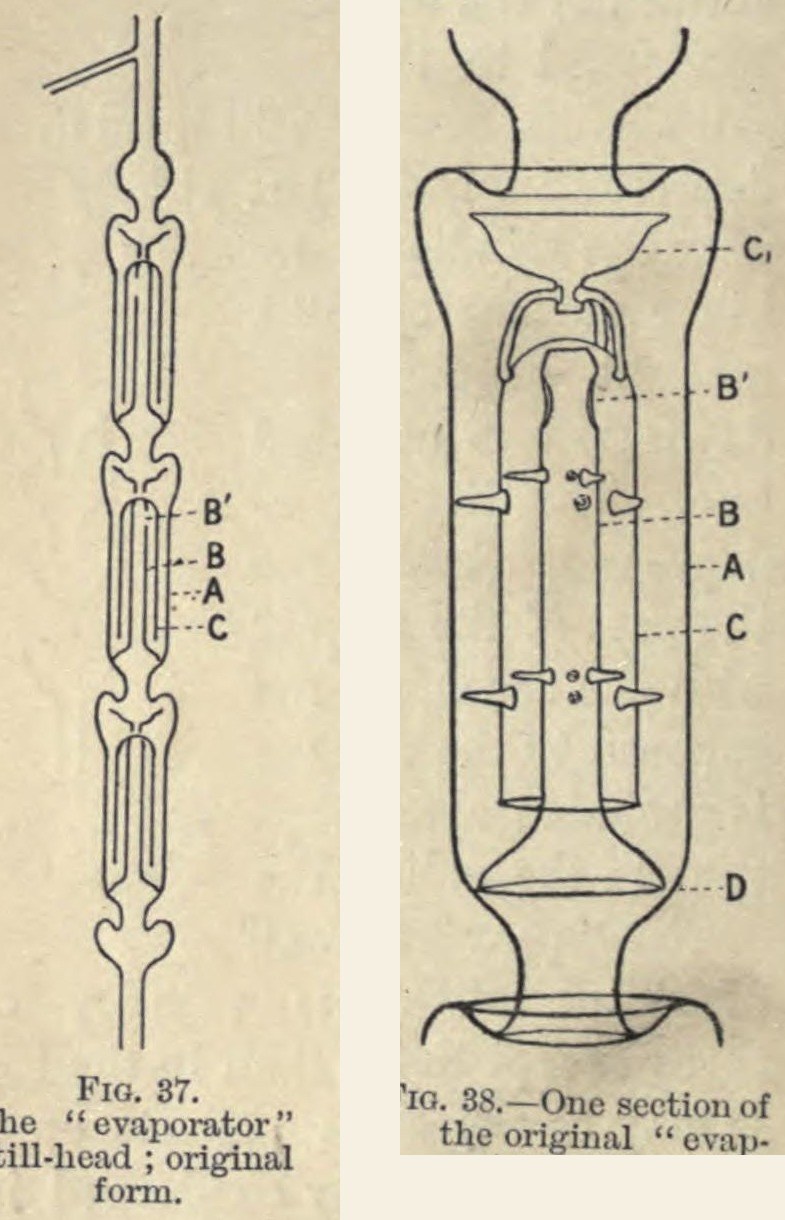


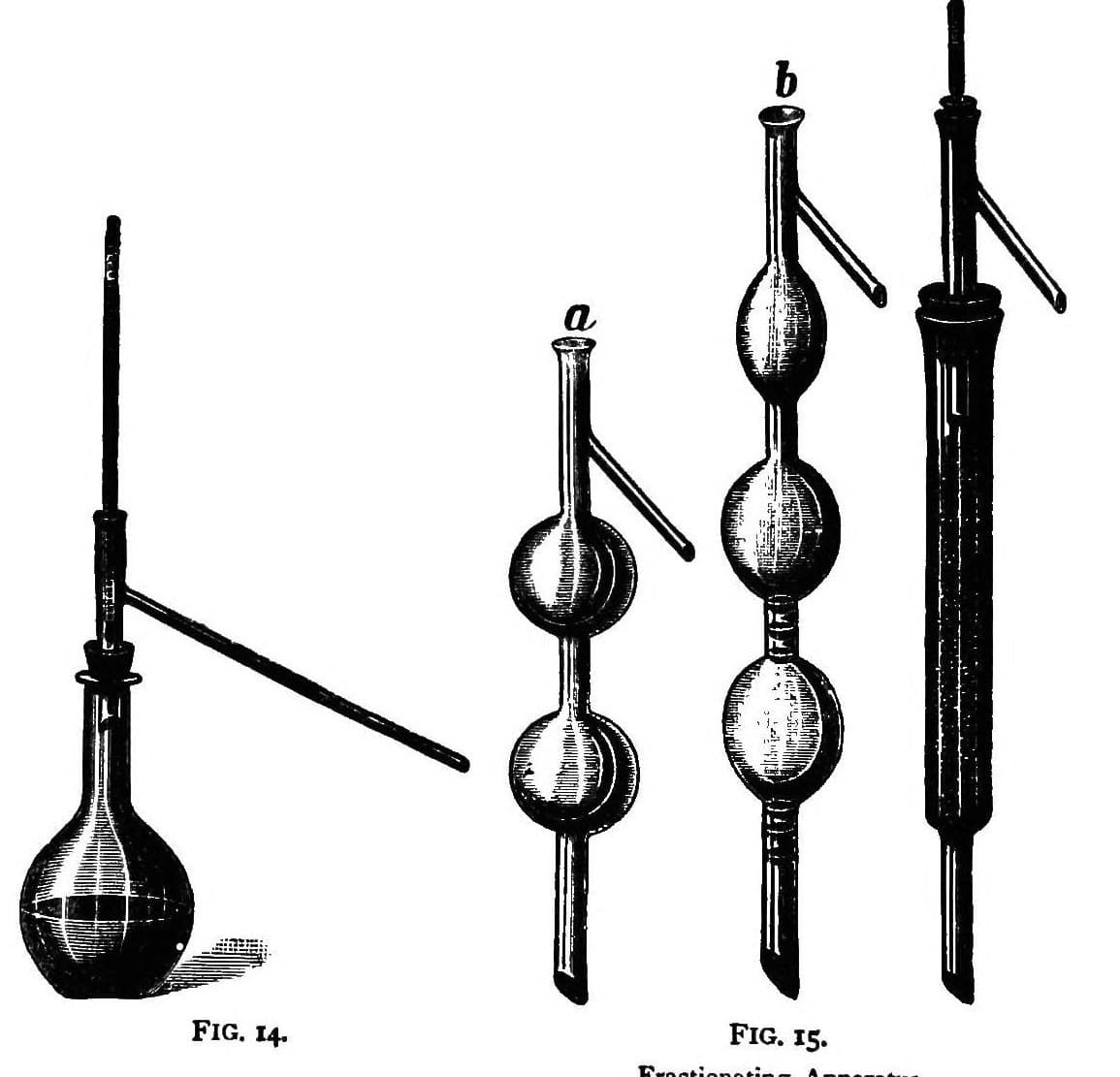
Distillation Column Assembly: Flask, "Evaporator" Still-Head, Liebig Condenser and Receivers (Young, 1903)
A complete fractional distillation set: a globular flask, Young and Thomas's 'evaporator' still-head built of stacked glass sections, a Liebig condenser and a row of receivers. In each section the rising vapour is forced through the liquid running back down, so the mixture separates better at each step.
Result: a fractionating apparatus for separating liquids by boiling point, the fractions caught in receivers changed at set temperatures.
Source: S. Young, Fractional Distillation (1903), pp. 4-7, 115-116, 166-168. Picture: Figs. 37 and 38 of the book.
Ilọsíwájú
Unknown
Ìlànà
1
1
Choose the still
Choose the still
Use a globular flask, since a flat-bottomed one may crack over a naked flame, no larger than the amount of liquid needs. Fit it with a cork for the still-head. Ours: a round-bottom flask.
Àwọn ohun èlò fún ìgbésẹ̀ yìí:
 Ìgò abẹ́-róbótó1 still
 Àwọn kọ́ọ̀kì1 still cork
Àwọn irinṣẹ́ tí a nílò:
 Ọ̀gọ̀ Bunsen
2
2
Blow the evaporator still-head
Blow the evaporator still-head
Build the still-head of sections joined end to end. Each outer tube is 22 to 24 mm inside and about 10 to 10.5 cm long, constricted at the bottom. In it stands a thin inner tube, 7.5 to 8 mm inside and 60 mm long, open at both ends, with two large holes near its top. Its lower end widens into a funnel resting on the constriction, with three or four tiny glass beads fused to the rim so it does not fit too tightly. Over it stands an intermediate tube about 14 mm inside and 50 mm long, like a small inverted test tube. A small funnel, slightly wider than the dip in the outer tube above, sits on top of it on three glass legs. Small glass projections centre the tubes. Make the head long enough that the thermometer's bulb and stem both sit in the vapour, with a side delivery tube at the top.
Àwọn ohun èlò fún ìgbésẹ̀ yìí:
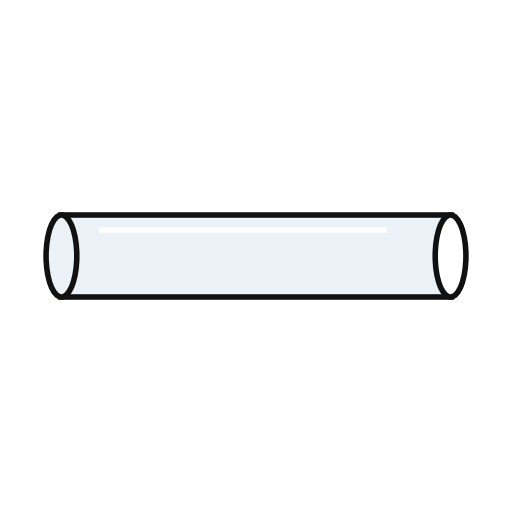 Ọpọ́n gíláàsì1 sections, inner and intermediate tubes, delivery tube
Àwọn irinṣẹ́ tí a nílò:
 Ọ̀gọ̀ ìfẹ́ dígí orí tábìlì
3
3
Fit the condenser
Fit the condenser
Use a Liebig condenser, about 7 or 8 mm inside for the inner tube and 15 mm for the outer, cooled by running water. Pass the delivery tube through a cork into it. Draw out the joint where the wide inlet meets the narrow tube so no pool of liquid lies there. Bend the narrow tube so the condenser can stand upright. Above about 170 °C use a long tube cooled by air instead of water.
Àwọn ohun èlò fún ìgbésẹ̀ yìí:
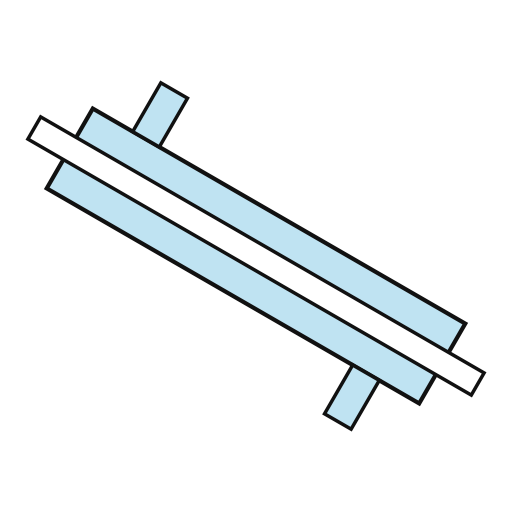 Kondẹnsa tí omi ń mú tutù1 condenserÀwọn kọ́ọ̀kì1 condenser cork
Àwọn irinṣẹ́ tí a nílò:
Ọ̀gọ̀ ìfẹ́ dígí orí tábìlì Omi
4
4
Set the heat and the receivers
Set the heat and the receivers
Heat with a Bunsen burner, its top about 2 mm below the flask so the small flame touches the glass, shielded from draughts. Add a few pieces of porous porcelain (a broken clay pipe will do) or pumice if the liquid bumps. Set a thermometer in the still-head and a row of small flasks as receivers.
Àwọn ohun èlò fún ìgbésẹ̀ yìí:
 Ẹ̀rọ Ìwọ̀n Ooru1 still-head thermometer
 Ìgò ìkójọ10 receivers
Àwọn irinṣẹ́ tí a nílò:
Ọ̀gọ̀ Bunsen Ohun èlò tí a kò mọ̀
5
5
Distil in fractions
Distil in fractions
Read the barometer and correct the set temperatures for it. Distil steadily. In each section, condensed liquid seals the narrow passage, so the vapour rises up the inner tube, down between the tubes and up again, while liquid drips from section to section back to the still. Collect the distillate in fractions, changing the receiver each time the temperature reaches one of the values fixed beforehand.
Àwọn irinṣẹ́ tí a nílò:
 Ohun ìdíwọ̀n ìtẹ̀ afẹ́fẹ́ ti mercuryỌ̀gọ̀ BunsenOmi
Àwọn ohun-èlò
6- 1 stillÀyè
- 1 condenser corkÀyè
- 1 sections, inner and intermediate tubes, delivery tubeÀyè
- 1 condenserÀyè
- 1 still-head thermometerÀyè
- 10 receiversÀyè
Àwọn Ohun Èlò Ìtọ́nisọ́nà Tí A So Pọ̀

Ìtọ́nisọ́nà yìí ń ṣe
Blueprint tó jọra
Àwọn blueprint wọ̀nyí pín ìmọ̀ — ọ̀nà, ohun-èlò tàbí ìlànà
CC0 Àgbègbè Gbogbogbò
Blueprint yìí ti jáde lábẹ́ CC0. O lè ṣe àdàkọ, yí padà, pín, àti lò láìsí ìyọ̀ǹda.
Ṣàtìlẹ́yìn Olùṣẹ́dá nípa rírà àwọn ọjà nipasẹ̀ Blueprint wọn Ẹ̀san Olùṣẹ́dá tí àwọn Olùtajà gbé kalẹ̀, tàbí ṣẹ̀dá àtúnṣe tuntun ti Blueprint yìí kí o sì fi sínú Blueprint rẹ gẹ́gẹ́ bí ìsopọ̀ láti pín owó-wíwọlé.