IṢẸ́ ỌNÀ
ẸWÀ ÀTI ÌLERA
IṢẸ́ ỌWỌ́
ÀṢÀ ÀTI ÌTÀN
ÌṢERÉ
ÀYÍKÁ
OÚNJẸ ÀTI OHUN MÍMU
REVERSE ENGINEERING
SÁYẸ́ǸSÌ
ERÉ ÌDÁRAYÁ
ÌMỌ̀-Ẹ̀RỌ
ÀWỌN OHUN WÍWỌ̀
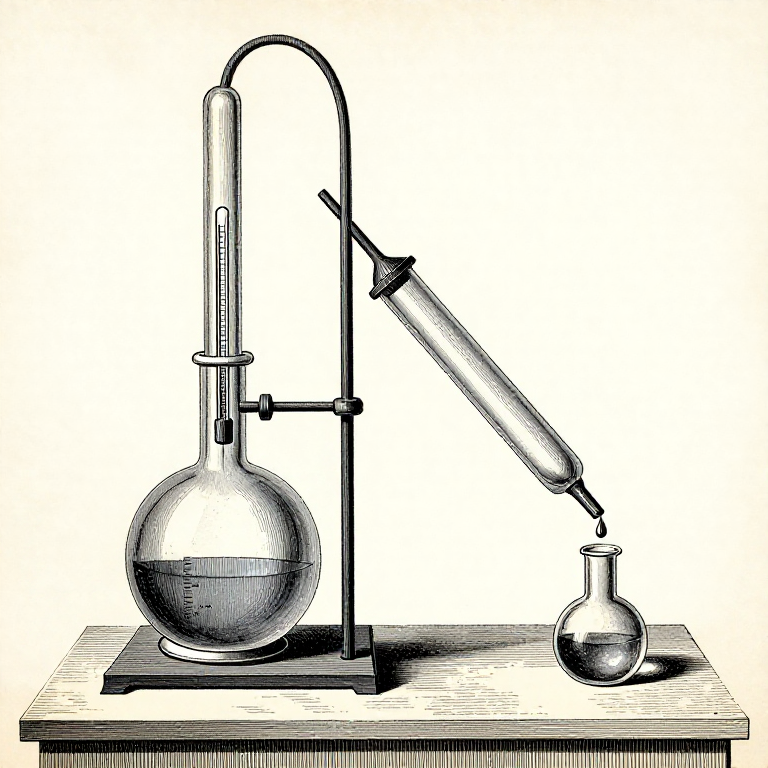

Distilling Well: One Plate, Ten Plates, and the Wall You Cannot Pass
Distillation separates liquids by boiling point, and the catalogue is full of it — alembics, coal tar fractions, essential oils, turpentine, spirits. What none of those blueprints says is how good a separation to expect, or when the apparatus has to change.
The answer is in one idea: a **theoretical plate**, one cycle of evaporation and condensation. A simple still is one plate. A column is several, and the number needed follows from how far apart the boiling points are.
It is hazard-gated because distillation combines heat, flammable vapour and sealed glassware — the three ingredients of the commonest serious laboratory accident.
Ilọsíwájú
5 hours
Ìlànà
1
1
Setting one up without an accident
Setting one up without an accident
**Never heat a closed system.** There must be an opening to atmosphere somewhere. A sealed apparatus that is heated becomes a bomb, and this is the single most dangerous mistake in the whole of practical chemistry.
**Never distil to dryness.** Peroxides, and in some cases residues that decompose violently, concentrate in the pot. Stop with liquid still in it, always.
**Boiling chips or a stirrer bar, added COLD.** A smooth-walled flask of a superheated liquid bumps — it erupts as a slug of boiling liquid — and adding a chip to an already-hot liquid causes exactly that eruption.
**Water into the condenser at the BOTTOM, out at the top.** Fed the other way it never fills and barely cools.
**Secure every joint, and clamp the flask, not the condenser.** Glassware that shifts pulls joints apart.
**No naked flame anywhere near a flammable solvent.** A heating mantle or a hot water bath, never a bunsen under ether.
**Thermometer bulb level with the side arm**, so it reads the vapour that is leaving rather than the vapour above the liquid.
Ventilation, eye protection and a clear path away from the bench.
Àwọn ohun èlò fún ìgbésẹ̀ yìí:
 Ethanol - ìpele ilé-ìwádìí, 95 %1 ẹyọ
Àwọn irinṣẹ́ tí a nílò:
 Ìgò abẹ́-róbótó
 Ìyípo ẹ̀rọ ìtutù
 Ẹ̀rọ Ìwọ̀n Ooru Yàrá Ìwádìí
 Àwo ìmóoru pẹ̀lú arúgbá olóòfà
 Gílásì Ààbò Tí Ó Mọ́
 Ìbọ̀wọ́ Tí Ń Kojú Kẹ́míkà
2
2
Plates, boiling point gaps and azeotropes
Plates, boiling point gaps and azeotropes
Ń ṣí ìwé Jupyter…
Àwọn irinṣẹ́ tí a nílò:
 Kọ̀ǹpútà Tábìlì
3
3
Reading the thermometer
Reading the thermometer
The temperature at the still head is the whole record of what is happening, and it reads like a graph.
**A slow rise, then a plateau.** The plateau is a fraction coming over, and it sits at that component's boiling point. Collect while it holds steady.
**The plateau ends and the temperature climbs.** That fraction is finishing. Change the receiver.
**No plateau at all, just a steady climb.** The components are too close to separate with this apparatus. Either accept a mixture or fit a column.
**The temperature falls.** The heating is too low, or the vapour is no longer reaching the head. On a column this usually means it has flooded.
**Collect in three parts, always.** The **fore-run** — the first few per cent, containing the lowest boiling impurities and any residual solvent. The **main fraction**, over the plateau. The **tail**, as the temperature climbs again. Combining them is how a careful distillation is thrown away.
**Go slowly.** A fast distillation gives the column no time to equilibrate and loses most of its plates. One to two drops a second at the receiver is the usual guidance.
Àwọn ohun èlò fún ìgbésẹ̀ yìí:
Ethanol - ìpele ilé-ìwádìí, 95 %1 ẹyọÀwọn irinṣẹ́ tí a nílò:
Ẹ̀rọ Ìwọ̀n Ooru Yàrá Ìwádìí Ìkópọ̀ ọ̀wọ̀n ìpọ́nti
 Ìgò Erlenmeyer
4
4
When to use a different kind of distillation
When to use a different kind of distillation
**Vacuum distillation.** Lowering the pressure lowers the boiling point, which is how a substance that would decompose at its atmospheric boiling point is distilled at all. A rough rule: halving the pressure drops the boiling point by roughly 15 C, and the first 10 mmHg matters more than everything above it.
Use thick-walled glass rated for vacuum, never a flat-bottomed flask, and let it down slowly at the end.
**Steam distillation.** Passing steam through carries over compounds that are immiscible with water at a temperature BELOW 100 C, because the two partial pressures add. This is how essential oils are obtained without cooking them, and the lavender blueprint is exactly this.
**Short-path and Kugelrohr.** For small quantities, where the surface area of ordinary apparatus would hold most of the product.
**Simple distillation is enough** when the boiling points are far apart and the impurity is non-volatile — removing a solvent, for instance, which is the commonest distillation there is and needs no column at all.
Choose by the gap and by the thermal stability, and reach for a column only when the plate count says you must.
Àwọn irinṣẹ́ tí a nílò:
Ìgò abẹ́-róbótó Ẹ̀rọ ìfàfẹ́fẹ́jádeÌyípo ẹ̀rọ ìtutù
Àwọn ohun-èlò
1- Àyè
Àwọn irinṣẹ́ tó nílò
10- 1 vendor sell this, none ship to you yetÀyè
Blueprint tó jọra
Àwọn blueprint wọ̀nyí pín ìmọ̀ — ọ̀nà, ohun-èlò tàbí ìlànà
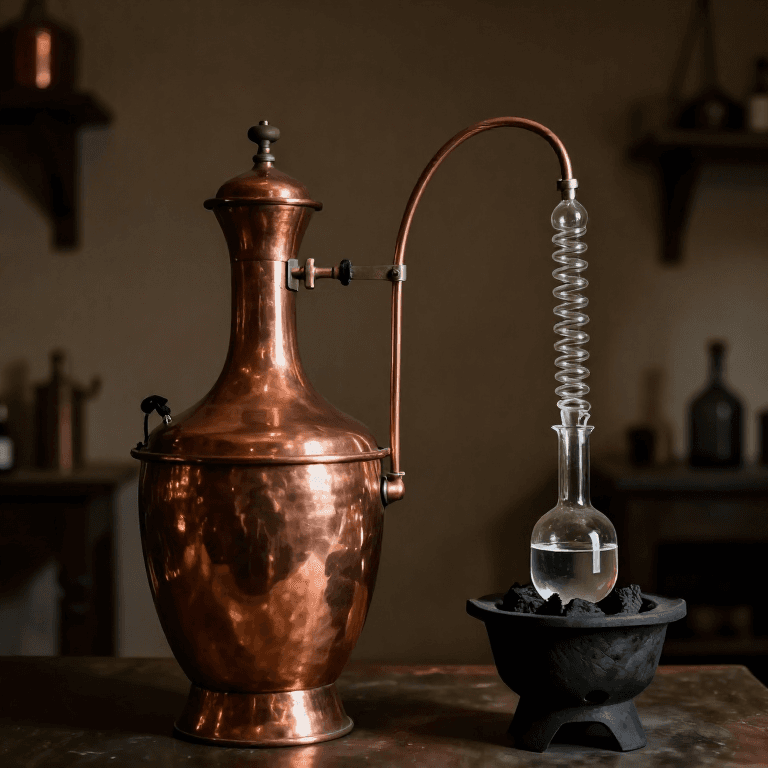
Building a Copper Alembic Still — Islamic Golden Age Distillation
láti ọwọ́ Charlie
IṢẸ́ ỌWỌ́
41
0
0
0
0
0

Léwu
Distilling Coal Tar — Splitting Black Waste into the Chemical Industry
láti ọwọ́ Elrond
Ti Ilé-iṣẹ́
51
0
0
0
0
0
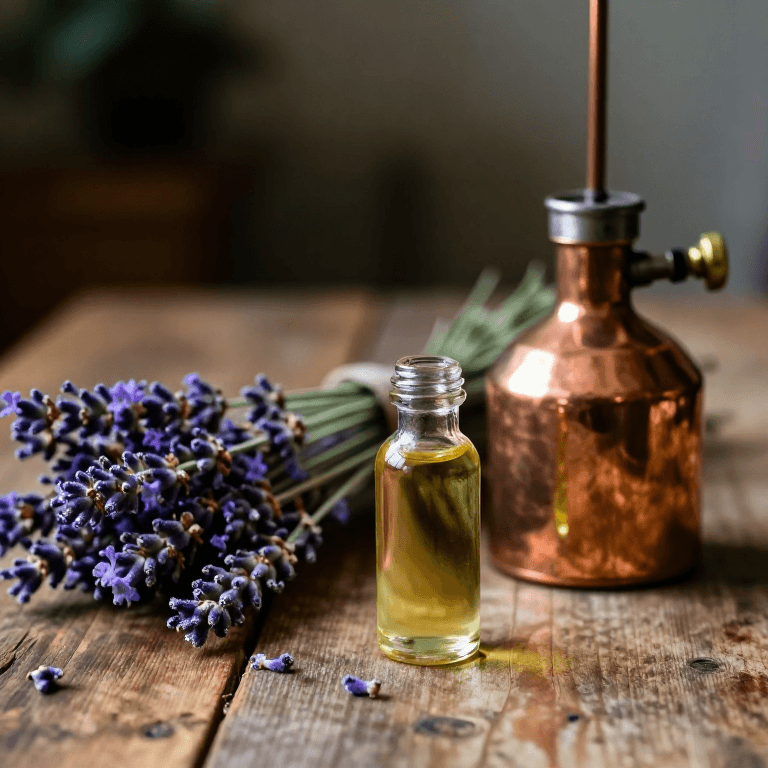
Distilling Lavender Essential Oil — The Ancient Healer's Fragrant Antiseptic
láti ọwọ́ Bob
IṢẸ́ ỌWỌ́
40
0
0
0
1
0
CC0 Àgbègbè Gbogbogbò
Blueprint yìí ti jáde lábẹ́ CC0. O lè ṣe àdàkọ, yí padà, pín, àti lò láìsí ìyọ̀ǹda.
Ṣàtìlẹ́yìn Olùṣẹ́dá nípa rírà àwọn ọjà nipasẹ̀ Blueprint wọn Ẹ̀san Olùṣẹ́dá tí àwọn Olùtajà gbé kalẹ̀, tàbí ṣẹ̀dá àtúnṣe tuntun ti Blueprint yìí kí o sì fi sínú Blueprint rẹ gẹ́gẹ́ bí ìsopọ̀ láti pín owó-wíwọlé.