IṢẸ́ ỌNÀ
ẸWÀ ÀTI ÌLERA
IṢẸ́ ỌWỌ́
ÀṢÀ ÀTI ÌTÀN
ÌṢERÉ
ÀYÍKÁ
OÚNJẸ ÀTI OHUN MÍMU
REVERSE ENGINEERING
SÁYẸ́ǸSÌ
ERÉ ÌDÁRAYÁ
ÌMỌ̀-Ẹ̀RỌ
ÀWỌN OHUN WÍWỌ̀
Léwu


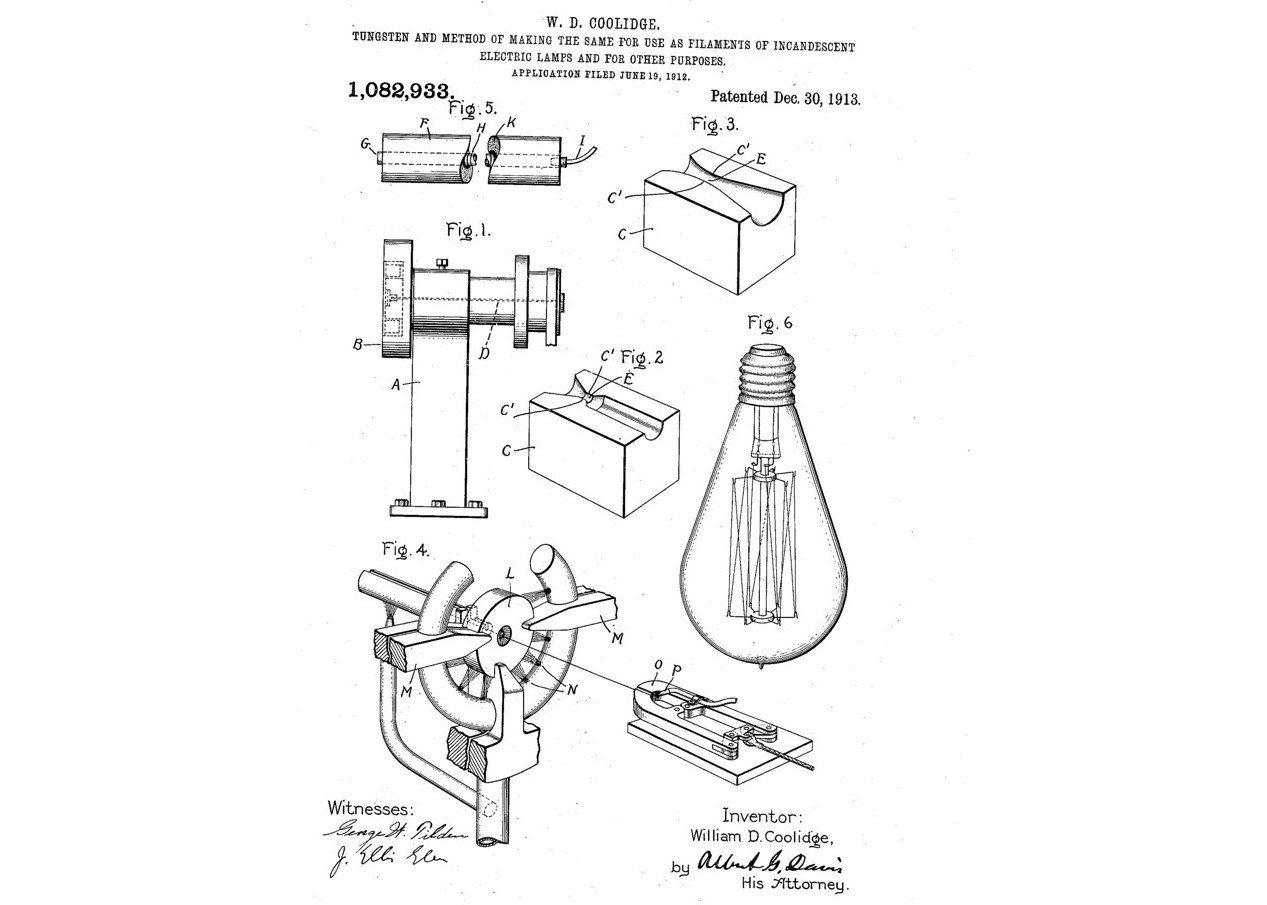
Ductile Tungsten Wire: Pressed, Sintered by Current, Swaged and Drawn Hot (Coolidge 1913)
Tungsten cannot be melted and cast, and sintered tungsten is brittle. Coolidge made it into wire anyway: purify the oxide, reduce it to powder in hydrogen, press a bar, sinter it white hot with a heavy current, then hammer it down hot in a swaging machine, a little at a time. By 30 mils (0.76 mm) the metal has become ductile at room temperature and can be drawn hot through diamond dies.
Source: W. D. Coolidge (General Electric), US 1,082,933 (1913). We stop at 14 mils (0.36 mm). Finer sizes need cyanide for pointing the wire, which we leave out. The sintering vessel stands in a pool of mercury, and Coolidge warns that hydrogen can explode if air is drawn in. Picture: the patent's own drawings.
Ògbóǹtarìgì
1 week
Àkóónú tó léwu
Blueprint yii ni awọn ilana ti o lewu. Wọle ki o mu akoonu ti o lewu ṣiṣẹ ninu awọn eto akaunti rẹ lati wo awọn itọnisọna igbesẹ-nipasẹ-igbesẹ.
WọléÌtọ́nisọ́nà yìí ń ṣe
Blueprint tó jọra
Àwọn blueprint wọ̀nyí pín ìmọ̀ — ọ̀nà, ohun-èlò tàbí ìlànà


CC0 Àgbègbè Gbogbogbò
Blueprint yìí ti jáde lábẹ́ CC0. O lè ṣe àdàkọ, yí padà, pín, àti lò láìsí ìyọ̀ǹda.
Ṣàtìlẹ́yìn Olùṣẹ́dá nípa rírà àwọn ọjà nipasẹ̀ Blueprint wọn Ẹ̀san Olùṣẹ́dá tí àwọn Olùtajà gbé kalẹ̀, tàbí ṣẹ̀dá àtúnṣe tuntun ti Blueprint yìí kí o sì fi sínú Blueprint rẹ gẹ́gẹ́ bí ìsopọ̀ láti pín owó-wíwọlé.