IṢẸ́ ỌNÀ
ẸWÀ ÀTI ÌLERA
IṢẸ́ ỌWỌ́
ÀṢÀ ÀTI ÌTÀN
ÌṢERÉ
ÀYÍKÁ
OÚNJẸ ÀTI OHUN MÍMU
REVERSE ENGINEERING
SÁYẸ́ǸSÌ
ERÉ ÌDÁRAYÁ
ÌMỌ̀-Ẹ̀RỌ
ÀWỌN OHUN WÍWỌ̀
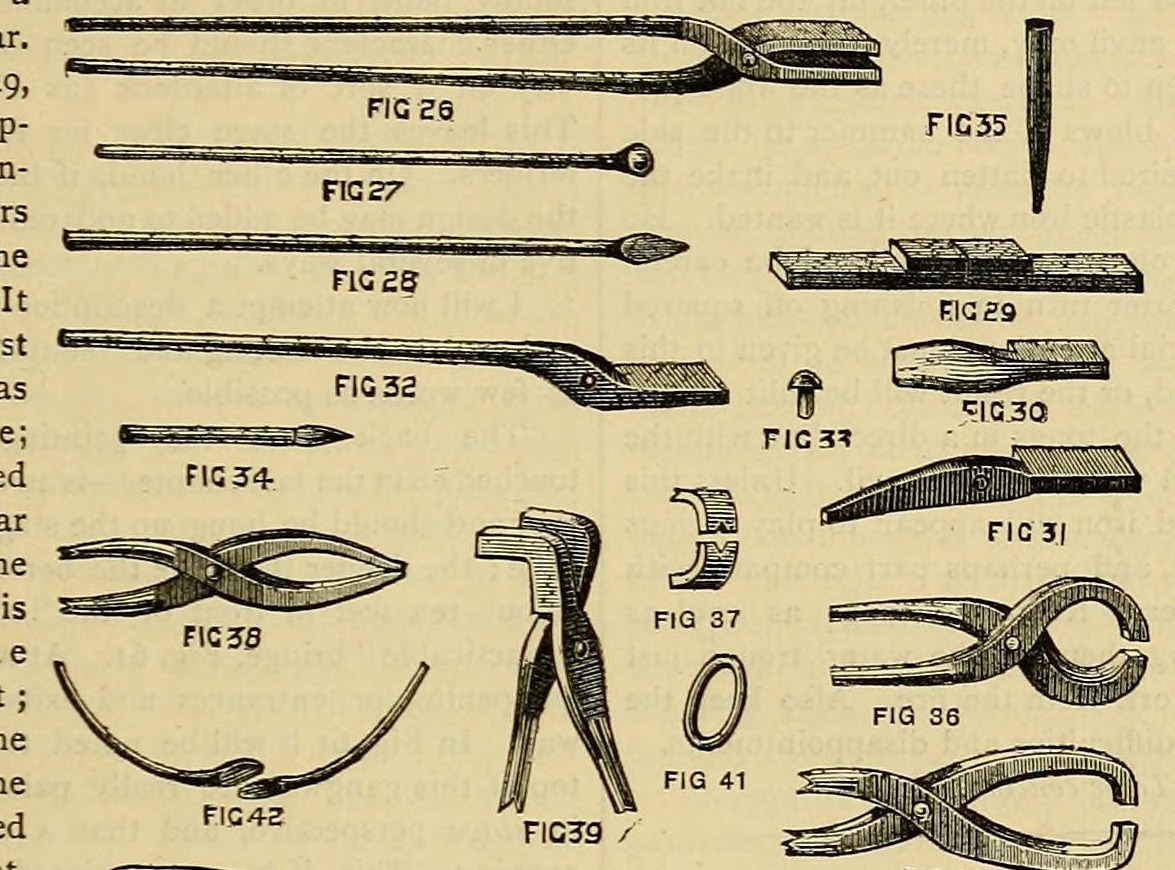


Flat-Bit Tongs and the Tongs Made from Them, down to Crucible Tongs: Welded Reins, Riveted Joint (Edwinson, 1886)
George Edwinson's tong-making lesson from Amateur Work (1886): jaws forged from inch-square iron, reins of 5/8 in. rod scarfed and welded on, the halves riveted with a hot iron pin. The same flat-bit tongs are then reshaped into pincer, hammer and crook-bit tongs, light smith's pliers, and thinned and curved into crucible tongs.
Ilọsíwájú
A day at the forge
Ìlànà
1
1
His sizes
His sizes
Ń ṣí ìwé Jupyter…
2
2
Read Edwinson
Read Edwinson
"Indeed, the man who can turn out a good pair of tongs may be trusted with almost any job in the smithy."
3
3
Forge the reins
Forge the reins
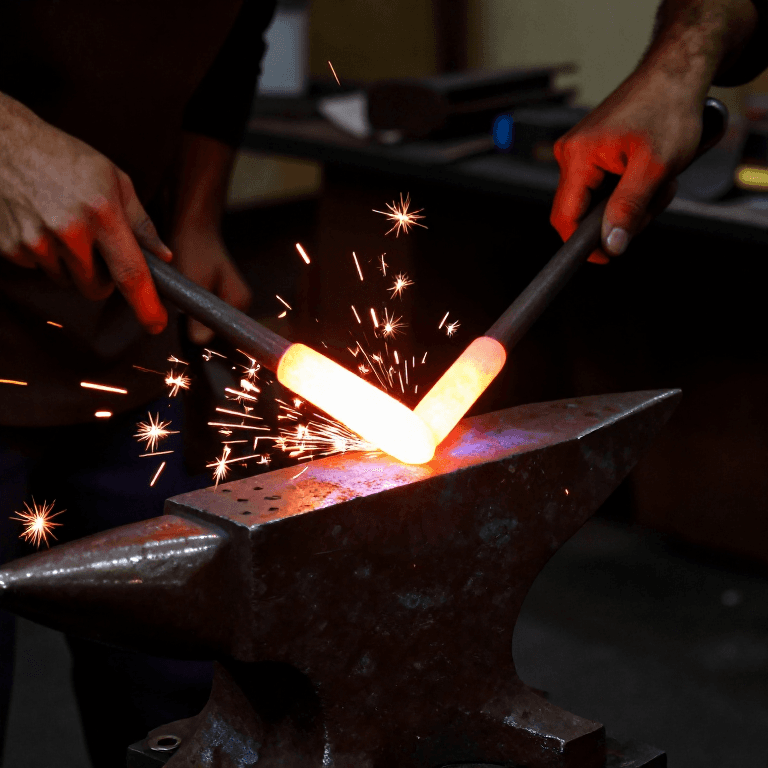
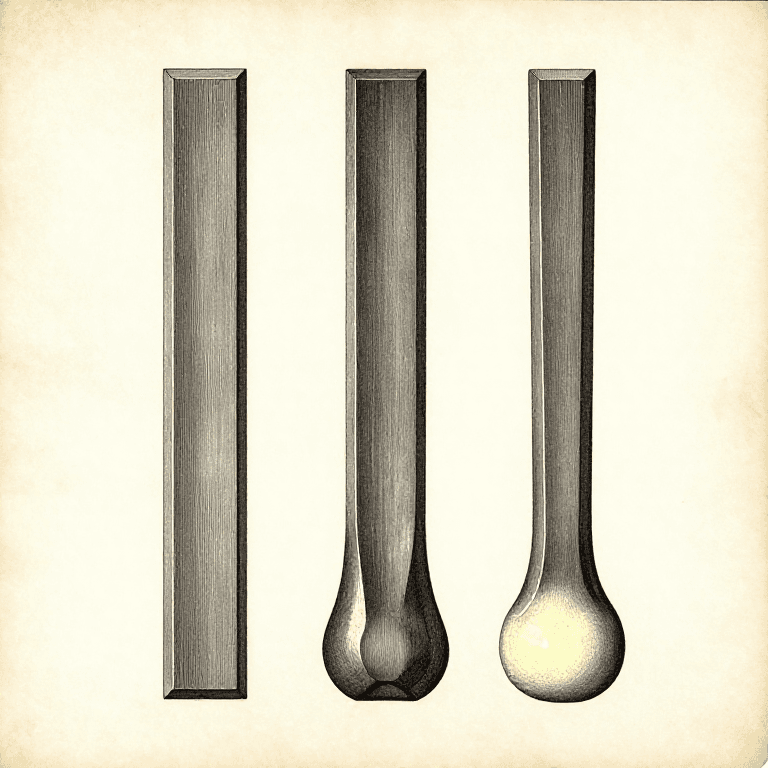
Cut two pieces of 5/8 in. (16 mm) iron rod, each 2 ft (0.6 m) long, with a cold chisel. Bring one end of each to a white welding heat and draw 3-4 in. down to a taper from 5/8 to 1/2 in., rounded for the hand. Upset the other ends at a white heat and scarf them (his figs. 27-28).
Àwọn ohun èlò fún ìgbésẹ̀ yìí:
 Ọ̀pá irin lílù1 ẹyọ
Àwọn irinṣẹ́ tí a nílò:
 Àyà irin tútù
 Ìléru alágbẹ̀dẹ
 Ìdí Alágbẹ̀dẹ
 Òòlù
 Ẹmú alágbẹ̀dẹ
4
4
Forge the jaws
Forge the jaws
Cut two 6 in. pieces of 1 in. square iron (or one 12 in. bar, worked from each end before cutting, fig. 29). Forge each jaw end 4 in. long, 1 1/4 in. wide and 3/8 in. thick. Flatten the other end to 1/4 in. thick, round it for the joint (fig. 30) and draw it to a slightly rounded taper (fig. 31).
Àwọn ohun èlò fún ìgbésẹ̀ yìí:
 Ọ̀pá onígun mẹ́rin irin rírọ̀1 ẹyọ
Àwọn irinṣẹ́ tí a nílò:
Ìléru alágbẹ̀dẹÌdí Alágbẹ̀dẹÒòlùẸmú alágbẹ̀dẹ5
5
Punch the joint
Punch the joint
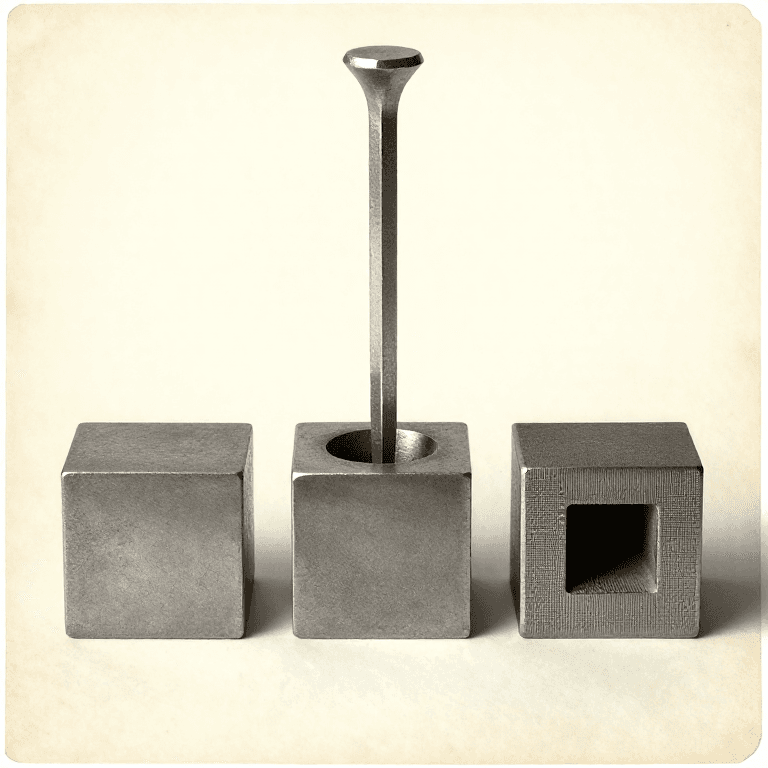
Mark the hole with a centre punch, heat, and punch a 3/8 in. hole over the anvil's heel hole with an iron punch tapering 1/4 to 1/2 in. (fig. 35), or a steel punch of 5/8 in. tool steel.
Àwọn ohun èlò fún ìgbésẹ̀ yìí:
 Ọ̀pá irin ohun èlò1 ẹyọ
Àwọn irinṣẹ́ tí a nílò:
 Igi Àmì ÀárínÌléru alágbẹ̀dẹÌdí Alágbẹ̀dẹÒòlù
6
6
Weld jaw to rein
Weld jaw to rein
Scarf the taper end of each jaw to fit a rein. Heat both to a welding heat in a clear fire, throw on clean fine fresh-water sand and heat until pasty. Tap the scarfs together lightly, return to the fire a moment, and finish the weld. At a red heat forge the square part to blend into the round rein (fig. 32).
Àwọn ohun èlò fún ìgbésẹ̀ yìí:
 Iyanrìn1 ẹyọ
Àwọn irinṣẹ́ tí a nílò:
Ìléru alágbẹ̀dẹÌdí Alágbẹ̀dẹÒòlùẸmú alágbẹ̀dẹ7
7
Rivet the joint
Rivet the joint
Smiths' way: nick a 3/8 in. round iron rod to rivet length, put the halves together, insert the hot end, twist it off, let 1/4 in. stand below, and rivet both sides. (Or make a 3/4 x 3/8 in. button-headed rivet in a 3/8 in. hole in a flat iron.) If the joint locks, reheat jaws and pin to bright red and work them free.
Àwọn ohun èlò fún ìgbésẹ̀ yìí:
Ọ̀pá irin lílù1 ẹyọÀwọn irinṣẹ́ tí a nílò:
Ìléru alágbẹ̀dẹÌdí Alágbẹ̀dẹÒòlù Pẹpẹ orí ìṣó
8
8
Set the jaws
Set the jaws
Heat the jaws and set them to the width of the stock to be held. Spring them wider with a piece of cold iron between and a few light blows.
Àwọn irinṣẹ́ tí a nílò:
Ìléru alágbẹ̀dẹÌdí Alágbẹ̀dẹÒòlù9
9
Crucible tongs and other forms
Crucible tongs and other forms
From flat-bit tongs at the fig. 32 stage: lengthen and curve the bits for pincer tongs (angular notches hold round or square bars), more for hammer tongs, bend them sideways for crook-bit tongs. Small flat-bit tongs with lengthened, shaped bits are smith's pliers; thin those out further and curve them like pincers to make crucible tongs for hot crucibles and pots of molten metal. Heavy tongs 2-5 ft long need stouter iron.
Àwọn irinṣẹ́ tí a nílò:
Ìléru alágbẹ̀dẹÌdí Alágbẹ̀dẹÒòlùẸmú alágbẹ̀dẹ10
10
Troubleshooting
Troubleshooting
Tongs troubleshooting.
Flow
Loading...
11
11
History and honest limits
History and honest limits
From George Edwinson, "Smithing and Forging" III, **Amateur Work, Illustrated**, vol. V (1886), pp. 266-269 (checked on the archive.org scan amateurworkillus05lond). He gives full sizes only for the flat-bit tongs; crucible tong sizes and curvature are left to the work. Metric figures and tools are ours.
Àwọn ohun-èlò
4- 1 ẹyọÀyè
- Àyè
- 1 ẹyọÀyè
- 1 ẹyọÀyè
Ìtọ́nisọ́nà yìí ń ṣe
Blueprint tó jọra
Àwọn blueprint wọ̀nyí pín ìmọ̀ — ọ̀nà, ohun-èlò tàbí ìlànà
CC0 Àgbègbè Gbogbogbò
Blueprint yìí ti jáde lábẹ́ CC0. O lè ṣe àdàkọ, yí padà, pín, àti lò láìsí ìyọ̀ǹda.
Ṣàtìlẹ́yìn Olùṣẹ́dá nípa rírà àwọn ọjà nipasẹ̀ Blueprint wọn Ẹ̀san Olùṣẹ́dá tí àwọn Olùtajà gbé kalẹ̀, tàbí ṣẹ̀dá àtúnṣe tuntun ti Blueprint yìí kí o sì fi sínú Blueprint rẹ gẹ́gẹ́ bí ìsopọ̀ láti pín owó-wíwọlé.