IṢẸ́ ỌNÀ
ẸWÀ ÀTI ÌLERA
IṢẸ́ ỌWỌ́
ÀṢÀ ÀTI ÌTÀN
ÌṢERÉ
ÀYÍKÁ
OÚNJẸ ÀTI OHUN MÍMU
REVERSE ENGINEERING
SÁYẸ́ǸSÌ
ERÉ ÌDÁRAYÁ
ÌMỌ̀-Ẹ̀RỌ
ÀWỌN OHUN WÍWỌ̀
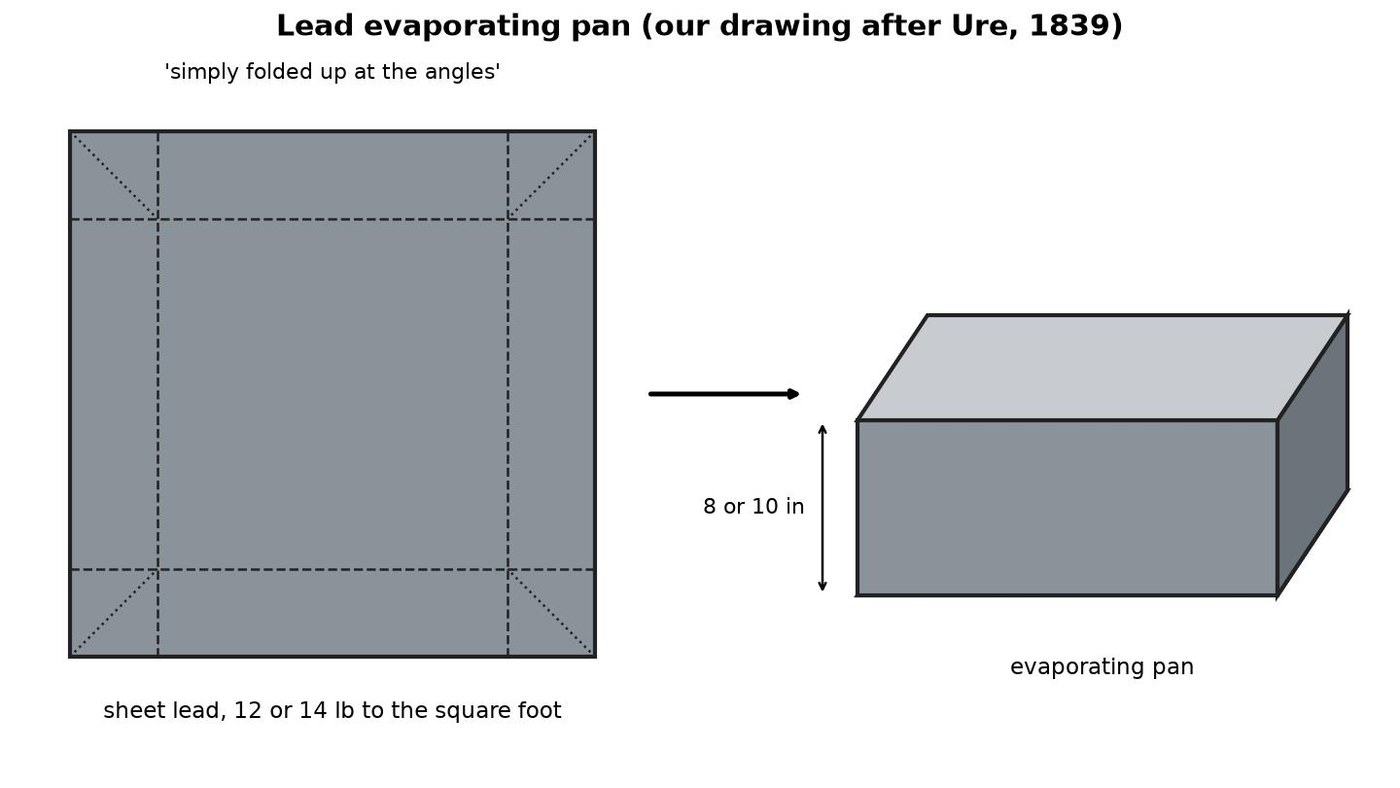


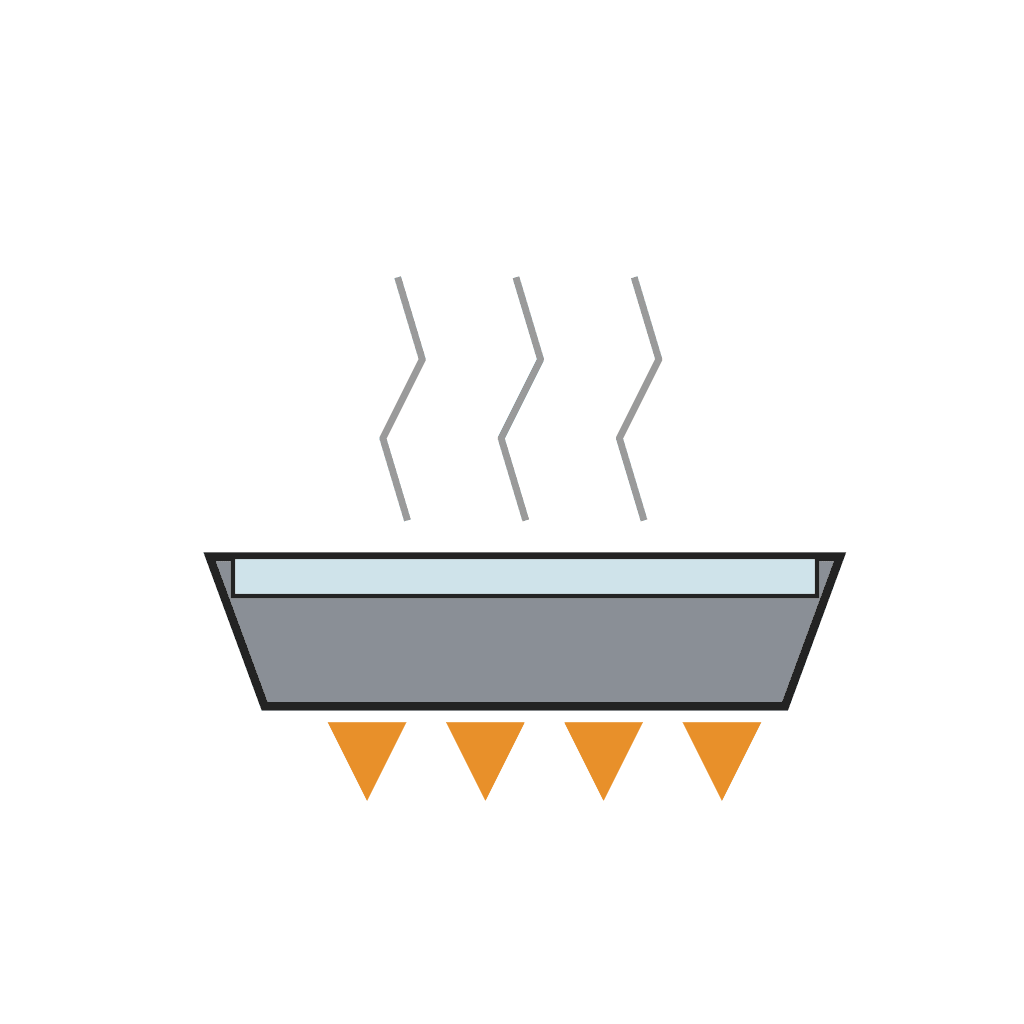
Evaporating Pan: Sheet Lead Folded Up at the Angles (Ure, 1839)
The acid-works evaporator of Ure's day: a rectangular pan made from one large sheet of lead, 12 or 14 lb to the square foot, simply folded up at the angles to a depth of 8 or 10 inches, and set on a grate of strong wrought-iron bars over a furnace.
Lead pans stand weak sulphuric acid; Ure takes the acid out at sp. gr. 1.650, or 1.700 at most, because stronger acid begins to eat the lead.
Not given: length and breadth.
Source: A. Ure, Dictionary of Arts, Manufactures, and Mines (1839), Acid, Sulphuric. Picture: our drawing.
Olùbẹ̀rẹ̀
Unknown
Ìlànà
1
1
Fold the sheet into a pan
Fold the sheet into a pan
Take a large sheet of lead weighing 12 or 14 lb to the square foot. Simply fold it up at the angles into a rectangular pan 8 or 10 inches deep. Ours: a straightedge and a mallet for the folds.
Àwọn ohun èlò fún ìgbésẹ̀ yìí:
 Ewé òjé1 12 or 14 lb per sq ft
 Ìwọ̀n tí a kò mọ̀1 ẹyọ
Àwọn irinṣẹ́ tí a nílò:
 Etí tààrà
 Òòlù Igi
2
2
Set it over the fire
Set it over the fire
Rest the pan on a grate of a close row of strong wrought-iron bars, with the furnace flame playing underneath. Do not concentrate sulphuric acid in it beyond sp. gr. 1.700: stronger acid begins to corrode the lead.
Àwọn irinṣẹ́ tí a nílò:
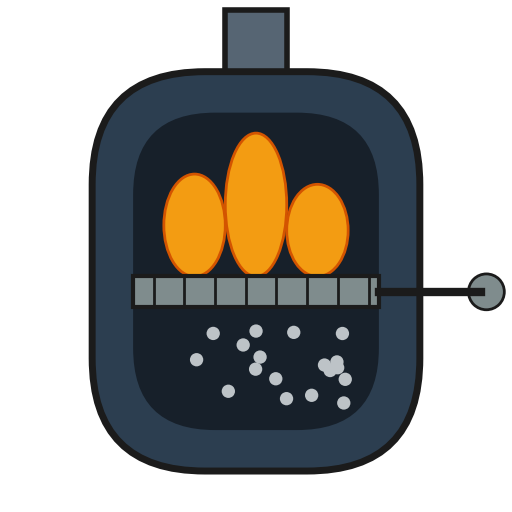 Irin ìdúró iná ààrò
Ìtọ́nisọ́nà yìí ń ṣe
CC0 Àgbègbè Gbogbogbò
Blueprint yìí ti jáde lábẹ́ CC0. O lè ṣe àdàkọ, yí padà, pín, àti lò láìsí ìyọ̀ǹda.
Ṣàtìlẹ́yìn Olùṣẹ́dá nípa rírà àwọn ọjà nipasẹ̀ Blueprint wọn Ẹ̀san Olùṣẹ́dá tí àwọn Olùtajà gbé kalẹ̀, tàbí ṣẹ̀dá àtúnṣe tuntun ti Blueprint yìí kí o sì fi sínú Blueprint rẹ gẹ́gẹ́ bí ìsopọ̀ láti pín owó-wíwọlé.