IṢẸ́ ỌNÀ
ẸWÀ ÀTI ÌLERA
IṢẸ́ ỌWỌ́
ÀṢÀ ÀTI ÌTÀN
ÌṢERÉ
ÀYÍKÁ
OÚNJẸ ÀTI OHUN MÍMU
REVERSE ENGINEERING
SÁYẸ́ǸSÌ
ERÉ ÌDÁRAYÁ
ÌMỌ̀-Ẹ̀RỌ
ÀWỌN OHUN WÍWỌ̀
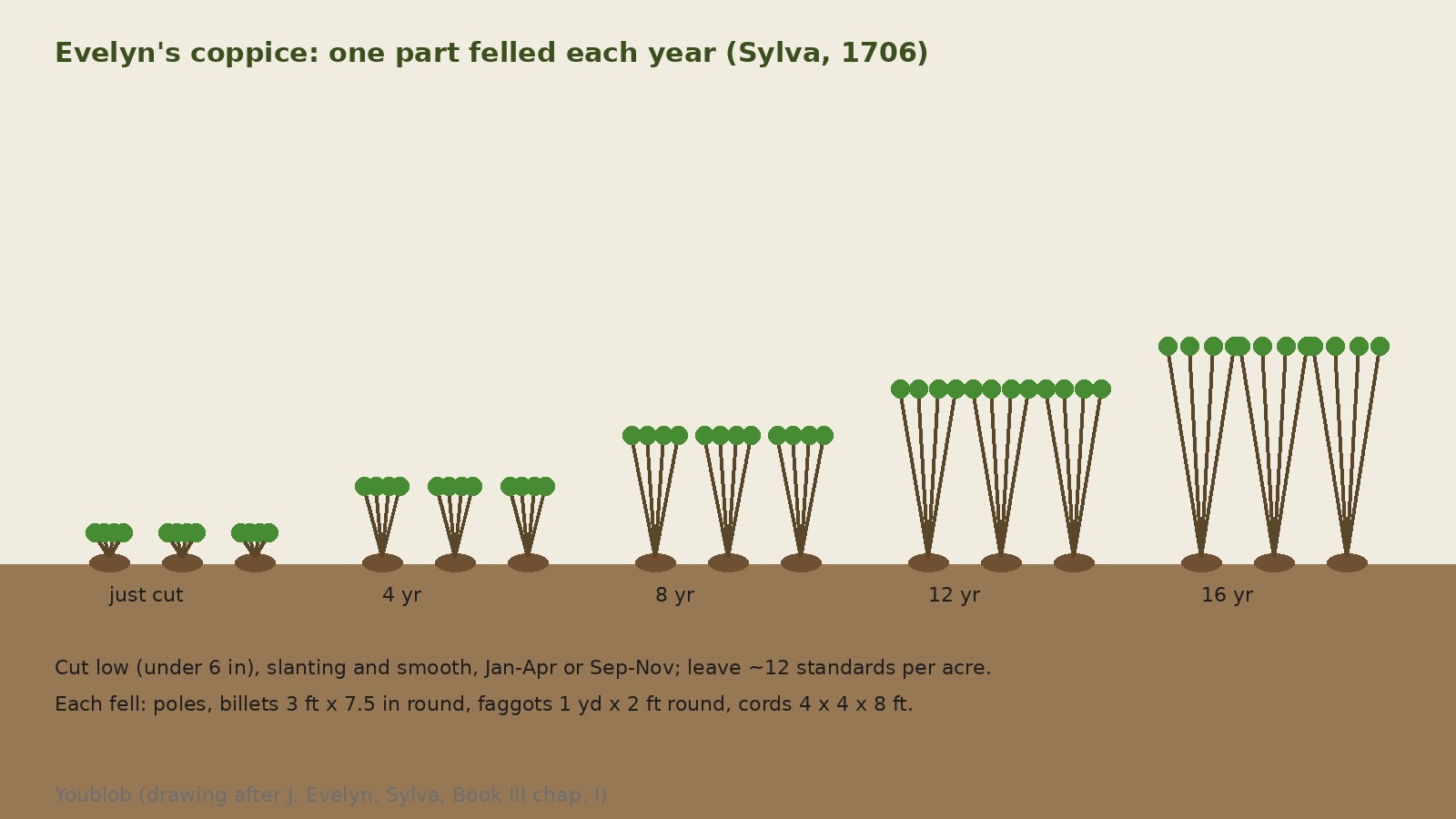


Coppice Wood for Poles, Billets and Faggots (Evelyn's Sylva, 1706)
John Evelyn's coppice husbandry: hazel, ash, chestnut and willow planted close and cut back to the stool every 8 to 20 years, so each fell gives poles, statute billets and faggots, while the best saplings are left to grow on as timber.
Àárín
Rotations of 8 to 20 years; a winter per fell
Ìlànà
1
1
Rotation and measures
Rotation and measures
Ń ṣí ìwé Jupyter…
2
2
Read Sylva
Read Sylva
"Sylva caedua is (as Varro defines it) as well copp'ce to cut for fuel as for use of timber."
3
3
Lay out and plant
Lay out and plant
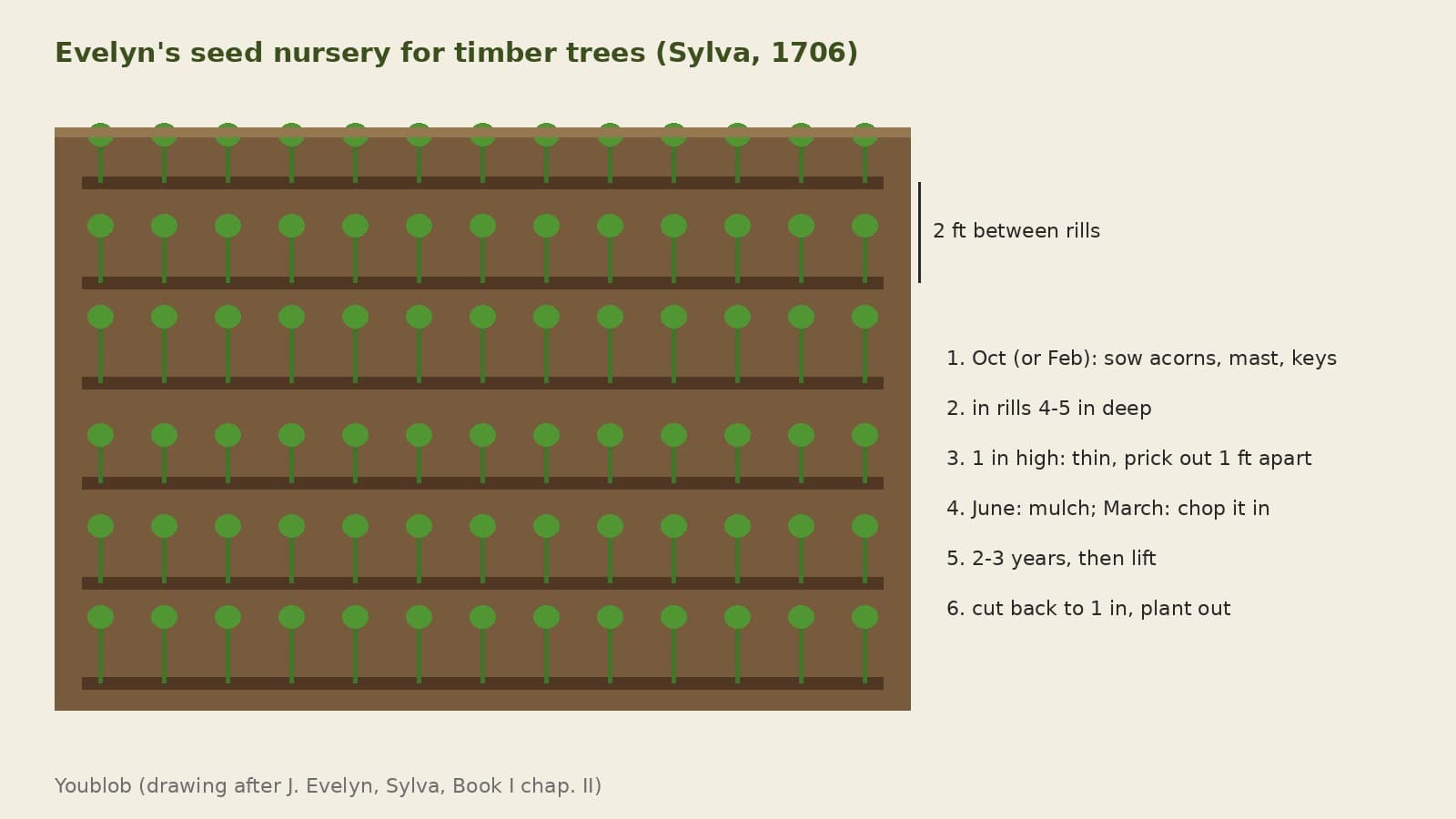
Lay the coppice out in parts that are cut in turn, with 18-20 ft rides of grass between them for carts, and fence it. Plant hazel or birch with ash, chestnut, sallow and sycamore mixed in (at least one in four), no closer than 5 ft; on wet ground drain it and put willow, sallow and alder low down. Or bury sets of sallow, willow or alder, a billet long with both ends sloped. Weed for two years and keep cattle out.
Àwọn ohun èlò fún ìgbésẹ̀ yìí:
 Ọ̀pá Igi Líle Kékeré1 ẹyọ
Àwọn irinṣẹ́ tí a nílò:
 Ọ̀kọ́ ìwalẹ̀ (ṣọ́ọ̀bù)
 Ọkọ́
4
4
Choose the rotation
Choose the rotation
Cut after 8 or 9 years on very good ground, otherwise 12 to 15; 20 years is better. With a 17-year growth, a 17-acre coppice gives one acre to fell every year for ever. Shallow ground 10-12 years, deeper 14.
5
5
Fell the underwood
Fell the underwood
Fell from January to mid-March or April, or mid-September to near the end of November, starting from one side so carts can enter. Cut no higher than half a foot, the closer the better, slanting, smooth and sloping to the south. Of a bunch of shoots keep the fairest sapling. Leave about twelve good young oaks (or ash, elm, beech) per acre as standards, best on the edges. Keep enough poles round the bounds for the fence.
Àwọn irinṣẹ́ tí a nílò:
 Àáké
 Àdá onítọ̀kọ̀
6
6
Make up the wood
Make up the wood
Sort out the straight poles. Cut billets 3 ft long and 7.5 in round, and bind the brush into round faggots a full yard long and 2 ft round. Stack cordwood 4 ft high, 4 ft broad and 8 ft long (128 cubic feet). Clear everything by Midsummer.
Àwọn ohun èlò fún ìgbésẹ̀ yìí:
 Okùn jute1 ẹyọ
Àwọn irinṣẹ́ tí a nílò:
ÀákéÀdá onítọ̀kọ̀ Ayùn Ọwọ́
7
7
Close it up
Close it up
Rake out spray and chips, grub out rotten stubs, fill thin places with new plants, and shut the coppice to cattle: four years if it was cut at 14 years or under, longer if older.
Àwọn ohun èlò fún ìgbésẹ̀ yìí:
Ọ̀pá Igi Líle Kékeré1 ẹyọÀwọn irinṣẹ́ tí a nílò:
 Ọkọ́-ìgé irinỌ̀kọ́ ìwalẹ̀ (ṣọ́ọ̀bù)
8
8
Troubleshooting
Troubleshooting
Coppice troubleshooting.
Flow
Loading...
9
9
History and honest limits
History and honest limits
From John Evelyn, **Sylva** (text of the 1706 edition, London reprint 1908), Book III, Chap. I 'Of Copp'ces' (checked on the archive.org scan sylvaordiscourse02evelrich, pp. 1-7). The statutes he cites are 17th-century English law, given as history; metric figures are ours.
Ìtọ́nisọ́nà yìí ń ṣe


Blueprint tó jọra
Àwọn blueprint wọ̀nyí pín ìmọ̀ — ọ̀nà, ohun-èlò tàbí ìlànà
CC0 Àgbègbè Gbogbogbò
Blueprint yìí ti jáde lábẹ́ CC0. O lè ṣe àdàkọ, yí padà, pín, àti lò láìsí ìyọ̀ǹda.
Ṣàtìlẹ́yìn Olùṣẹ́dá nípa rírà àwọn ọjà nipasẹ̀ Blueprint wọn Ẹ̀san Olùṣẹ́dá tí àwọn Olùtajà gbé kalẹ̀, tàbí ṣẹ̀dá àtúnṣe tuntun ti Blueprint yìí kí o sì fi sínú Blueprint rẹ gẹ́gẹ́ bí ìsopọ̀ láti pín owó-wíwọlé.