IṢẸ́ ỌNÀ
ẸWÀ ÀTI ÌLERA
IṢẸ́ ỌWỌ́
ÀṢÀ ÀTI ÌTÀN
ÌṢERÉ
ÀYÍKÁ
OÚNJẸ ÀTI OHUN MÍMU
REVERSE ENGINEERING
SÁYẸ́ǸSÌ
ERÉ ÌDÁRAYÁ
ÌMỌ̀-Ẹ̀RỌ
ÀWỌN OHUN WÍWỌ̀
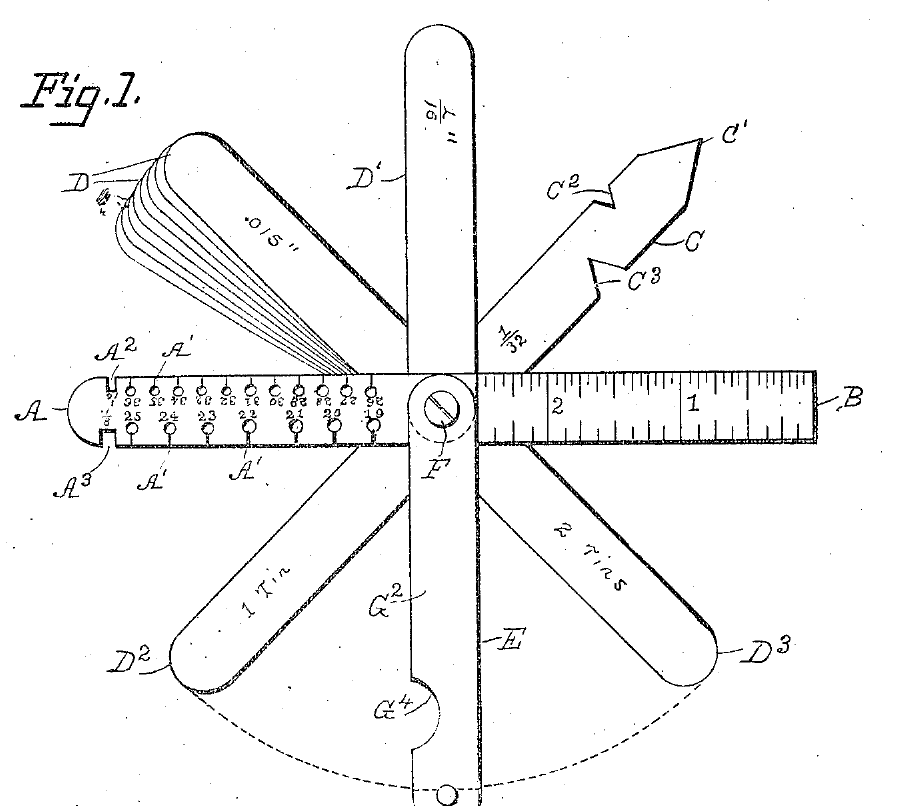


Feeler Gauge Set in a Folding Handle: Curtin, 1911
Feelers are thin blades of known thickness, used to measure small gaps by feel. Peter A. Curtin of Buffalo patented a pocket set in 1911, US 987,703: blades differing by about a thousandth of an inch (for example 0.002, 0.003, 0.004 and 0.006 in), each marked with its thickness, all pivoted on one screw between the two sides of a handle so they fold away like the blades of a jack-knife. Two or more blades laid side by side measure their combined thickness. The thin blades are flexible enough to be pressed together at their free ends even when they do not lie next to each other at the pivot.
Àárín
Workshop process
Ìlànà
1
1
Blades
Blades
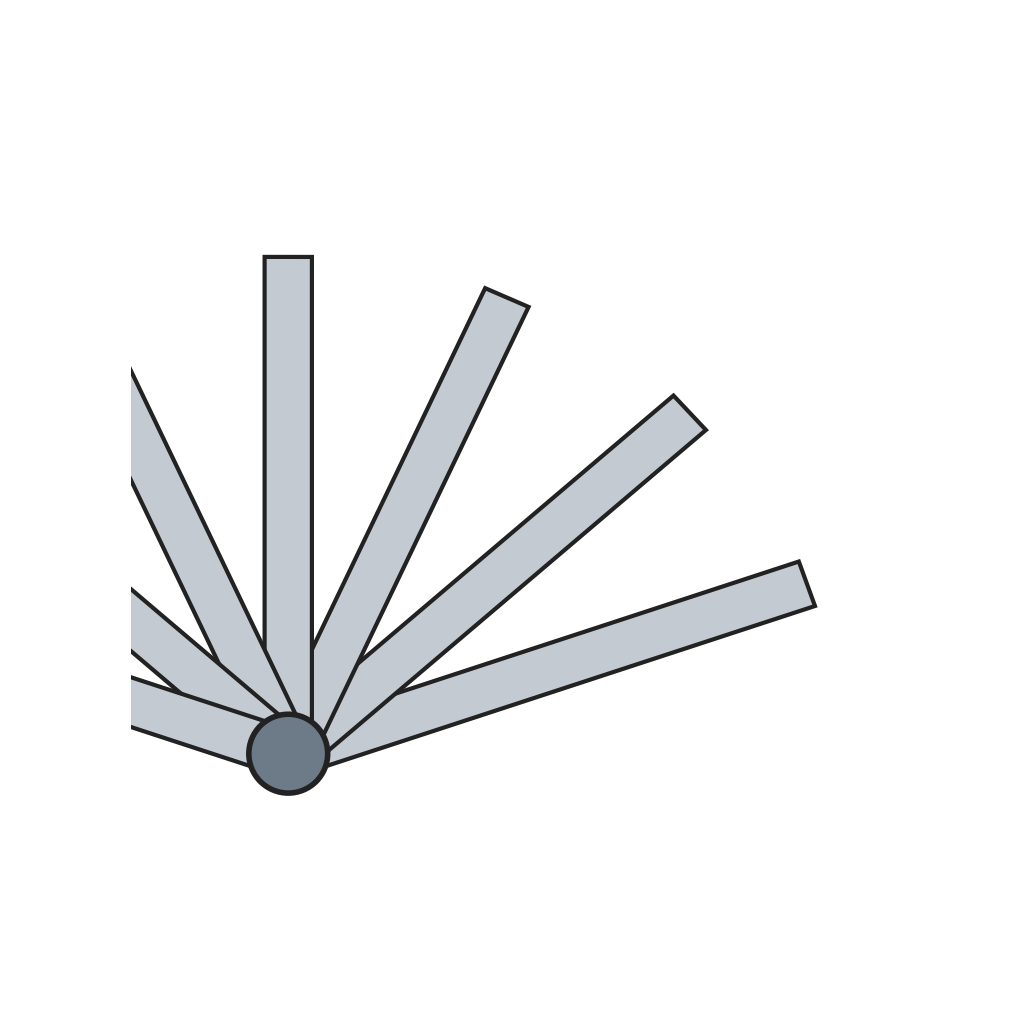
Make the feeler blades in a series of thicknesses, each with a hole at one end, and mark each with its thickness.
Àwọn ohun èlò fún ìgbésẹ̀ yìí:
 Abẹ feeler1 ẹyọ
Àwọn irinṣẹ́ tí a nílò:
 Ìlàǹkàn irin
 Ìlù ọwọ́
 Àwọn Ìfá (Ìfá Ọwọ́)
2
2
Handle
Handle
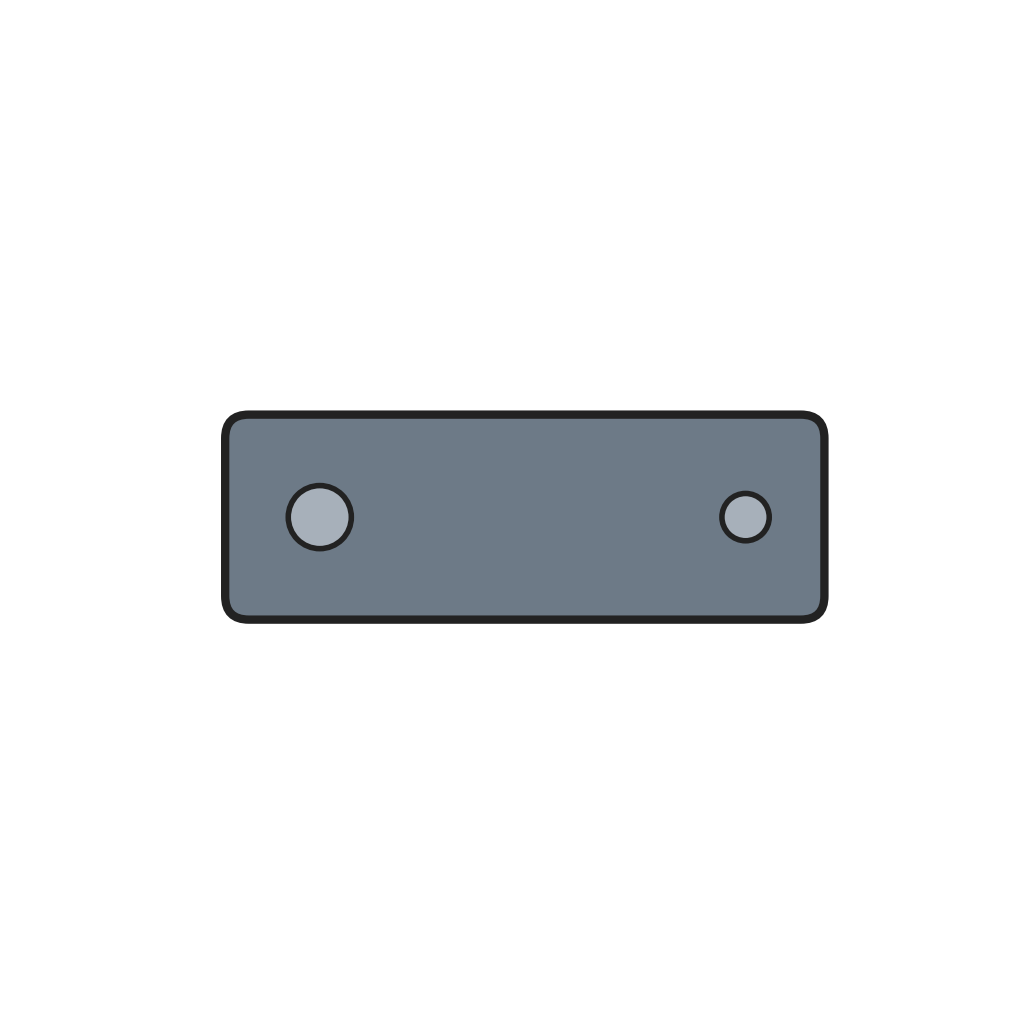
Hold the two handle sides the right distance apart with a bolster at the lower end, fixed by a rivet. Cut a notch near the lower end to make the blades easy to open.
Àwọn ohun èlò fún ìgbésẹ̀ yìí:
 Ọwọ́ abẹ yíyí1 ẹyọ
 Ìṣó irin1 ẹyọ
Àwọn irinṣẹ́ tí a nílò:
Ìlù ọwọ́ Òòlù ìsoÀwọn Ìfá (Ìfá Ọwọ́)
3
3
Pivot
Pivot
Pass the pivot screw through the handle sides and the holes of all the blades, so each blade folds into the handle like a jack-knife blade.
Àwọn irinṣẹ́ tí a nílò:
 Ìṣù àwọn ohun ìyí skurú
Àwọn ohun-èlò
3- 1 ẹyọÀyè
- 1 ẹyọÀyè
- 1 ẹyọÀyè
Ìtọ́nisọ́nà yìí ń ṣe

Blueprint tó jọra
Àwọn blueprint wọ̀nyí pín ìmọ̀ — ọ̀nà, ohun-èlò tàbí ìlànà
CC0 Àgbègbè Gbogbogbò
Blueprint yìí ti jáde lábẹ́ CC0. O lè ṣe àdàkọ, yí padà, pín, àti lò láìsí ìyọ̀ǹda.
Ṣàtìlẹ́yìn Olùṣẹ́dá nípa rírà àwọn ọjà nipasẹ̀ Blueprint wọn Ẹ̀san Olùṣẹ́dá tí àwọn Olùtajà gbé kalẹ̀, tàbí ṣẹ̀dá àtúnṣe tuntun ti Blueprint yìí kí o sì fi sínú Blueprint rẹ gẹ́gẹ́ bí ìsopọ̀ láti pín owó-wíwọlé.