IṢẸ́ ỌNÀ
ẸWÀ ÀTI ÌLERA
IṢẸ́ ỌWỌ́
ÀṢÀ ÀTI ÌTÀN
ÌṢERÉ
ÀYÍKÁ
OÚNJẸ ÀTI OHUN MÍMU
REVERSE ENGINEERING
SÁYẸ́ǸSÌ
ERÉ ÌDÁRAYÁ
ÌMỌ̀-Ẹ̀RỌ
ÀWỌN OHUN WÍWỌ̀
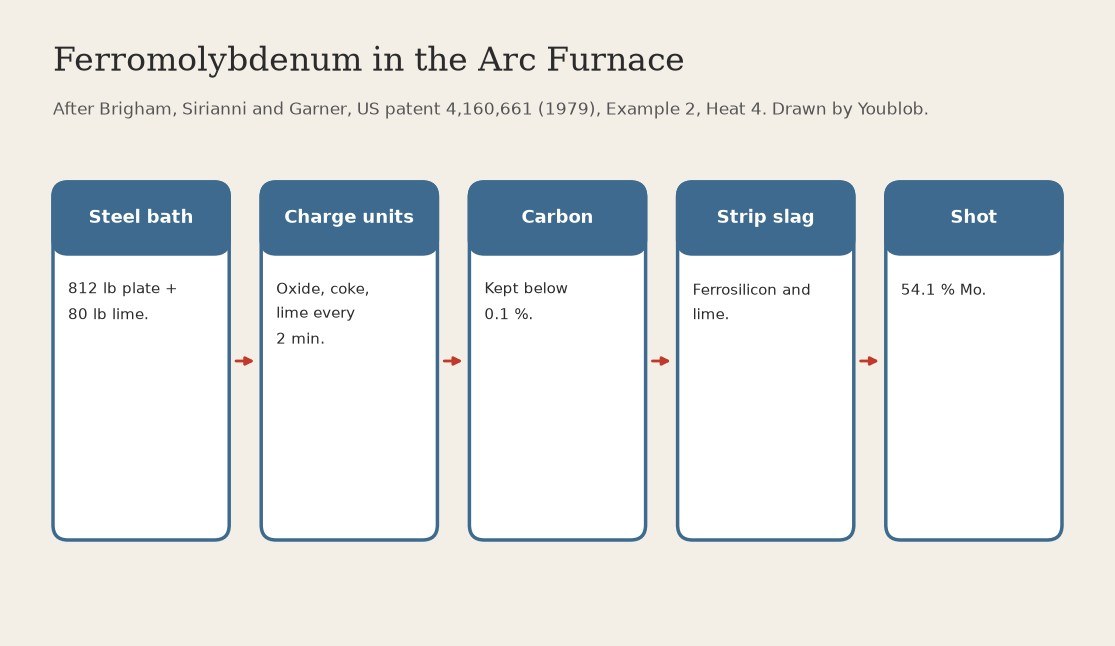


Ferromolybdenum: Molybdic Oxide Smelted with Coke and Lime into Molten Steel in an Electric Arc Furnace (Brigham, US 4,160,661)
Technical molybdic oxide is fed in cans, with coke and lime, into a bath of molten steel in a 3000 kVA arc furnace. The electrodes stay in the slag, and the coke is trimmed after every charge unit so the metal keeps under 0.1 % carbon. Ferrosilicon and lime strip the slag, and the metal is shotted in running water.
Result: from 5000 lb oxide, 3110 lb shot and pig of 54.1 % molybdenum, 0.06 % carbon, 43.1 % iron (Heat 4), using 1.94 kWh per lb of molybdenum.
Source: Brigham, Sirianni and Garner, US patent 4,160,661 (1979), Example 2, Heat 4. Not given: how the shot was heated while drying overnight. Picture drawn by Youblob.
Ilọsíwájú
1 day
Ìlànà
1
1
Melt the steel
Melt the steel
In a three-phase 3000 kVA arc furnace with 8 in graphite electrodes, lined with magnesia brick and rammed basic refractory (about 60 % MgO), 5 ft 6 in across and 26 in deep below the tap hole, melt 812 lb steel plate with 80 lb burnt lime under full power. Lead the fume to a bag house.
Àwọn ohun èlò fún ìgbésẹ̀ yìí:
 Pẹpẹ irin rírọ̀812 lbs
Àwọn irinṣẹ́ tí a nílò:
 Ẹ̀fun tí a kò tíì pa
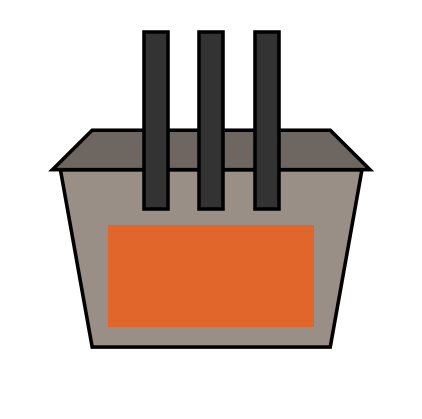 Ààrò arc iná mọ̀nàmọ́ná
 Elektrode graphite
 Ilé àsẹ́ àpò
2
2
Make up the charge units
Make up the charge units
While it melts, weigh out five charge units, each 1000 lb molybdic oxide (in cans of 37 lb oxide in a 2 lb steel can), 250 lb coke and 320 lb lime. For Heat 4 that was 5000 lb oxide, 1150 lb coke, 1600 lb lime and 1488 lb steel in plate and cans. Ours: metallurgical coke for the dried breeze coke.
Àwọn ohun èlò fún ìgbésẹ̀ yìí:
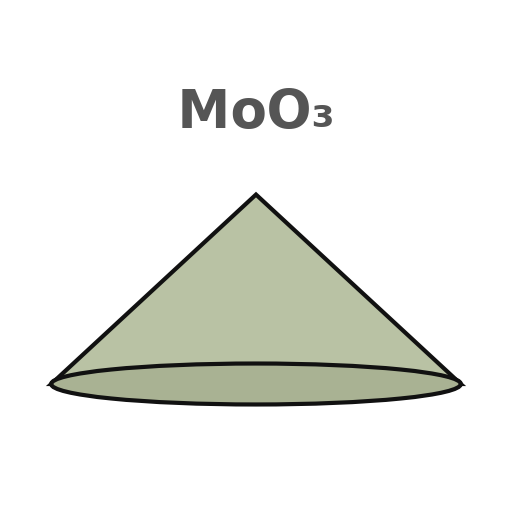 Ọ̀sídì mọlibdẹ́nọ̀mù ti iṣẹ́-ọnà5000 lbsPẹpẹ irin rírọ̀1488 lbs
Àwọn irinṣẹ́ tí a nílò:
 Èédú metalurgiẸ̀fun tí a kò tíì pa
 Ìwọ̀n pẹpẹ ti iléeṣẹ́
3
3
Smelt in the bath
Smelt in the bath
When the bath is molten at about 1450 °C, add one can of oxide with equal shovels of coke and lime every 2 minutes, about 1 hour per unit. Use the 205 V tap so the electrodes dip only into the slag; hold the bath at most 1760 °C. About 1 kWh per lb of oxide.
Àwọn irinṣẹ́ tí a nílò:
 Ọ̀kọ́ pẹrẹsẹÀàrò arc iná mọ̀nàmọ́ná
4
4
Keep the carbon down
Keep the carbon down
After every charge unit, dip a steel spoon into the bath and analyse the carbon (about 15 minutes); cut the coke so the metal stays below 0.1 % carbon.
Àwọn irinṣẹ́ tí a nílò:
Èédú metalurgi5
5
Strip the slag and tap
Strip the slag and tap
Add 200 lb ferrosilicon and 560 lb lime to strip the slag. Tip the furnace into a preheated 5000 lb ladle: the first ladle is mostly slag, the second mostly metal. Back-pour the slag into slag pots.
Àwọn irinṣẹ́ tí a nílò:
 Ferrosilikọ́ọ̀nùẸ̀fun tí a kò tíì pa
 Ṣíbí gígùn fún irin yíyọ́
6
6
Shot the metal
Shot the metal
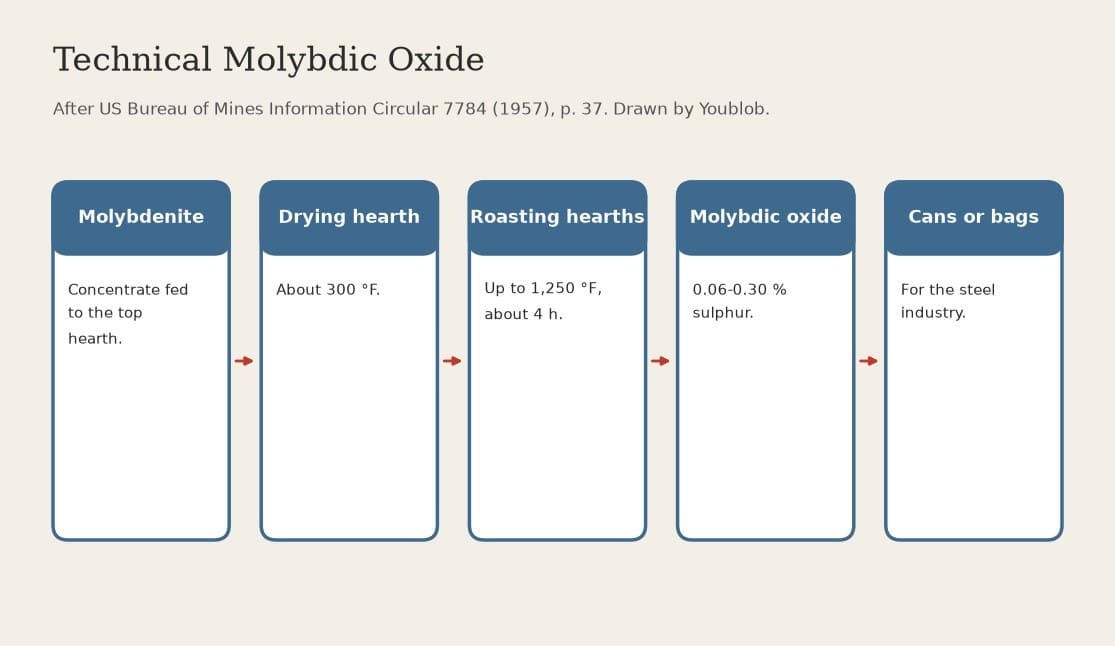
Pour the metal from the ladle into a second unlined 5000 lb ladle filled with running water from a 2 1/4 in fire hose, about 3000 lb a minute, from about 4 ft up; 2000 lb shots in 10 to 15 minutes. Dry the shot overnight at about 300 °F in 40 gallon drums. Ours: a drying oven.
Àwọn irinṣẹ́ tí a nílò:
Ṣíbí gígùn fún irin yíyọ́ Omi
 Ààrò ìgbẹ̀
Àwọn ohun-èlò
2- 1488 lbsÀyè
- 5000 lbsÀyè
Àwọn irinṣẹ́ tó nílò
11- Àyè
- Àyè
- Àyè
- Àyè
Ìtọ́nisọ́nà yìí ń ṣe
Blueprint tó jọra
Àwọn blueprint wọ̀nyí pín ìmọ̀ — ọ̀nà, ohun-èlò tàbí ìlànà
CC0 Àgbègbè Gbogbogbò
Blueprint yìí ti jáde lábẹ́ CC0. O lè ṣe àdàkọ, yí padà, pín, àti lò láìsí ìyọ̀ǹda.
Ṣàtìlẹ́yìn Olùṣẹ́dá nípa rírà àwọn ọjà nipasẹ̀ Blueprint wọn Ẹ̀san Olùṣẹ́dá tí àwọn Olùtajà gbé kalẹ̀, tàbí ṣẹ̀dá àtúnṣe tuntun ti Blueprint yìí kí o sì fi sínú Blueprint rẹ gẹ́gẹ́ bí ìsopọ̀ láti pín owó-wíwọlé.