IṢẸ́ ỌNÀ
ẸWÀ ÀTI ÌLERA
IṢẸ́ ỌWỌ́
ÀṢÀ ÀTI ÌTÀN
ÌṢERÉ
ÀYÍKÁ
OÚNJẸ ÀTI OHUN MÍMU
REVERSE ENGINEERING
SÁYẸ́ǸSÌ
ERÉ ÌDÁRAYÁ
ÌMỌ̀-Ẹ̀RỌ
ÀWỌN OHUN WÍWỌ̀
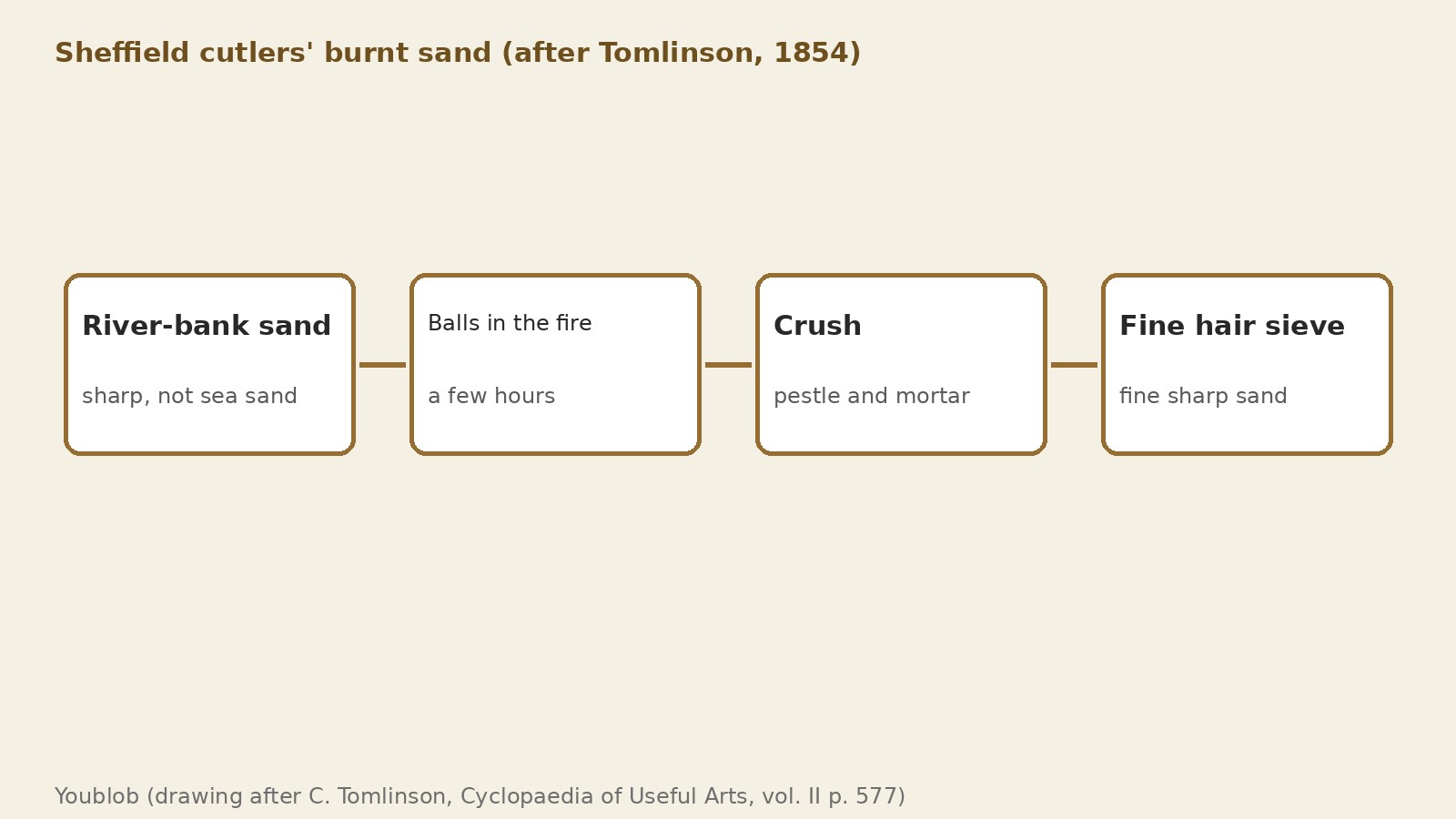


Fine Sharp Sand: Dug from a River Bank, Burnt in Balls and Hair-Sifted (Tomlinson, 1854)
Fine quartz sand the way the Sheffield cutlers prepared Trent sand: sharp river-bank sand made into balls, burnt in the fire for a few hours, then crushed and passed through a fine hair sieve; burnt sand was held to cut faster than raw.
Olùbẹ̀rẹ̀
A day
Ìlànà
1
1
Read the Cyclopaedia
Read the Cyclopaedia
"Trent sand is a fine and sharp sand, collected from the banks of the Trent."
2
2
Choose and dig
Choose and dig
Take river or pit sand rather than sea sand: it is sharper, while sea sand has been rounded. Pale sand is purest (colour comes mostly from iron oxide).
Àwọn ohun èlò fún ìgbésẹ̀ yìí:
 Iyanrìn1 ẹyọ
Àwọn irinṣẹ́ tí a nílò:
 Ọkọ́
 Bàkẹ́ẹ̀tì Lítà 20
3
3
Burn it
Burn it
Make the sand into balls and put them in the fire for a few hours.
Àwọn ohun èlò fún ìgbésẹ̀ yìí:
Iyanrìn1 ẹyọ Omi1 ẹyọ
Àwọn irinṣẹ́ tí a nílò:
 Ihò iná
4
4
Crush and sift
Crush and sift
When cold, crush the balls and pass the sand through a fine hair sieve.
Àwọn irinṣẹ́ tí a nílò:
 Odó àti Ọmọ Odó Òkúta
 Ohun Ìsẹ́ Kékeré
5
5
Troubleshooting
Troubleshooting
Sand troubleshooting.
Flow
Loading...
6
6
History and honest limits
History and honest limits
From Charles Tomlinson (ed.), **Cyclopaedia of Useful Arts** (1854), vol. II, "Sand", pp. 576-577 (checked on the archive.org scan cyclopdiaofuse02tomlrich). He gives no fire heat or ball size; the dust warning is ours.
Àwọn irinṣẹ́ tó nílò
5- Àyè
- Àyè
Ìtọ́nisọ́nà yìí ń ṣe
Blueprint tó jọra
Àwọn blueprint wọ̀nyí pín ìmọ̀ — ọ̀nà, ohun-èlò tàbí ìlànà
CC0 Àgbègbè Gbogbogbò
Blueprint yìí ti jáde lábẹ́ CC0. O lè ṣe àdàkọ, yí padà, pín, àti lò láìsí ìyọ̀ǹda.
Ṣàtìlẹ́yìn Olùṣẹ́dá nípa rírà àwọn ọjà nipasẹ̀ Blueprint wọn Ẹ̀san Olùṣẹ́dá tí àwọn Olùtajà gbé kalẹ̀, tàbí ṣẹ̀dá àtúnṣe tuntun ti Blueprint yìí kí o sì fi sínú Blueprint rẹ gẹ́gẹ́ bí ìsopọ̀ láti pín owó-wíwọlé.