IṢẸ́ ỌNÀ
ẸWÀ ÀTI ÌLERA
IṢẸ́ ỌWỌ́
ÀṢÀ ÀTI ÌTÀN
ÌṢERÉ
ÀYÍKÁ
OÚNJẸ ÀTI OHUN MÍMU
REVERSE ENGINEERING
SÁYẸ́ǸSÌ
ERÉ ÌDÁRAYÁ
ÌMỌ̀-Ẹ̀RỌ
ÀWỌN OHUN WÍWỌ̀
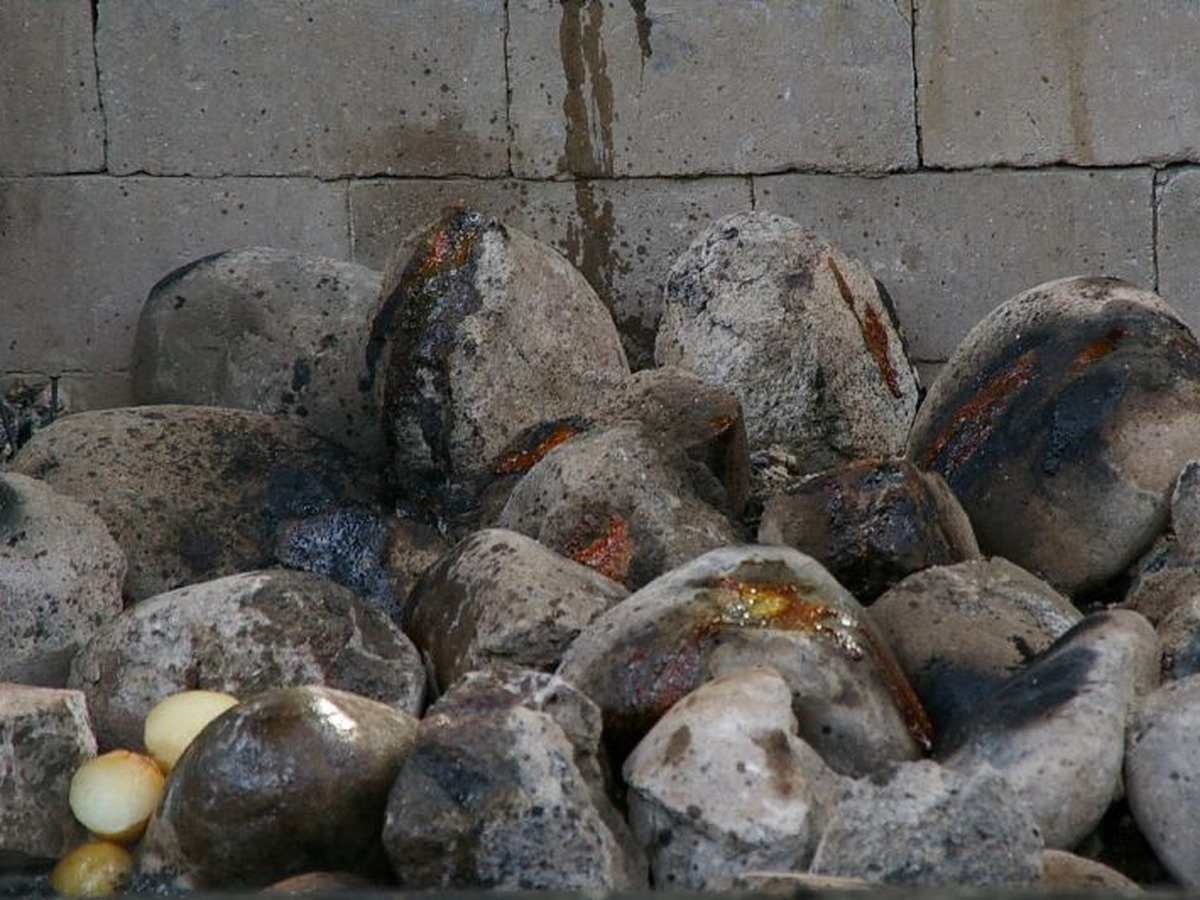


Fire and Hot Stones: Stones Heated Near Red-Hot for Steaming and Herb Fumes (Densmore, 1928-1929)
Stones heated in an open fire until nearly red-hot, then lifted out with a bent stick, for the Chippewa ways of treating with steam and with herb fumes. Water or a decoction is sprinkled on them with a bunch of grass for steam; dry herbs strewn on them give fumes that are breathed in under a blanket. As Frances Densmore recorded them in 1928 and 1929.
Olùbẹ̀rẹ̀
About 1-2 hours of heating
Ìlànà
1
1
Stones heated in a fire
Stones heated in a fire
Stones heated in an open fire and lifted out to boil water (Rod Benson). Here they are used for steam and herb fumes.
2
2
How the stones were used
How the stones were used
Densmore (Uses of Plants by the Chippewa Indians, 1928, pp. 330-331): dried roots or leaves were strewn on hot stones and the fumes inhaled, or a decoction was sprinkled on them for steam. For fumes the stones were "about the size of a small bowl", and the patient covered head and shoulders with a blanket, enclosing the stones. In Chippewa Customs (1929, p. 94) she writes that the stones were heated in a fire outside the lodge, a large one "as nearly red-hot as possible", and lifted with a bent stick.
3
3
Choose and gather the stones
Choose and gather the stones
Gather stones about the size of a small bowl. Ours, for safety: take only stones that have lain dry for a long time; never take them from a stream, lake shore or wet ground, as water inside can make a stone burst in the fire.
Àwọn ohun èlò fún ìgbésẹ̀ yìí:
 Àwọn òkúta4 piece (about the size of a small bowl)
4
4
Heat them in the fire
Heat them in the fire
Build the fire outdoors, away from the place where the stones will be used, and set the stones in it. Feed the fire and keep everyone back while the stones heat, until they are as nearly red-hot as you can get them (ours: allow one to two hours).
Àwọn ohun èlò fún ìgbésẹ̀ yìí:
 Igi ìdáná gbígbẹ20 kg
5
5
Make the bent stick and the sprinkler
Make the bent stick and the sprinkler
Bend a green hazel rod into a hook for lifting the stones out of the fire. Tie a bunch of dried grass for sprinkling, and fill a pail with water, or with the decoction to be used.
Àwọn irinṣẹ́ tí a nílò:
 Ọ̀pá hazel (tútù, ó ń tẹ̀)
 Koríko gbígbẹ
 Bàkẹ́ẹ̀tì
6
6
Use them for steam or fumes
Use them for steam or fumes
Lift a hot stone out with the bent stick and set it down on bare ground or a flat stone (ours). For steam, dip the grass in the water or decoction and sprinkle it on the stone. For fumes, strew a little of the dry herbs on it and sit with head and shoulders under a blanket over the stone. Keep skin and blanket clear of the stone itself.
Àwọn irinṣẹ́ tí a nílò:
 Woven Wool Blanket
7
7
Troubleshooting
Troubleshooting
Stone problems and fixes.
Flow
Loading...
8
8
Sources and honest limits
Sources and honest limits
Frances Densmore, Uses of Plants by the Chippewa Indians (44th Annual Report of the Bureau of American Ethnology, 1928), pp. 330-331, and Chippewa Customs (Bureau of American Ethnology Bulletin 86, 1929), p. 94. The sweat lodge she describes there belongs to the ceremonies of the Midewiwin; this blueprint takes only how the stones were heated and handled. Which stones, how long and where to set them are ours. Red-hot stones burn: work outdoors and keep children away. Cover photo: hangi stones heated in a fire (Percita, CC BY-SA 2.0, Wikimedia Commons). Not made by us yet.
Àwọn ohun-èlò
2- 4 piece (about the size of a small bowl)Àyè
- 20 kgÀyè
Àwọn irinṣẹ́ tó nílò
4- Àyè
Ìtọ́nisọ́nà yìí ń ṣe
CC0 Àgbègbè Gbogbogbò
Blueprint yìí ti jáde lábẹ́ CC0. O lè ṣe àdàkọ, yí padà, pín, àti lò láìsí ìyọ̀ǹda.
Ṣàtìlẹ́yìn Olùṣẹ́dá nípa rírà àwọn ọjà nipasẹ̀ Blueprint wọn Ẹ̀san Olùṣẹ́dá tí àwọn Olùtajà gbé kalẹ̀, tàbí ṣẹ̀dá àtúnṣe tuntun ti Blueprint yìí kí o sì fi sínú Blueprint rẹ gẹ́gẹ́ bí ìsopọ̀ láti pín owó-wíwọlé.