IṢẸ́ ỌNÀ
ẸWÀ ÀTI ÌLERA
IṢẸ́ ỌWỌ́
ÀṢÀ ÀTI ÌTÀN
ÌṢERÉ
ÀYÍKÁ
OÚNJẸ ÀTI OHUN MÍMU
REVERSE ENGINEERING
SÁYẸ́ǸSÌ
ERÉ ÌDÁRAYÁ
ÌMỌ̀-Ẹ̀RỌ
ÀWỌN OHUN WÍWỌ̀
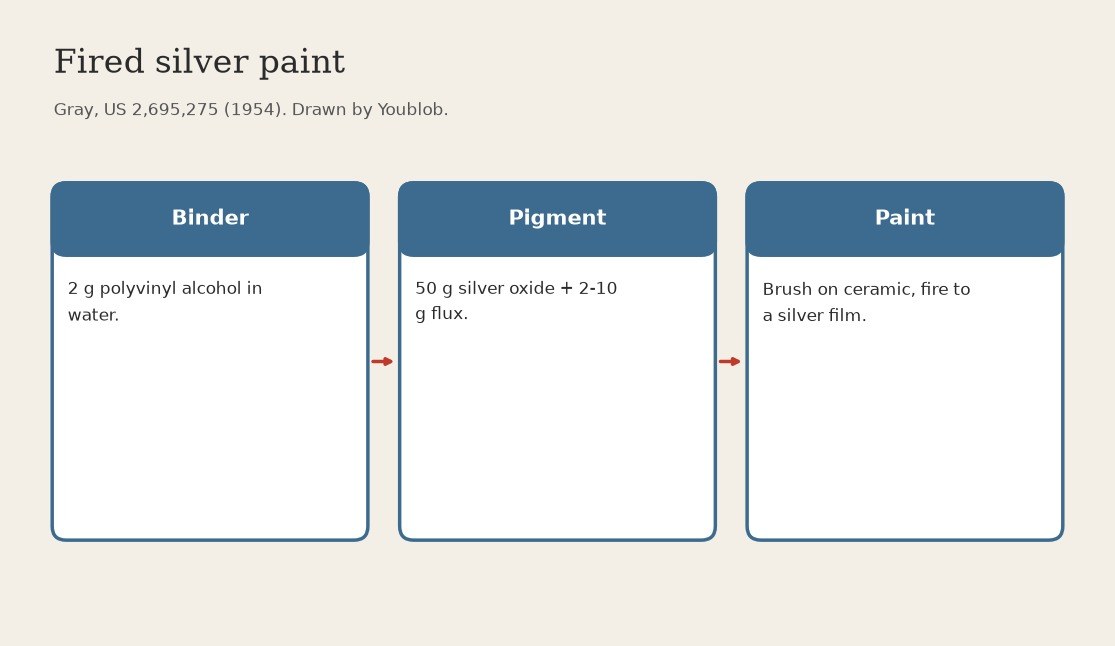


Fired Silver Paint: Silver Oxide and Flux in Polyvinyl Alcohol and Water (Gray, Erie Resistor 1954, Ex. 2)
A paint for putting silver electrodes on ceramic, glass or mica. Silver oxide and a little ceramic flux are held in polyvinyl alcohol dissolved in water. The wet paint conducts electricity, so a capacitor can be measured while it is being painted. On firing, the silver oxide turns into a silver film held on by the flux. Gray found this paint so stable that it kept six months.
Source: Robert B. Gray, US 2,695,275 (Erie Resistor, 1954), Example 2. Not given: which flux, and the firing heat. Bismuth subnitrate, one of the fluxes Gray names, is ours. Picture drawn by Youblob.
Olùbẹ̀rẹ̀
1 day
Ìlànà
1
1
Dissolve 2 g polyvinyl alcohol in the water
Dissolve 2 g polyvinyl alcohol in the water
For 100 g of paint: dissolve 2 g polyvinyl alcohol in the water, warming it to help it dissolve. The water is the balance, about 34 to 44 g. Warming is ours.
Àwọn ohun èlò fún ìgbésẹ̀ yìí:
 Ẹ̀lúbọ́ polyvinyl alcohol2 g
 Omi Àyọ́1 as required
Àwọn irinṣẹ́ tí a nílò:
 Òǹwọ̀n ìdọ́gba
 Ago Bórósílíkéètì
 Pátákó Gbígbóná
 Ọ̀pá Gíláàsì Borosilicate
2
2
Grind in silver oxide and flux
Grind in silver oxide and flux
Grind 50 g precipitated silver oxide and 2 to 10 g ceramic flux into the solution until smooth. Gray gives the flux only as a class; ours: bismuth subnitrate, one of the common fluxes he names. The right amount depends on the ceramic it will be fired onto.
Àwọn ohun èlò fún ìgbésẹ̀ yìí:
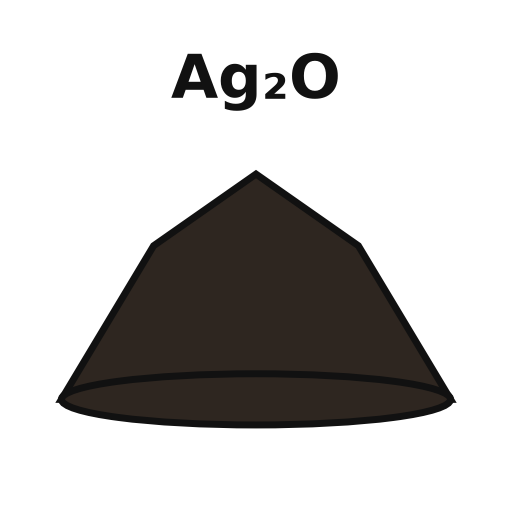 Ọ̀ksáídì fàdákà50 g
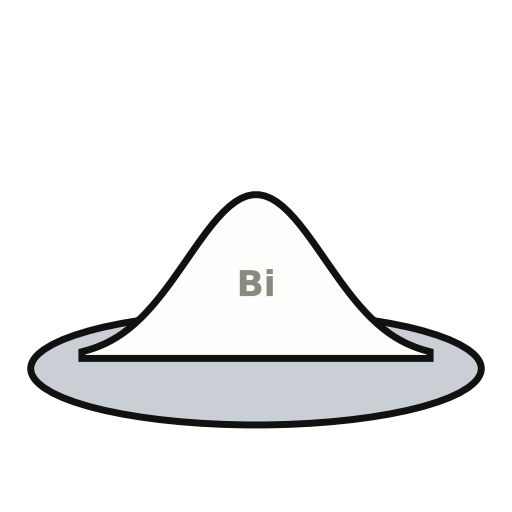 Bismuth subnitrate1 as required
Àwọn irinṣẹ́ tí a nílò:
Òǹwọ̀n ìdọ́gba Odó àti Ọmọ Odó
 Ìbọ̀wọ́ Nítírílì
3
3
Add 2 to 4 g alcohol against foam
Add 2 to 4 g alcohol against foam
Stir in 2 to 4 g ethyl alcohol. It stops the polyvinyl alcohol from foaming.
Àwọn ohun èlò fún ìgbésẹ̀ yìí:
 Ethanol - ìpele ilé-ìwádìí, 95 %1 as required
Àwọn irinṣẹ́ tí a nílò:
Ọ̀pá Gíláàsì Borosilicate4
4
Store
Store
Keep it in a closed jar. Gray found no reaction between the ingredients in six months, and the paint can stand for some hours in use without stirring.
Àwọn irinṣẹ́ tí a nílò:
 Ìgò Gíláàsì Dúdú Onídìí Tí Kò Jẹ́ Afẹ́fẹ́ Kọjá
Àwọn ohun-èlò
5- 1 as requiredÀyè
- 50 gÀyè
- 1 as requiredÀyè
- 1 as requiredÀyè
Àwọn irinṣẹ́ tó nílò
7Ìtọ́nisọ́nà yìí ń ṣe
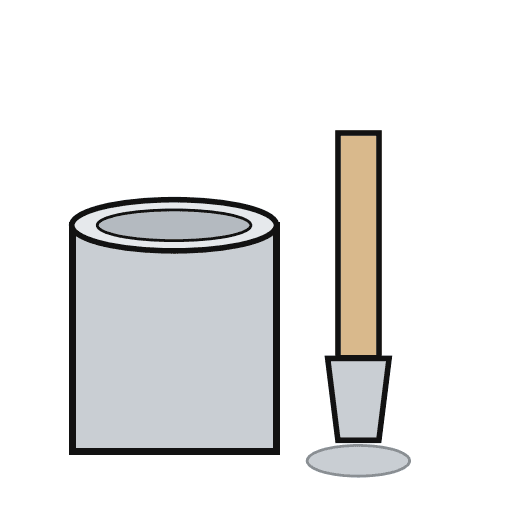
Blueprint tó jọra
Àwọn blueprint wọ̀nyí pín ìmọ̀ — ọ̀nà, ohun-èlò tàbí ìlànà

CC0 Àgbègbè Gbogbogbò
Blueprint yìí ti jáde lábẹ́ CC0. O lè ṣe àdàkọ, yí padà, pín, àti lò láìsí ìyọ̀ǹda.
Ṣàtìlẹ́yìn Olùṣẹ́dá nípa rírà àwọn ọjà nipasẹ̀ Blueprint wọn Ẹ̀san Olùṣẹ́dá tí àwọn Olùtajà gbé kalẹ̀, tàbí ṣẹ̀dá àtúnṣe tuntun ti Blueprint yìí kí o sì fi sínú Blueprint rẹ gẹ́gẹ́ bí ìsopọ̀ láti pín owó-wíwọlé.