IṢẸ́ ỌNÀ
ẸWÀ ÀTI ÌLERA
IṢẸ́ ỌWỌ́
ÀṢÀ ÀTI ÌTÀN
ÌṢERÉ
ÀYÍKÁ
OÚNJẸ ÀTI OHUN MÍMU
REVERSE ENGINEERING
SÁYẸ́ǸSÌ
ERÉ ÌDÁRAYÁ
ÌMỌ̀-Ẹ̀RỌ
ÀWỌN OHUN WÍWỌ̀
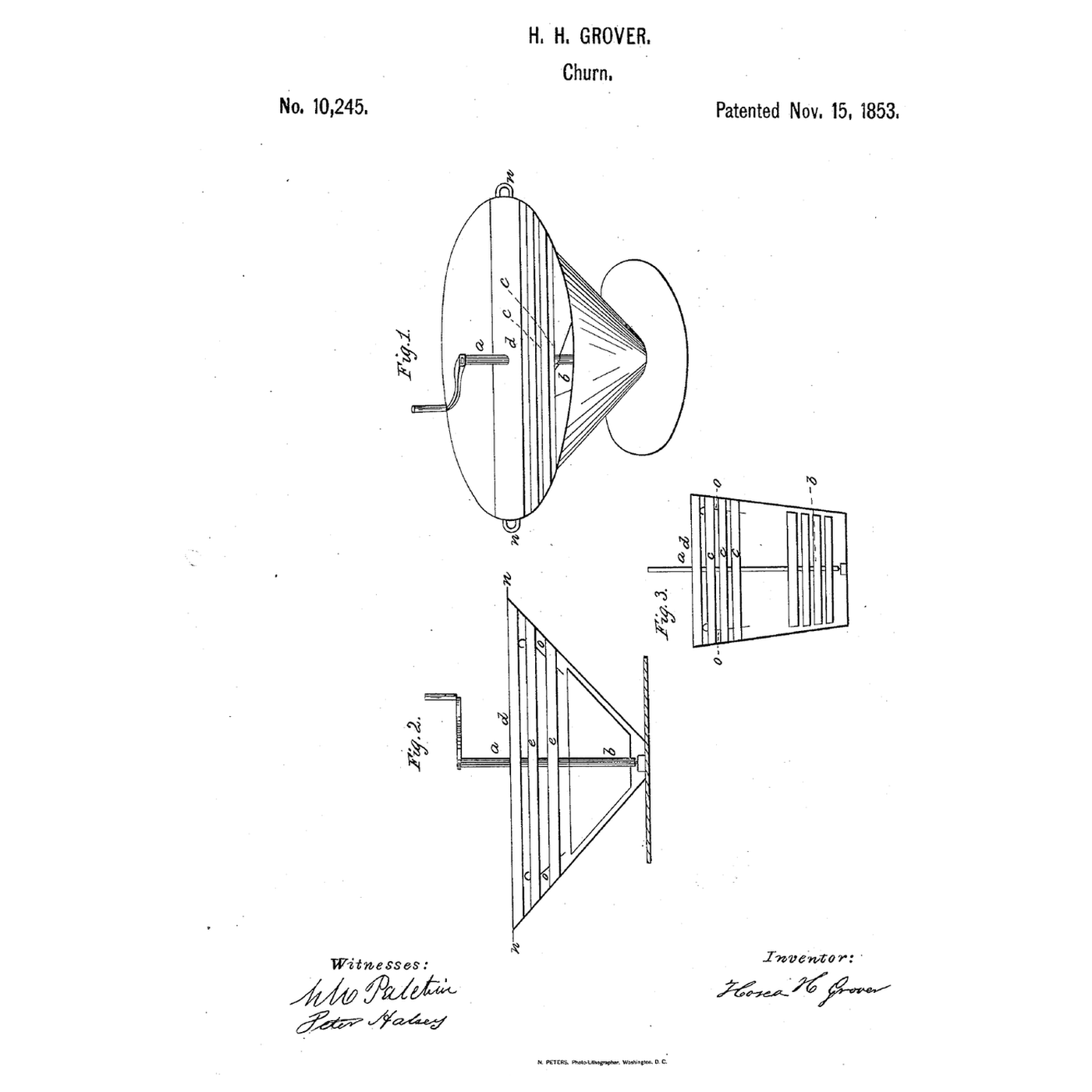

Flaring-Tub Slat-Reactor Churn: The Cream Climbs the Flare and Is Beaten Back by Slats
Grover let the shape of the tub do the work: spun cream climbs a flaring side.
Hosea H. Grover of North Cohocton, Steuben County, New York, received US 10,245, dated 15 November 1853, for a rotary churn: a crank and shaft with a transverse piece near the bottom, standing in a step at the tub's bottom, under slats across the top held by wires and a cross piece fastened with staples. Turning it "produces centrifugal motion in the milk and thereby causes it to rise up the flaring surface of the tub until it meets the reactor by which it is beat back upon the dash." The small churn is of tin; for larger quantities he made the tub of wood, less flaring, with a pinion and larger cog wheel to speed the dash.
This rung looks at how high spun cream could climb, then prints the dash bar, step, slat rails and bearing block, fits them in a flaring stainless bowl, and makes butter.
Olùbẹ̀rẹ̀
About 3 hours, plus printing
Ìlànà
1
1
How high it could climb
How high it could climb
Ń ṣí ìwé Jupyter…
2
2
A reaction in the churn before it
A reaction in the churn before it
The embedded blueprint makes the cream react against oars pitched opposite ways. Grover throws it up a flaring side into fixed slats.
3
3
Read US 10,245
Read US 10,245
"These slats are designed to be placed in singly and then the wires passed through them so that the slats may be used in any required number to suit the quantity and quality (that is the thickness) of the milk or cream to be churned. Thus situated the slats constitute a reactor."
4
4
Print the parts
Print the parts
Print the dash bar b with its square socket (/uploads/blueprints/flaring-tub-slat-reactor-churn-dash-bar.stl), the step (/uploads/blueprints/flaring-tub-slat-reactor-churn-step.stl), two slat rails that hook over the rim like his staples (/uploads/blueprints/flaring-tub-slat-reactor-churn-slat-rail.stl) and the bearing block for the cross piece (/uploads/blueprints/flaring-tub-slat-reactor-churn-bearing-block.stl). Print in PETG at 0.2 mm layers, 30 % infill, 4 walls; wash before first use.
Àwọn ohun èlò fún ìgbésẹ̀ yìí:
 Okùn PETG1 ẹyọ
Àwọn irinṣẹ́ tí a nílò:
 Ẹ̀rọ ìtẹ̀ 3D oníwàyà (FDM)
5
5
Dash and step
Dash and step
Stand the step in the middle of a large stainless mixing bowl with sloping sides, about 300 mm across. Cut a 10 mm square hardwood shaft to stand in it and reach 60 mm above the rim, push the dash bar onto it 15 mm above the step, and glue a pine crank arm and dowel handle on top.
Àwọn ohun èlò fún ìgbésẹ̀ yìí:
 Àwo ìdàpọ̀ ńlá ti irin tí kò ń yá1 ẹyọ
 Àwọn dowel igi líle1 ẹyọ
 Pákó igi pine1 ẹyọ
 Ìdìpọ̀ Igi1 ẹyọ
Àwọn irinṣẹ́ tí a nílò:
 Ayùn Ọwọ́
 Ẹ̀rọ Ìlùkòkò Aláìlókùn
 Àkójọ Orí Ìlùkòkò
 Bébà Ìfá
6
6
Slats, wires and cross piece
Slats, wires and cross piece
Hook the two rails over the rim opposite each other. Cut hardwood laths 10 mm thick to span between the rails in their grooves, each with a 14 mm hole in its middle for the shaft, and slide in as many as the cream needs, one at a time. Push a 3 mm stainless rod down through each rail and the slat ends, as his wires. Lay a 24 by 12 mm lath across the rim through the bearing block, over the rails, as the cross piece d, the shaft through the block.
Àwọn ohun èlò fún ìgbésẹ̀ yìí:
Àwọn dowel igi líle1 ẹyọ Ọ̀pá Róbótó Irin Rírọ̀1 ẹyọ
Àwọn irinṣẹ́ tí a nílò:
Ayùn Ọwọ́Ẹ̀rọ Ìlùkòkò AláìlókùnÀkójọ Orí Ìlùkòkò Ayùn Irin
7
7
The build in 3D
The build in 3D
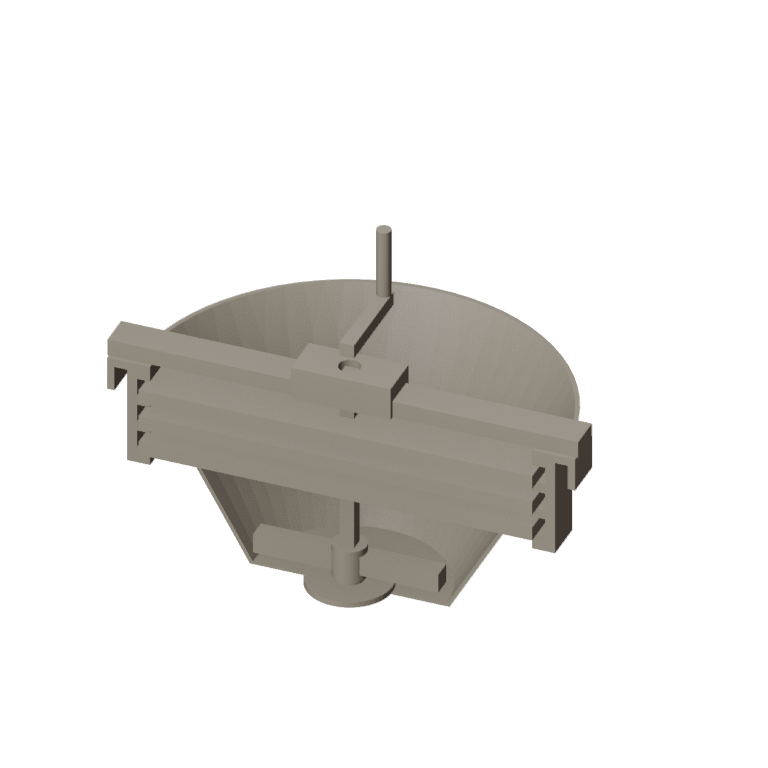
FreeCAD model of this build, not of the patent: the flaring tub cut away to show the step and the dash bar near the bottom, three slats across the top in the rails hooked over the rim, the wires, and the cross piece with its bearing block and the crank.
8
8
Spin and make butter
Spin and make butter
Let the heavy cream stand until it reaches about 15 °C, checked with the thermometer. Pour in 1.5 litres. Turn the crank briskly so the cream climbs the bowl's side into the slats; if it does not reach them, take out the top slat and lower the rest. Time until the butter comes. Pour off the buttermilk, add cold water, churn a little and pour off again until it runs clear; work in a pinch of salt and weigh the butter.
Àwọn ohun èlò fún ìgbésẹ̀ yìí:
 Ọ̀rá wàrà tó nípọn1500 ml
 Iyọ̀ Òkun Rúkèrúdò1 ẹyọ
 Omi1 ẹyọ
Àwọn irinṣẹ́ tí a nílò:
 Ẹ̀rọ ìwọ̀n ooru oníhun tí ó dúró sí inú
 Aago Ìdúró
 Òṣùwọ̀n Díjítà Ilé ÌdánáÀwo ìdàpọ̀ ńlá ti irin tí kò ń yá
9
9
Cream that will not climb, a shaft that wanders
Cream that will not climb, a shaft that wanders
Flaring-tub slat-reactor churn troubleshooting.
Flow
Loading...
10
10
History and honest limits
History and honest limits
**Hosea H. Grover** of North Cohocton, Steuben County, New York, received US 10,245, dated 15 November 1853 (the drawing sheet reads "H. H. Grover"). He did not claim a conical tub with a revolving dasher, with or without breakers, as such churns had been used before; he claimed such a conical tub with a vertical revolving dasher at its bottom combined with breakers at the top.
**Honest limits.** A mixing bowl with curved sides, hardwood and printed parts stand in for his tin cone; the notebook's rise is an upper bound, not a measurement. FDM prints hold food in their layer lines, so wash well and replace when worn. Your times and weights are the result.
Àwọn ohun-èlò
9- 1 ẹyọÀyè
- 1 ẹyọÀyè
- 1 ẹyọÀyè
- 1 ẹyọÀyè
- Àyè
- 1500 mlÀyè
- 1 ẹyọÀyè
- 1 ẹyọÀyè
Àwọn irinṣẹ́ tó nílò
10- Àyè
- 1 vendor sell this, none ship to you yetÀyè
- Àyè
- Àyè
- Àyè
Àwọn fáìlì àpẹrẹ
1Ìtọ́nisọ́nà yìí ń ṣe

Blueprint tó jọra
Àwọn blueprint wọ̀nyí pín ìmọ̀ — ọ̀nà, ohun-èlò tàbí ìlànà
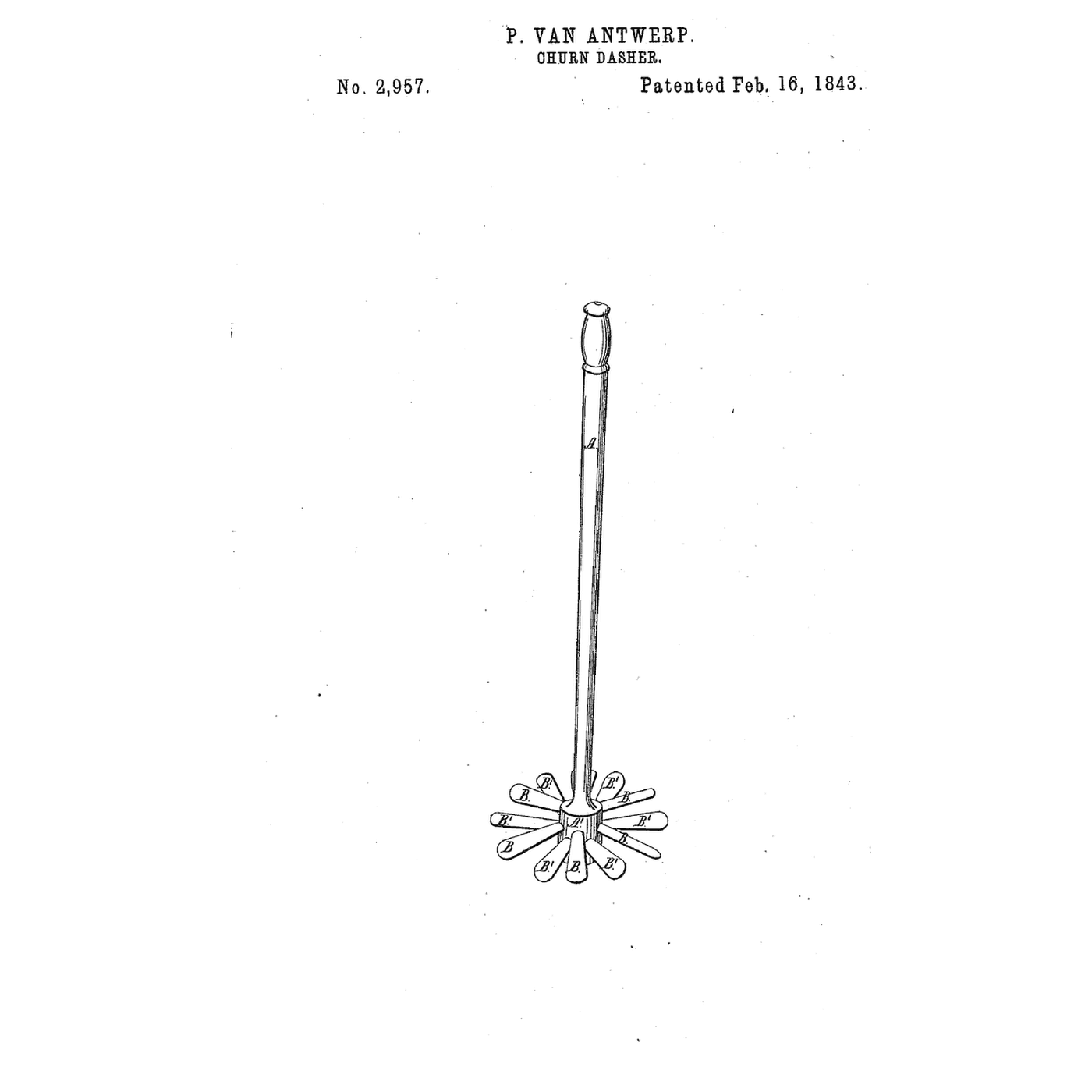
Reacting Churn Dasher: Two Rows of Oars Pitched Opposite Ways
láti ọwọ́ TheChef
OÚNJẸ ÀTI OHUN MÍMU
20
0
0
0
0
0
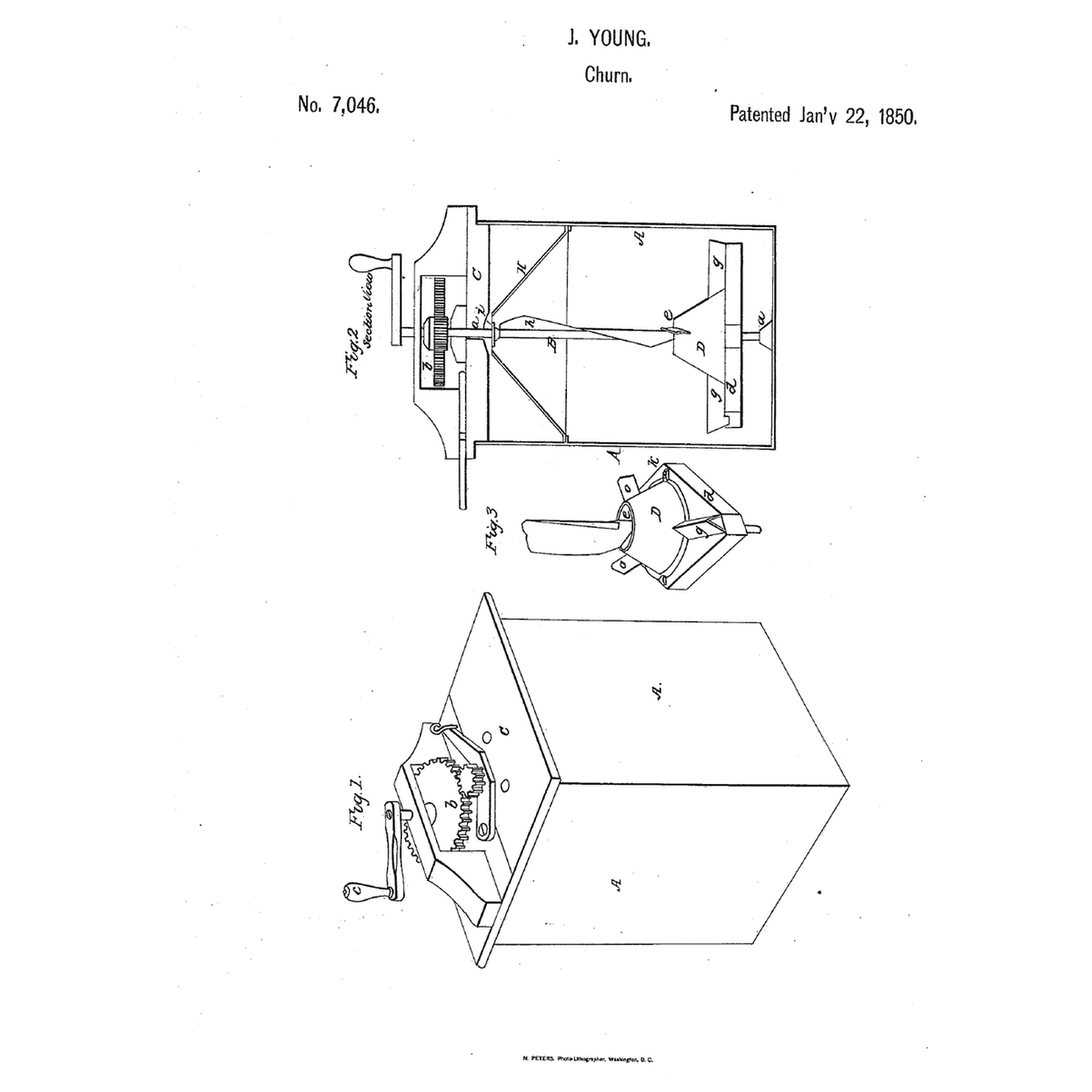
Whirl-Cone Splash-Guard Churn: A Whirl Feeds Air to a Cone, a Funnel Keeps the Cream In
láti ọwọ́ Karen
OÚNJẸ ÀTI OHUN MÍMU
16
0
0
0
0
0

Churning Butter from Cream — The 5,000-Year-Old Fat Separation
láti ọwọ́ TheChef
IṢẸ́ ỌWỌ́
49
0
0
0
0
0
CC0 Àgbègbè Gbogbogbò
Blueprint yìí ti jáde lábẹ́ CC0. O lè ṣe àdàkọ, yí padà, pín, àti lò láìsí ìyọ̀ǹda.
Ṣàtìlẹ́yìn Olùṣẹ́dá nípa rírà àwọn ọjà nipasẹ̀ Blueprint wọn Ẹ̀san Olùṣẹ́dá tí àwọn Olùtajà gbé kalẹ̀, tàbí ṣẹ̀dá àtúnṣe tuntun ti Blueprint yìí kí o sì fi sínú Blueprint rẹ gẹ́gẹ́ bí ìsopọ̀ láti pín owó-wíwọlé.