IṢẸ́ ỌNÀ
ẸWÀ ÀTI ÌLERA
IṢẸ́ ỌWỌ́
ÀṢÀ ÀTI ÌTÀN
ÌṢERÉ
ÀYÍKÁ
OÚNJẸ ÀTI OHUN MÍMU
REVERSE ENGINEERING
SÁYẸ́ǸSÌ
ERÉ ÌDÁRAYÁ
ÌMỌ̀-Ẹ̀RỌ
ÀWỌN OHUN WÍWỌ̀
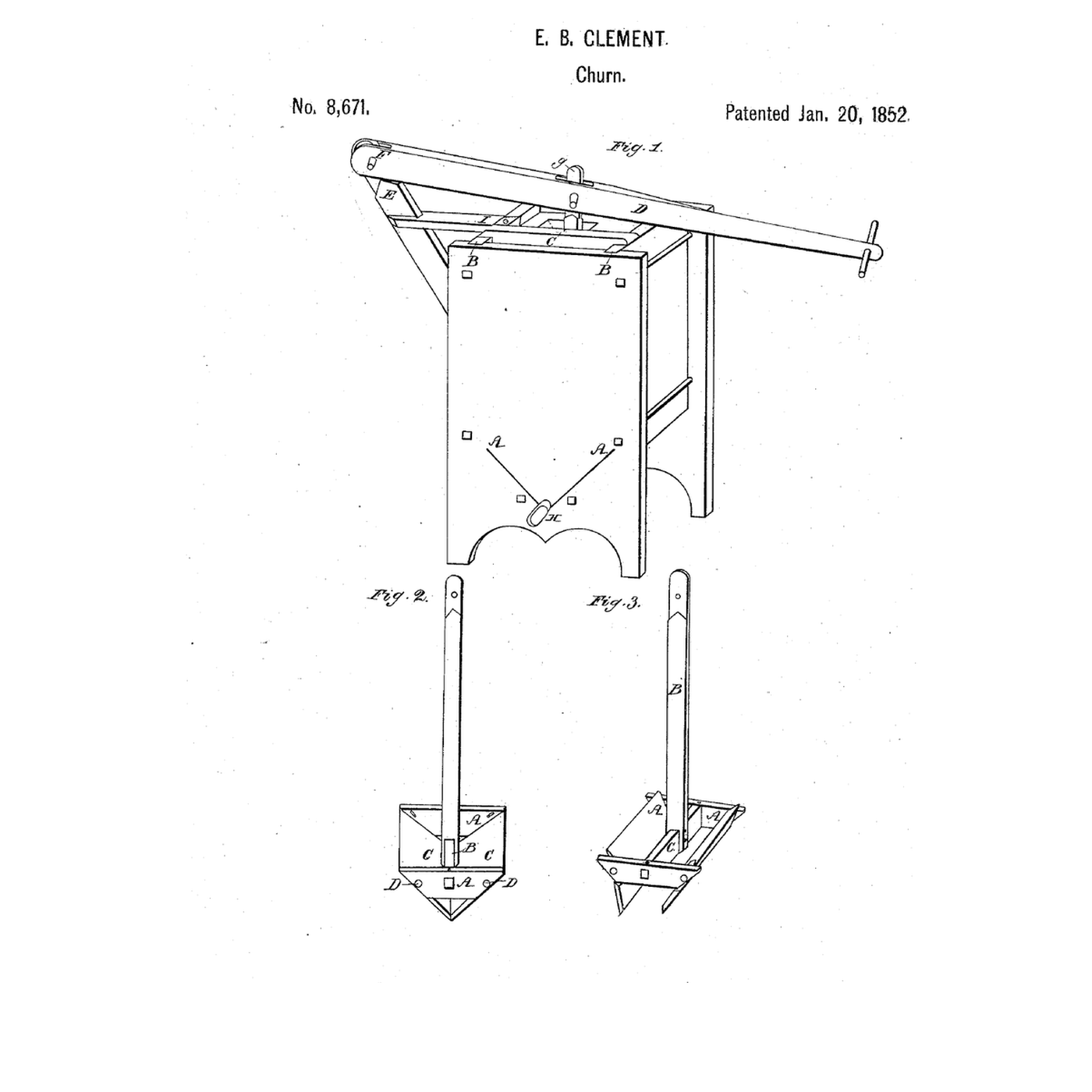

Folding-Float V-Bottom Churn: Floats That Close Into a V on the Down-Stroke
Clement wanted the dasher to close on the way down and open on the way up.
Edwin B. Clement of Barnet, Vermont, received US 8,671, dated 20 January 1852, for a churn whose vessel is a box with a bottom of "two pieces square to each other, the corner pointing downward," and a dasher of two bevelled end pieces, a lengthwise cross piece and "two loose or swinging floats." Closed, the floats fit the bottom, leaving three-eighths to half an inch at the sides for the cream to pass up; raised, they swing apart against pins, "leaving the floats inclining toward the center, so that they may more readily close when they strike the cream." A lever on a post works it.
This rung works out the gaps, then prints the end pieces and floats, builds a V-bottomed box and lever, and makes butter.
Àárín
About 4 hours, plus printing
Ìlànà
1
1
The side gaps
The side gaps
Ń ṣí ìwé Jupyter…
2
2
Hinged parts that change with the stroke before it
Hinged parts that change with the stroke before it
The embedded blueprint hinges beaters so they tilt rising and lie flat falling. Clement's floats close into a V falling and swing open rising.
3
3
Read US 8,671
Read US 8,671
"When these floats are closed at the bottom the upper edges of the floats may reach to three eighths, or one half of an inch from the sides of the vessel, which space is left for the cream to pass up through in the operation. When this dasher is raised, see Fig. 3, these floats will swing apart and strike a pin in each end of one of the end pieces."
4
4
Print the parts
Print the parts
Print two bevelled end pieces with their gudgeon holes and stop pins (/uploads/blueprints/folding-float-v-bottom-churn-end-piece.stl) and two floats with gudgeons (/uploads/blueprints/folding-float-v-bottom-churn-float.stl). Print in PETG at 0.2 mm layers, 30 % infill, 4 walls; wash before first use.
Àwọn ohun èlò fún ìgbésẹ̀ yìí:
 Okùn PETG1 ẹyọ
Àwọn irinṣẹ́ tí a nílò:
 Ẹ̀rọ ìtẹ̀ 3D oníwàyà (FDM)
5
5
The V-bottomed box
The V-bottomed box
Build a box of 12 mm plywood about 200 mm long and 110 mm wide, its bottom two boards at right angles, corner down, grooved into the ends and sealed with food-safe sealant; fit a stopper low in one end to draw off the milk.
Àwọn ohun èlò fún ìgbésẹ̀ yìí:
 Àwo igi tí a lẹ̀ pọ̀1 ẹyọ
 Ìdílẹ̀ Silikoni1 ẹyọ
 Ìdìpọ̀ Igi1 ẹyọ
 Ìsúrù igi #8 x 1"1 ẹyọ
 Àwọn kọ́ọ̀kì1 ẹyọ
Àwọn irinṣẹ́ tí a nílò:
 Ayùn Ọwọ́
 Ayùn Kópìngì
 Àwọn clamp
 Ẹ̀rọ Ìlùkòkò Aláìlókùn
6
6
Dasher and lever
Dasher and lever
Join the end pieces with a pine cross piece and a pine staff, and hang the floats between them by their gudgeons so they meet in a V. Fix a pine post to the box's end with a brace, pivot a lever on its top, and pass the staff's tenon through a slot in the lever with a pin.
Àwọn ohun èlò fún ìgbésẹ̀ yìí:
 Pákó igi pine1 ẹyọ
 Skurú ẹ̀rọ1 ẹyọ
 Nọ́ọ̀tì Onígun Mẹ́fà1 ẹyọÌdìpọ̀ Igi1 ẹyọÌsúrù igi #8 x 1"1 ẹyọ
Àwọn irinṣẹ́ tí a nílò:
Ayùn Ọwọ́Ẹ̀rọ Ìlùkòkò Aláìlókùn Àkójọ Orí Ìlùkòkò
 Ìṣù àwọn ohun ìyí skurú
7
7
The patent drawing
The patent drawing
US 8,671 drawing sheet, public domain (expired patent).
8
8
Work the lever and make butter
Work the lever and make butter
Let the heavy cream stand until it reaches about 15 °C, checked with the thermometer. Pour in 1.5 litres. Work the lever steadily up and down; time until the butter comes. Draw off the milk at the stopper. Pour off the buttermilk, add cold water, churn a little and pour off again until it runs clear; work in a pinch of salt and weigh the butter.
Àwọn ohun èlò fún ìgbésẹ̀ yìí:
 Ọ̀rá wàrà tó nípọn1500 ml
 Iyọ̀ Òkun Rúkèrúdò1 ẹyọ
 Omi1 ẹyọ
Àwọn irinṣẹ́ tí a nílò:
 Ẹ̀rọ ìwọ̀n ooru oníhun tí ó dúró sí inú
 Aago Ìdúró
 Òṣùwọ̀n Díjítà Ilé Ìdáná
 Àwo ìdàpọ̀ ńlá ti irin tí kò ń yá
9
9
Floats that stick, a dasher that jams
Floats that stick, a dasher that jams
Folding-float V-bottom troubleshooting.
Flow
Loading...
10
10
History and honest limits
History and honest limits
**Edwin B. Clement** of Barnet, Caledonia County, Vermont, received US 8,671, dated 20 January 1852. His box was nearly as long as deep to where the bottom began and about half as wide, secured by iron rods; the cover sank a little into the mouth on two cross pieces. He claimed the application to churn dashers of floats that close when pressed down through the cream, forcing it through narrow spaces, and open again when raised.
**Honest limits.** A plywood box, pine and printed parts stand in for his. FDM prints hold food in their layer lines, so wash well and replace when worn. Your times and weights are the result.
Àwọn ohun-èlò
12- 1 ẹyọÀyè
- 1 ẹyọÀyè
- 1 ẹyọÀyè
- 2 ẹyọÀyè
- 2 ẹyọÀyè
- 1 ẹyọÀyè
- 1 ẹyọÀyè
- 1 ẹyọÀyè
- 1 ẹyọÀyè
- 1500 mlÀyè
- 1 ẹyọÀyè
- 1 ẹyọÀyè
Àwọn irinṣẹ́ tó nílò
11- Àyè
- Àyè
- Àyè
- 1 vendor sell this, none ship to you yetÀyè
- Àyè
Ìtọ́nisọ́nà yìí ń ṣe

Blueprint tó jọra
Àwọn blueprint wọ̀nyí pín ìmọ̀ — ọ̀nà, ohun-èlò tàbí ìlànà
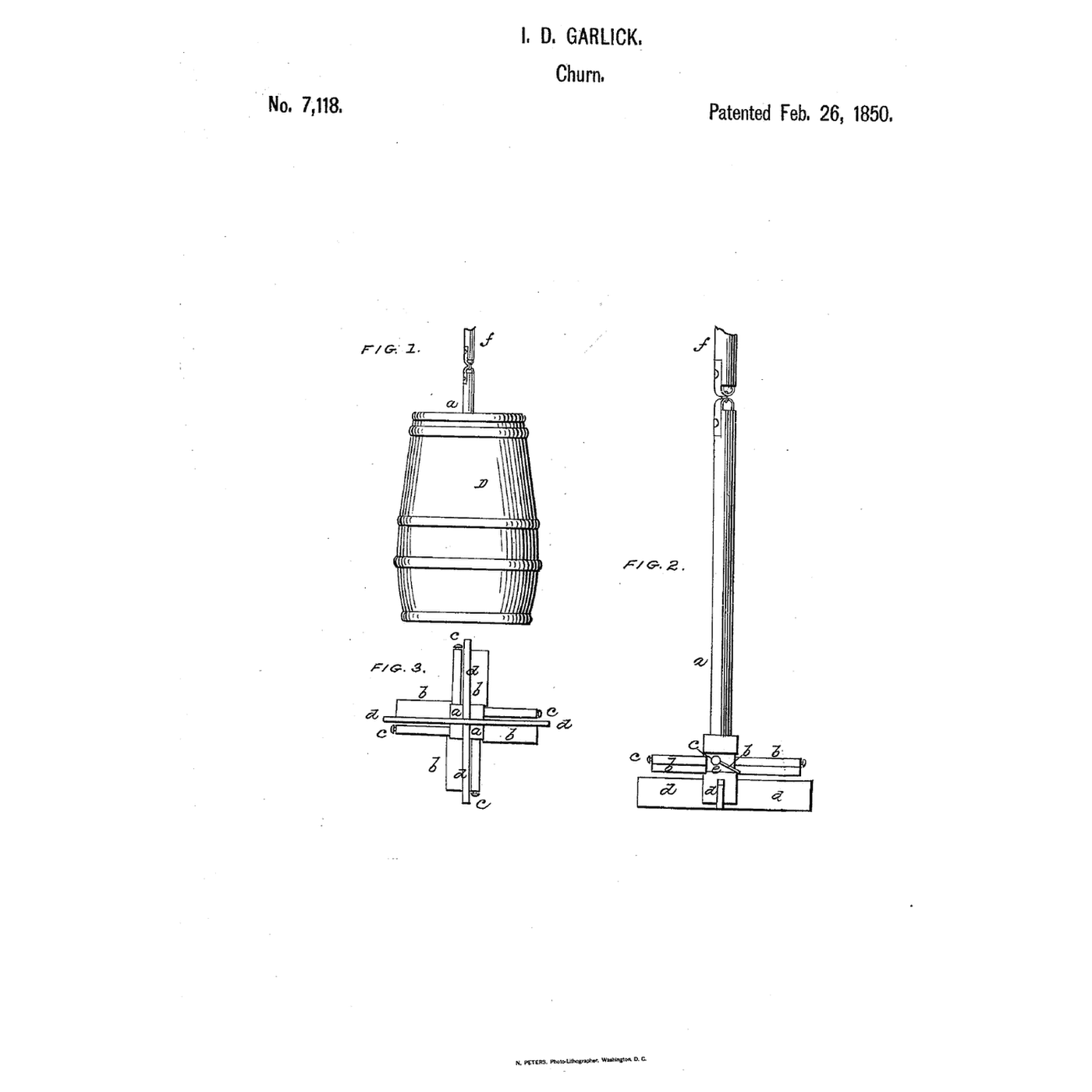
Hinged-Beater Swivel Dasher: Beaters That Tilt Rising and Lie Flat Falling
láti ọwọ́ YourGrandma
OÚNJẸ ÀTI OHUN MÍMU
14
0
0
0
0
0
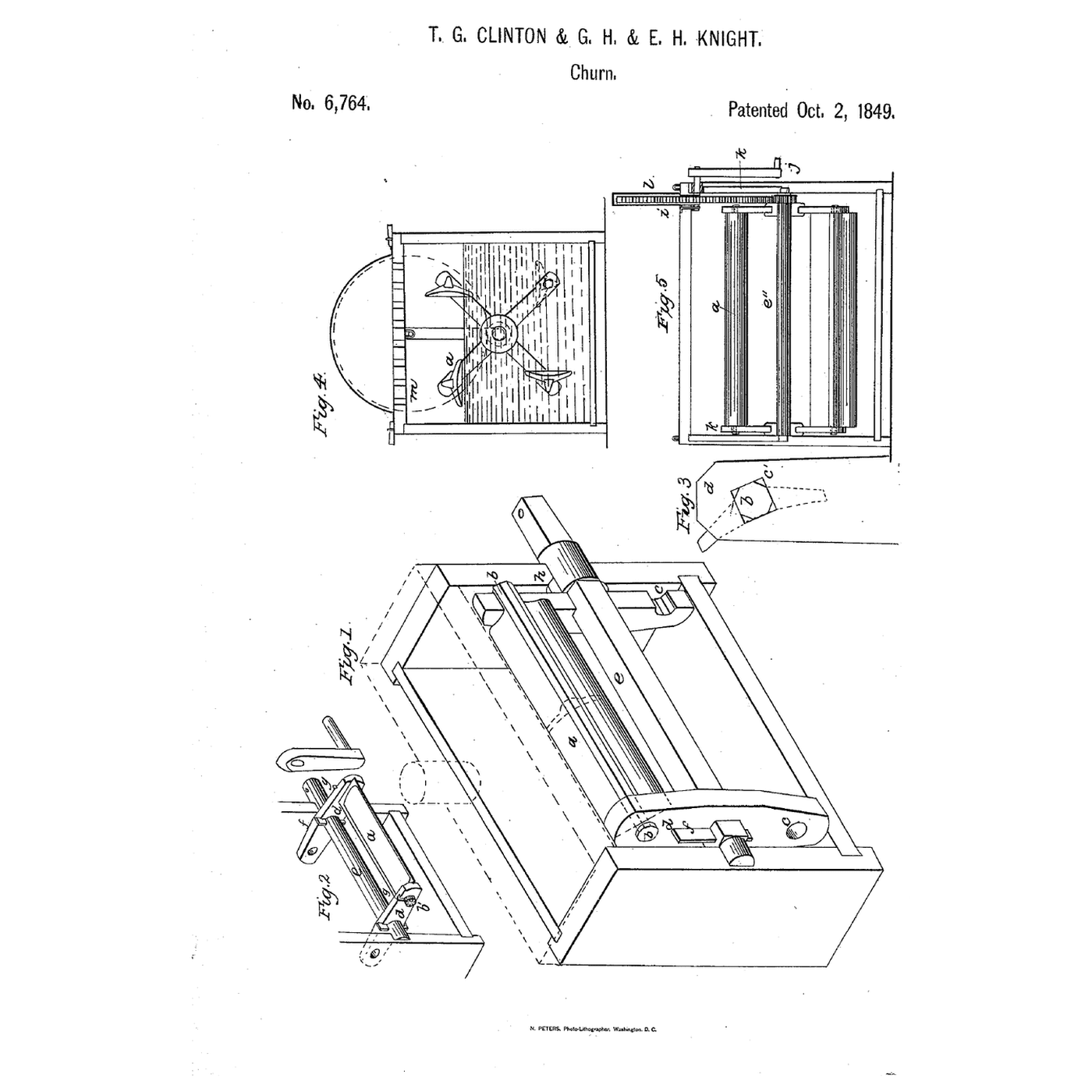
Adjustable Concave Beater Churn: Beaters You Turn to Meet the Cream at Any Level
láti ọwọ́ Woody
OÚNJẸ ÀTI OHUN MÍMU
7
0
0
0
0
0
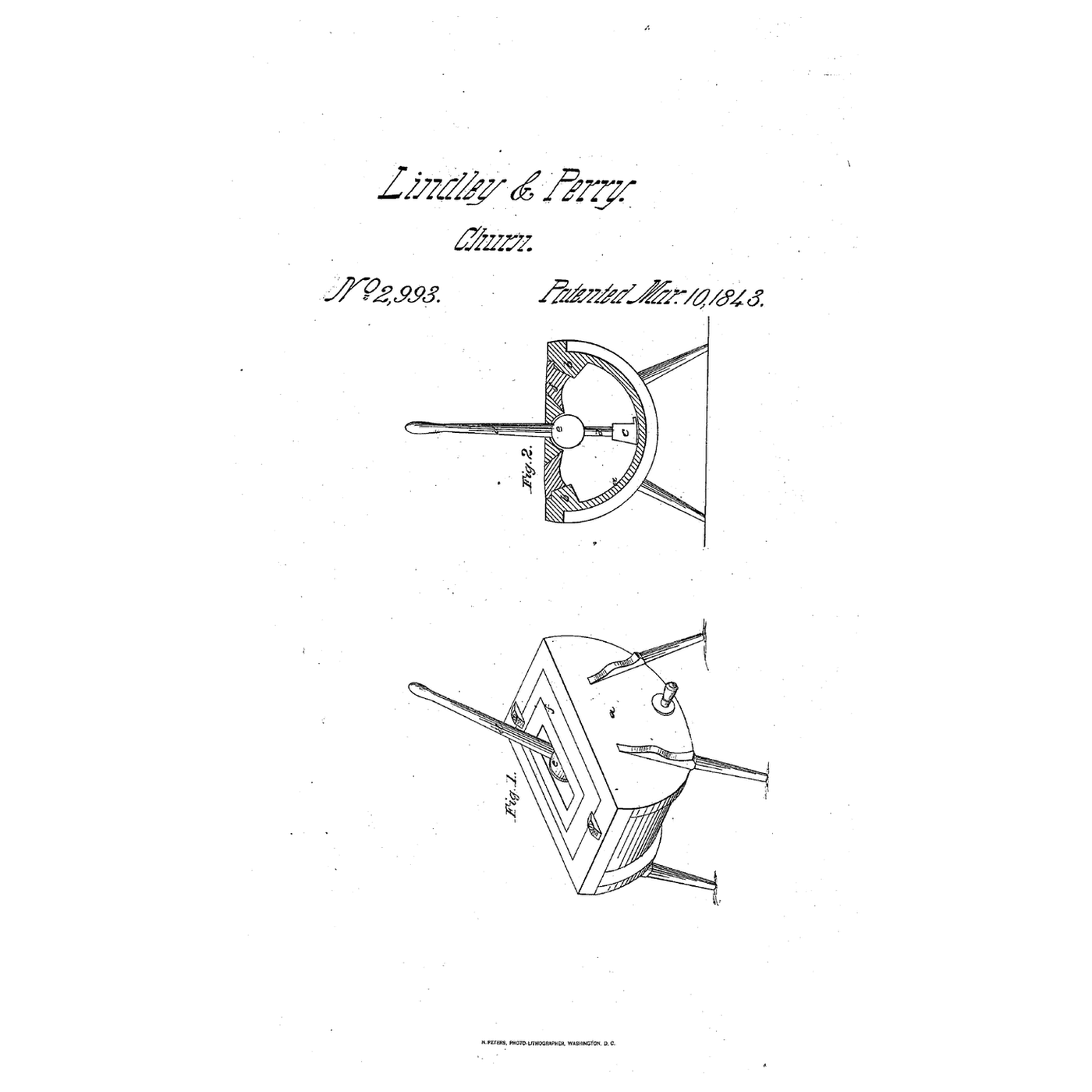
Roller-Fulcrum Dash Churn: A Vibrating Dash That Also Works the Butter
láti ọwọ́ Emma
OÚNJẸ ÀTI OHUN MÍMU
32
0
0
0
0
0
CC0 Àgbègbè Gbogbogbò
Blueprint yìí ti jáde lábẹ́ CC0. O lè ṣe àdàkọ, yí padà, pín, àti lò láìsí ìyọ̀ǹda.
Ṣàtìlẹ́yìn Olùṣẹ́dá nípa rírà àwọn ọjà nipasẹ̀ Blueprint wọn Ẹ̀san Olùṣẹ́dá tí àwọn Olùtajà gbé kalẹ̀, tàbí ṣẹ̀dá àtúnṣe tuntun ti Blueprint yìí kí o sì fi sínú Blueprint rẹ gẹ́gẹ́ bí ìsopọ̀ láti pín owó-wíwọlé.