IṢẸ́ ỌNÀ
ẸWÀ ÀTI ÌLERA
IṢẸ́ ỌWỌ́
ÀṢÀ ÀTI ÌTÀN
ÌṢERÉ
ÀYÍKÁ
OÚNJẸ ÀTI OHUN MÍMU
REVERSE ENGINEERING
SÁYẸ́ǸSÌ
ERÉ ÌDÁRAYÁ
ÌMỌ̀-Ẹ̀RỌ
ÀWỌN OHUN WÍWỌ̀
Léwu

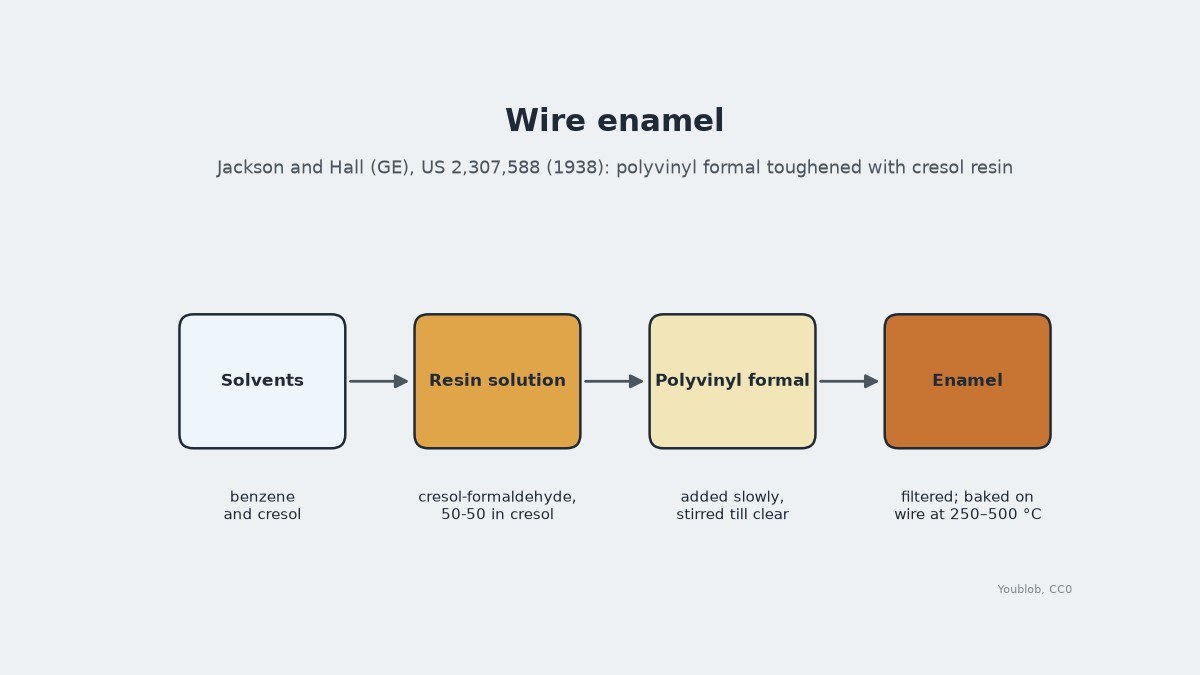
Wire Enamel: Polyvinyl Formal and Cresol Resin in Solvent, Jackson and Hall 1938
GE's 1938 magnet-wire enamel: 10.67 % polyvinyl formal and 5.33 % cresol-formaldehyde resin dissolved in cresol and a hydrocarbon solvent, stirred until clear and viscous, then filtered. Wire drawn through it and baked at 250–500 °C, several passes, gets a tough, flexible insulation. We use benzene, one of the solvents the patent allows.
The picture: our diagram of the mixing.
Ilọsíwájú
A few hours
Àkóónú tó léwu
Blueprint yii ni awọn ilana ti o lewu. Wọle ki o mu akoonu ti o lewu ṣiṣẹ ninu awọn eto akaunti rẹ lati wo awọn itọnisọna igbesẹ-nipasẹ-igbesẹ.
WọléÌtọ́nisọ́nà yìí ń ṣe

Blueprint tó jọra
Àwọn blueprint wọ̀nyí pín ìmọ̀ — ọ̀nà, ohun-èlò tàbí ìlànà
Léwu
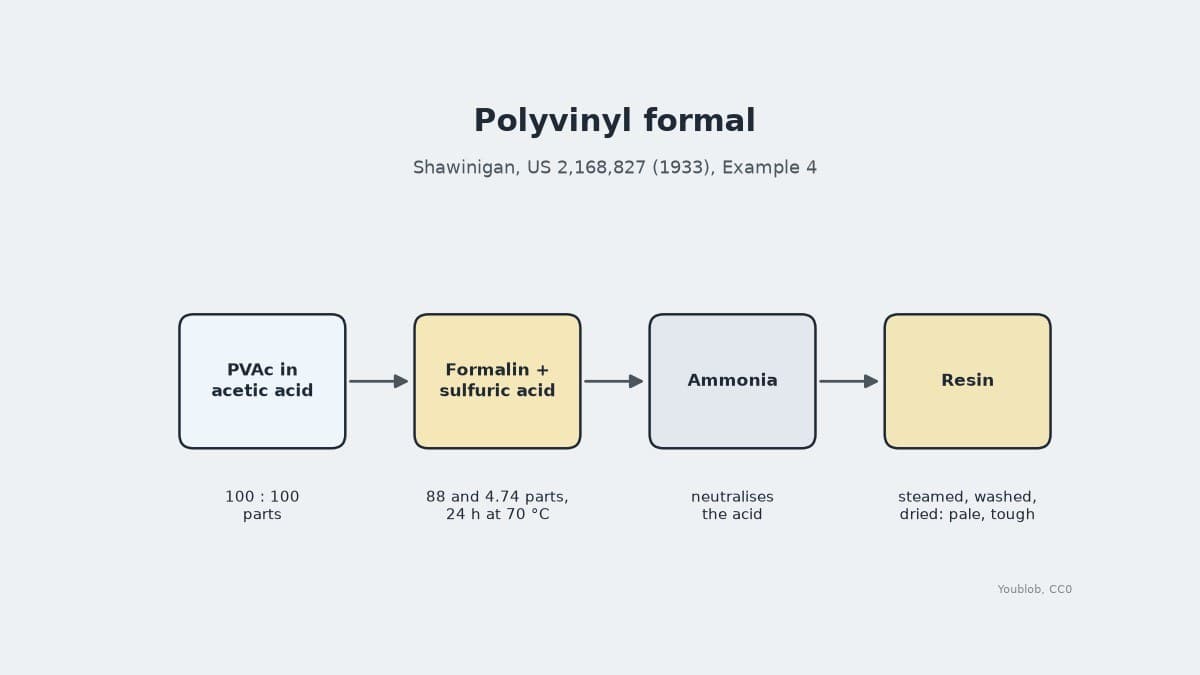
Polyvinyl Formal: Polyvinyl Acetate Acetalised with Formalin, Shawinigan 1933
láti ọwọ́ Charlie
Polymer
8
0
0
0
0
0
Léwu
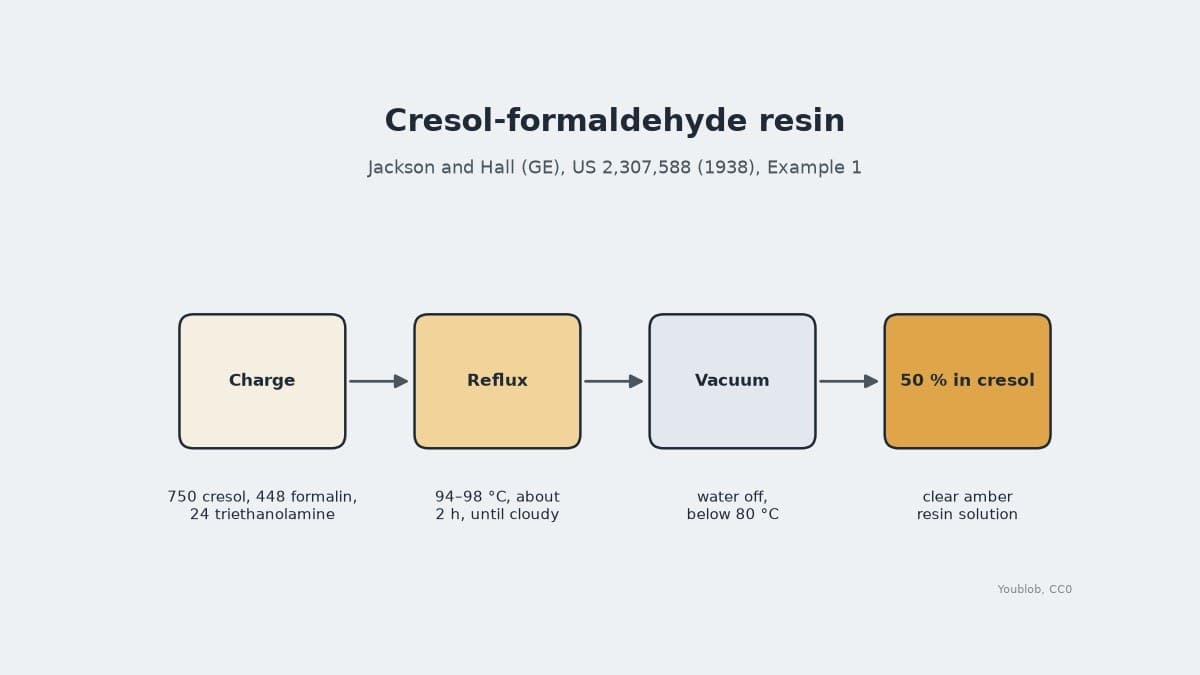
Cresol-Formaldehyde Resin for Wire Enamel, Jackson and Hall 1938
láti ọwọ́ Charlie
Polymer
7
0
0
0
0
0
Léwu
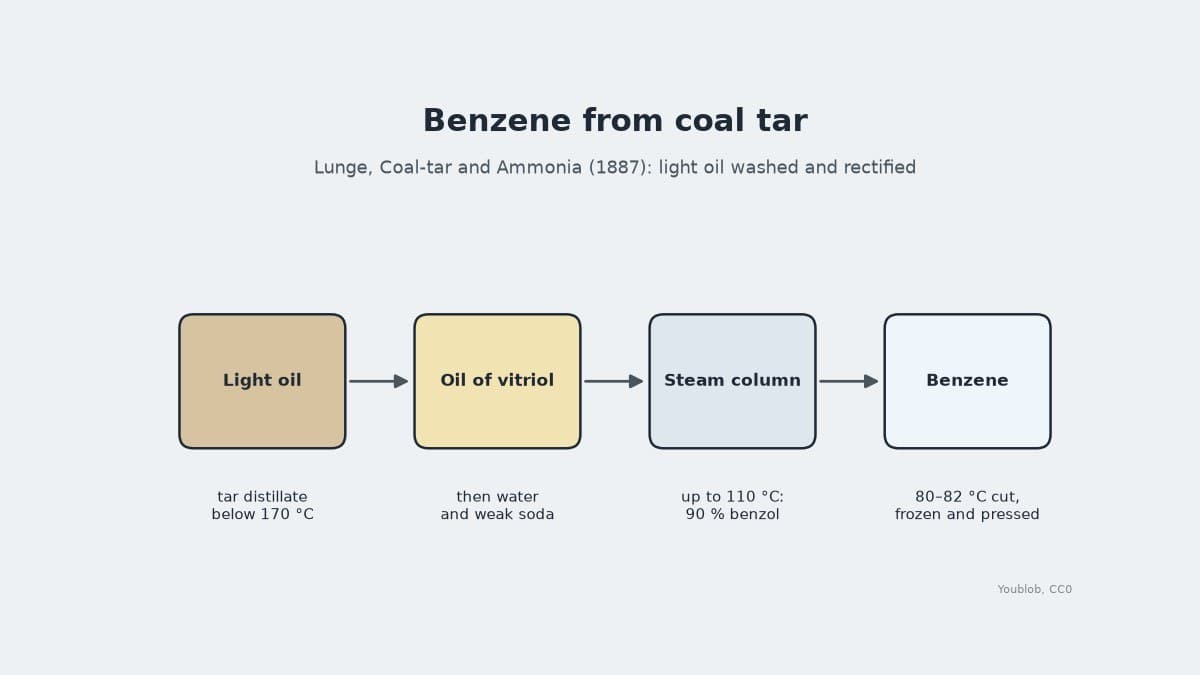
Benzene from Coal-Tar Light Oil: Washed and Rectified, Lunge 1887
láti ọwọ́ Charlie
Ti Ilé-iṣẹ́
8
0
0
0
0
0
CC0 Àgbègbè Gbogbogbò
Blueprint yìí ti jáde lábẹ́ CC0. O lè ṣe àdàkọ, yí padà, pín, àti lò láìsí ìyọ̀ǹda.
Ṣàtìlẹ́yìn Olùṣẹ́dá nípa rírà àwọn ọjà nipasẹ̀ Blueprint wọn Ẹ̀san Olùṣẹ́dá tí àwọn Olùtajà gbé kalẹ̀, tàbí ṣẹ̀dá àtúnṣe tuntun ti Blueprint yìí kí o sì fi sínú Blueprint rẹ gẹ́gẹ́ bí ìsopọ̀ láti pín owó-wíwọlé.