IṢẸ́ ỌNÀ
ẸWÀ ÀTI ÌLERA
IṢẸ́ ỌWỌ́
ÀṢÀ ÀTI ÌTÀN
ÌṢERÉ
ÀYÍKÁ
OÚNJẸ ÀTI OHUN MÍMU
REVERSE ENGINEERING
SÁYẸ́ǸSÌ
ERÉ ÌDÁRAYÁ
ÌMỌ̀-Ẹ̀RỌ
ÀWỌN OHUN WÍWỌ̀
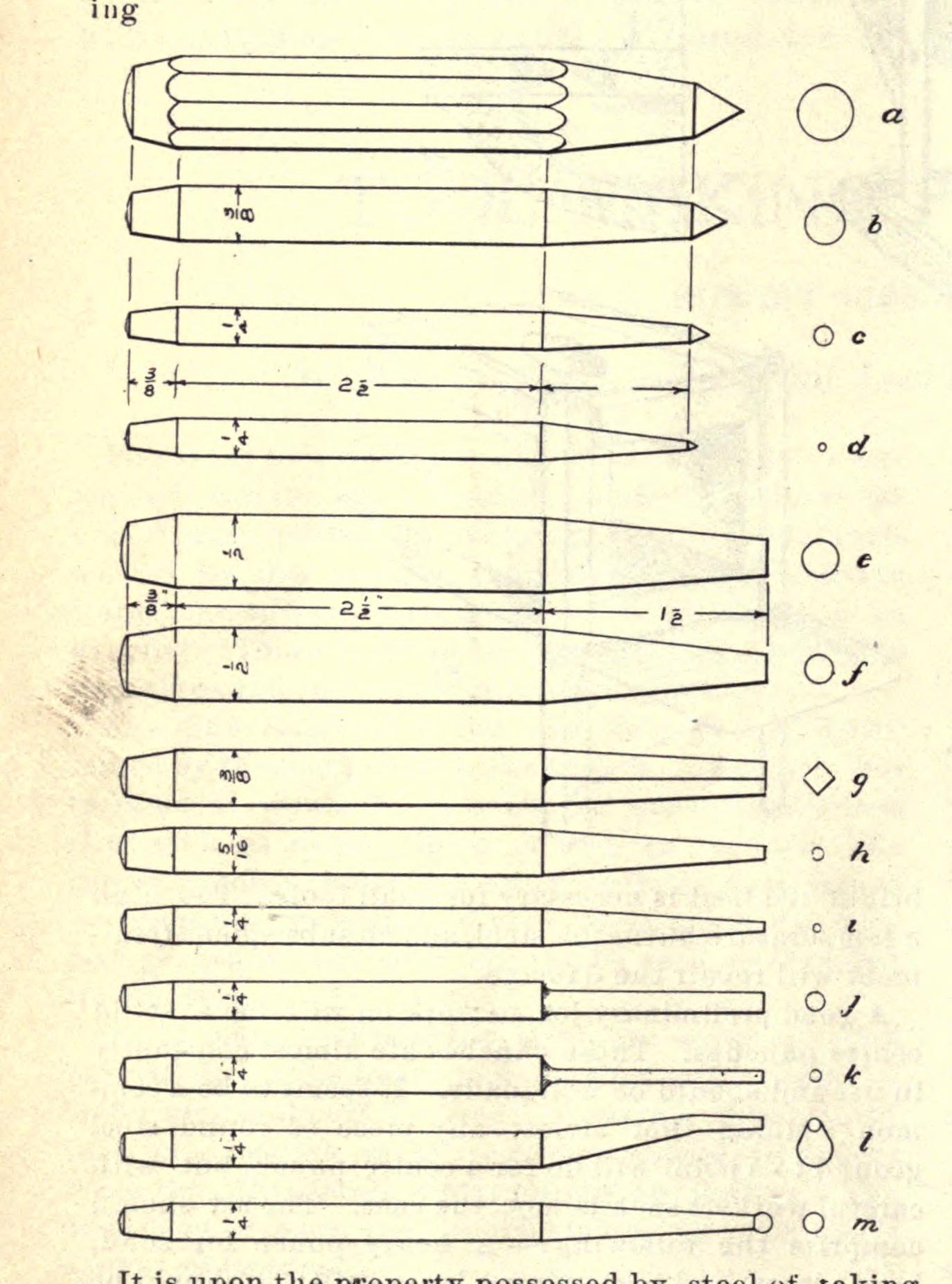


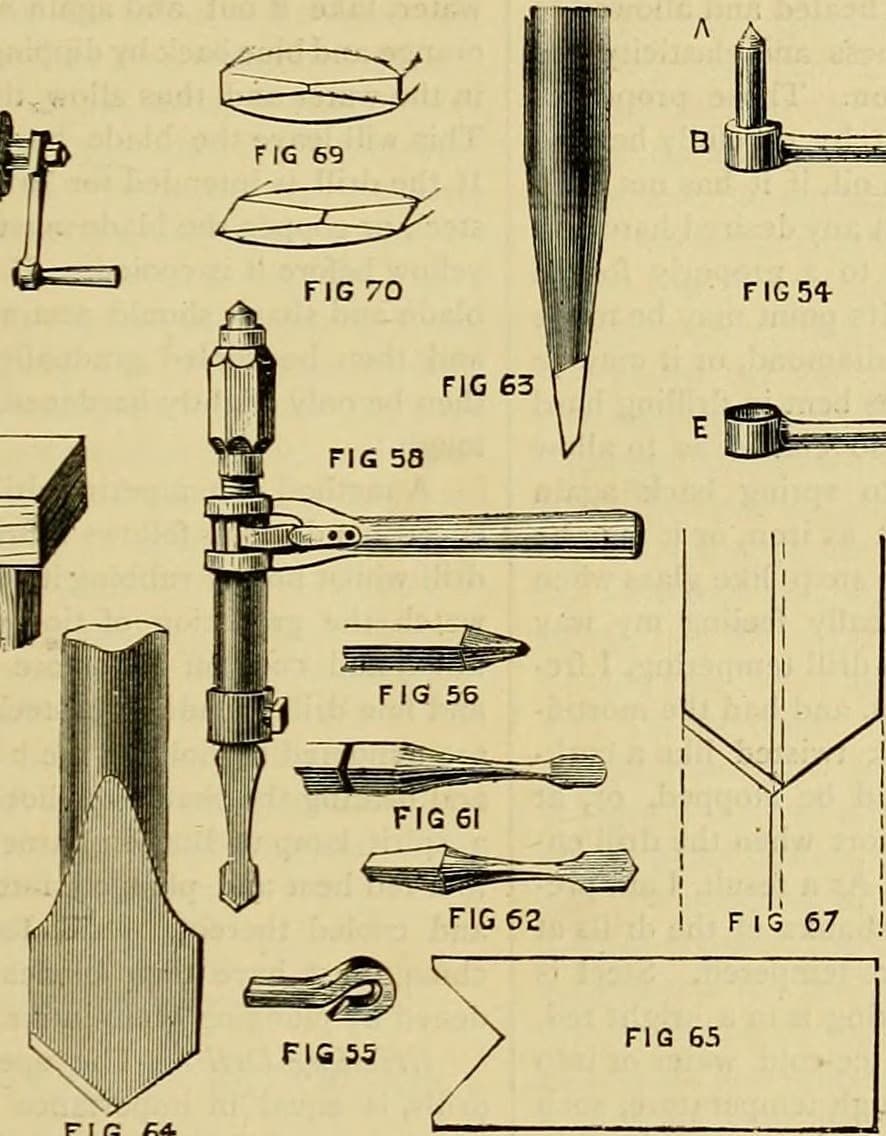
Forged Centre Punches and Pin Punches: Point Hardened in Brine, Temper Run to Straw from the Stock (Griswold, Amateur Work, 1904)
Robert Gibson Griswold's first tool-making lesson in Amateur Work (Boston, 1904): four centre punches from heavy to fine and nine pin, drift, offset and riveting punches, forged from carbon tool steel, finished with file and emery, then the point alone dipped in brine and the temper let run down from the hot stock to straw yellow.
Àárín
A day for the set
Ìlànà
1
1
His sizes
His sizes
Ń ṣí ìwé Jupyter…
2
2
Read Griswold
Read Griswold
"The more work put into the steel at the working point the better will be its grade."
3
3
Forge the blanks
Forge the blanks
Forge carbon tool steel at no more than a bright red into the shapes of his fig. 2: a 3/8 in. chamfered head, a 2 1/2 in. body and a 1 1/2 in. taper. Heavy centre punch at least 5/8 in. across with a conical point about 3/8 in. at the base; lighter centre punches 3/8 and 1/4 in.; pin punches 1/2, 3/8 (square end), 5/16 and 1/4 in., plus parallel-ended, offset and round-ended ones.
Àwọn ohun èlò fún ìgbésẹ̀ yìí:
 Ọ̀pá irin ohun èlò1 ẹyọ
Àwọn irinṣẹ́ tí a nílò:
 Ìléru alágbẹ̀dẹ
 Ìdí Alágbẹ̀dẹ
 Òòlù
 Ẹmú alágbẹ̀dẹ
4
4
Finish before hardening
Finish before hardening
Do all work except grinding the point now: file each punch to shape and finish it with emery cloth. Keep the striking head slightly rounded so it does not broom.
Àwọn ohun èlò fún ìgbésẹ̀ yìí:
 Aṣọ emery1 ẹyọ
Àwọn irinṣẹ́ tí a nílò:
 Àwọn Ìfá (Ìfá Ọwọ́)
5
5
Harden the point
Harden the point
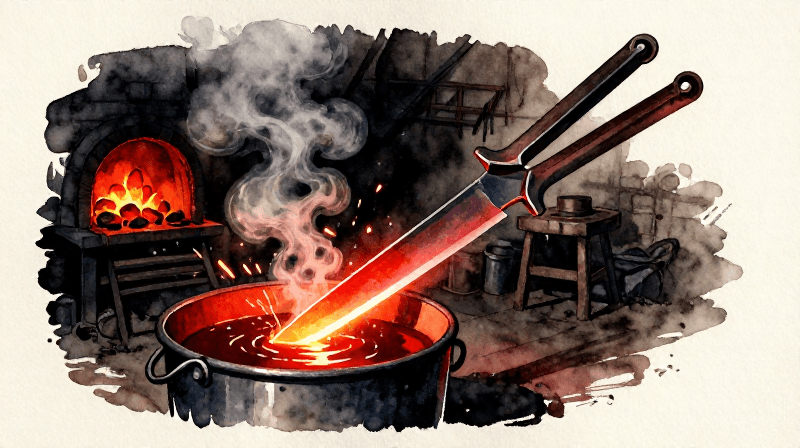
Heat the point to a dull red and plunge only the point, about 1/2 in. (13 mm), into a brine bath.
Àwọn ohun èlò fún ìgbésẹ̀ yìí:
 Omi iyọ̀ tí ó kún1 ẹyọ
Àwọn irinṣẹ́ tí a nílò:
Ìléru alágbẹ̀dẹẸmú alágbẹ̀dẹ Bàkẹ́ẹ̀tì
6
6
Run the temper
Run the temper
When the point is black, rub a bright spot with emery cloth on a flat stick and watch the heat from the stock colour it. At straw yellow (460 F) plunge the whole punch in water and keep it moving. If the stock has too little heat, lay it over the furnace to draw the colour.
Àwọn ohun èlò fún ìgbésẹ̀ yìí:
 Omi1 ẹyọAṣọ emery1 ẹyọ
Àwọn irinṣẹ́ tí a nílò:
Bàkẹ́ẹ̀tìÌléru alágbẹ̀dẹ7
7
Grind the points
Grind the points
Grind the points to shape after hardening without letting the edge turn blue; if it blues, grind back to hard metal.
Àwọn irinṣẹ́ tí a nílò:
 Ẹ̀rọ ìfá orí tábìlì
8
8
Troubleshooting
Troubleshooting
Punch troubleshooting.
Flow
Loading...
9
9
History and honest limits
History and honest limits
From Robert Gibson Griswold, "Tool Making for Amateurs" I, **Amateur Work** (Boston), vol. III (1903-04), pp. 273-275 and fig. 2 (checked on the archive.org scan amateurwork03bostrich). Metric figures and tools are ours.
Àwọn ohun-èlò
4- 1 ẹyọÀyè
- 2 ẹyọÀyè
- 1 ẹyọÀyè
- 1 ẹyọÀyè
Ìtọ́nisọ́nà yìí ń ṣe
Blueprint tó jọra
Àwọn blueprint wọ̀nyí pín ìmọ̀ — ọ̀nà, ohun-èlò tàbí ìlànà
CC0 Àgbègbè Gbogbogbò
Blueprint yìí ti jáde lábẹ́ CC0. O lè ṣe àdàkọ, yí padà, pín, àti lò láìsí ìyọ̀ǹda.
Ṣàtìlẹ́yìn Olùṣẹ́dá nípa rírà àwọn ọjà nipasẹ̀ Blueprint wọn Ẹ̀san Olùṣẹ́dá tí àwọn Olùtajà gbé kalẹ̀, tàbí ṣẹ̀dá àtúnṣe tuntun ti Blueprint yìí kí o sì fi sínú Blueprint rẹ gẹ́gẹ́ bí ìsopọ̀ láti pín owó-wíwọlé.