IṢẸ́ ỌNÀ
ẸWÀ ÀTI ÌLERA
IṢẸ́ ỌWỌ́
ÀṢÀ ÀTI ÌTÀN
ÌṢERÉ
ÀYÍKÁ
OÚNJẸ ÀTI OHUN MÍMU
REVERSE ENGINEERING
SÁYẸ́ǸSÌ
ERÉ ÌDÁRAYÁ
ÌMỌ̀-Ẹ̀RỌ
ÀWỌN OHUN WÍWỌ̀
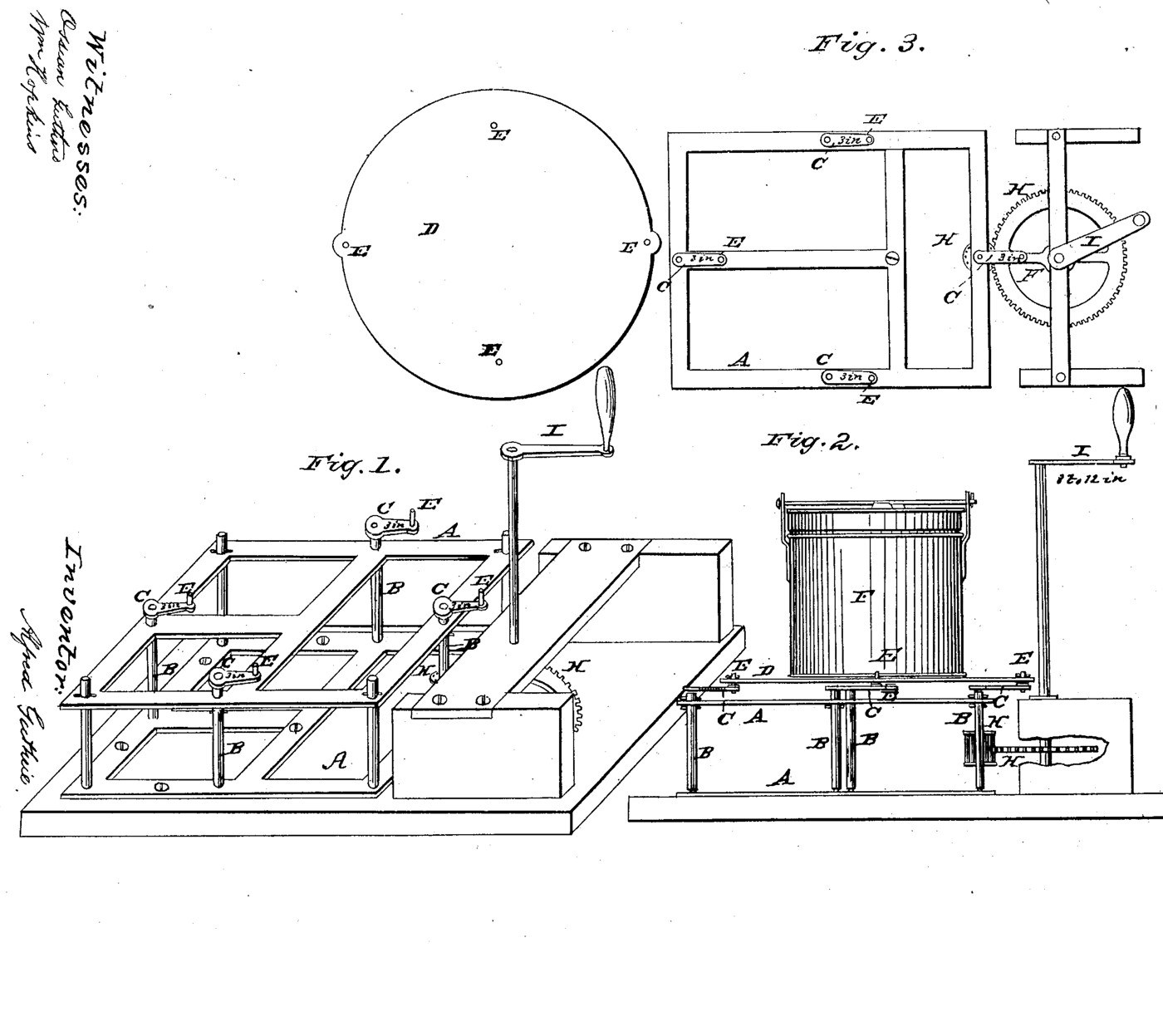


Four-Crank Gyrating Churn: Four Cranks Carry the Tub Round a Small Circle With No Dasher
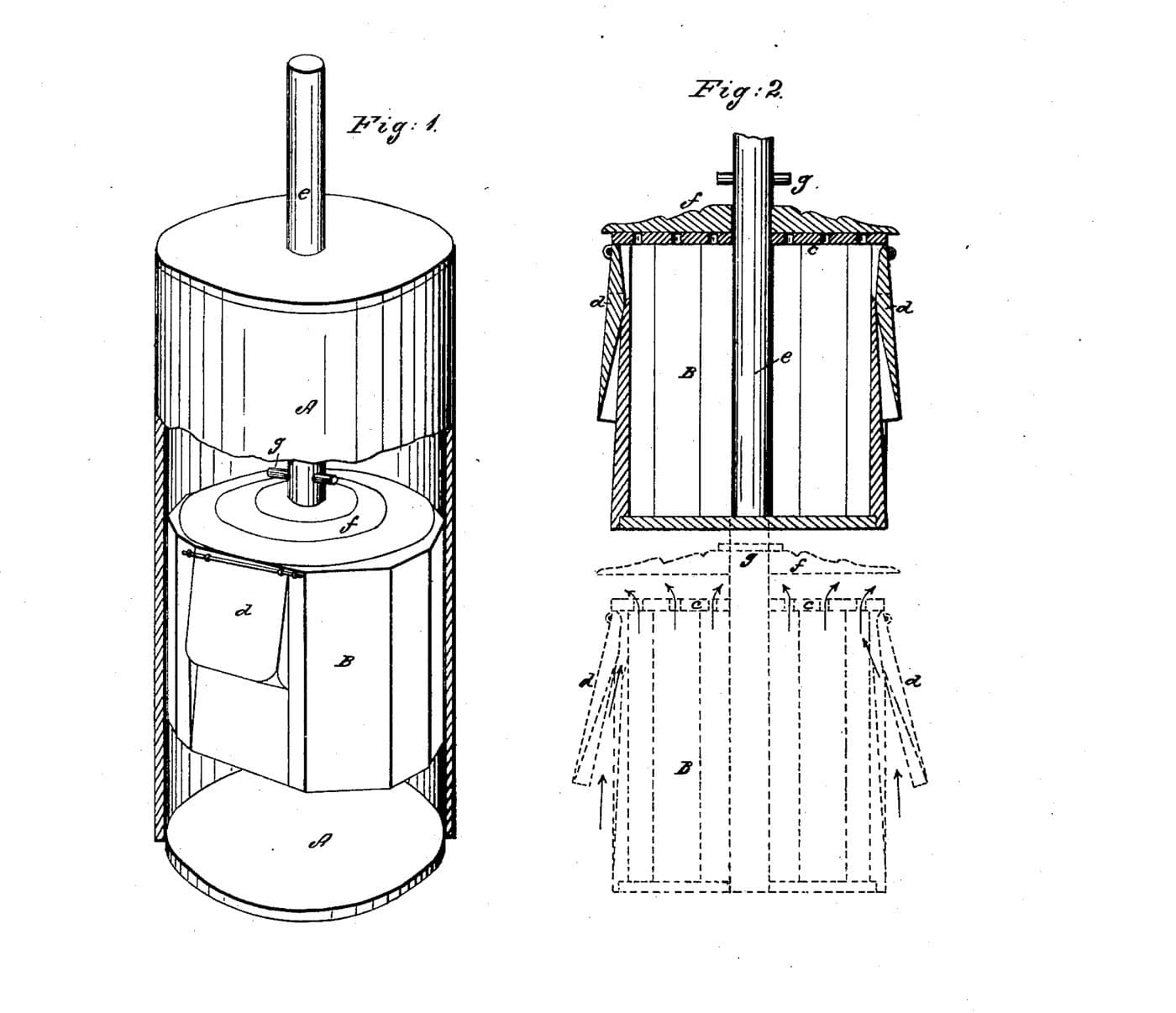
Alfred Guthrie of Chicago received US 24,907, dated 26 July 1859, for a churn with no dasher at all. Four upright shafts in a frame have cranks on their tops, and a bed plate lies over the four crank pins, so each crank turns on its own centre but all move together. The tub stands on the plate, held by stirrups, and is carried round a small circle, throwing the cream against its sides. A handle turns one crank shaft through cogged gearing.
This rung builds it at the patent's own sizes: a frame about two feet square and one foot high, shafts of 3/4 inch iron and 3 inch cranks.
Àárín
About 2 days, plus printing
Ìlànà
1
1
How hard the cream is swung
How hard the cream is swung
Ń ṣí ìwé Jupyter…
2
2
A churn with a dasher, before it
A churn with a dasher, before it
Wineman's dasher drove the cream through holes. Guthrie did away with the dasher and moved the whole tub.
3
3
Read US 24,907
Read US 24,907
"I connect the whole together by the bed plate D over the wrists of each crank E, E, E, E. Each crank will revolve upon its own center but will each correspond to the motion of the other."
4
4
Print the wheel H
Print the wheel H
The 64-tooth spur wheel (module 3, 198 mm across) for the handle shaft I, with a 20 mm bore. PETG, 0.2 mm layers, 50 % infill, 5 walls.
5
5
Print the pinion H
Print the pinion H
The 24-tooth spur pinion for the driven crank shaft, with a 19 mm bore and a hub. PETG, 0.2 mm layers, 50 % infill, 5 walls.
6
6
Frame and bearing bars
Frame and bearing bars
Build a pine frame 610 mm square and 305 mm high: four 50 mm corner posts, and 50 mm rails round the top and the bottom. Fit two hardwood bars across it, top and bottom, 150 mm in front of and behind the middle, and bore them 19.6 mm square to the frame at 200 mm either side of the middle, for the four shafts. Screw two hardwood brackets to the right side, top and bottom, bored 20.6 mm 132 mm out from the front right shaft, for the handle shaft.
Àwọn ohun èlò fún ìgbésẹ̀ yìí:
 Pákó igi pine2 ẹyọ
 Igi rírọ̀ 70x70 mm2 ẹyọ
 Pátákó Igi Líle2 ẹyọ
 Ìṣó igi #10 x 3"24 ẹyọ
 Ìdìpọ̀ Igi1 ẹyọ
Àwọn irinṣẹ́ tí a nílò:
 Ayùn Ọwọ́
 Ẹ̀rọ Ìlùkòkò Aláìlókùn
 Àkójọ orí kànnàkànnà
 Igun-òsùwọ̀n tí ó dúró
 Ìwọ̀n Ìtẹ́jú
 Okùn Ìdíwọ̀n
7
7
Shafts, cranks and plate D
Shafts, cranks and plate D
Cut four 19 mm steel shafts 323 mm long and stand them in the bars. Make four hardwood crank arms, 76 mm from the shaft to the crank pin, and pin them on the shafts' tops all pointing the same way. Fit a 19 mm steel crank pin 50 mm long in each. Cut plate D 532 mm across from plywood, bore it for the four pins exactly where they stand, and drop it on them. Turn one crank by hand: the plate must run round freely without turning.
Àwọn ohun èlò fún ìgbésẹ̀ yìí:
 Ọ̀pá irin aise2 ẹyọPátákó Igi Líle1 ẹyọ
 Àwo igi tí a lẹ̀ pọ̀1 ẹyọ
 Wáṣà Pẹrẹsẹ8 ẹyọ
 Àkójọ bọ́ọ̀lù onígun mẹ́fà4 ẹyọ
 Ẹ̀kù Ìdìmú Onínáílọ́ọ̀nù4 ẹyọÌdìpọ̀ Igi1 ẹyọ
Àwọn irinṣẹ́ tí a nílò:
 Ayùn Irin
 Àwọn Ìfá (Ìfá Ọwọ́)
 Ìdìmú TábìlìẸ̀rọ Ìlùkòkò Aláìlókùn
 Àkójọ Orí Ìlùkòkò
 Ayùn JígísòOkùn Ìdíwọ̀n
 Kọ́kọ́rọ́ tí a lè ṣàtúnṣe
8
8
Gearing H and handle I
Gearing H and handle I
Pin the pinion on the front right shaft 140 mm up. Stand a 20 mm steel shaft 885 mm long in the brackets, pin the wheel on it level with the pinion, and check they mesh fully. Fix a hardwood handle arm 150 mm long on the shaft's top with a dowel grip.
Àwọn ohun èlò fún ìgbésẹ̀ yìí:
 Okùn PETG1 ẹyọỌ̀pá irin aise1 ẹyọPátákó Igi Líle1 ẹyọ
 Àwọn dowel igi líle1 ẹyọÌdìpọ̀ Igi1 ẹyọ
Àwọn irinṣẹ́ tí a nílò:
 Ẹ̀rọ ìtẹ̀ 3D oníwàyà (FDM)Ayùn IrinẸ̀rọ Ìlùkòkò AláìlókùnÀkójọ Orí Ìlùkòkò
9
9
Tub F on its grooved bottom
Tub F on its grooved bottom
Glue a plywood ring to the plate's middle, 282 mm inside and 340 mm outside, so the bucket's foot sits in it. Bend two flat-bar stirrups to go up the bucket's sides and over its lid, notch the ring for them and bolt them to the plate.
Àwọn ohun èlò fún ìgbésẹ̀ yìí:
Àwo igi tí a lẹ̀ pọ̀1 ẹyọÌdìpọ̀ Igi1 ẹyọ Ọ̀pá Pẹrẹsẹ Irin Pẹ́lẹ́2 ẹyọÀkójọ bọ́ọ̀lù onígun mẹ́fà4 ẹyọẸ̀kù Ìdìmú Onínáílọ́ọ̀nù4 ẹyọ
 Bàkẹ́ẹ̀tì Lítà 201 ẹyọ
Àwọn irinṣẹ́ tí a nílò:
Ayùn JígísòÌdìmú TábìlìAyùn IrinẸ̀rọ Ìlùkòkò AláìlókùnÀkójọ Orí ÌlùkòkòKọ́kọ́rọ́ tí a lè ṣàtúnṣe10
10
The build in 3D
The build in 3D
FreeCAD model of this build: the frame with its bearing bars, the four shafts and cranks, plate D on the crank pins, the bucket in its ring under two stirrups, and the spur wheel on the handle shaft driving the pinion. It was checked at eight crank angles.
11
11
Churn
Churn
Pour about 8 litres of heavy cream at about 15 °C into the bucket, checked with the thermometer, put the lid on and tighten the stirrups. Turn the handle steadily and time it. When the butter comes, lift the bucket off, pour off the buttermilk, wash the butter in cold water until it runs clear, work in a pinch of salt and weigh it.
Àwọn ohun èlò fún ìgbésẹ̀ yìí:
 Ọ̀rá wàrà tó nípọn8 l
 Iyọ̀ Òkun Rúkèrúdò1 ẹyọ
 Omi1 ẹyọ
Àwọn irinṣẹ́ tí a nílò:
 Ẹ̀rọ ìwọ̀n ooru oníhun tí ó dúró sí inú
 Aago Ìdúró
 Òṣùwọ̀n Díjítà Ilé Ìdáná
 Àwo ìdàpọ̀ ńlá ti irin tí kò ń yá
12
12
Troubleshooting
Troubleshooting
Four-crank churn troubleshooting.
Flow
Loading...
13
13
History and honest limits
History and honest limits
**Alfred Guthrie** of Chicago, Illinois, assignor to Wardell Guthrie, US 24,907, 26 July 1859, "Churn". He claimed the cranks C connected by the plate D. His sizes are kept: a frame about two feet square and one foot high, shafts of 3/4 inch iron about a foot long, and cranks of 3 inches, which we read from "about a six inch throw or three inches" and Fig. 3's "3 in" marks. He gives no gear sizes; ours are printed spur gears placed as his Figs. 2-3 draw them. Every other size is ours.
Àwọn ohun-èlò
17- 2 ẹyọÀyè
- 2 ẹyọÀyè
- 2 ẹyọÀyè
- 24 ẹyọÀyè
- 4 ẹyọÀyè
- 2 ẹyọÀyè
- 1 ẹyọÀyè
- 8 ẹyọÀyè
- Àyè
- Àyè
- 1 ẹyọÀyè
- 1 ẹyọÀyè
- Àyè
- 1 ẹyọÀyè
- Àyè
- 1 ẹyọÀyè
- 1 ẹyọÀyè
Àwọn irinṣẹ́ tó nílò
17- Àyè
- 1 vendor sell this, none ship to you yetÀyè
- Àyè
- 1 vendor sell this, none ship to you yetÀyè
- Àyè
- Àyè
- 1 vendor sell this, none ship to you yetÀyè
- Àyè
Àwọn fáìlì àpẹrẹ
3Ìtọ́nisọ́nà yìí ń ṣe

Blueprint tó jọra
Àwọn blueprint wọ̀nyí pín ìmọ̀ — ọ̀nà, ohun-èlò tàbí ìlànà


CC0 Àgbègbè Gbogbogbò
Blueprint yìí ti jáde lábẹ́ CC0. O lè ṣe àdàkọ, yí padà, pín, àti lò láìsí ìyọ̀ǹda.
Ṣàtìlẹ́yìn Olùṣẹ́dá nípa rírà àwọn ọjà nipasẹ̀ Blueprint wọn Ẹ̀san Olùṣẹ́dá tí àwọn Olùtajà gbé kalẹ̀, tàbí ṣẹ̀dá àtúnṣe tuntun ti Blueprint yìí kí o sì fi sínú Blueprint rẹ gẹ́gẹ́ bí ìsopọ̀ láti pín owó-wíwọlé.